

Assertiveness in Medical Admin: Terms & Interactive Guide
Assertiveness helps medical administrative professionals communicate limits, correct errors, clarify responsibilities, and protect patients without sounding hostile or passive. It strengthens effective patient communication, supports safer front-desk operations, reinforces patient privacy communication, and improves medical administrative workflows. This guide explains the language, techniques, and decision frameworks medical administrators can use when facing demanding patients, unclear instructions, scheduling pressure, privacy risks, disputed charges, and difficult workplace dynamics.
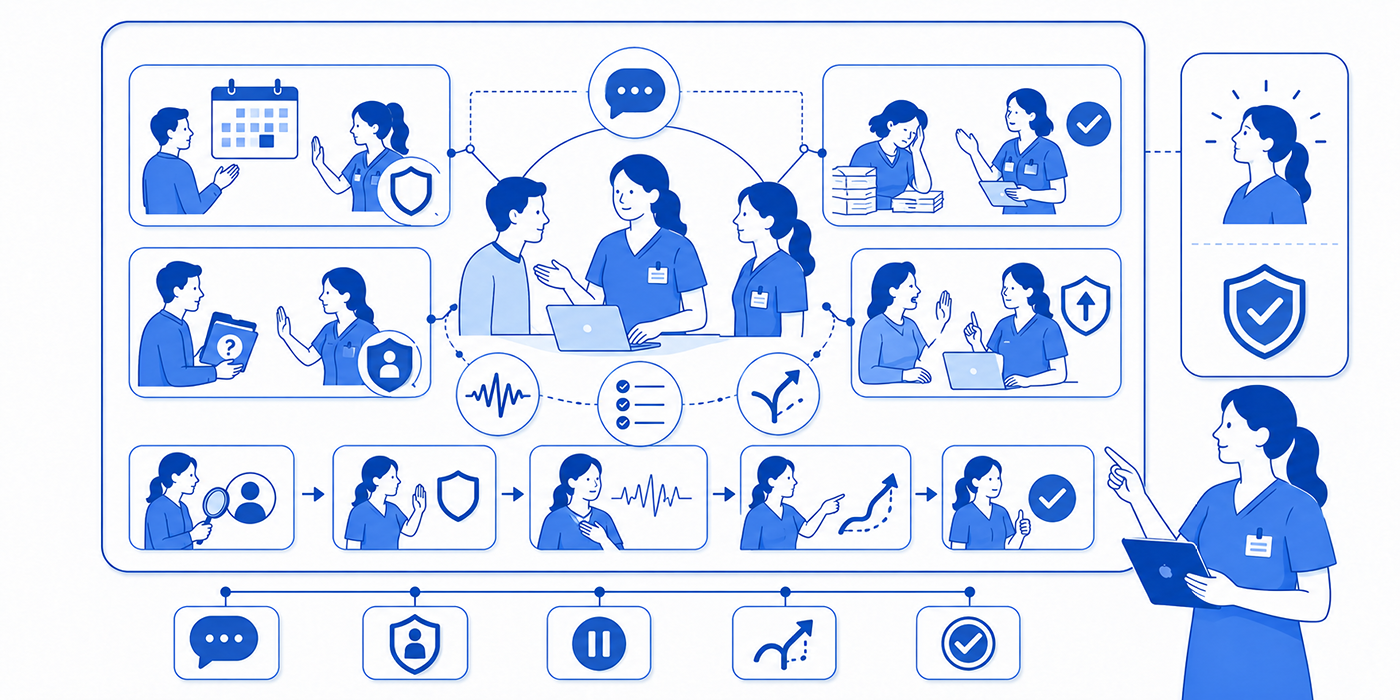
1. Essential Assertiveness Terms for Medical Administrative Professionals
Assertiveness is the ability to express a concern, need, limit, or decision clearly while respecting the rights of everyone involved. In medical administration, assertiveness is essential during appointment scheduling conflicts, insurance verification, patient complaints, and medical records release. The objective is to make the next safe action unmistakably clear.
Assertive communication
Assertive communication uses direct, respectful language that identifies the issue, explains the relevant requirement, and presents an appropriate next step. A scheduling coordinator might say, “The provider has no open appointments today. I can place you on the cancellation list, schedule the first available visit, or send a message to the clinical team for review.”
This response protects the scheduling boundary while offering workable choices. The same structure can support emergency appointment management, medical office triage, virtual patient management, and telehealth administration.
Passive communication
Passive communication occurs when a staff member avoids expressing a legitimate concern, accepts an unsafe request, apologizes excessively, or gives vague answers to escape discomfort. A passive employee may promise an unavailable appointment, release information without completing verification, or accept blame for a process they do not control.
Passivity creates operational risks across patient confidentiality, HIPAA compliance, patient intake procedures, and medical claims processing. Avoiding one uncomfortable conversation can produce a larger compliance or service failure later.
Aggressive communication
Aggressive communication dismisses concerns, assigns blame, threatens, interrupts, humiliates, or uses authority to dominate the interaction. Examples include “That is our policy, so stop arguing,” “You should have read the form,” or “There is nothing I can do.”
Aggression increases the likelihood of escalation, formal complaints, poor patient satisfaction metrics, and preventable crisis communication. Staff should replace blame with process language drawn from de-escalation techniques and structured difficult-conversation strategies.
Passive-aggressive communication
Passive-aggressive communication hides resistance behind sarcasm, delay, selective compliance, silence, or indirect comments. Statements such as “I guess I’ll fix it again” or “Some people never follow the procedure” avoid direct problem-solving.
This behavior damages team trust, weakens medical office collaboration, complicates staff scheduling, and prevents clear accountability within practice management systems. A direct alternative would be: “The required information was missing from this referral. Please include the diagnosis, provider signature, and supporting note before resubmission.”
Boundary
A boundary identifies what a staff member can do, cannot do, or requires before taking action. Boundaries may come from law, policy, workflow, role authority, safety requirements, system access, or appointment availability.
Strong boundaries protect legal responsibilities for CMAAs, support risk management, and prevent staff from making promises outside their authority. A boundary becomes more useful when it includes an alternative: “I cannot interpret the clinical result, but I can send your question to the licensed clinical team.”
Broken-record technique
The broken-record technique involves repeating the same calm boundary without adding unnecessary arguments. It is valuable when a patient, vendor, colleague, or caller continues pressing after receiving a complete answer.
For example: “I understand you would like the record today. Written authorization is required before we can release it.” If the demand continues, the employee repeats the requirement and available next step. This technique supports medical records management, patient privacy communication, and compliant portal management.
Fogging
Fogging acknowledges the reasonable part of another person’s statement without surrendering the required boundary. A staff member might say, “I understand that another delay is frustrating. The authorization is still pending, and I can contact the payer for an updated status.”
Fogging is useful during prior authorization, denial management, claims processing, and explanation of benefits discussions because it validates impact while preserving factual accuracy.
DESC script
DESC stands for Describe, Express, Specify, Consequences. It helps staff address recurring workplace problems without attacking the other person.
A medical administrator could say: “When urgent messages are entered without a callback number, I cannot route them safely. I need every urgent message to include the verified number and reason for the call. That will reduce delays and prevent failed callbacks.” DESC can improve medical administrative workflow, EMR compliance, office policies, and team productivity.
| # | Term or Technique | What It Means | Medical Admin Example | High-Value Response |
|---|---|---|---|---|
| 1 | Assertiveness | Clear communication that respects rights, policy, and safety. | A patient demands an appointment in a fully booked schedule. | State availability clearly and offer approved alternatives. |
| 2 | Passive communication | Avoiding legitimate limits or concerns. | Staff promise a callback they cannot guarantee. | Give a realistic timeframe and escalation pathway. |
| 3 | Aggressive communication | Using blame, threats, interruption, or humiliation. | An employee says the patient caused the scheduling error. | Describe the record and focus on resolution options. |
| 4 | Passive aggression | Indirect resistance expressed through sarcasm or delay. | A coworker delays a task after disagreeing with the assignment. | Name the task, deadline, and barrier directly. |
| 5 | Boundary | A defined professional, legal, or operational limit. | A caller asks for protected information without verification. | Explain the verification requirement and next step. |
| 6 | Broken-record technique | Calm repetition of the same valid limit. | A patient repeatedly demands an unavailable controlled-substance refill. | Repeat the approved process without debating. |
| 7 | Fogging | Acknowledging a valid concern while keeping the boundary. | A patient complains about a long authorization delay. | Recognize the impact and provide the current status. |
| 8 | DESC script | Describe, express, specify, and explain consequences. | A coworker repeatedly sends incomplete referrals. | Identify missing elements and required future standard. |
| 9 | I-statement | Language that explains impact without assigning motive. | Messages are being interrupted during handoff. | “I need to finish the handoff so the details remain accurate.” |
| 10 | Limit setting | Defining acceptable behavior and consequences. | A caller uses abusive language. | Require respectful communication and explain escalation policy. |
| 11 | Escalation | Transferring an issue to the appropriate authority level. | A billing dispute exceeds front-desk authority. | Route it to billing leadership with documented facts. |
| 12 | Scope of role | Tasks and decisions permitted within a position. | A patient asks an administrator to interpret a lab result. | Refer the clinical question to licensed staff. |
| 13 | Clarifying question | A targeted question that removes ambiguity. | A manager says a request is urgent without a deadline. | Ask for the required completion time and priority level. |
| 14 | Expectation setting | Explaining process, timing, and responsibilities in advance. | A referral review may take several business days. | Provide the timeframe and follow-up method immediately. |
| 15 | Neutral tone | Steady vocal delivery without contempt or defensiveness. | A patient disputes a balance loudly. | Slow the pace and review one fact at a time. |
| 16 | Concise refusal | A brief denial supported by a valid reason. | Someone asks staff to backdate a document. | Decline clearly and follow documentation policy. |
| 17 | Choice architecture | Offering several safe, approved options. | The requested appointment time is unavailable. | Offer alternative dates, cancellation list, or clinical review. |
| 18 | Accountability statement | Naming responsibility and corrective action. | Staff entered the wrong insurance identifier. | Acknowledge the error and explain how it will be corrected. |
| 19 | Closed-loop communication | Confirming that a message was received and understood. | A provider requests an urgent scheduling change. | Repeat the request, deadline, and completion status. |
| 20 | Redirection | Moving the conversation back to the solvable issue. | A complaint expands into unrelated accusations. | Return to the specific appointment, claim, or record issue. |
| 21 | Time boundary | A clear limit on when an action can occur. | A same-day request requires review after clinic hours. | Give the earliest realistic response window. |
| 22 | Privacy boundary | A limit protecting personal health information. | A relative requests details without authorization. | Explain that authorization or patient participation is required. |
| 23 | Behavioral boundary | A standard for acceptable conduct. | A visitor threatens or insults staff. | State the behavior requirement and activate safety protocol. |
| 24 | Workload boundary | Clarifying capacity, priority, and resource limits. | Several managers assign competing urgent tasks. | Request a ranked priority and deadline for each task. |
| 25 | Clinical boundary | Separating administrative support from clinical judgment. | A patient asks whether symptoms require emergency care. | Use the approved triage or emergency escalation process. |
| 26 | Documentation boundary | Refusing inaccurate, altered, or unsupported entries. | A colleague asks staff to remove a documented delay. | Preserve the factual record and report the request appropriately. |
| 27 | Repair statement | A concise effort to restore communication after tension. | An employee interrupts a frustrated patient. | Acknowledge the interruption and invite the patient to finish. |
| 28 | Escalation threshold | A defined point requiring supervisor or security involvement. | A person blocks the desk and refuses to leave. | Follow the approved workplace safety pathway immediately. |
2. How to Build an Assertive Response That Protects Patients and Workflow
An effective assertive response usually contains four elements: acknowledgment, fact, boundary, and next step. This structure prevents staff from becoming trapped in circular arguments and improves consistency across front-desk procedures, appointment scheduling, patient portal management, and healthcare CRM workflows.
Step 1: Acknowledge the practical impact
Acknowledgment shows that the employee has understood the problem. It should identify the patient’s stated concern rather than assume an emotion.
Useful phrases include:
“I understand that this delay affects your treatment schedule.”
“I can see that you expected the authorization to be completed.”
“I understand that you travelled here for this appointment.”
“I hear that you need a clear answer about the balance.”
This approach reflects active listening techniques, supports empathy in healthcare administration, and strengthens patient satisfaction. It also reduces pressure during crisis communication.
Step 2: State the verified fact
The employee should explain what the record, system, policy, or current availability shows. Facts should be specific enough to guide action.
Instead of saying, “The insurance company has not done anything,” say, “The payer portal shows the authorization as pending review, and no decision has been posted.” Precise language strengthens insurance verification, prior authorization management, denials management, and accurate medical claims processing.
Step 3: State the boundary clearly
A boundary should explain what must happen before the requested action can proceed. Long explanations create opportunities for debate and may sound uncertain.
Examples include:
“Identity verification is required before I can discuss the account.”
“The clinical team must review that symptom question.”
“Written authorization is required before records can be released.”
“I cannot change the diagnosis code without approved documentation.”
“The office cannot guarantee a same-day response.”
These boundaries protect patient confidentiality, support medical compliance, reduce coding errors, and reinforce legal responsibilities.
Step 4: Give the next safe action
The next step converts a boundary into useful service. It should explain who will act, what will happen, and when the patient can expect an update.
A strong response might be: “I will send the question to the clinical pool today. Routine messages are reviewed within two business days, and urgent symptoms must follow the office’s triage process.” This supports medical office triage, telemedicine basics, virtual patient management, and consistent office procedures.
3. Assertiveness Scenarios Medical Administrators Face Every Week
Scenario 1: A patient demands protected information
A caller says they are the patient’s spouse and insists on receiving results immediately. The employee feels pressured because the caller knows the patient’s date of birth and address.
An assertive response is: “I understand you are trying to help. I cannot discuss the account until the required authorization or identity-verification process is completed. I can explain how the patient can add an authorized representative.”
This protects HIPAA requirements, patient privacy communication, patient confidentiality, and secure patient portal management.
Scenario 2: A provider gives an incomplete instruction
A provider sends a message that says, “Schedule follow-up soon,” without specifying the timeframe, appointment type, or urgency. Guessing could place the patient in the wrong slot or delay necessary care.
An assertive clarification would be: “Please confirm whether the follow-up is routine, urgent, or within a specific number of days, and whether it requires an in-person or telehealth slot.”
This protects appointment scheduling accuracy, improves medical administrative workflow, supports telehealth platform use, and reduces errors within practice management systems.
Scenario 3: A patient refuses an available appointment
A patient rejects every available time and demands to be “squeezed in.” The employee worries that maintaining the boundary will appear unhelpful.
A strong response is: “The schedule is currently full, and I cannot add an appointment without clinical approval. I can offer the earliest available visit, place you on the cancellation list, or send your concern to the clinical team for review.”
This approach supports scheduling conflict resolution, emergency appointment management, secure scheduling tools, and proper medical office triage.
Scenario 4: A coworker repeatedly interrupts
A colleague interrupts every time the administrator is relaying a patient message. The pattern increases the risk of omitted symptoms, incorrect callback numbers, and failed routing.
A DESC response would be: “When I am interrupted during message documentation, important details can be missed. I need to finish the entry before answering another question. That will protect message accuracy and reduce callback delays.”
This supports medical records management, EMR compliance training, collaboration tools, and effective time management.
Scenario 5: A patient uses abusive language
An angry caller begins insulting the employee and threatens to “make sure everyone gets fired.” Staff should avoid arguing, defending their character, or matching the caller’s volume.
An appropriate boundary is: “I am available to help with the scheduling issue. I need the conversation to remain respectful. If the abusive language continues, I will end the call and follow the office escalation procedure.”
This response applies de-escalation techniques, strengthens crisis communication, supports complaint handling, and follows risk management strategies.
4. Interactive Assertiveness Scripts for Difficult Medical Office Conversations
Memorized scripts reduce hesitation when pressure is high. Each script should include a verified fact, a clear limit, and a realistic action. Staff can adapt these examples for professional email communication, patient communication apps, healthcare portals, and telephone-based front-desk operations.
When a patient wants an immediate callback
Patient: “I need the doctor to call me in ten minutes.”
Assertive response: “I will send the message immediately and mark the reason accurately. I cannot guarantee a ten-minute callback. The clinical team reviews messages according to urgency, and I will tell you what to do if your symptoms worsen before they respond.”
This script supports medical office triage, effective patient communication, patient record updates, and defensible clinical documentation.
When a patient disputes an insurance balance
Patient: “My insurance covers everything. Remove this charge.”
Assertive response: “I can review how the claim was processed and explain the balance shown on the account. I cannot remove a charge without an approved correction or payer adjustment.”
This protects the integrity of revenue cycle management, explanation of benefits, denials management, and coordination of benefits.
When a colleague asks you to skip a required step
Coworker: “Just register the patient now. We can fix the missing information later.”
Assertive response: “The required identifiers must be verified before registration is completed. I can help obtain the missing information so the record is accurate before the visit.”
This response supports patient intake procedures, medical records management, EMR compliance, and prevention of medical coding errors.
When a manager assigns conflicting priorities
Manager: “Complete all of these before lunch.”
Assertive response: “I currently have three time-sensitive tasks: the authorization queue, morning callbacks, and today’s referral corrections. Please rank these assignments so I can complete the highest-risk work first.”
This communicates capacity without refusing responsibility. It supports time management mastery, medical admin time tracking, office productivity, and more effective staff scheduling.
When a patient requests clinical advice
Patient: “Do you think this medication is causing my symptoms?”
Assertive response: “I cannot provide clinical advice, but I can document your question and route it to the appropriate clinical team. I also need to ask the approved safety questions so the message receives the correct priority.”
This preserves professional scope, supports medical office triage, strengthens legal responsibilities, improves medical records accuracy, and protects patient communication.

5. How Medical Offices Can Train and Measure Assertiveness
Assertiveness training should focus on observable communication behaviors rather than personality labels. Staff do not need to become louder, more forceful, or more confrontational. They need reliable language for stating limits, escalating concerns, correcting misunderstandings, and requesting clarification.
Training can be integrated into medical administration conferences, professional organizations, online CMAA communities, and structured office policies.
Use pressure-based role-play
Role-play should reproduce the conditions that weaken assertiveness: a growing queue, ringing phones, missing information, frustrated patients, unclear provider instructions, and limited appointment availability.
Observers should score whether the employee:
Acknowledged the concern
Used verified facts
Stated the boundary clearly
Offered a safe next step
Avoided blame and over-apologizing
Escalated at the correct threshold
Documented the outcome objectively
These exercises can draw from scheduling conflicts, insurance claims training, EMR issue resolution, and patient complaint handling.
Measure behavior rather than confidence
A confident tone can still carry incorrect information. Evaluation should therefore examine whether the employee followed the correct process, respected role boundaries, preserved privacy, and created an actionable next step.
Useful indicators include fewer unresolved handoffs, fewer inappropriate promises, fewer privacy exceptions, more complete referral messages, clearer escalation documentation, and reduced repeat calls. These measures connect assertiveness to patient satisfaction metrics, medical chart audits, risk management, and stronger medical office workflows.
Create approved boundary language
Medical offices should develop approved phrases for high-risk situations such as identity verification, record release, abusive language, clinical questions, same-day requests, billing disputes, and incomplete referrals.
Standardized phrases improve consistency across patient confidentiality, medical compliance, prior authorization, and front-desk operations. Staff should still be permitted to adapt wording so the interaction sounds natural.
Train escalation thresholds
Employees need clear criteria for involving a supervisor, clinical staff member, privacy officer, billing specialist, security team, or emergency service. Hesitation becomes dangerous when staff are uncertain whether threats, symptoms, privacy breaches, or altered documentation require escalation.
Escalation pathways should align with crisis communication, risk management strategies, legal responsibilities for CMAAs, and medical compliance requirements.
6. Frequently Asked Questions About Assertiveness in Medical Administration
-
Assertiveness communicates the issue, boundary, and next step with respect. Aggression uses blame, threats, humiliation, interruption, or intimidation to force compliance. Medical offices should train employees to combine clear limits with de-escalation techniques, active listening, patient communication skills, and professional complaint handling.
-
Use a three-part response: state the limit, give the reason briefly, and offer an approved alternative. For example: “I cannot release the record without written authorization. I can send the authorization form through the secure portal or explain how to complete it in person.”
This format protects patient confidentiality, supports records-release workflows, reinforces HIPAA terminology, and improves patient portal management.
-
Use the broken-record technique. Repeat the requirement calmly, avoid adding fresh arguments, and explain the escalation pathway when necessary. Consistency is especially important during scheduling conflicts, billing disputes, prior authorization delays, and privacy requests.
-
Ask a precise clarification question tied to safety, timing, or workflow. Useful wording includes: “What deadline should I use?” “Which task has priority?” “What appointment type is required?” or “Which approved documentation supports this change?”
Clarification protects medical records accuracy, reduces coding errors, improves appointment scheduling, and strengthens medical administrative workflows.
-
Clear limits reduce uncertainty, prevent false promises, and help patients understand what will happen next. A patient may dislike an unavailable appointment or delayed authorization, yet they are more likely to trust staff who provide accurate information, respectful choices, and realistic timelines.
Assertiveness therefore supports patient satisfaction metrics, empathy in healthcare administration, professional bedside manner, and effective patient education.
-
Record objective facts, the request made, the boundary explained, alternatives offered, escalation steps, and the final outcome. Avoid labels such as “rude,” “difficult,” “manipulative,” or “aggressive” unless documenting a specific observable behavior.
Objective documentation supports medical chart audits, clinical documentation improvement, legal responsibilities, and defensible risk management.
