

Interactive Tutorial: Managing Insurance Claims Effectively
Insurance claims management decides whether a visit becomes clean revenue, delayed cash, or preventable rework. Offices feel that pressure every day when insurance verification is rushed, when patient intake procedures leave gaps, when EMR compliance training is inconsistent, and when staff know the task but miss the sequence. Claims rarely collapse because of one dramatic mistake. They weaken through small misses that stack.
This tutorial walks through the full operating rhythm that keeps claims moving: registration accuracy, documentation discipline, code support, submission controls, denial follow-up, and team accountability. Along the way, you will see how stronger front-desk operations, tighter patient privacy communication, smarter EMR shortcuts, and better medical billing term mastery turn claim management into a repeatable skill instead of a daily firefight.
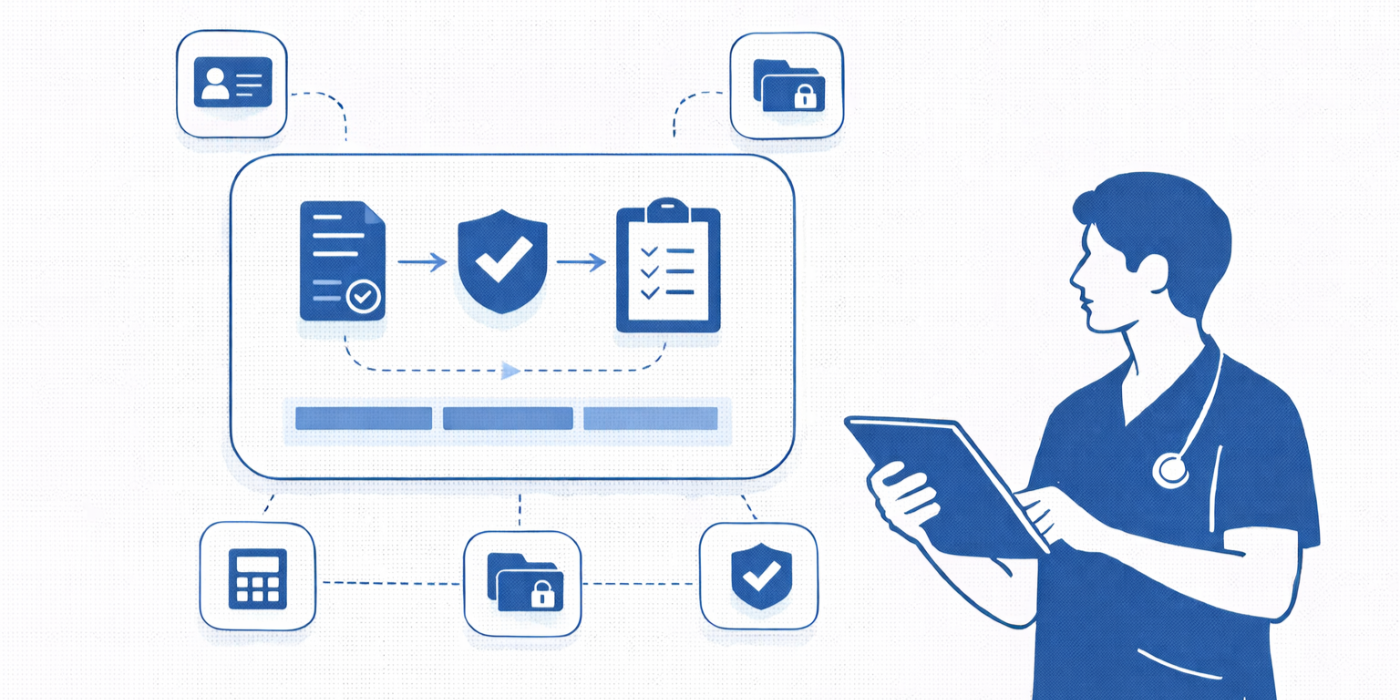
1. Build A Claim Workflow That Prevents Errors Before Submission
Effective claim management starts before a claim exists. It starts when the patient is scheduled, when demographics are entered, when the insurance card is reviewed, and when the staff member handling intake knows which details affect reimbursement later. A front office that understands appointment scheduling best practices, uses strong patient communication apps, follows clean front-desk workflows, and documents accurately inside the EMR gives the billing side a usable starting point.
Claims fail early when offices treat eligibility as a checkbox instead of a verification process. You need active coverage, correct payer selection, subscriber accuracy, plan-specific referral rules, authorization status, coordination-of-benefits clarity, and a current understanding of patient responsibility. That is why teams that train on insurance verification, strengthen medical administrative terminology, learn core HIPAA and privacy terms, and practice active listening catch revenue leaks before they harden into denials.
The biggest operational mistake is fragmentation. Scheduling owns one piece, registration owns another, the clinical team documents separately, and billing discovers the damage days later when the claim rejects. A tighter system connects EMR integration tools, reliable collaboration tools for medical office teams, disciplined time-tracking and workflow visibility, and structured records-release processes so everyone sees the same claim-critical facts at the right time.
2. Collect Claim-Ready Information At The Front End So Billing Is Not Forced To Guess
A clean claim depends on the quality of the encounter setup. Staff should verify demographics, plan details, referrals, and authorization status before the patient reaches the provider. They also need to know how that information is stored inside the record. Offices that cross-train on insurance verification, sharpen patient intake procedures, use safer secure patient scheduling tools, and strengthen EMR issue resolution skills give billing a chart that can move instead of stall.
At check-in, the staff member should confirm more than identity and copay. They should ask which insurance is primary today, whether the patient changed employers, whether a referral was obtained, whether the service needs prior authorization, and whether the encounter is linked to an accident, workers’ compensation, or another special payer route. Teams that study healthcare portal workflows, improve patient communication language, strengthen difficult-conversation handling, and apply de-escalation techniques protect both cash flow and trust when coverage issues surface in real time.
Front-end claim control also requires disciplined record placement. If the authorization number is scanned into an attachment no one checks, or if the referral lives in a note field the billing team never sees, the office still behaves like the data is missing. That is where better EMR shortcuts, practical EMR compliance workflows, stronger healthcare CRM habits, and better medical office automation strategies matter. Good claim management depends on visibility. Staff should know exactly where billing-critical data belongs and exactly who owns correction when it is absent.
3. Turn Documentation And Coding Into Revenue Protection, Not Cleanup Work
Claims become expensive when clinical documentation forces billers to interpret instead of verify. The note must clearly support the diagnosis, the procedure, the level of service, the modifiers, the medical necessity story, and any payer-specific conditions that matter. Teams who understand ICD-10 coding language, review CPT coding fundamentals, master top billing terms for CMAAs, and learn the documentation mindset inside top medical scribe terms recognize weak support before a payer does.
The most dangerous claim errors hide inside believable documentation. A diagnosis lacks specificity, a laterality detail is missing, the chief complaint does not logically support the service, a procedure is performed but not described, or the modifier is technically possible but unsupported by the note. Those misses do not always trigger immediate rejection. Many survive first submission and come back later as denials, downcoding, or audit exposure. That is why practices benefit from specialty template libraries, stronger medical terminology mastery, better charting-term fluency, and sharper documentation accuracy training.
Before submission, every office needs a claim scrub mindset. That means checking diagnosis-pointer mapping, place of service, rendering provider, modifier logic, payer edits, attachment requirements, timely filing, and whether the note is complete and signed. Teams working in telehealth or hybrid care also need workflow discipline around telehealth platform terminology, medical appointment scheduling tools, remote-work medical administration workflows, and AI and automation awareness. Claims move faster when the team scrubs them intentionally instead of trusting the payer to reveal what the office missed.
4. Work Rejections, Denials, And Pending Claims With A Ruthlessly Structured Follow-Up System
A rejected claim and a denied claim demand different responses. Rejections usually mean the claim never made it through a format or data requirement. Denials usually mean the payer adjudicated the claim and refused payment for a reason. Pending claims require a third discipline: status tracking. Offices that teach staff the difference, use tighter medical admin staff scheduling tools, improve collaboration systems, build smarter workflow technology stacks, and standardize career-level operational skills recover revenue faster because the team stops treating all nonpayment as the same problem.
Rejections should be corrected and resubmitted quickly, ideally within one business day. These are often demographic errors, missing payer fields, invalid subscriber IDs, NPI mismatches, or claim-format failures. Denials need categorization first: eligibility, authorization, medical necessity, coding, bundling, timely filing, coordination of benefits, or documentation support. Each category needs its own response path. Teams who develop stronger healthcare administration efficiency habits, sharpen professional organization engagement, learn from medical administration conferences, and use peer insight from online communities for CMAAs often improve follow-up speed because they stop improvising.
Pending claims deserve discipline too. The worst thing an office can do is let claims age without a next action date. Every outstanding claim should have an owner, a claim age, a payer status, a last touch date, a next contact date, and a documented barrier. High-dollar claims deserve first attention. Claims near timely-filing or appeal deadlines deserve second attention. Everything else can be tiered after that. Teams using better time-tracking tools, smarter patient portal communication, clear patient privacy communication habits, and stronger medical office technology adoption keep claim follow-up from turning into aged A/R that everyone sees and nobody owns.

5. Create A Team System That Reduces Repeat Errors Week After Week
The best claims teams do more than fix claims. They study why the same mistakes happen. A denial that repeats three times is no longer a payer event. It is a workflow defect. Maybe schedulers do not understand authorization windows. Maybe front-desk staff do not capture secondary coverage. Maybe providers close notes late. Maybe diagnosis specificity remains weak in a specific specialty. Practices that review medical administration job-market expectations, sharpen CMAA career skills, reinforce certification-driven knowledge, and train around future-proof admin competencies build teams that think in root causes instead of excuses.
Weekly denial review should answer five questions. Which denial categories cost the most money. Which categories show up most often. Which payer is producing unusual friction. Which staff workflow step is upstream of the error. Which training or system fix will prevent recurrence fastest. That review grows stronger when staff are fluent in HIPAA terminology, comfortable with EMR integration tools, capable of handling scheduling conflicts, and prepared for emergency appointment changes, because claim damage often begins when the front office is forced to work fast without a stable process.
Training should stay case-based. Show the team a denied claim, the supporting note, the registration screen, the payer response, and the corrected version. Then identify the earliest interrupt point. That kind of teaching changes behavior because it makes the cost of a small miss visible. Offices that reinforce learning through CMAA exam preparation resources, targeted study tips for terminology, interactive practice tools, and practical medical office automation insight usually improve claims performance because the team learns how details connect instead of memorizing isolated rules.
6. Frequently Asked Questions About Managing Insurance Claims Effectively
-
The fastest win comes from fixing front-end accuracy and first-pass review at the same time. Start with tighter insurance verification, cleaner patient intake procedures, stronger front-desk operations training, and a simple pre-submission checkpoint for diagnosis support, modifiers, and claim edits. When offices only focus on denials after they arrive, they keep funding rework. When they tighten the visit setup and the claim review together, denial volume usually drops much faster.
-
Prioritize by claim type, age, deadline, and dollar value. Rejections need immediate correction because they often threaten timely filing. Denials need categorization so the response matches the reason. Pending claims need a documented next action date so they do not disappear into aging. Staff work becomes far more efficient when they use structured time-tracking systems, clear collaboration tools, reliable records-release workflows, and strong patient portal communication habits.
-
The most expensive issues are incomplete notes, vague diagnoses, unsupported modifiers, incorrect diagnosis-pointer mapping, missing signatures, and services that were performed but not described clearly enough to justify billing. Teams reduce these problems when they build fluency in ICD-10 terminology, CPT concepts, charting terms, and documentation-accuracy practices. The goal is clear support before the claim leaves the office, not clever defense after the payer raises the issue.
-
Use plain language, verify facts before speaking, and separate what the office knows from what the payer still has to decide. Patients respond better when staff explain benefits, authorization status, network rules, and likely responsibility in a calm, specific sequence. That approach improves when teams train in effective patient communication, active listening, de-escalation skills, and difficult-conversation management. Strong claim management includes communication discipline because confused patients often become delayed collections.
-
Track first-pass acceptance rate, rejection turnaround time, denial rate by category, average days to resolution, high-value outstanding claims, appeal success rate, timely-filing losses, and the top three root causes behind preventable errors. Then connect those numbers to staff training and workflow changes. Offices get better results when reporting is paired with medical office automation strategy, smarter emerging admin technologies, stronger CMAA skill development, and long-range career-focused process improvement. Metrics only matter when they change behavior.
-
Software helps, but claims performance depends on judgment, ownership, and workflow design. A stronger tool cannot repair weak intake questions, incomplete notes, unworked edits, or denial queues with no priority rules. Offices improve when they pair software with training in scheduling software mastery, practical EMR troubleshooting, better EMR integration habits, and smarter AI and automation awareness. Systems amplify discipline. They do not replace it.
