

Mastering CPT Codes: Interactive Training for CMAAs
CPT fluency shapes the entire front end of a medical office. A CMAA who can recognize code families, documentation triggers, modifier clues, and payer dependencies helps the team move faster with fewer denials, fewer callbacks, and fewer late-stage chart corrections. This guide connects daily work inside patient intake procedures, insurance verification, patient record updates and EMR compliance, and medical billing terms to the CPT knowledge that keeps workflows clean.
You will learn how to read CPT structure, distinguish high-risk visit types, spot chart gaps before they become claim problems, and train for speed inside the EMR using the same operational discipline behind EMR shortcuts, scheduling software mastery, CMAA career growth, and future-proof CMAA skills.
1. Why CPT Mastery Changes a CMAA’s Daily Performance
CPT knowledge improves far more than billing conversations. It sharpens how a CMAA prepares appointments, reads visit intent, routes prior authorization tasks, anticipates documentation needs, and supports cleaner communication across the office. A staff member who understands the logic behind a preventive visit, a problem-oriented visit, a procedure encounter, and a telehealth service can schedule more accurately, flag the right paperwork earlier, and reduce the last-minute scramble that burns time in both clinical and administrative teams. That same fluency strengthens work done around appointment scheduling best practices, front desk operations, patient communication, HIPAA and patient privacy, and medical office automation trends.
The pain shows up quickly when CPT awareness is weak. A patient gets booked as a routine follow-up even though the actual visit requires a procedure room, extra consent, device inventory, and payer verification. A provider documents a distinct problem during a wellness visit, but nobody recognizes the need for supporting detail before the chart moves forward. A telehealth encounter gets scheduled correctly on the calendar yet lands in the wrong workflow because documentation and payer requirements were never aligned. Each of those mistakes starts upstream, right where CMAAs work every day inside medical admin staff scheduling tools, secure patient scheduling platforms, EMR integration tools, patient communication apps, and collaboration tools for medical office teams.
Practice policy determines who finalizes code selection. Even in offices where coding decisions sit with billers, coders, or providers, CPT fluency gives CMAAs enormous operational value. It helps them prepare cleaner messages, escalate faster, ask sharper follow-up questions, and keep the record aligned with what the patient actually received. That matters for patient privacy communication, active listening in medical administration, handling difficult patient conversations, EMR issue resolution, and healthcare efficiency gains from certified medical administrative assistants. Strong CPT understanding makes a CMAA more trusted, more promotable, and more valuable in the kind of higher-skill roles described in top employer-valued CMAA skills, the CMAA career roadmap, the 2026 healthcare administration report, and virtual medical administration.
| # | CPT Concept | What It Means in CMAA Workflow | What to Verify Immediately | Risk if Missed |
|---|---|---|---|---|
| 1 | Category I Codes | Standard medical services and procedures used every day across offices, clinics, and outpatient settings. | Visit type, procedure intent, documentation support, payer expectations. | Wrong scheduling, wrong authorization path, claim edits. |
| 2 | Category II Codes | Performance tracking codes used for quality reporting in some workflows. | Whether the practice captures quality measures in the encounter. | Missed reporting opportunities and weaker quality data. |
| 3 | Category III Codes | Temporary codes for emerging technology and newer services. | Whether the service uses a temporary code set and special payer rules. | Confusion, manual rework, delayed claim routing. |
| 4 | E/M Services | Evaluation and management visits such as office, outpatient, or consult-style workflows. | Visit purpose, complexity, time capture, supporting note detail. | Downstream coding disputes and audit exposure. |
| 5 | New vs Established Patient | Changes the visit family and often affects scheduling, expectations, and coding review. | Prior visits with same specialty/subspecialty in same group within 3 years. | Incorrect visit setup and reimbursement issues. |
| 6 | Preventive Visit | Routine wellness-focused service with age-based code families. | Whether the encounter stayed preventive or included a separately addressed problem. | Patient confusion over bills and complaint calls. |
| 7 | Problem-Oriented Visit | Focused visit for symptoms, follow-up, disease management, or acute issues. | Chief concern, assessment, plan, and medical necessity. | Weak documentation support for billed service. |
| 8 | Modifier 25 | Signals a significant, separately identifiable E/M service on the same day as another procedure. | Distinct complaint, distinct work, distinct documentation. | Frequent denials and payer scrutiny. |
| 9 | Modifier 59 | Shows distinct procedural service in specific situations. | Separate site, session, lesion, incision, or encounter as applicable. | Bundling denials and compliance risk. |
| 10 | Modifier 95 | Often supports synchronous telehealth services depending on payer policy. | Telehealth modality, patient location, provider location, payer rule. | Rejected telehealth claims and recoding work. |
| 11 | Modifier 26 | Professional component of a service. | Whether the provider only interpreted and did not supply technical resources. | Incorrect split billing or duplicate charges. |
| 12 | Modifier TC | Technical component of a service. | Whether equipment, staff, or facility resources were billed separately. | Component billing conflicts. |
| 13 | Modifier 51 | Multiple procedures performed during the same session. | Sequence of services and payer handling for multiple procedures. | Payment reductions handled incorrectly. |
| 14 | Modifier 52 | Reduced service when the procedure was partially reduced or eliminated. | Clear documentation of what changed and why. | Overstatement of service performed. |
| 15 | Modifier 53 | Discontinued procedure. | Reason for discontinuation and stage of service when stopped. | Claim mismatch and audit questions. |
| 16 | Modifier 24 | Unrelated E/M service during a postoperative period. | Whether the new issue is unrelated to the global procedure. | Global denial if support is weak. |
| 17 | Modifier 57 | Decision for surgery in qualifying situations. | Documentation showing surgical decision-making occurred that day. | Missed payment or payer challenge. |
| 18 | Modifier 76 | Repeat procedure by same physician or qualified healthcare professional. | Timing, repeat reason, same-day context. | Duplicate claim edits. |
| 19 | Modifier 77 | Repeat procedure by another physician or qualified healthcare professional. | Who repeated the procedure and why. | Duplicate or unsupported service rejection. |
| 20 | Add-On Codes | Supplemental services reported with a primary code. | Presence of the required primary code and correct pairing. | Stand-alone denial. |
| 21 | Bundled Services | Related components included in a primary procedure. | Whether a service is already part of a more comprehensive code. | Unnecessary charge entry and denials. |
| 22 | Unbundling Risk | Separate reporting of services that belong together. | NCCI edits, payer rules, specialty workflow. | Compliance exposure and payer recoupment. |
| 23 | Time-Based Services | Codes that rely on documented total time or direct time. | Total time statement, qualifying activities, date of service context. | Unsupported level selection. |
| 24 | Unit-Based Services | Repeated units for injections, therapy-style services, or supplies in some workflows. | Exact quantity, dose, duration, and administered units. | Undercoding, overcoding, or resubmission. |
| 25 | Global Period | Pre-op, intra-op, and post-op package rules affecting follow-up billing. | Procedure date, postoperative window, relatedness of return visit. | Visits billed when already included. |
| 26 | Medical Necessity | The service must fit the patient’s condition and documentation. | Diagnosis support, symptom detail, failed prior treatment, rationale. | Denials even when code format looks correct. |
| 27 | Authorization Match | Scheduled service, ordered service, and intended billed service must align. | CPT family, payer approval, date range, provider, location. | Retro-auth battles and delayed care. |
| 28 | Diagnosis-to-Procedure Linkage | CPT tells what was done; diagnosis codes explain why it was needed. | Problem list, assessment, order detail, payer coverage logic. | Medical necessity denials. |
| 29 | Telehealth Support | Remote encounters require correct service type, modality, and payer handling. | Video vs audio rules, place of service, modifier guidance, consent if required. | Telehealth rejection and rebilling. |
| 30 | EMR Audit Trail | Chart actions, edits, timestamps, and workflow handoffs need clarity. | Who updated what, when, and based on which provider instruction. | Documentation disputes and compliance questions. |
2. The CPT Structure Every CMAA Should Read Instantly
The fastest path to CPT confidence starts with structure. Category I codes cover mainstream medical services and procedures. Category II supports performance measurement. Category III tracks emerging technology. Once that framework feels familiar, the next layer becomes easier: office and outpatient E/M services, preventive services, surgery families, radiology, pathology and laboratory, and medicine. A CMAA who sees these as service families rather than random numbers develops usable pattern recognition much faster. That same training becomes stronger when paired with CPT reference work for medical admins, ICD-10 understanding, top charting terms for scribes, documentation accuracy insights, and how scribes improve accuracy.
Most CMAA confusion clusters around five pressure points. The first is new versus established patient status. The second is preventive versus problem-oriented service. The third is modifier logic, especially when the visit includes more than one service stream. The fourth is telehealth handling. The fifth is the bridge between documentation and medical necessity. Each one affects scheduling, intake, chart preparation, patient messaging, and payer readiness. You can see the operational overlap by comparing how offices manage telehealth platform workflows, appointment conflict handling, emergency appointment management, records release workflows, and medical admin time tracking.
CMAAs also need a clean mental split between what the service was and why the service was necessary. CPT describes the professional service, procedure, or encounter performed. ICD-10-CM captures the diagnosis, symptom, condition, or reason for care. That relationship drives claim logic, prior authorization fit, patient estimates, and front-end chart review. A preventive exam with a separately addressed acute complaint lives in a different operational universe than a pure wellness visit, and the documentation must reflect that reality. The same is true when procedure prep, injections, follow-up care, or telehealth modality rules enter the picture. Strong offices reinforce this through insurance verification workflows, EMR compliance training, HIPAA training for scribes, medical documentation futures in an AI-driven world, and AI and automation in medical administration.
Another training win comes from learning high-frequency modifiers as workflow signals instead of memorizing them in isolation. Modifier 25 signals a separately identifiable E/M service on the same day as another procedure when documentation supports that distinction. Modifier 59 points toward distinct procedural separation in qualifying situations. Modifier 95 often becomes central in telehealth claims, depending on payer rules. Modifier 24 can matter during postoperative windows. A CMAA who recognizes these markers knows when to pause, verify, and escalate instead of letting the chart sail forward on assumptions. That discipline aligns with medical office technology training, voice recognition and dictation workflows, AI scribe and ambient tool awareness, EMR platform literacy, and specialty documentation template libraries.
3. A Practical Training System for Reading Encounters and Supporting CPT Accuracy
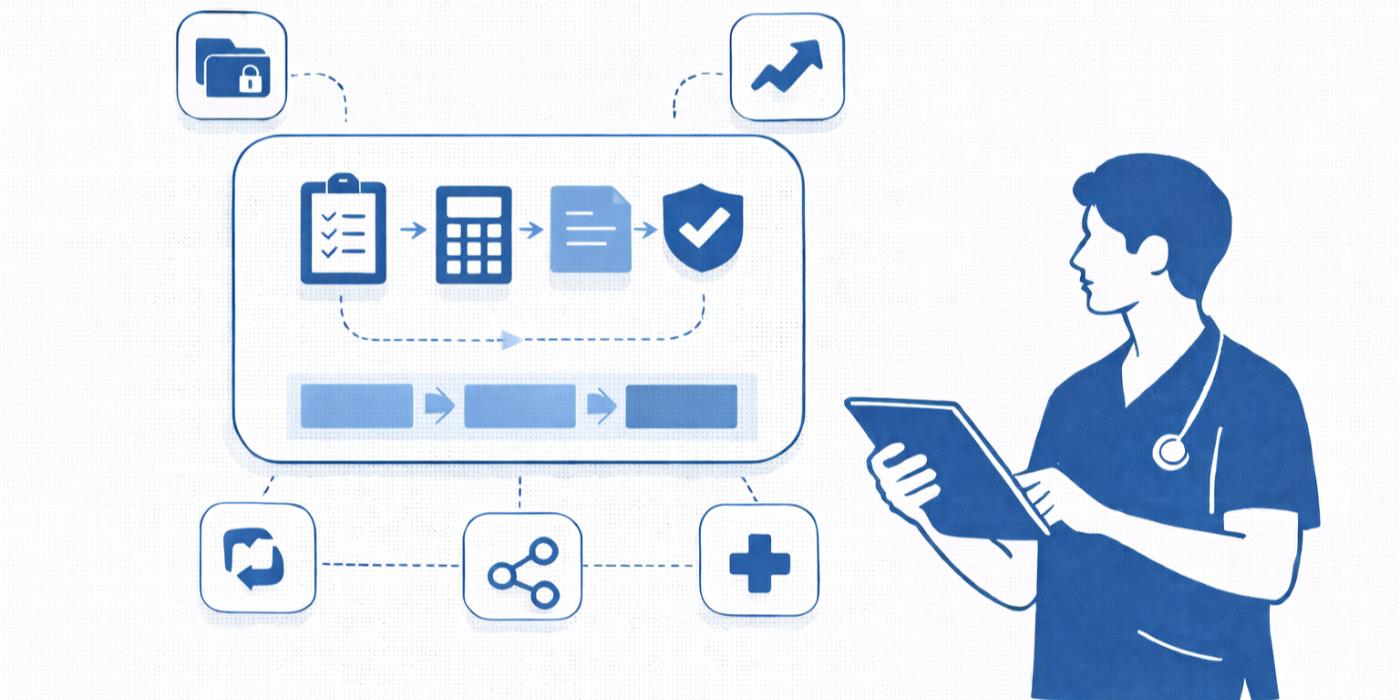
The strongest training model uses a repeatable review sequence. Start with visit intent. Ask what the patient was scheduled for, what the provider actually addressed, and whether the service family changed mid-encounter. Move next to documentation anchors. Ask whether the note supports the service level, procedure detail, timing, or separate problem work. Then review payer dependence. Ask whether authorization, telehealth handling, and benefit logic match the actual service path. End with escalation. Ask what needs confirmation before the chart leaves the front end. That sequence becomes much easier to practice alongside front desk terminology, patient intake definitions, EMR shortcut habits, record-update compliance, and medical admin communities and forums.
A good daily drill takes ten to fifteen minutes. Pull five encounters from yesterday. For each one, identify the likely CPT family, the documentation element that most strongly supports it, the one missing element that could cause payer friction, and the exact question you would send if clarification were needed. This builds operational judgment rather than shallow memorization. A second drill compares scheduled visit type versus completed note. A third drill reviews denials or rebills and maps them back to the front-end miss that allowed the problem to form. That training style mirrors the discipline behind CMAA exam prep, common exam mistakes to avoid, interactive practice testing, terminology mastery for the exam, and the 2026–27 exam breakdown.
Scenario-based training matters even more in specialty clinics. Cardiology, orthopedics, women’s health, urgent care, telehealth-heavy practices, and procedure-focused outpatient settings all create different CPT pressure points. The front desk questions, intake prep, equipment needs, authorizations, and follow-up logic shift by specialty. A CMAA becomes far more effective when training includes specialty-specific language, common procedures, frequent modifiers, and typical documentation gaps from that service line. ACMSO readers can deepen that perspective through cardiology scribing skills, orthopedic workflow training, surgical scribing fundamentals, advanced oncology documentation, and mastering ER scribing. Even if your role stays administrative, exposure to specialty documentation patterns makes your CPT judgment faster, sharper, and much more useful.
Training also becomes stronger when communication is explicit. A vague message saying “please review coding” slows everyone down. A precise message saying “scheduled as preventive, acute sinus symptoms addressed in assessment and plan, checking whether separate E/M support is present” moves the chart forward faster and builds trust with billing and clinical teams. That level of precision grows from the same communication habits taught in active listening techniques, patient communication terms, HIPAA communication essentials, de-escalation techniques, and networking strategies for medical admin professionals. CPT fluency gets more powerful when the language around it becomes disciplined.
4. The Front-End CPT Mistakes That Create Denials, Rework, and Patient Friction
The most expensive CPT mistakes usually begin as ordinary workflow shortcuts. One common example is the preventive visit that quietly becomes a problem-oriented encounter plus possibly another service stream. Patients often arrive with “just one quick issue,” providers address it, and the note changes direction. The front end feels the impact later through patient complaints, insurance confusion, rebilling work, and hard conversations about balances. Offices that reduce this problem train staff to identify visit drift early, communicate clearly during intake, and prepare patients more accurately using patient intake frameworks, appointment scheduling definitions, difficult patient conversation strategies, healthcare portal terminology, and medical admin assistant job-market skill trends.
A second pain point sits around new versus established patient classification. One wrong assumption at scheduling can ripple into incorrect appointment lengths, wrong paperwork, poor estimates, mismatched templates, and coding review delays. The fix comes from disciplined verification of prior visits within the same group and specialty context, paired with cleaner chart review habits and better EMR visibility. A third major pain point involves modifier support. Modifier 25 draws constant scrutiny because the office needs clear evidence of a separately identifiable E/M service beyond the usual pre- and post-procedure work. Modifier 59 and telehealth modifiers bring their own layers of payer friction. Teams improve this area when they combine EMR issue resolution habits, top charting terms for scribes, medical office ergonomics and productivity tools, healthcare CRM literacy, and EMR platform knowledge.
Another frequent source of damage is documentation that sounds complete yet fails the real support test. A template may contain medication lists, vitals, and a short assessment, while the specific elements needed for time-based work, repeated procedures, or distinct services remain unclear. A rushed office often discovers that gap only after claim submission or payer challenge. Telehealth magnifies this pressure because payers may expect certain modality details, place-of-service handling, or encounter conditions that differ from in-person workflows. Strong teams reduce those misses by pairing CPT review with telehealth workflow training, medical office automation guidance, future-facing admin technology training, AI documentation awareness, and voice and dictation tool literacy.
Authorization mismatch creates another brutal form of rework. The patient was authorized for one service family. The actual documented service moved in a different direction. Someone then has to repair the gap after the visit, when payer leverage is weaker and staff time is already lost. CMAAs who understand CPT families can catch those mismatches early enough to save the day. They verify whether the scheduled service, authorized service, and anticipated documentation path live in the same lane. That habit strengthens operational control across insurance verification, patient communication apps, staff scheduling tools, medical administration conferences and workshops, and medical admin professional organizations. CPT mastery earns its keep precisely here, where prevention is cheaper than repair.

5. How to Build CPT Speed Without Sacrificing Compliance
Speed comes from systems, not panic. A CMAA learns faster when the office groups training by encounter type, specialty, and recurring payer friction rather than by dumping disconnected code lists into a spreadsheet. Create short cheat sheets for top visit categories, top procedures, frequent modifiers, telehealth patterns, and common authorization pitfalls. Pair each cheat sheet with the exact documentation elements staff should look for before escalation. Then build five-minute weekly reviews using real de-identified cases. This format supports the same practical growth strategy seen in ACMSO certification prep, exam-day essentials, essential study techniques, medical admin salary and growth insight, and real-life success stories from certified CMAAs.
The EMR should also do more of the lifting. Smart templates, structured intake questions, scheduling prompts, follow-up task routing, and specialty-specific note flags all reduce memory burden. So does a simple exception log that tracks why charts were returned for clarification. Over time, those returns reveal the office’s real CPT pain points: preventive visits that drift, procedure authorizations that do not match, modifiers applied without support, and telehealth notes that miss required detail. Once those patterns are visible, leadership can refine training, templates, and escalation rules. That is exactly where tools and workflow literacy from EMR integration resources, medical admin collaboration tools, time-tracking systems, secure scheduling platforms, and AI and automation guidance for CMAAs become useful instead of theoretical.
Cross-training with billers, coders, scribes, and providers accelerates everything. The CMAA learns what details downstream teams constantly need. Billing teams learn which upstream handoffs create confusion. Providers see where small documentation habits save major cleanup later. Scribes share how note structure influences code support. That shared language makes the entire office stronger. ACMSO readers can extend this multidisciplinary mindset through medical scribe certification preparation, medical scribe exam technique, medical terminology mastery for scribes, day-in-the-life scribe perspectives, and why certified medical scribes are preferred. CPT mastery deepens when the office sees documentation, scheduling, coding, and patient communication as one connected machine.
The last piece is career strategy. A CMAA who can speak intelligently about CPT structure, documentation sufficiency, modifier warning signs, payer alignment, and escalation discipline stands out immediately in interviews and internal promotions. Employers value people who prevent rework, protect access, and keep claims moving cleanly. That is why CPT literacy belongs beside career opportunity growth from certification, the CMAA salary calculator, future-ready skills for the next decade, interactive industry demand by specialty, and medical administration efficiency data. Mastery here builds credibility because it solves real pain where money, patient experience, and compliance meet.
6. FAQs
-
Practice policy, role design, and compliance structure determine who finalizes code selection. A CMAA still gains major value from CPT fluency because scheduling accuracy, authorization alignment, chart prep, documentation review, and escalation quality all improve when the service family is understood clearly. That practical support role connects directly with patient intake procedures, EMR compliance training, medical billing terminology, and top employer-valued CMAA skills. The strongest mindset is this: understand the logic deeply, document cleanly, verify carefully, and escalate precisely.
-
Learn them by workflow cluster. Group codes by office visits, preventive services, procedures, telehealth, imaging-related coordination, lab-related coordination, and specialty-specific visit patterns. Then anchor each cluster to the intake questions, documents, authorizations, and note elements that typically travel with it. This method sticks faster than raw memorization because it lives inside daily work. It pairs especially well with CPT reference training, ICD-10 review, terminology prep for the CMAA exam, and interactive CMAA practice testing.
-
CPT tells the payer what service or procedure was performed. Diagnosis coding explains the condition, symptom, finding, or reason that supports medical necessity. A front-end reviewer should think in pairs: service plus reason, procedure plus diagnosis logic, encounter type plus supporting documentation. That perspective helps when checking authorizations, patient estimates, chart sufficiency, and claim readiness. It becomes easier through insurance verification training, medical billing term review, EMR charting terminology, and documentation accuracy resources.
-
Pause the workflow and compare four things: scheduled reason, intake details, provider assessment and plan, and payer-related setup such as authorization or telehealth status. Then send a precise clarification message that names the mismatch and the likely downstream consequence. A generic “please review” note wastes time. A focused message speeds resolution. This habit fits well with appointment scheduling guidance, handling scheduling conflicts, emergency appointment management, and active listening training.
-
In many outpatient offices, modifier 25, modifier 59, modifier 95, modifier 24, and component-related modifiers like 26 and TC create the most practical front-end value. Recognition matters because these modifiers often signal distinct work, telehealth handling, postoperative context, or split professional and technical responsibility. A CMAA does not need blind memorization of every modifier. A CMAA needs reliable recognition of which encounters deserve pause-and-verify attention. That skill becomes stronger with telehealth platform literacy, EMR issue troubleshooting, future-facing documentation workflows, and AI documentation tool awareness.
-
Use micro-training. Review five recent encounters, one denial trend, one authorization mismatch, and one communication example each week. Keep the session short, repeatable, and tied to the real specialty mix of your office. Build one-page cheat sheets, track recurring misses, and update templates when the same problem appears again and again. That approach turns learning into workflow improvement instead of extra homework. It fits naturally beside scheduling software mastery, EMR shortcut training, medical admin technology education, and future-proof CMAA career planning.
