

Virtual Medical Administration: How Remote Work Is Transforming the Role
Virtual medical administration is no longer a side option in 2026. It is a core operating model that clinics use to protect schedules, reduce documentation backlogs, and keep patient communication from turning into chaos. Remote work is changing what “good” looks like. You are no longer judged by being busy. You are judged by whether you keep workflows clean without constant supervision, whether you prevent revenue leakage, and whether your handoffs reduce provider edits. This guide breaks down what is really changing, where remote teams fail, and how to become the person clinics trust.
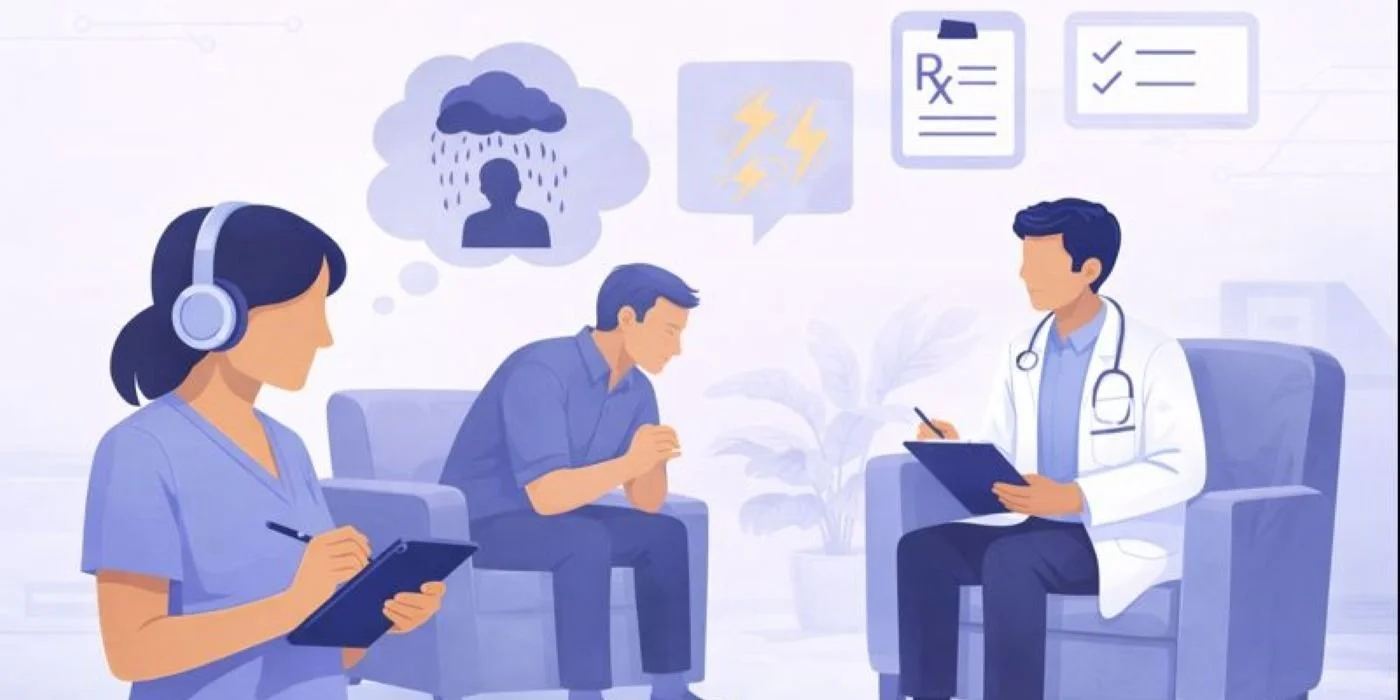
1: The 2026 Shift: Why Virtual Medical Administration Is Now a Core Operating Model
Remote medical administration expanded because the pain became non negotiable. Clinics are dealing with heavier documentation demands, more portal messaging, tighter staffing, and patients who expect fast updates. The old model forced providers and front desks to absorb overflow. That created missed follow ups, rescheduled visits, and charts that stayed open too long. The 2026 shift is about building a distributed admin layer that protects flow and reduces rework, using systems tied to healthcare documentation trends and stronger EMR data entry processes.
The role is transforming in three clear ways. First, your value is now measured by outcomes, not presence. Remote teams win when they reduce callbacks, close loops, and keep schedules tight, which connects directly to appointment scheduling efficiency and reducing no shows. Second, communication skill matters more because you are often the only human touchpoint for anxious patients, so you need the principles in mastering patient communication and the tone control from telephone etiquette. Third, technology is no longer “nice.” It is the job. If you do not understand routing, templates, and automation, you become a bottleneck, which is why you must track automation and AI changes and build long horizon readiness from future proof skills for 2030.
A painful truth in 2026 is that remote work exposes weak operators. If you relied on hallway reminders and verbal handoffs, remote will punish you. Clinics now want admins who can create clarity, document decisions, and run checklists. This is the same discipline that shows up in medical scribe exam day preparation and the structured thinking inside the exam breakdown for 2025. Even if your track is admin, the operating mindset translates.
If you want career leverage, treat virtual administration as a specialty, not a location. Build a profile that matches the high trust expectations employers list in essential skills employers want and plan your next steps using career pathways from entry level to leader. Remote roles reward people who can run systems, not people who just complete tasks.
2: What Virtual Medical Administration Looks Like Day to Day in 2026
In 2026, virtual medical administration is less about answering phones from home and more about running a predictable operating system. The best remote admins create stable, repeatable outcomes across scheduling, documentation support, patient communication, and revenue protection. They use structured workflows that mirror what high performing teams already do on site, then they document it so it scales. This aligns with the systems mindset in patient flow improvement tools and the discipline behind medical office performance metrics.
Your day is usually split into three work blocks.
First block is pre visit control. You run eligibility checks, confirm documentation uploads, validate orders, and ensure visit readiness. This is not busywork. It prevents the day of collapse where patients arrive unverified, the clinic scrambles, and providers lose time. Your best references here are scheduling efficiency systems, no show reduction tactics, and clean EMR data entry methods.
Second block is live flow support. You manage portal triage, route results, coordinate referrals, and keep provider inboxes from becoming a graveyard. This requires strong communication, because patients read messages literally and anxiety turns into repeated calls when your wording is unclear. That is why remote admins who understand patient communication and the human tone of empathy in patient interactions outperform those who only know software. When communication is tight, work volumes drop.
Third block is closure and audit readiness. You close loops on results, follow ups, and documentation. You log what happened, identify patterns, and fix the root cause. This is where remote teams either become trusted or become ignored. A clinic will trust you if you surface problems early and show fixes, using habits similar to patient chart audits and awareness of documentation trends.
If you want a strong mental model for this role, study how medical scribing improved clinical flow, then map it to admin operations. Learn from remote medical scribing transformation and apply the same principles of accuracy, speed, and structured handoffs. Then keep your career direction intentional using career pathways and the market realities in the 2025 job outlook report, which still informs 2026 hiring behavior.
3: Where Remote Work Breaks the Role: The 2026 Failure Points You Must Prevent
Remote work does not fail because people are lazy. It fails because workflows are unclear and accountability is weak. The clinic assumes tasks will magically complete. The remote admin assumes someone else is owning it. Then patients feel the cracks. Providers see the mess later and blame the role, not the system.
Failure point one is unclear triage and routing. When every portal message looks urgent, the queue becomes noise. Patients wait longer, and your “response time” looks good while outcomes get worse. Fix this with decision trees, approved phrasing, and strict escalation criteria, using communication standards from telephone etiquette and the clarity habits inside patient communication mastery. Then measure performance using a simple scorecard style borrowed from medical office performance metrics tools.
Failure point two is scheduling chaos. Remote admins often inherit broken calendars. Overbooking, underfilled blocks, and constant reschedules burn providers. Your job is to impose structure, not to absorb pain. Use systems based on appointment scheduling efficiency, reinforce with no show reduction, and lock in control through daily schedule optimization.
Failure point three is documentation drift. Providers revert to free typing, templates fragment, and notes get inconsistent. Remote admins can fix this if they manage template governance, maintain phrasing libraries, and audit errors before they multiply. The relevant foundations live in efficient EMR data entry and chart audit techniques, plus broader understanding of documentation trends.
Failure point four is tools without training. Clinics buy software, then expect remote teams to “figure it out.” That creates silent failures, broken automations, and poor handoffs. Your advantage in 2026 is to become the person who understands how tools map to patient flow. Use resources like office management software directories and policy and procedure tools to speak the language of systems and governance. Then align with the future direction outlined in AI reshaping roles and long term skill requirements from future proofing for 2030.
If you can prevent these failure points, you become rare. Most candidates talk about being remote. Very few can run remote operations with consistent outcomes.
4: The Remote Ready Operating System: How to Run Virtual Administration Without Chaos
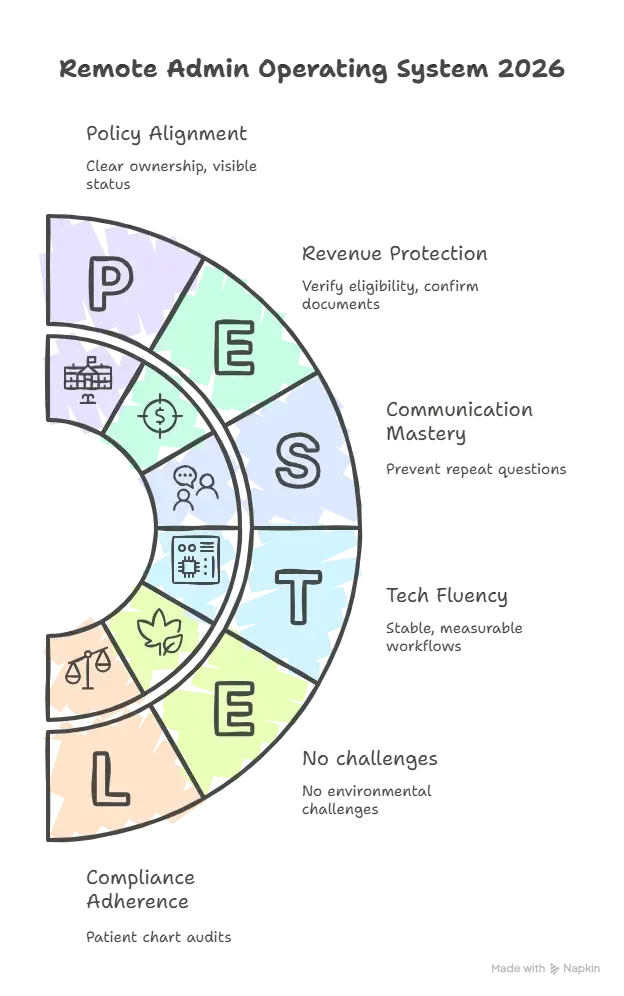
The strongest remote admins in 2026 follow an operating system that keeps everyone aligned. You do not need complicated software. You need repeatable rules.
Rule one is single ownership for every task. If something matters, it has an owner, a due time, and a visible status. That alone eliminates most “I thought you handled it” failures. This is the same clarity mindset behind policy and procedure tools and the operational measurement habits from performance metrics tools. When you set ownership, you reduce back and forth.
Rule two is pre visit control as your daily anchor. Before the day starts, verify eligibility, confirm key documents, and clear blockers. This protects both patient trust and revenue. It also reduces provider frustration because charts arrive cleaner. Build this system using appointment scheduling efficiency, reinforce with no show reduction, and make your documentation foundation stronger through EMR data entry discipline.
Rule three is message triage with scripts that prevent repeat questions. Remote teams waste hours because they answer the same confusion five times. Build message templates that use plain language, confirm next steps, and set expectations. Pair the tone from telephone etiquette with the structure in patient communication mastery, then layer empathy from the art of empathy.
Rule four is weekly audit and improvement. Remote operations degrade silently. You prevent that by sampling errors, tracking patterns, and fixing root causes. Use techniques aligned with patient chart audits and stay aware of evolving expectations through documentation trends. When you show that you can improve systems, you stop being seen as “support” and start being seen as operations.
Rule five is tech fluency with guardrails. In 2026, clinics will keep adopting automation, dictation, and workflow tools. Your goal is not to chase every platform. Your goal is to keep workflows stable and measurable. Align with AI reshaping medical roles, explore vetted resources like office management software, and keep your long term security anchored in future proof skills.
5: How to Turn Remote Work Into Career Leverage in 2026
Remote work can trap you in low visibility roles, or it can launch you into higher trust positions. The difference is whether you can prove outcomes. In 2026, employers want remote admins who reduce friction across the clinic, not just individuals who can answer messages quickly.
To get hired faster, build a simple proof portfolio. Include a scheduling playbook, a triage decision tree, a chart readiness checklist, and a weekly scorecard. These artifacts show you can run systems. They also align directly with what employers list in essential employer skills and the process discipline behind exam prep checklists. Hiring managers trust proof more than claims.
To increase pay, target environments where admin work protects revenue. Procedure heavy specialties and prior auth heavy workflows pay more because mistakes are expensive. If you want location strategy too, compare demand and compensation using the salary calculator and validate trends using the annual salary report. Then use market pages like California job market guide or New York state analysis to pick stronger lanes.
To future proof, build skills that survive tool changes. Communication, documentation accuracy, and workflow ownership remain valuable even as technology evolves. Stay current with automation and AI changes, keep your fundamentals strong through efficient EMR data entry, and anchor your long horizon plan in future proof skills for 2030. If you want role mobility, map your path using career pathways and learn from real transitions in success stories.
Remote work is not the advantage. Being a reliable operator is the advantage. In 2026, reliability is the rarest skill.
6: FAQs on Virtual Medical Administration in 2026
-
Virtual admins are judged by clarity and outcomes. In clinic roles can hide behind activity. Remote work exposes whether tasks actually close. The best remote admins use structured workflows for scheduling, documentation support, and patient communication, supported by scheduling efficiency systems and clean EMR data entry practices. They also prevent repeat questions by mastering patient communication and keeping tone consistent using telephone etiquette.
-
Employers want people who can prevent chaos without being micromanaged. That means strong task ownership, documentation accuracy, and communication that reduces callbacks. Build the documentation side with chart audits in EMR and documentation trend awareness. Build the patient side with empathy skills and structured patient communication. Then show your readiness by aligning with essential employer skills.
-
They run a single queue system where every item has an owner and a due time. They also keep decision criteria written, not verbal. This is why governance resources like policy and procedure tools matter, even for individual contributors. Add measurement using performance metrics tools and operational discipline from daily schedule optimization. When handoffs are documented, outcomes improve fast.
-
Yes, because telehealth scales volume but also increases coordination requirements. Patients need clear instructions, connectivity support, and follow ups. Remote admins who can keep visits on time and close loops are valuable. Learn the operational direction from remote medical scribing and how technology changes tasks from automation and AI. Combine that with strong communication habits from telephone etiquette to reduce reschedules and confusion.
-
Build proof artifacts. Create a triage decision tree, a chart readiness checklist, and a weekly scorecard. This shows you can run systems. Tie your proof to operational excellence using patient flow tools and quality habits from chart audits. If you need a structured discipline model, adapt the same preparation mindset from exam day checklists. Employers trust visible systems.
-
AI will replace repetitive tasks first, not trusted judgment. Remote admins who rely only on manual clicking are at risk. Remote admins who own workflows, manage exceptions, and protect patient trust become more valuable. Stay current with AI reshaping roles, keep your documentation accuracy strong through EMR data entry systems, and build long term resilience using future proof skills. In 2026, the winning skill is being the human who stabilizes change.
