

Annual Medical Scribe Salary Report: Key Trends & Data for 2025
Medical scribe salaries in 2025 are no longer driven by location alone. Pay is now shaped by documentation complexity, technology exposure, specialty demand, and how closely scribes support revenue and compliance workflows. Clinics that treat scribes as productivity multipliers pay more and retain longer. Those that treat the role as clerical churn talent fast. This report breaks down where real salary growth is happening, why some scribes are quietly out-earning peers, and how to position yourself on the right side of the pay curve using verified industry data.

1. High-Impact Specialties Where Scribes Earn More in 2025
Not all specialties generate the same documentation pressure, and in 2025 that pressure directly converts into pay. Scribes earn more in specialties where documentation errors create revenue loss, compliance risk, or care delays. Emergency medicine sits at the top because of volume, acuity, and time sensitivity. Emergency departments listed in the urgent care and ED hiring directory rely on scribes to close charts before shift changes, prevent missed elements, and support time based billing. Faster, cleaner notes translate into higher hourly rates and overtime premiums.
Specialty outpatient care is the second major salary accelerator. Cardiology, orthopedics, gastroenterology, and neurology practices documented in the outpatient specialty networks directory generate complex notes tied to procedures, imaging, and follow up plans. These clinics pay more because incomplete documentation leads to denied procedures, delayed authorizations, and downstream billing disputes. Scribes who master specialty templates and terminology reduce those risks and are compensated accordingly.
Telehealth driven specialties are the fastest climbers. Behavioral health, chronic care management, and multi state virtual clinics listed in the telehealth companies directory often pay above regional averages because they compete nationally for talent. These roles require precision around consent language, location documentation, and time tracking, all of which are tightly audited. Scribes who consistently meet these requirements command higher base pay plus flexible scheduling benefits.
Academic medical centers and teaching hospitals also offer higher long term earning potential. Facilities highlighted in the academic medical centers list manage layered documentation involving residents, attendings, and compliance teams. While entry pay may start average, scribes who handle complex case documentation and resident workflows move quickly into lead, QA, or trainer roles with structured salary bands.
Finally, procedure heavy outpatient settings such as dermatology, ophthalmology, and sports medicine consistently outpace general clinic pay. Directories like the dermatology and ophthalmology practices list show where documentation volume is predictable but highly detailed. Every missed element can invalidate a procedure note. Clinics reward scribes who maintain near zero error rates with higher hourly wages and retention bonuses.
2. What’s Actually Driving Medical Scribe Salaries in 2025
The biggest salary mistake scribes make is assuming pay is flat across roles. It is not. Compensation is now tightly tied to how much risk, revenue, and documentation burden a scribe removes from providers. Health systems tracked in the medical scribe hiring surge report are allocating higher budgets to roles that directly reduce chart delays, audit exposure, and claim denials. That is why scribes embedded in high-acuity settings or advanced documentation workflows consistently earn more.
Another major driver is technology fluency. Employers adopting platforms listed in the top EMR and EHR platforms guide and the AI medical scribe tools directory pay a premium for scribes who can operate inside these systems without slowing providers down. These tools increase visit volume and documentation depth, but only when the human layer understands how to structure notes correctly. Scribes who reduce provider rework are now viewed as revenue protectors, not overhead.
Compliance pressure is the third force reshaping salaries. With audits intensifying, documentation quality is under constant review. Organizations referencing insights from the documentation compliance standards report and the real-time data accuracy industry report are paying more for scribes who prevent costly corrections and denials. When your documentation lowers risk, your salary ceiling rises.
3. Where Salaries Are Rising The Fastest
The fastest wage growth in 2025 is not happening in entry level clinic roles. It is happening where documentation complexity intersects with speed. Emergency departments, specialty outpatient clinics, and telehealth organizations consistently post higher compensation bands because documentation errors in these environments are expensive. Employers in directories like the emergency and urgent care list and the specialty networks directory reward scribes who can maintain accuracy under pressure.
Telehealth driven pay growth is another major trend. National employers listed in the telehealth companies directory often pay above local averages because they compete for talent across states. These roles also value security and uptime discipline, which is why scribes who understand workflows outlined in the office management software guide tend to earn more quickly.
Geography still matters, but differently. Instead of broad state averages, pay spikes now appear in specific metros identified in the best cities for medical scribe careers guide. These spikes usually coincide with rapid system expansion, new specialty centers, or regulatory changes that increase documentation load. Scribes who track these signals can time job changes strategically rather than waiting for annual raises.
What is currently limiting your medical scribe pay growth?
4. How Technology Is Quietly Inflating Pay
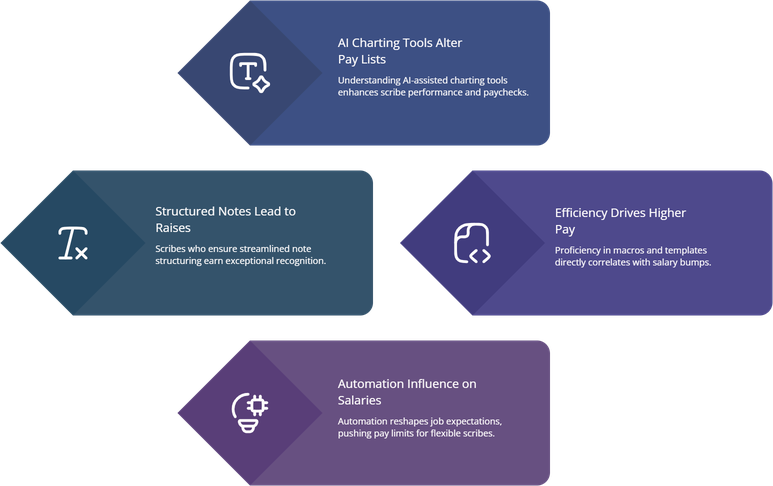
Technology is the most underestimated salary lever in scribing. Clinics adopting AI assisted charting from the ambient dictation tools guide do not pay less. They pay more to scribes who can manage these tools responsibly. AI increases visit volume, but only if notes are structured correctly. That responsibility often falls on scribes.
Scribes who understand macro libraries, template versioning, and documentation shortcuts described in the scribe efficiency innovations report consistently command higher pay because they reduce provider cognitive load. When a provider edits less, sees more patients, and avoids compliance flags, leadership notices. That is when raises happen outside the standard cycle.
Automation also shifts pay expectations. Clinics using platforms from the workflow automation tools directory expect scribes to think beyond typing. If you can explain how documentation triggers downstream tasks for CMAAs, billing teams, and care coordinators, you move closer to operations roles. Those hybrid responsibilities expand your earning potential beyond traditional scribe pay bands.
5. Using Salary Data To Negotiate Smarter In 2025
The scribes who earn the most are not always the most experienced. They are the most prepared. Use reports like the real-time CMAA and scribe salary analysis and the job market demand report to anchor negotiations in data, not emotion. Bring examples of how your documentation reduced corrections, supported audits, or increased throughput.
Tie your work to outcomes described in the data accuracy industry report. If your notes reduce addendums or denials, quantify it. Employers pay for risk reduction, not effort.
Finally, think in career arcs. Salary growth accelerates when you move into lead scribe, QA, or hybrid admin roles outlined in the scribe career pathways guide and supported by insights from the workforce trends report. Each step compounds your earning potential over time.
6. FAQs: Medical Scribe Salary Trends in 2025
-
Yes, but unevenly. Salaries are rising fastest in high acuity, specialty, and telehealth roles. Data from the medical scribe hiring surge report shows employers paying more where documentation errors carry higher risk or revenue impact. Entry level clinic roles remain flatter unless paired with technology or compliance responsibilities.
-
Emergency departments, specialty outpatient clinics, and telehealth organizations consistently offer higher pay. Directories like the ED and urgent care list and the specialty networks guide highlight where documentation intensity is highest.
-
Yes. Employers using tools from the AI scribe buyers guide pay more to scribes who can manage and refine AI output. AI increases volume, but only skilled scribes ensure quality. That skill commands higher compensation.
-
Geography matters at the metro level rather than state level. Use the best cities for medical scribe careers guide to identify demand spikes. These local surges often produce short term salary premiums.
-
Absolutely. Metrics tied to accuracy, closure time, and audit outcomes carry weight. Align your results with benchmarks from the data accuracy report and the compliance standards guide during negotiations.
-
Long term earnings increase when scribes move into lead, QA, or hybrid admin roles. Pathways outlined in the scribe careers with certification guide and supported by the workforce trends analysis show how documentation expertise translates into sustained income growth.
