

Medical Scribe Certification Exam Breakdown: Everything to Expect in 2025
If you are walking into the Medical Scribe Certification exam in 2025, you are not being tested on memorized definitions. You are being tested on whether you can produce clean, compliant clinical documentation under pressure, inside real workflows, with real risk. That is why candidates who “study hard” still fail when they ignore chart logic, provider preferences, and HIPAA grade habits. Use this breakdown as your roadmap, then pair it with the skills in core scribe competencies, the trends shaping 2025 documentation expectations, and the reality of AI reshaping scribing so you study what actually moves the needle.
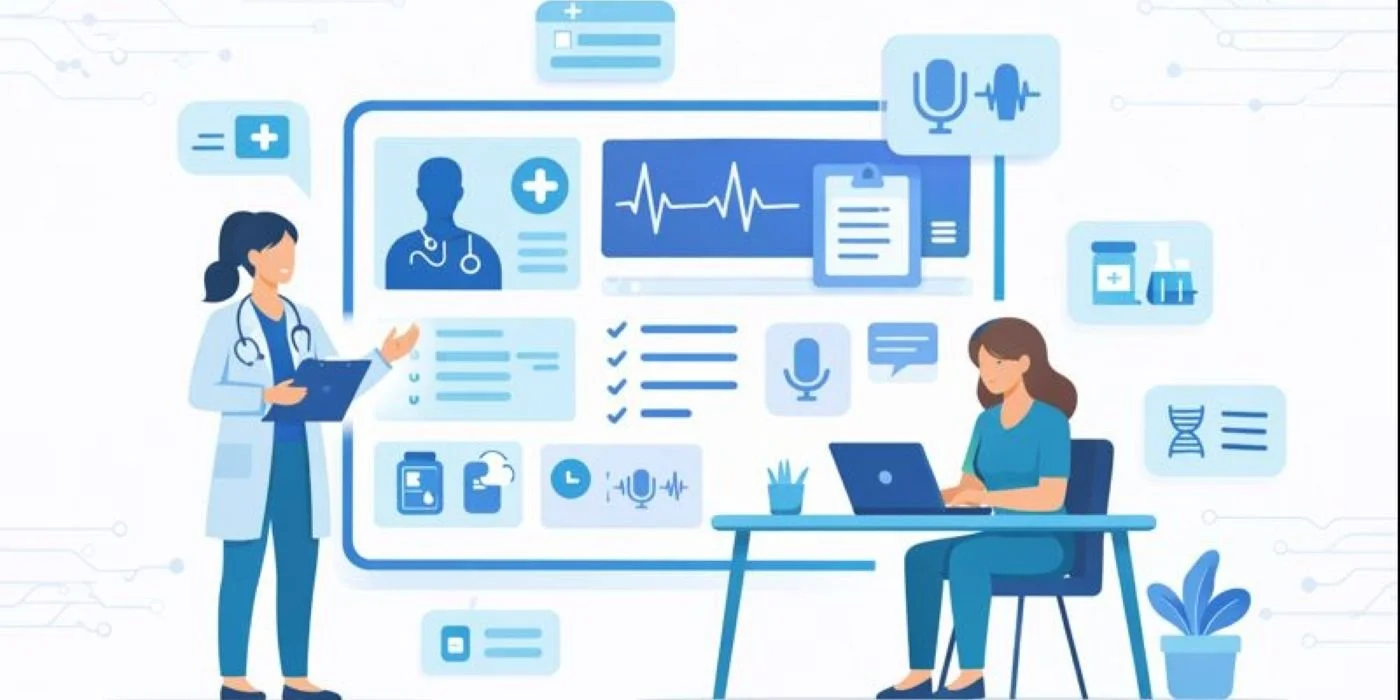
1) What the 2025 Medical Scribe Certification Exam is Actually Testing
In 2025, certification exams are leaning harder into scenario based judgment because clinics are drowning in documentation risk. That risk shows up as inconsistent notes, missing clinical details, and billing delays that trigger rework. You are being evaluated on whether you can build a note that survives three filters: the provider’s clinical standard, the organization’s compliance standard, and the payer’s documentation standard. That is why studying only terms is weak. You need to practice how documentation decisions affect downstream outcomes, including coding clarity, audit readiness, and patient safety.
Expect the exam to test whether you can keep documentation aligned with modern workflows like team based care, telehealth, and high volume specialty clinics. If you are not familiar with how workflow shifts change what a “good note” looks like, fix that using remote scribing workflows and the shift toward telemedicine documentation. The exam will not ask you to debate policy. It will ask you to pick the best documentation choice when time is limited and the chart must be defensible.
The biggest “silent” scoring factor is whether you can protect the chart from avoidable ambiguity. Ambiguity is what triggers provider edits, slows sign off, and creates mismatched diagnoses. The exam often bakes this into questions that look simple but punish weak phrasing. This is why the best prep is to learn efficient EMR entry, clean templating, and audit friendly structure from efficient EMR data entry and patient chart audit skills. If you cannot explain why a note is defensible, you are not ready.
Certification exams also reflect market pressure. Clinics want scribes who reduce burnout, reduce rework, and support throughput. That market reality is described clearly in the 2025 job market outlook and backed by the operational findings in research on clinical efficiency. Translation: the exam is built to identify whether you can perform like a revenue protecting, time saving documentation specialist, not a passive note taker.
One more shift you should expect in 2025 is a heavier emphasis on compliance and privacy behaviors inside the documentation process. That means you should study HIPAA as a workflow skill, not a memorized rule list. Use HIPAA compliance essentials, patient privacy best practices, and EMR security practices because modern exams often test what you should do in a messy real world situation.
| Exam Domain | What You Must Be Able to Do | High Yield Details to Drill | Common Traps | Practice Task |
|---|---|---|---|---|
| SOAP structure | Organize subjective and objective content cleanly | Chief complaint, HPI flow, assessment clarity | Mixing assessment into HPI, vague language | Rewrite a messy note into SOAP in 8 minutes |
| HPI quality | Capture story with clinically relevant specificity | Timing, severity, modifiers, context | Copying symptoms without clinical anchors | Turn bullet symptoms into a defendable HPI |
| ROS capture | Document pertinent positives and negatives | System grouping, concise negatives | Over documenting, auto populated noise | Write ROS that supports the assessment only |
| Physical exam | Record objective findings with precision | Normal vs abnormal phrasing, measurements | Contradictions between ROS and PE | Spot contradictions and correct them |
| Assessment clarity | Make diagnoses readable and defensible | Problem list logic, ruled out language | Using “likely” without supporting facts | Draft 3 assessments with supporting facts |
| Plan quality | Document plan steps and follow up | Diagnostics, meds, referrals, education | Missing follow up instructions | Turn a plan into clear patient facing steps |
| Medication documentation | Record med name, dose, route, frequency | Allergy checks, renewals, changes | Dose missing, wrong units, unclear changes | Fix 10 med lines with missing elements |
| Abbreviations and terminology | Recognize common medical shorthand safely | High risk abbreviations to avoid | Misreading units and routes | Build a personal “do not use” list |
| Orders and results | Document labs, imaging, and key findings | What belongs in note vs results section | Copying full result blocks into narrative | Summarize results in one high signal line |
| Coding awareness | Support diagnoses with documented facts | ICD 10 specificity mindset | Diagnosis with no supporting details | Add specificity to 8 common diagnoses |
| HIPAA workflow | Handle data access and sharing safely | Minimum necessary, secure messaging | Leaving PHI exposed in public spaces | Identify 5 PHI risks in a clinic scenario |
| EMR navigation | Find the right fields fast | Smart phrases, templates, shortcuts | Wrong section entries | Map where each content type belongs |
| Error prevention | Catch mismatches before sign off | Timeline issues, unit mismatches | Assuming the template is correct | Do a 60 second pre sign off checklist |
| Telehealth documentation | Document visit context and limitations | Consent, location, exam limitations | Missing telehealth required elements | Write a compliant telehealth note header |
| Professional conduct | Stay in scope and escalate properly | What a scribe can and cannot do | Taking verbal orders without policy | Classify tasks into “scribe” vs “provider” |
| Patient safety flags | Capture red flags in the note | Chest pain, neuro deficits, sepsis clues | Burying red flags inside paragraphs | Rewrite with red flags visible and clear |
| Specialty nuance | Adjust note emphasis by specialty | Ortho, GI, cardio, derm focus shifts | Using generic templates everywhere | Build a template skeleton per specialty |
| Chart audits | Recognize audit triggers and missing items | Consistency, medical necessity signals | Over documenting without relevance | Audit 5 notes and list top 3 fixes each |
| Time management | Prioritize what matters under time limits | High value facts first, concise wording | Writing novels instead of clinical clarity | Summarize a visit in 6 lines without losing meaning |
| Provider edit reduction | Write notes providers can sign fast | Consistency, correct placement, clear phrasing | Template bloat and contradictions | Compare pre and post edit note versions |
| AI assisted documentation awareness | Know what to verify and what to never trust blindly | Hallucination risk, missing context, bias | Accepting AI output without verification | Mark what must be confirmed with the provider |
| Career readiness | Connect certification skills to hiring expectations | Interview examples, metrics, impact statements | Talking only about “typing fast” | Write 5 impact bullets using clinic outcomes |
2) Exam Format in 2025: Sections, Question Styles, and What They Try to Catch
Most candidates lose points because they misread what the question is really asking. The exam is designed to simulate clinic pressure, where you must choose the best next action, the best documentation phrasing, or the best chart placement. That means question stems often include distracting details. Your job is to identify the clinical signal, then choose the documentation move that reduces risk. If you are training on random flashcards only, you are training the wrong skill.
You should expect a mix of straightforward knowledge checks and scenario based items. Knowledge checks cover basics like terminology, abbreviations, anatomy terms, documentation sections, and safe handling of PHI. Scenario items test what you do when documentation choices collide with workflow. Example: the provider says something fast, the patient adds a key detail late, or the templated ROS conflicts with the exam. You are being tested on whether you can reconcile that conflict without guessing. This is where candidates get crushed because they try to be “helpful” instead of being accurate.
The exam also rewards candidates who understand the documentation drivers behind billing and compliance, even if you are not doing full coding. You are not expected to code like a professional coder, but you are expected to document with enough specificity that coding is possible. This overlaps with medical billing basics, the avoidance points in billing error prevention, and the specificity mindset taught in ICD 10 simplified guidance. If you document “pain” without location, severity, timing, or context, you are building a weak chart.
Watch for trap patterns. One trap is over documentation. Exams increasingly punish noise because clinics are trying to reduce bloated notes that hide the real story. Another trap is contradictions, such as a negative ROS with a positive HPI, or a normal exam auto populated while the assessment claims an abnormal finding. If you want to sharpen this, use chart audit methods and align your note quality with 2025 documentation standards because modern test makers copy these trends.
Finally, understand what “scope” looks like in exam questions. The exam may ask what you should do when the provider is busy and something is unclear. The correct answer is often about escalation, clarification, or documenting exactly what was stated without adding interpretation. This is where strong candidates separate themselves, because they protect the provider and protect the patient.
3) The 2025 High Yield Study Plan That Actually Works
A high yield study plan is not “study everything.” It is “master the tasks that produce reliable notes.” Start by building a repeatable documentation framework, then drill accuracy under time limits. The fastest way is to practice with realistic note fragments, then improve them. That means you should drill: clean HPI, relevant ROS, accurate PE placement, assessment clarity, and actionable plans. Then you run audits on your own notes to catch contradictions, missing specificity, and template bloat.
You also need to build a “clinic truth” habit. In real settings, providers speak in shorthand. Patients speak in stories. The note must translate both into clinically usable information. Practice converting patient language into clinical detail without losing meaning. Example: “I feel dizzy” becomes onset, triggers, duration, associated symptoms, and impact. This is exactly where provider edits happen, and those edits are a pain point clinics want to eliminate. Reducing provider edits is how you become valuable fast, and it is why certification matters for career leverage as explained in how certification boosts your career.
Next, drill EMR efficiency. Exams reward candidates who know where content belongs because correct placement reduces errors. Practice note section discipline using efficient EMR entry and match your prep to the realities of remote documentation workflows. If you cannot navigate an EMR cleanly, you will misplace details, and the exam will punish it.
You should also treat compliance as a daily habit, not a topic you cram. The easiest way to score well is to always choose the safest path when patient data is involved. That means you must be fluent in HIPAA compliance essentials, understand real world privacy decisions from patient privacy workflows, and apply EMR security best practices to scenario questions.
Last, use labor market reality to motivate your study targets. Employers are hiring for outcomes, not for effort. Understand the hiring landscape through market outlook trends, compare opportunity paths with clinical documentation specialist roles, and keep your long term edge by building skills from future proof skill planning. When you study with the job in mind, you study smarter.
4) Test Day Execution: How to Score Higher Without Studying More
On test day, your biggest enemy is panic driven speed. Panic makes you skim stems, miss key qualifiers, and choose answers that sound familiar rather than correct. Your goal is controlled speed. Build a routine: read the last line first, identify what the question wants, then scan the stem for the facts that support the answer. This mirrors real clinic work where you confirm what is being asked before you document.
Use a two pass approach. Pass one: answer the confident items quickly, flag anything that feels like a trap, and keep moving. Pass two: return to flagged items with a clearer mind. Many candidates burn time early because they get stuck proving a point. The exam is not a debate. It is an accuracy game. The highest scores often come from candidates who avoid unforced errors, not from candidates who know obscure facts.
When you face scenario questions, default to the safest documentation behavior. If something is unclear, the best action is usually clarification or accurate documentation of what was said without adding interpretation. This is the same logic taught through HIPAA essentials and reinforced in privacy best practices. The exam rewards the candidate who protects the chart, protects the patient, and protects the provider from unnecessary exposure.
Also treat contradictions like flashing warning lights. If an answer choice creates a contradiction, it is almost always wrong. Contradictions kill chart defensibility, and that is a core reason scribes are used to improve efficiency as discussed in clinical efficiency research. Strong candidates win by ensuring internal consistency between HPI, ROS, PE, and assessment.
Lastly, manage mental energy. If you feel your focus dropping, take a slow breath, reset your eyes, and re anchor to what the question is asking. That micro reset prevents the spiral where you start guessing. Guessing is how you fail a test you were ready to pass.

5) After the Exam: What Comes Next and How to Turn Certification into Real Leverage
Passing is not the finish line. It is proof you can operate at a standard clinics need right now. Your next step is to convert the credential into stronger job options, higher pay potential, and faster advancement. Employers hire scribes who reduce provider burden and improve throughput, and that hiring demand is captured in the 2025 salary report and deeper market analysis like job growth by specialty. The way you position yourself matters as much as the credential.
Build a simple portfolio of outcomes. Track how many charts you handled, how often providers edited your notes, and what workflow improvements you supported. Even if you are new, you can show evidence of your documentation mindset. If you want credible story framing, study how others advanced using real success stories. Hiring managers trust evidence, not hype.
Also, understand where the career path can go. Scribing can lead into clinical documentation, healthcare operations, compliance roles, and administrative leadership. Use documentation specialist pathways and the detailed discussion of emerging scribe specializations to map your next 12 months. If you do not choose a direction, you will drift into low leverage work.
You should also keep your skill set aligned with technology changes. AI tools are entering documentation, but they do not remove the need for skilled humans. They increase the need for verification, correct placement, and clinical judgment. If you want to stay ahead, keep studying AI reshaping the scribe role and the broader real time administration insights so you stay valuable as workflows evolve.
Finally, use certification as a negotiation tool, not a badge. You are proving you can reduce risk. That means you can ask for better roles, better shifts, and better learning opportunities. Pair the credential with operational skills, then you become hard to replace.
6) FAQs: Medical Scribe Certification Exam Breakdown (2025)
-
It feels harder because questions are more scenario driven. You are expected to choose the safest documentation move, not just recall facts. If you train on real note correction, chart consistency, and audit style thinking, you will feel in control. If you only memorize lists, the exam will feel unpredictable.
-
Prioritize note structure, HPI quality, contradictions, and HIPAA workflow decisions. Drill fast placement skills using efficient EMR entry, then add compliance confidence with HIPAA essentials. Two weeks is enough if your practice is realistic and timed.
-
You do not need coder level knowledge, but you must document with specificity that supports coding. That means you should understand how documentation affects billing errors, which is why common billing errors and ICD 10 specificity guidance help you avoid weak, vague notes.
-
Stop guessing intentions. Anchor to documented facts, scope, and safety. If a detail is unclear, the safest answer usually involves clarification or documenting exactly what was stated without adding interpretation. Study privacy and workflow decisions through privacy best practices and EMR security to remove doubt.
-
Your notes are likely too long or your decision process is not structured. Use a two pass strategy, answer the clear items first, flag traps, then return. Also practice summarizing the visit in fewer lines without losing key details, which aligns with 2025 documentation trends where bloated notes are being reduced.
-
If your notes are consistent, specific, and require minimal provider edits, you are on track. Audit yourself the same way a clinic would. Use chart audit methods and compare your habits to employer required skills. Your goal is a note that is readable, defensible, and fast to sign.
-
Yes, because employers want reliable documentation support to protect throughput and reduce risk. Certification makes it easier to prove readiness, especially when paired with market knowledge from job market outlook and pay context from salary trend data. The credential is leverage if you position it with outcomes, not with claims.
