

Future of Medical Documentation: How Scribes Fit into an AI Driven World
Medical documentation is changing fast, and the pressure is landing on the same people every day. Front desk, back office, clinicians, billers, and especially scribes. If notes are slow, messy, inconsistent, or missing key details, everything breaks. Payments stall, prior auth fails, quality scores drop, and patients feel the chaos.
In an AI driven world, scribes do not disappear. They evolve into the role that keeps documentation accurate, compliant, and usable across billing, care coordination, and analytics. The clinics that win will treat scribes as the operating layer between humans and machines.
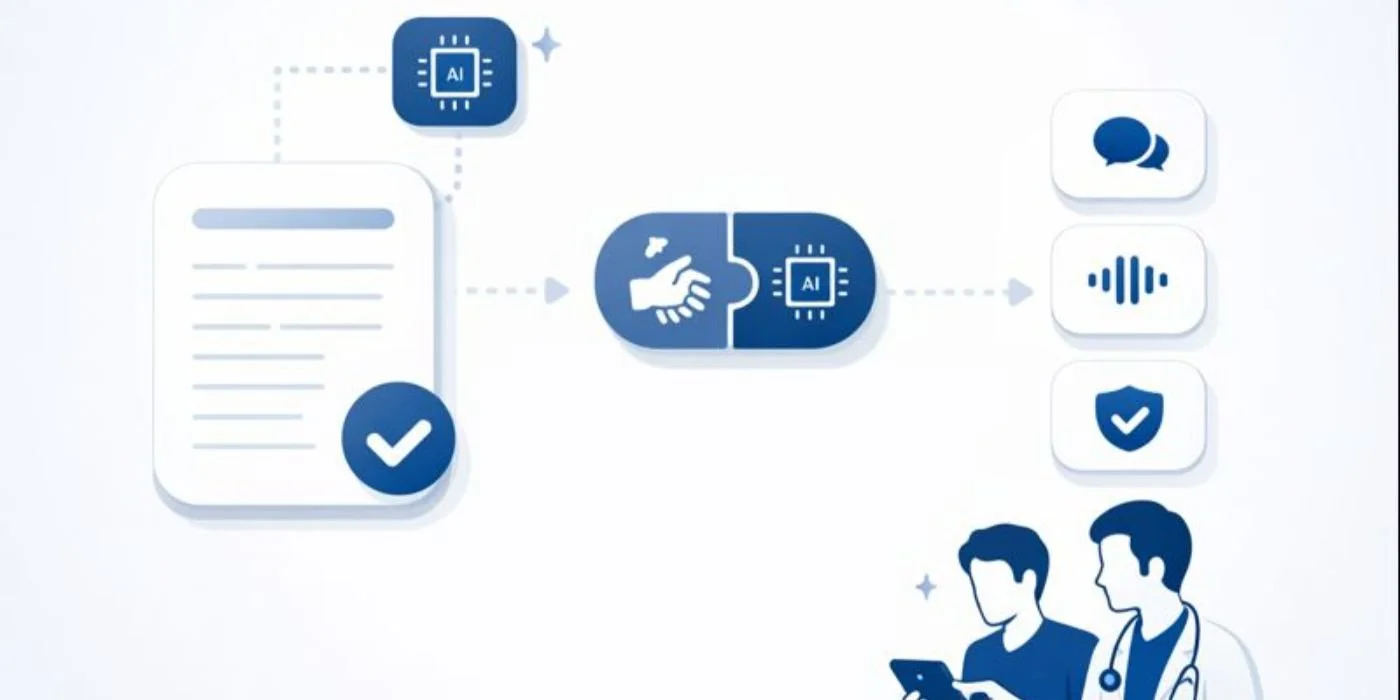
1) What “AI Documentation” Really Means Inside a Clinic
Most teams hear “AI documentation” and picture a magic tool that listens to the visit and creates perfect notes. Reality is harsher. AI is only as good as the workflow around it. If your templates are inconsistent, your problem list is messy, your visit types are unclear, and your clinicians document differently, AI will amplify the mess, not fix it. That is why clinics still lean on scribe driven systems that raise accuracy and consistency, as outlined in how scribes improve documentation accuracy.
AI does three things well when set up correctly. It helps generate a draft quickly, it suggests structured phrases, and it reduces repetitive typing. But it struggles when context is missing, when the conversation is noisy, when multiple problems are addressed quickly, and when the clinician uses vague language. If you want proof that documentation changes are already reshaping hiring, pay, and expectations, use the employment trends visualization and compare it with the reality in your own market.
The first mistake clinics make is thinking AI is a replacement decision. It is not. It is a workflow decision. The second mistake is ignoring that documentation is not only clinical. It is revenue and compliance. A note can be “clinically fine” and still fail coding or medical necessity. That is why scribe training has moved closer to administrative and revenue skills, which you can see inside the CMAA exam breakdown and the CMAA career roadmap.
Here is the honest model: AI drafts, scribes validate, humans sign. The “validate” step is where outcomes are won or lost. It is also where clinics reduce denials, reduce rework, and protect clinicians from after hours charting. If your team does not know how to run that validation step, your documentation becomes faster and worse. That is how you end up with notes that look polished but contain small inaccuracies that trigger payer audits later. For training that prevents that drift, start with essential study tips for CMAA success and build your baseline documentation language using medical administrative terminology mastery.
Pain point check: if your clinicians keep saying “the note is wrong but I do not have time to fix it,” you do not have a documentation problem. You have an operating model problem. That is exactly where scribes fit.
2) The New Scribe Role: Documentation Operator, Not Typist
In the AI era, the scribe who “types fast” is not the top performer. The top performer is the scribe who runs a clean documentation system. That includes templates, macros, visit type rules, code support language, and a consistent sign off process. If you want to see how the job market is shifting toward higher skill expectations, compare the job market outlook with the reality described in the annual salary report.
A modern scribe sits at the intersection of three worlds. Clinical documentation, administrative process, and revenue protection. That is why many teams cross train scribes using CMAA resources like the ultimate guide to passing the CMAA exam and the CMAA exam prep mistakes list. AI can draft a note, but it cannot reliably protect you from denials caused by missing medical necessity language, missing prior authorization context, or mismatched documentation.
Here is what “documentation operator” looks like in practice. You build standardized templates for each visit type. You maintain a macro library for common conditions. You enforce consistency in problem list structure. You catch contradictions between HPI, ROS, and assessment. You ensure that telehealth notes include required compliance language. You flag missing elements before the clinician signs. If your team struggles with note review on exam day scenarios, the CMAA exam day checklist is a useful framework because it forces a repeatable process under time pressure.
The biggest pain point for clinics is not documentation speed. It is documentation rework. Rework is invisible until it shows up as late charge entry, denials, coder queries, and clinician burnout. AI can increase rework if the draft is wrong and the clinician stops trusting it. The scribe fixes that trust gap by owning quality control. If you want to quantify what “quality control” should look like, use the approach in new research on healthcare efficiency improvements and translate it into documentation metrics.
If you are a scribe, the career upside is real. The moment you can prove you reduce edit time, improve first pass sign off, and stabilize coding support language, you become harder to replace. That progression is mapped clearly in the career roadmap to medical office manager and backed by the demand signals in the industry report on job demand by specialty.
3) Where AI Breaks and Why Scribes Become the Safety Layer
AI fails in predictable ways, and the clinics that pretend it does not fail are the clinics that get burned. The failures fall into four buckets: missing context, incorrect specificity, compliance gaps, and billing alignment gaps. Each bucket creates a different kind of financial risk. If you want a clinic friendly way to think about documentation risks, start with documentation accuracy trends and then add the reality of automation and AI reshaping the scribe role.
Missing context is the most common. AI hears “pain improved” and writes a clean sentence, but it fails to capture what improved, by how much, and what triggered it. It may miss that the patient tried two therapies already. That missing context becomes a denial when you need prior auth or when a payer reviews medical necessity. Scribes prevent that by adding qualifiers, timelines, and failed trial language. That is why terminology and structure matter, and why scribes benefit from resources like medical administrative terminology study guides and practice exams for knowledge gaps.
Incorrect specificity is next. AI can guess codes or suggest a diagnosis statement, but it cannot guarantee that the documentation contains the specific elements required for a supported code selection. This is where “the note looks good” becomes “the claim fails.” Scribes who understand what coders look for become the bridge that keeps revenue stable. If you want to pressure test your own readiness, use the top 10 skills employers look for in a CMAA and compare them to your daily workflow.
Compliance gaps are the quiet killer. Telehealth consent language, time based documentation requirements, who was present, how data was obtained, and what limitations existed. AI often glosses over these details because they do not feel “clinical.” Payers and auditors do not care what feels clinical. They care what is documented. Clinics that operate remote or hybrid models should use virtual medical administration guidance as a workflow reference, not as a trend article.
Billing alignment gaps happen when the note content and the charge story do not match. AI can draft a plan, but it can miss that a procedure occurred, that a modifier was needed, or that a separate E M service was provided and supported. This is where “fast notes” turn into “slow money.” If your clinic wants stronger systems, anchor to structured improvement models like the 2026 healthcare administration report and link it with the daily execution steps in medical office automation trends.
Pain point check: if your clinic has rising denials, more coder queries, and more after hours edits since adopting automation, that is not bad luck. That is a missing scribe led validation layer.
4) The AI Ready Scribe Playbook: Skills, Metrics, and Proof
If you want job security in an AI driven clinic, stop thinking like a typist and start thinking like an operator. Operators bring outcomes. Outcomes need proof. That is why the best scribes build a small portfolio of metrics and artifacts that show they reduce risk and increase throughput. If you want a model for outcomes and measurement, mirror the structure used in interactive industry analysis on job growth and translate it into your clinic’s own dashboard.
Start with these skill pillars:
Template governance. You can create, maintain, and version templates, and you can explain why each section exists. This aligns with the documentation readiness mindset in complete guides for scribes and supports the consistency employers expect in the essential skills list.
Draft validation. You can validate AI drafts against visit reality. That means you confirm problem list, assessment order, key negatives, and medical necessity phrases. The fastest way to build this skill is deliberate practice with checklists, like those used in exam day preparation frameworks and reinforced through practice exams.
Coding awareness. You do not need to be a coder, but you must know what documentation supports. You should understand where specificity is required, where time statements matter, and where modifiers need rationale. To see how formal programs structure this knowledge, review the medical scribe exam breakdown and pair it with the administrative skill coverage in the CMAA exam guide.
Communication under pressure. AI increases speed, which increases the cost of small errors. You need a calm protocol for flagging issues to clinicians without slowing the clinic. The scribe who can do this becomes the person clinicians trust. Trust is also why certified professionals stand out, which is covered in why CMAA certification boosts opportunities and shown through real life success stories.
Now the metrics. Choose metrics that show you protect outcomes:
Time to sign: how long from visit end to note sign off. Benchmark it using the style of analysis in the industry report on remote market growth, then apply it to your clinic.
First pass rate: percent of notes signed with minimal edits. If you want a simple path to reduce edits, study the common failure patterns in top scribe exam mistakes and treat them as real workflow hazards.
Coder query rate: how often coders ask for clarification. This is the purest signal of documentation quality.
Denial linked to documentation: track denial reasons that are preventable with better phrasing, specificity, or completeness. Use a standardized approach like the one implied by how scribes impact hospital revenue.
Finally, build proof artifacts. You do not need fancy tools. You need consistent evidence. Keep a template index, a macro change log, an audit folder of deidentified examples, and a trendline report on edit rates. If you are aiming for remote roles, align your portfolio with the realities in remote medical scribing transformation and the job signals in the top remote employers list.

5) What Clinics Should Implement Now to Win the Next Decade
Clinics that “turn on AI” without redesigning workflows will experience a messy middle. Notes get faster, but trust falls, edits rise, and compliance gaps expand. Clinics that win treat AI as a drafting engine and scribes as the quality system. The best way to frame your rollout is to think in phases and assign ownership clearly. If you want future facing skill context, use future proof skills for 2030 and map each skill to a clinic process, not just to individual training.
Phase 1 is standardization. Pick your top visit types and create templates that reduce variability. Clinics hate this work because it feels slow, but it is the foundation that makes AI accurate. It also reduces clinician cognitive load. If you need a reality check on how much variation is costing you, compare your internal process to the evidence style in the annual report on documentation accuracy and track your own edit rate.
Phase 2 is validation workflow. Decide who reviews what, when, and how. Define what the scribe validates versus what the clinician validates. Then define how corrections are fed back into templates and macros so the system improves. This is where clinics usually fail. They fix each note one by one and never fix the upstream pattern. That is why organizations keep repeating the same pain. If you want an internal training anchor for this phase, use essential study techniques because the mindset is about repeatable systems, not one time effort.
Phase 3 is measurement and accountability. Choose a small set of metrics that represent outcomes. Time to sign, first pass rate, coder queries, and denial reasons are enough. Avoid vanity metrics like “AI usage rate.” Usage means nothing if your denials rise. If you want market level benchmarks for compensation and role expectations that can influence your staffing model, review salary analysis for certified vs non certified scribes and align your training budget accordingly.
Phase 4 is workforce design. AI will shift scribe staffing, not eliminate it. Some clinics will need fewer scribes per provider, but they will need higher skilled scribes who can manage templates, macros, and quality systems. Other clinics will redistribute scribes to higher complexity areas like specialty care, telehealth, and high volume urgent care. If you want location specific hiring signals, you can cross reference how demand differs in top CMAA opportunities in New York City and compare it with hiring trends in Chicago hospitals.
The clinic level pain point that matters most is clinician burnout. AI can reduce typing, but it can also increase worry if clinicians fear errors in the draft. Scribes reduce that worry by being the responsible operator who ensures the final note is accurate, consistent, compliant, and ready for billing. If your leadership wants real confidence in the model, it should not rely on hope. It should rely on metrics, audits, and continuous improvement loops like those implied in the interactive job market reports and the broader workforce patterns in the annual employment report.
6) FAQs
-
AI will replace some typing tasks, but it will not replace the need for reliable documentation outcomes. Clinics still need someone to ensure the note matches the visit, supports coding, and stays compliant. That validation layer becomes more important as AI drafts become more common because small errors scale quickly across thousands of notes. Scribes who learn template governance, draft validation, and workflow measurement become harder to replace, not easier. If you want to understand how roles evolve with technology, connect the themes in automation reshaping the scribe role with the future skill signals in skills needed for 2030.
-
The biggest skill is structured validation. That means you can verify that the AI draft captures the correct problem list, the correct assessment and plan, the correct medical necessity language, and the correct compliance elements. Fast typing does not protect the clinic. Validation protects the clinic. To build this skill quickly, use checklists and repeatable reviews the same way exam preparation forces consistency. Start with structured preparation like the scribe exam day checklist and reinforce your knowledge gaps with practice exams.
-
Measure outcomes, not usage. Track time to sign, first pass sign off rate, coder query rate, documentation linked denials, and clinician after hours charting. If those improve, AI is helping. If those worsen, AI is creating rework and risk. Clinics should also run a monthly audit sample to detect drift, especially in high risk visit types like telehealth and procedures. For measurement mindset and reporting approaches, use the trend framing in the documentation trends report and compare it with the operational insights in the 2026 administration report.
-
The most common denial drivers are missing medical necessity statements, missing specificity, missing failed trial details for prior auth, contradictions inside the note, and documentation that does not align to the billed service. AI drafts often sound confident even when they omit key elements. That is why scribes must add qualifiers, timelines, and rationale language. If you want a structured way to learn what “good” looks like, build your baseline knowledge using the CMAA exam breakdown and avoid quality traps by studying the top mistakes to avoid.
-
Remote work can increase risk if communication is unclear, templates are inconsistent, and validation protocols are not enforced. But remote can also improve outcomes when workflows are standardized and performance is measured because it forces process discipline. The key is to define what the scribe validates, when the clinician reviews, and how feedback updates templates. If your clinic is considering remote models, compare your workflow to the operational realities described in remote medical scribing transformation and use the market signals in the remote employer directory.
-
Proof beats opinions. Build a small portfolio that includes a template version index, a macro usage log, an audit sample showing reduced errors, and a dashboard of the metrics you influence. Employers care about reduced clinician edits, fewer coder queries, cleaner first pass sign off, and fewer preventable denials. Tie your proof to recognized skill expectations by aligning with the essential skills employers want and career progression signals in the scribe career pathways guide.
-
Fix the foundation before you add speed. Standardize templates for your top visit types, clean up problem list conventions, and define a clear validation and sign off workflow. Then pilot AI in a narrow scope and measure outcomes weekly. If you skip standardization, AI will create faster chaos. If you skip measurement, you will not see drift until denials rise. Use the practical mindset in medical office automation trends and reinforce training readiness with the ultimate CMAA exam guide.
