

Interactive Industry Report: Medical Administration Job Demand by Specialty
Medical administration demand is not a single market. It is a set of micro markets that rise and fall by specialty, setting, payer mix, and documentation load. If you are applying “everywhere,” you are competing in the noisiest lane. This report helps you pick the lanes where hiring is consistent, workflows are stable, and your skills translate into measurable outcomes. If you want a faster path to interviews, higher leverage responsibilities, and better long term security, you need to target specialties where admins protect revenue, reduce denials, and keep providers in flow. Use this as your specialty map for 2026-27.

1: How to Read Job Demand Like a Hiring Manager (Not Like a Job Seeker)
Job posts are a lagging signal. The hiring manager is reacting to something that already hurt the operation, like backlogs, claim rejections, patient complaints, or provider burnout. The fastest way to predict demand is to track the “pain sources” that create admin hiring spikes, then align your resume to those pains.
Here are the strongest demand signals across specialties:
Documentation complexity is rising. When notes get longer, edits increase, and compliance risk climbs, admin demand spikes. That is why specialties affected by new documentation standards and audit pressure hire steadily, especially when clinics are trying to improve accuracy without slowing clinicians. Tie this back to workflow trends covered in 2025 healthcare documentation trends and show you can support clean charting using efficient EMR data entry.
Revenue friction creates headcount. Prior auth, eligibility, coding specificity, and denials are “admin heavy” systems. Specialties with expensive procedures and strict payer rules hire admins who can keep first pass claims clean. If you want a demand safe lane, position yourself as someone who prevents rework and keeps the schedule billable using systems from appointment scheduling efficiency and reducing no shows.
Patient volume volatility drives staffing. Urgent care surges, seasonal pediatrics spikes, and chronic care backlogs increase admin staffing because intake, messaging, refills, and follow ups explode. This is where communication skill becomes a hard requirement, not a “nice to have,” so show proof using master patient communication and telephone etiquette.
Technology change forces new roles. When organizations adopt automation, AI dictation, new portals, or new EMR workflows, they hire admins who can stabilize the transition. If you can translate workflow into outcomes, you become the “bridge” candidate. Use insight from automation and AI reshaping roles and career positioning guidance from future proof skills for 2030.
If you want your job search to feel less random, stop ranking jobs by title and start ranking them by specialty pressure. This pairs perfectly with your long term planning from medical scribe career pathways and the market direction inside the 2025 job market outlook.
2: Highest Demand Specialties in 2026 and What They Pay You For
“High demand” is not about being busy. It is about being expensive to mess up. Specialties hire aggressively when a small admin error becomes a denial, a reschedule, a compliance risk, or a patient churn event. You get paid more in environments where your work protects revenue and provider time.
1) Procedure heavy specialties pay for coordination. Cardiology, orthopedics, GI, ophthalmology, urology, and imaging are built on pipelines. They do not just need “a scheduler.” They need someone who can keep the pipeline clean with eligibility checks, prior auth timing, prep instructions, results routing, and zero missed steps. If you can document how you reduce friction using daily schedule optimization techniques and audit for errors using patient chart audits in EMR, you stand out fast.
2) Chronic care specialties pay for follow up systems. Primary care, endocrinology, pulmonology, nephrology, and rheumatology run on consistency. These clinics drown in portal messages, refills, results, and referrals. The admin they keep is the one who prevents the “lost patient” problem by closing loops. This is why employers look for proof of communication skill and empathy, not generic claims. Align your examples with empathy in patient interactions and show outcomes based thinking learned from new research on efficiency.
3) Compliance sensitive specialties pay for precision. Pain management, oncology, and high risk documentation environments hire people who can keep notes, forms, and workflows clean. This is where training matters, because the clinic wants fewer edits, fewer missing elements, and fewer audit scares. If you are building career leverage, connect your skills to the professional expectations covered in essential employer wanted skills and the value of credentials explained in how certification boosts your career.
If you want a reality check on earning power by market and setting, compare your target specialties using the annual salary report and the interactive salary calculator. Then cross reference where demand is strongest using best cities for careers and the regional guides like California job market and salary or Florida career trends.
3: The Demand Engine Behind Each Specialty (What Creates Hiring Surges)
Every specialty has a demand engine. When you understand it, you can write a resume that sounds like a solution instead of a list of tasks.
Engine A: Prior auth and payer friction. These specialties hire when revenue is leaking through denials and delays. Your advantage is to show you can run a clean workflow, not that you “have experience with insurance.” Use a specific framework like: eligibility check, auth request, documentation completeness, follow up cadence, patient prep, and confirmation. Pair your proof points with operational thinking from appointment scheduling efficiency and reducing no shows because missed visits create repeat work.
Engine B: Documentation and provider edits. Some specialties hire because the provider is trapped in charts. The clinic hires to reduce after hours documentation and reduce edit cycles. That is why medical scribing adjacent skills translate strongly into admin demand. If you can reduce errors, improve chart completeness, and speed up note finalization, you are valuable. Learn the standards from exam breakdown expectations and build daily habits using essential study techniques.
Engine C: Patient communication load. The specialties with heavy triage messaging, frequent questions, and emotionally sensitive visits hire admins who can communicate clearly and protect patient trust. This includes pediatrics, behavioral health, oncology, and OB/GYN. You can demonstrate readiness by referencing skills from mastering patient communication and telephone etiquette, then showing how you reduced call backs or prevented appointment confusion.
Engine D: Technology transitions and remote workflows. When clinics add portals, automate documentation, or scale telehealth, demand shifts toward people who can run workflows reliably. Remote and hybrid operations also change hiring, because clinics need consistent documentation and routing across sites. If you want long term optionality, align your approach with remote medical scribing and understand the direction from AI reshaping the role.
When you build your story around the engine, you stop being a generic applicant and start sounding like someone who reduces operational risk. That is how you move faster into higher demand specialties.
4: Specialty Targeting Strategy (How to Pick the Right Lane and Get Hired Faster)
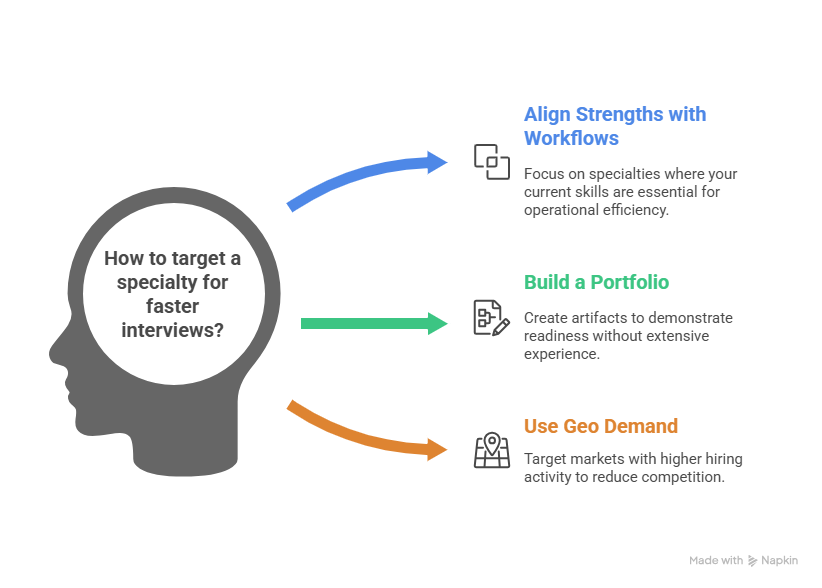
If you want faster interviews, target specialties where your current strengths map to “must have” workflows. Most candidates choose based on interest. Hiring managers choose based on operational pain. Your job is to align the two.
Step 1: Choose a specialty based on the work you already do well.
If you are strong at scheduling discipline, reminders, and reducing no shows, you are a fit for high cadence clinics like physical therapy, pediatrics, and primary care. Build proof using daily schedule optimization and demonstrate patient clarity from telephone etiquette.
If you are strong at documentation accuracy and catching errors, you fit specialties where note quality protects revenue and reduces edits. Show your process using efficient EMR data entry and your quality discipline using patient chart audits. Then strengthen your foundation with medical terminology study guidance.
Step 2: Build a “specialty readiness” portfolio in 7 days.
You do not need years of experience to look ready. You need artifacts. Create a one page workflow map for the specialty, a checklist for intake and documentation, and a script for patient communication. This aligns with skills employers expect from essential employer wanted skills and preparation guidance from exam day checklists.
Step 3: Use geo demand to reduce competition.
Some markets hire more aggressively. If you are open to relocation or remote workflows, you can stack your odds. Compare growth patterns using region pages like New York state market analysis, Pennsylvania careers and employers, and Illinois career outlook. Then match that with lifestyle and compensation using best cities interactive guide.
When you target a lane, your application becomes sharper, your interview stories become clearer, and you stop losing to generic keyword stuffing.
5: Skills That Increase Demand Across Every Specialty (Your 2026 Upgrade Checklist)
If you want “portable” career leverage, build skills that show up in every specialty and directly reduce operational pain. These are the upgrades that move you from task based admin work to outcome based operations support.
1) EMR performance under pressure.
High demand clinics care about speed with accuracy. Not speed alone. Build a repeatable method using efficient EMR data entry and quality control using chart audit techniques. Then connect your skill growth to broader documentation shifts explained in 2025 documentation trends.
2) Communication that reduces call backs.
Clinics do not want more messages. They want fewer repeats and fewer misunderstandings. Build patient facing clarity using patient communication skills, keep tone and trust strong through empathy skills, and avoid friction using telephone etiquette.
3) Scheduling as revenue protection.
Scheduling is not admin busywork. It is the revenue gate. The best admins stabilize utilization and reduce last minute chaos. Use strategies from appointment scheduling efficiency, reduce waste using no show reduction, and build daily control using optimize your schedule.
4) Technology fluency that makes you future safe.
The market is shifting toward automation, AI assisted documentation, and hybrid care. The admin who can adapt becomes valuable in every specialty, because they keep systems stable during change. Align your growth with AI reshaping scribe roles, strengthen long term security using future proof skills for 2030, and understand the remote opportunity curve from remote medical scribing.
If you apply these upgrades while picking a specialty lane, you become a candidate that clinics keep, not a candidate they replace.
6: FAQs on Medical Administration Job Demand by Specialty
-
Look for specialties where admin work protects revenue and reduces rework. Procedure heavy and prior auth heavy environments tend to hire consistently because delays and denials hurt quickly. Pair that strategy with your skills in appointment scheduling efficiency and efficient EMR data entry. If you want a broader market view, cross check trends using the 2026 job market outlook and compare compensation signals using the annual salary report.
-
Build specialty readiness artifacts that prove you understand the workflow. Create a checklist for intake, a simple authorization timeline, and a results follow up map. Then reinforce your documentation foundation using chart audits in EMR and sharpen your language accuracy using medical terminology study guidance. Your goal is not to claim experience you do not have. Your goal is to show you can reduce risk on day one.
-
The standouts are the people who reduce friction. That usually means tight scheduling control, clean documentation habits, and communication that prevents confusion. You can build those three pillars using optimize your daily schedule, reduce no shows, and master patient communication. When you can describe outcomes like fewer reschedules and faster chart readiness, you become hard to replace.
-
Yes, but demand is shifting toward people who can run reliable workflows without constant supervision. Remote friendly roles grow where documentation is standardized and handoffs are clear. If you want to compete, learn how remote operations change expectations through remote medical scribing and stay current on how tech changes tasks using AI reshaping roles. Combine that with accuracy proof from efficient EMR data entry.
-
Start with specialty demand, then overlay regional hiring intensity and compensation. Use location guides like New York state market analysis, California job market and salary, and Ohio employment guide. Then compare opportunity density using the best cities interactive guide and validate earning trends using the interactive salary calculator.
-
Speak in outcomes, not duties. Use a short story format: the problem, your workflow, the result. Anchor your story in measurable operational wins like fewer reschedules, cleaner charts, faster follow ups, or reduced provider edits. Build confidence by aligning with employer expectations in essential skills employers want and strengthen your process discipline using the exam day preparation checklist. Then connect your long term plan to career pathways so you sound intentional, not desperate.
-
You stay valuable by becoming the person who stabilizes change. Learn the tools, understand the handoffs, and keep documentation quality high. Track the direction of the role using technology reshaping medical scribing and build the long horizon skills from future proofing for 2030. Then keep your core execution strong through EMR data entry systems and documentation trend awareness.
