

Top 20 EMR & Charting Terms Medical Scribes Need to Understand Clearly
Medical scribes do not just record what happens in a visit. They protect clarity inside the legal, clinical, operational, and financial record of care. When a scribe misunderstands charting language, the damage does not stay on the screen. It spreads into coding, medical decision-making, continuity of care, audit exposure, provider frustration, and patient safety. That is why EMR and charting terminology cannot be treated like background vocabulary.
A strong medical scribe needs more than fast typing and good listening. They need precise command of the terms that shape how documentation is built, reviewed, corrected, signed, retrieved, and used downstream. This guide breaks down the 20 charting terms scribes need to understand clearly, while also showing how those terms affect accuracy, workflow, compliance, and real-world documentation performance across modern healthcare settings.
1. Why EMR and Charting Vocabulary Is a Core Scribe Skill, Not a Side Detail
Many new scribes assume charting problems come from speed alone. In reality, many costly errors come from misunderstanding the architecture of the record itself. A scribe may hear the right clinical information and still place it in the wrong section, fail to distinguish imported text from provider assessment, misunderstand what belongs in the HPI versus ROS, or document something as confirmed when it was only discussed. That is not a typing issue. It is a terminology issue. Strong command of charting language also supports better performance in mastering medical terminology for medical scribes, improves readiness for the medical scribe certification exam breakdown, strengthens confidence for medical scribe exam day, and builds the operational discipline employers expect in essential skills every healthcare employer wants from a medical scribe.
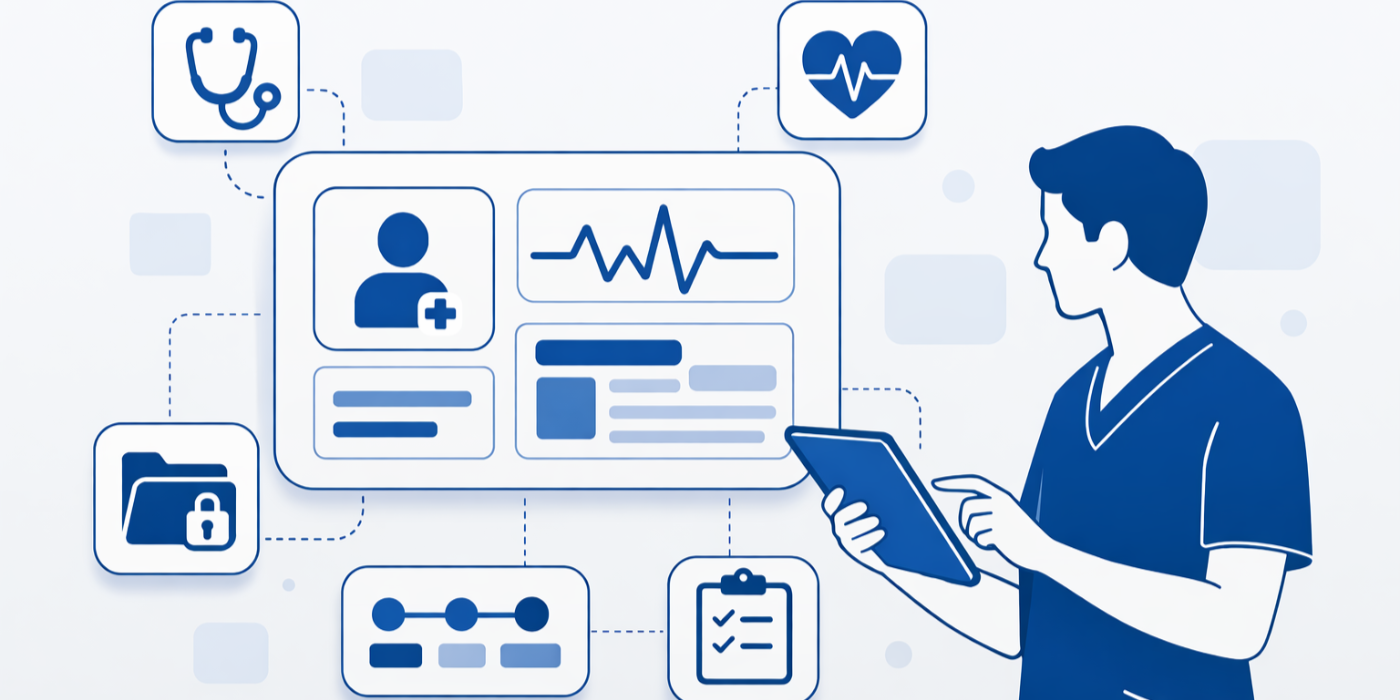
EMR fluency matters because the chart is not just a note. It is a shared clinical workspace. Providers use it to make decisions. coders use it to support claims. compliance teams use it to evaluate documentation integrity. other clinicians use it to continue care. quality teams use it to track outcomes. and organizations increasingly use it to power digital workflows, remote care, portal communication, and analytics. A scribe who understands charting language can contribute to cleaner documentation in the same way that strong teams support annual medical scribe employment trends and future predictions, adapt faster to 2025 healthcare documentation trends crucial insights for scribes, remain useful as automation and AI reshape the medical scribe role, and position themselves well for future-proof medical scribe career skills needed for 2030.
The pain point many scribes feel is this: they may be fast enough to keep up, yet still get corrected for note placement, phrasing, structure, or missing nuance. That usually means the gap is not effort. It is document logic. Once a scribe learns how EMR terms govern the note, the work becomes far more precise, predictable, and trusted.
| Charting Breakpoint | What the Scribe Must Understand | Why It Matters in the Real Record |
|---|---|---|
| Chief complaint entry | Reason for visit must match patient-reported concern | Sets the frame for the rest of the encounter |
| HPI structure | Chronology, severity, context, modifying factors | Supports clinical reasoning and accurate MDM |
| ROS documentation | System-based symptom review separate from HPI narrative | Prevents section confusion and template errors |
| Past history import | Imported history may need provider review or updates | Avoids carrying forward inaccurate data |
| Medication reconciliation | Med list needs status awareness, not blind copying | Reduces treatment and safety risks |
| Allergy section | Differentiate allergy, intolerance, unknown reaction | Affects clinical safety and CDS alerts |
| Problem list hygiene | Active vs resolved conditions must be distinct | Improves chart clarity and downstream coding |
| Template use | Know default language versus custom encounter detail | Prevents inaccurate boilerplate notes |
| Smart phrase insertion | Shortcut text must still fit the actual visit | Reduces copy-forward inaccuracies |
| Copy-forward text | Imported prior note content requires scrutiny | Avoids stale, misleading documentation |
| Objective data entry | Vitals, labs, imaging, and exam are not interchangeable | Keeps note sections logically distinct |
| Assessment phrasing | Problems should reflect provider judgment, not guesswork | Protects legal and clinical accuracy |
| Plan section | Orders, follow-up, counseling, referrals, precautions | Drives actionable next steps in care |
| Order entry linkage | Orders should align with documented indications | Supports necessity and continuity |
| Pending orders | Drafted items may still await provider action | Prevents false assumptions about completed care |
| In-basket messaging | Internal message workflows differ from encounter notes | Reduces communication loss |
| Addendum | Late clarification updates the original chart appropriately | Preserves transparent correction history |
| Amendment | Formal revision process may follow compliance rules | Important for regulated correction workflows |
| Attestation | Provider verifies authorship, review, or supervision | Critical in shared documentation environments |
| Co-signature | Secondary sign-off may be required by role/policy | Supports compliant note completion |
| Unsigned note status | Drafted text may not yet be part of finalized record | Affects reliance and workflow follow-through |
| Audit trail | System tracks actions, edits, users, and timing | Reinforces accountability and compliance |
| Discrete data field | Structured entry differs from free-text narrative | Improves reporting and interoperability |
| Clinical decision support alert | Alerts may depend on accurate chart inputs | Bad data weakens system safety prompts |
| Encounter closure | All required documentation and orders are finalized | Prevents incomplete chart carryover |
| Portal-visible documentation | Some patient-facing records may be viewed later | Encourages precision and professionalism |
| Problem-oriented note design | Note sections should reflect actual care logic | Makes records usable for future clinicians |
2. The Top 20 EMR and Charting Terms Medical Scribes Need to Understand Clearly
A medical scribe who understands these terms does more than create cleaner notes. They reduce provider edits, prevent chart drift, strengthen compliance, and make documentation more usable for everyone who touches the record. These terms also connect with broader workforce realities in annual report medical scribes’ role in enhancing clinical documentation accuracy, reinforce the value shown in new research on how medical scribes improve clinical efficiency, align with the operational impact described in how medical scribes impact hospital revenue, and prepare scribes for more advanced pathways in future opportunities for medical scribes as clinical documentation specialists.
1. Encounter
The specific patient visit or clinical interaction being documented. In the EMR, the encounter is the container for the note, orders, diagnoses, and visit-related actions. If a scribe loses track of encounter context, documentation can drift into the wrong record or the wrong visit logic.
2. Chief Complaint (CC)
The main reason the patient is being seen, usually in the patient’s own words or the closest accurate clinical summary. This is not a place for broad history dumping. It should anchor the visit clearly and cleanly.
3. History of Present Illness (HPI)
The detailed narrative of the current problem, including timing, severity, context, associated symptoms, and modifying factors. This is often where scribes either shine or struggle. Strong HPI documentation requires listening for sequence and relevance, not merely transcribing everything said.
4. Review of Systems (ROS)
A symptom-based review organized by body systems. It is different from the HPI because it expands beyond the main complaint and follows a structured symptom logic. Confusing HPI and ROS makes notes look sloppy and clinically less useful.
5. Physical Exam
The provider’s objective findings from examination. Scribes must understand that this section reflects observed or assessed findings, not patient-reported complaints.
6. Assessment
The provider’s clinical impression about the patient’s conditions or problems. A scribe should never invent assessment language. This section captures judgment, not transcription guesswork.
7. Plan
The actions being taken in response to the assessment, such as medications, tests, referrals, follow-up timing, precautions, or education. This section turns the note from description into care direction.
8. Template
A prebuilt note structure that helps standardize documentation. Templates save time, but they can also create dangerous inaccuracies when blindly reused. Scribes need to know where template text ends and true visit-specific content begins.
9. Smart Phrase / Macro
A shortcut that inserts frequently used text into the chart. Smart phrases are useful only when the inserted content is reviewed and adjusted to match the encounter.
10. Copy Forward
The importation of content from prior notes into a new note. This is one of the biggest charting risk areas because old information can quietly survive even when no longer accurate.
11. Discrete Data Field
A structured entry field in the EMR, such as medication status, allergies, diagnoses, or vitals, that can be sorted, searched, and reported by the system. This differs from narrative text and matters for analytics, alerts, and interoperability.
12. Medication Reconciliation
The process of reviewing and updating the patient’s medication list for accuracy. A scribe should understand that a charted med list is not automatically correct just because it appears in the EMR.
13. Problem List
The maintained list of active and relevant past conditions in the chart. Poor problem list hygiene creates clutter, confusion, and downstream documentation problems.
14. Addendum
A later addition to the note that clarifies, updates, or supplements the original documentation. This is not casual rewriting. It should be transparent and purposeful.
15. Amendment
A formal correction or modification to a note, often tied to organizational or compliance workflow. Different systems treat this differently, but the key idea is that changes to the legal record must be handled appropriately.
16. Attestation
A statement by the provider confirming review, authorship, participation, or supervision related to the note. In shared documentation models, this can be critically important.
17. Co-Signature
An additional required signature, often for supervised or trainee-related documentation. Scribes should understand when a note is still pending review versus fully completed.
18. Audit Trail
The EMR’s record of who entered, changed, viewed, or signed information and when. This matters because documentation actions are traceable. Sloppy charting is not invisible.
19. In-Basket
The EMR message and task system used for communication, follow-up, and workflow management. This is different from encounter documentation and should not be confused with the formal visit note.
20. Encounter Closure
The completion state in which documentation, signatures, and associated tasks are finalized for the visit. A note can look complete and still not be operationally complete if required steps remain open.
3. How These Terms Affect Note Quality, Compliance, and Provider Trust
The fastest way for a scribe to lose provider trust is not poor typing speed. It is repeated chart logic mistakes. If the chief complaint is vague, the HPI bloated, the ROS repetitive, the plan thin, and old template language left uncorrected, the provider ends up spending extra time fixing the note. That defeats the point of using a scribe. Clean note quality comes from knowing what each section is for and respecting its function. This same precision mindset supports long-term performance in medical scribe careers with certification, helps candidates stand out in the 2025 medical scribe job market outlook, increases readiness for medical scribe job growth by specialty, and reinforces the practical value seen in real-time industry reports on medical scribes and data accuracy.
Compliance pressure makes charting vocabulary even more important. A note is not just a memory aid. It is part of the legal medical record. If copied text suggests an exam that did not happen, if imported history remains outdated, or if the plan does not clearly match the assessment, the problem becomes bigger than inconvenience. The note may become misleading. That is why scribes must understand the difference between documentation efficiency and documentation carelessness. Strong charting habits also position scribes to work more effectively with top 50 EMR/EHR platforms every medical scribe should know, adapt to top 50 voice recognition and dictation software for clinicians and scribes, compare tools intelligently through the top 50 AI medical scribe and ambient dictation tools buyers guide, and remain relevant as remote medical scribing transforms healthcare documentation.
There is also a patient-care angle that is easy to underestimate. Incomplete or poorly structured notes can impair the next clinician’s understanding of what happened. A vague HPI can hide the timeline of an illness. An unclear plan can create follow-up confusion. A cluttered problem list can obscure the condition that actually drove the visit. Documentation quality is not abstract. It shapes continuity of care.
4. The Most Common EMR and Charting Mistakes New Scribes Make
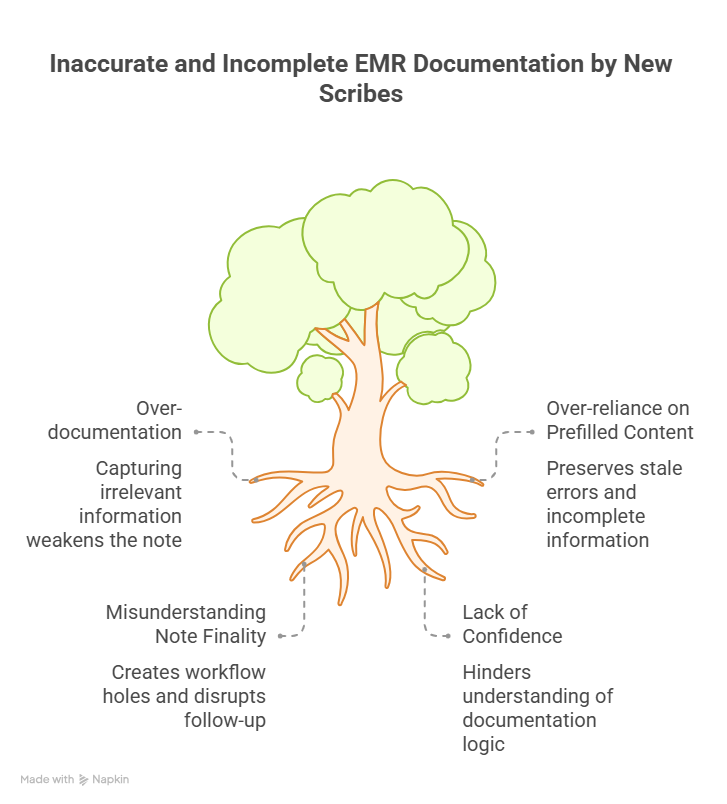
One of the most common mistakes is documenting everything with equal weight. Real charting is selective. The job is not to capture all spoken language. It is to capture clinically relevant language in the correct structure. New scribes often over-document patient stories in the HPI, under-document modifying factors, or allow ROS and HPI to blur together. That leads to longer notes that are actually weaker. A stronger scribe builds a disciplined filter shaped by chart logic, which is exactly the kind of professionalism that can accelerate outcomes described in how medical scribe certification boosts your healthcare career, support the growth shown in success stories from medical scribes to medical professionals, strengthen competitiveness in top 50 medical scribe training courses and certifications, and align with evolving roles described in predictive insights on the next evolution in medical scribe roles.
Another major mistake is trusting prefilled content too much. The EMR can create an illusion of completeness. Medication lists, problem lists, old templates, copied histories, smart phrases, and imported exam sections may all look polished while still being partially wrong. A scribe who assumes the system is clean will help preserve stale errors. A scribe who understands charting terminology knows where risk hides. They treat the record as a dynamic document that must reflect today’s encounter, not yesterday’s shortcuts.
A third mistake is misunderstanding note finality. Draft text, pended orders, unsigned notes, co-signature requirements, and addenda all have different meanings. If a scribe does not understand those distinctions, they may overestimate what is complete and under-recognize what still needs provider action. That creates workflow holes that can frustrate providers and disrupt follow-up.
The deeper pain point underneath all of this is confidence. Many scribes feel uncertain because they know the platform clicks but not the documentation logic behind them. Once the terminology becomes clear, confidence rises because the chart stops feeling like a maze and starts feeling like a structured system.
5. How Medical Scribes Can Build Stronger EMR and Charting Mastery Fast
The fastest way to improve is to study notes by section rather than by encounter alone. Take one visit and ask: What exactly belonged in the chief complaint? What made the HPI strong? Which symptoms were appropriate for ROS rather than HPI? What language reflected provider assessment versus patient report? Where did the plan become actionable? This type of note dissection builds judgment quickly. It also makes scribes more adaptable across specialties, which matters if they want to explore opportunities from the top 100 telehealth companies using medical scribes to the top 100 emergency departments and urgent care chains for medical scribe jobs, the top 75 outpatient specialty networks hiring scribes, or the top 50 academic medical centers and teaching hospitals using medical scribes.
A second strategy is to create a personal charting glossary. Do not just memorize definitions. Write each term with a real example, a common mistake, and a reminder of why it matters. For instance, under copy forward, note that old assessment language may survive into a new encounter even when clinically irrelevant. Under addendum, note that late clarification should remain transparent. Under problem list, note that unresolved clutter can affect future visits, coding, and quick chart review. This method turns passive vocabulary into operational awareness.
A third strategy is to practice platform skepticism. Every smart phrase, imported field, or template convenience should trigger one question: does this reflect the actual encounter? That mindset is increasingly important as scribes work alongside speech tools, AI assistance, and high-volume digital workflows. Human value now comes from review judgment, not just typing speed. The scribe who can detect inconsistency, section drift, and stale content becomes far more valuable than the scribe who merely populates a note quickly.
6. FAQs About EMR and Charting Terms for Medical Scribes
-
HPI should be a top priority because it is where clinical storytelling, relevance, and structure all meet. If the HPI is weak, the note often feels weak even when other sections are acceptable.
-
Because old information can look polished and still be wrong. If copied text is not carefully reviewed, the note may preserve outdated symptoms, findings, assessments, or plans that no longer reflect the current encounter.
-
The HPI tells the focused story of the current problem. The ROS is a structured symptom review across body systems. They support each other, but they are not interchangeable.
-
Because the chart is a shared tool used across visits, teams, and sometimes care settings. A cluttered or inaccurate problem list slows review, obscures priorities, and can affect downstream documentation and coding.
-
An addendum usually adds or clarifies information after the initial note. An amendment is a more formal correction or revision process. Exact workflows vary by system and organization, but both require transparency and appropriate handling.
-
Because structured data drives alerts, reporting, quality tracking, and interoperability in ways free text cannot. Misunderstanding structured fields can weaken both documentation and system performance.
-
It means the visit’s documentation and required actions are finalized. A note can look finished while still lacking signatures, order completion, or other workflow steps needed for true closure.
-
By consistently putting the right information in the right section, reducing template mistakes, and making the note easier to sign with minimal correction. Accuracy of structure builds trust as much as speed does.
