

Medical Admin Assistant Professional Organizations Directory
Medical administrative assistants do not get stuck because they lack hustle. They get stuck because healthcare changes faster than job descriptions do. One month the pressure is cleaner registration, the next it is privacy exposure at the front desk, portal confusion, payer friction, documentation gaps, denials, staffing shortages, or new digital workflows. The right professional organization shortens that learning curve by giving you education, peer answers, certification pathways, compliance updates, and a clearer route out of entry-level repetition.
That is why this directory matters. It is not just a list of logos. It is a practical map for choosing the organizations that can sharpen your front-desk judgment, improve your patient communication, strengthen your billing awareness, and help you build the kind of credibility that moves you from task-doer to trusted operations professional.

1. Why Medical Admin Assistants Should Treat Professional Organizations as Career Infrastructure
A medical administrative assistant who only learns from daily chaos usually develops reactive habits. A stronger professional builds from structured exposure: current terminology, patient access standards, revenue-cycle thinking, chart-handling discipline, workflow design, and real-world peer insight. That is exactly where professional organizations become useful. They help you turn scattered experience into repeatable competence. If you are already strengthening your base through front desk operations terms, appointment scheduling best practices, effective patient communication terms, and top 20 HIPAA & patient privacy terms for medical administrative assistants, the next smart move is joining communities that keep those skills current and marketable.
The most useful organizations for this role usually fall into five buckets: broad medical assisting and certification bodies, practice management associations, health information and patient access groups, revenue-cycle and billing organizations, and leadership or specialty associations for people who want to move into supervision. Official organization sites show this range clearly: AAMA and AMT support allied health professionals; MGMA and PAHCOM focus on practice leadership and operations; AHIMA centers health information; NAHAM focuses on patient access; AAHAM, HFMA, HBMA, and AAPC support revenue-cycle and business-side skill development; HCCA emphasizes compliance; and ACHE supports longer-term healthcare leadership development.
If your long-term goal is stability, these memberships are not “extra.” They help you solve the exact problems that quietly limit promotions: weak payer vocabulary, awkward portal communication, incomplete intake workflows, uncertainty around records handling, inconsistent scheduling judgment, and poor confidence during audits or escalations. Pairing organization-based learning with ACMSO resources like insurance verification definitions, healthcare portal terms, telehealth platform definitions, and future-proofing your CMAA career gives you both daily-use skill and long-range career leverage.
2. How to Choose the Right Organization Without Wasting Money or Momentum
The wrong way to choose is by prestige alone. The smarter way is by friction. Ask yourself where your work hurts most right now. If your day is swallowed by registration errors, missing demographic details, insurance confusion, and awkward pre-visit corrections, then a patient-access-focused path makes more sense than a leadership-heavy membership. In that case, strengthening your skills through patient intake procedures, appointment scheduling terms CMAAs should know by heart, medical appointment scheduling tools ranked by ease of use, and interactive industry report medical administration job demand by specialty should point you toward groups like NAHAM, PAHCOM, or MGMA.
If your stress comes from release-of-information questions, chart-handling pressure, portal messaging risk, documentation inconsistency, and privacy-sensitive communication, then your best-fit ecosystem is different. In that case, start leaning into healthcare portal terms, HIPAA and patient privacy terms, infection control in medical offices, and future healthcare compliance changes. Then look hard at AHIMA for information governance, HCCA for compliance depth, and AAAHC if your outpatient environment is shaped by quality and accreditation expectations. Official descriptions support that alignment: AHIMA focuses on health information, HCCA on compliance education and certification, and AAAHC on ambulatory quality standards.
A third group of professionals feels the pain in money flow, not just desk flow. They are the people dealing with incorrect insurance entry, eligibility friction, prior authorization pressure, billing handoff problems, patient-balance confusion, and the downstream consequences of tiny front-office mistakes. If that is you, then insurance verification glossary, top 20 medical billing terms all CMAAs should clearly understand, medical office automation trends, and new study how certified medical administrative assistants improve healthcare efficiency are the right internal foundation. From there, AAHAM, HFMA, HBMA, and AAPC become high-value choices because they strengthen the business logic behind front-office decisions.
3. The Smartest Way to Use a Membership After You Join
Joining without a system is how people waste dues. They sign up, skim one newsletter, bookmark a webinar they never watch, and call the membership “not worth it.” That is not a membership problem. It is an application problem. A medical admin assistant should join with one operational target and one career target. For example: operational target, reduce registration corrections and improve insurance accuracy; career target, become the most reliable patient-access resource in the office. That kind of clarity turns the organization into a working asset, not a passive subscription.
Start by matching your membership activity to your actual workload. If your office constantly trips over communication breakdowns, use the organization’s webinars, forums, and articles to sharpen scripts and workflow judgment, then reinforce that learning with empathy in healthcare administration, de-escalation techniques, healthcare CRM terms, and virtual medical administration. If the office struggles with records discipline and message routing, pair association education with how to master medical administrative terminology for your CMAA exam, the future of EMR systems, medical administrative assistants & technology 2025 industry report, and interactive guide: the medical office of 2025.
The biggest membership return usually comes from three habits: attend one role-relevant educational event each month, save one practical tool or framework each week, and ask one real-world question in a member community each quarter. That rhythm compounds. Over six months, you stop reacting like a generalist and start sounding like someone who understands patient access, privacy, intake quality, scheduling design, and revenue implications as connected systems. That shift is what makes managers trust you with harder work.
4. What High-Performing Medical Admin Assistants Look For in a Professional Organization
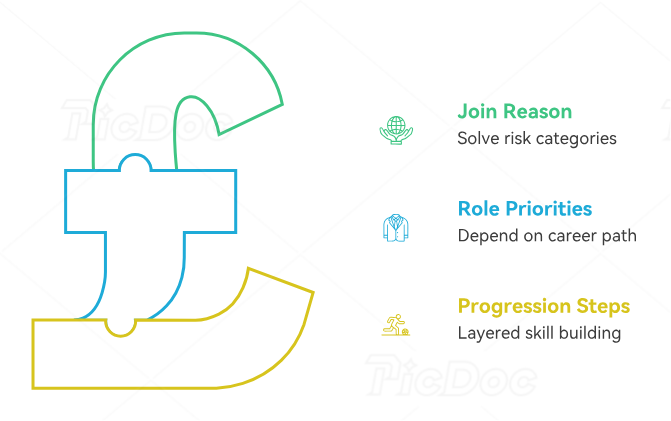
High-performers do not join because an organization sounds impressive. They join because it solves a category of risk. For a medical admin assistant, the most expensive risks are not dramatic. They are quiet: wrong subscriber data, poor follow-up instructions, release-of-information missteps, inconsistent portal handling, incomplete scheduling logic, incorrect documentation routing, weak payer communication, and avoidable escalations with upset patients. The right organization helps reduce those risks through education, certification, policy awareness, and peer discussion.
That is why “best organization” depends on role direction. A person staying deeply front-office should prioritize patient access, records, scheduling, and communication. A person moving toward the financial side should prioritize revenue cycle, coding language, compliance, and payer education. A person aiming for leadership should prioritize practice management, operations, and strategic thinking. The official positioning of NAHAM, AAHAM, MGMA, PAHCOM, HFMA, AAPC, and ACHE reflects exactly those different lanes.
This is also where many professionals misjudge themselves. They pick a highly advanced organization too early and feel overwhelmed, or stay in beginner-only environments too long and plateau. A better progression is layered. First, build job-ready certainty through ultimate guide to passing your CMAA certification exam on the first try, essential study tips to guarantee your CMAA exam success, complete breakdown of what’s included in the 2026-27 CMAA exam, and CMAA exam day checklist. Next, use one organization to deepen the exact lane you work in. Then, once you are the person others rely on, step into management-oriented associations and credentials.
5. Common Mistakes People Make When Choosing Professional Organizations
The first mistake is joining based only on title match. “Medical administrative assistant” sounds broad, so people assume any healthcare association will help. That is not true. If your day is dominated by authorizations, intake corrections, portal issues, and patient data handling, a random leadership group will not solve your immediate pain. Join around the work you actually touch. Then grow outward.
The second mistake is ignoring the job market around the membership. An organization is more powerful when it sharpens skills employers already reward. So if you are exploring faster growth, compare your membership choice against the trends reflected in medical admin assistant job market outlook, annual CMAA salary report, interactive salary calculator for medical administrative assistants, and CMAA career roadmap from entry-level to medical office manager. A good membership should help you become more promotable, more accurate, or harder to replace.
The third mistake is expecting a credential to rescue weak workflow judgment. Credentials help, but they do not fix sloppy habits. If you still mishandle screening questions, fail to verify demographics, route messages poorly, or confuse urgency levels, employers will notice the gap. That is why the strongest professionals combine credentials with applied ACMSO learning like front desk operations guide, appointment scheduling definitions, telehealth regulation changes for CMAAs, and predicting HIPAA updates and their impact on CMAAs.
The fourth mistake is joining and staying invisible. Membership value often comes from being seen: attending chapter events, asking sharper questions, volunteering for small projects, or using member-only education to solve a documented office problem. If you want your membership to matter in performance reviews, connect it to outcomes. Improve your intake script. Reduce scheduling errors. Create a cleaner records checklist. Tighten portal-message routing. Support a better no-show workflow. When you can point to improved office results, membership stops being a line on your resume and starts becoming proof of professional maturity.
6. FAQs
-
For most beginners, the best first step is a body tied closely to foundational medical assisting or administrative credentialing, then a role-specific operational association after that. In practice, that often means building your base through ACMSO learning and exam prep, then exploring organizations like NHA, AAMA, or AMT if your main goal is proving readiness and building early professional credibility. Official resources from those bodies emphasize certification, education, and professional development for allied health learners.
-
NAHAM stands out when your role revolves around registration, intake quality, authorizations, and patient access workflows. PAHCOM and MGMA are also useful if you work in physician practices where desk operations, scheduling, communication, and business flow all connect.
-
Start with AAHAM, AAPC, HFMA, and HBMA. They give you language and frameworks around revenue cycle, finance, coding, compliance-adjacent processes, and healthcare business operations. That foundation helps a medical admin assistant stop seeing errors as isolated mistakes and start seeing their downstream financial impact.
-
Then AHIMA and HCCA deserve serious attention. AHIMA is a natural fit for chart integrity, health information, documentation governance, and record-handling discipline. HCCA is valuable when you want deeper compliance thinking around regulated healthcare work.
-
Not at the beginning. One well-chosen organization used deeply is more valuable than three memberships you barely touch. Start with the association that matches your current pain point, then add a second only when your role broadens or you begin targeting promotion into supervision, revenue cycle, or management.
-
Track three things over six months: the number of workflow problems you now solve faster, the number of office responsibilities you can perform with less supervision, and the number of professional opportunities now open to you, such as exam eligibility, better interview language, new projects, or promotion conversations. If the membership changes your judgment, confidence, and usefulness, it is working.
-
Yes, but only when paired with visible performance. Organizations like MGMA, PAHCOM, and ACHE are especially useful once you begin thinking in terms of operations, people flow, communication systems, and business impact rather than only task completion.
