

Empathy in Healthcare Administration: Key Definitions & Scenarios
Empathy is not a “soft extra” in healthcare administration—it is a workflow skill that directly affects patient trust, de-escalation, scheduling compliance, front-desk efficiency, complaint volume, and team burnout. When empathy is missing, even technically correct processes feel hostile to patients. When empathy is present, the same process feels organized, safe, and human.
This interactive-style guide is built for ACMSO readers who want practical definitions, real scenarios, and communication patterns they can apply immediately in medical offices, phone workflows, check-in desks, telehealth coordination, and administrative follow-up.
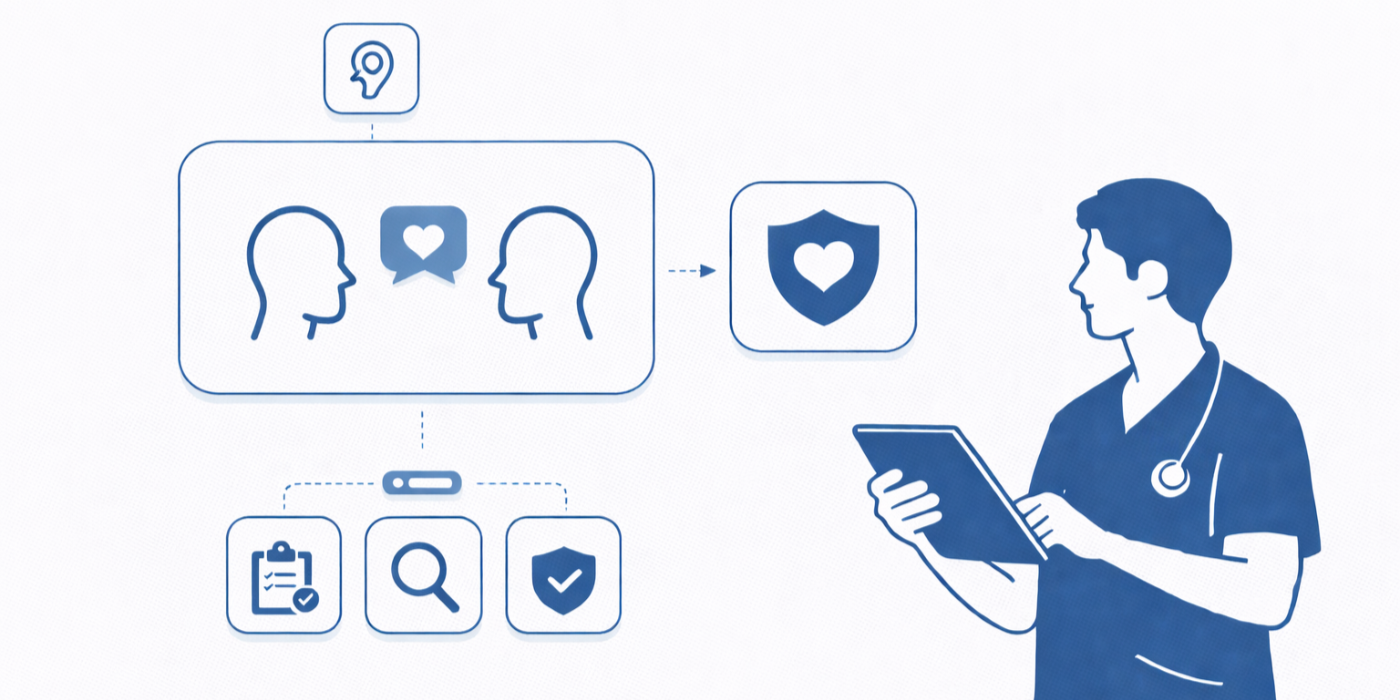
1: Why Empathy in Healthcare Administration Is a Performance Skill (Not Just a Personality Trait)
Many teams talk about empathy as if it means “being nice.” In healthcare administration, that definition is far too weak. Real empathy is the ability to recognize what the patient is experiencing (confusion, fear, urgency, embarrassment, frustration), respond in a way that preserves dignity, and still move the workflow forward accurately.
That matters because administrative breakdowns often begin before a clinician enters the room. A patient who feels dismissed at scheduling may arrive defensive. A family member who receives a cold billing explanation may escalate at check-in. A confused caller who hears jargon may miss prep instructions. These are not just communication issues—they become operational issues affecting delays, no-shows, complaints, and documentation quality. This is why empathy overlaps with active listening in healthcare terms & interactive scenarios, medical office telephone etiquette interactive dictionary & examples, patient advocacy essential terms & interactive role-play scenarios, and conflict resolution in medical admin interactive dictionary.
Empathy also improves accuracy. Patients are more likely to disclose relevant details when they do not feel rushed or judged. They clarify medications, correct demographic errors, and ask questions about instructions they didn’t understand. That directly supports better handoffs across patient management systems interactive dictionary & examples, patient flow management terms interactive guide & scenarios, EMR software terms interactive dictionary & walkthroughs, and scheduling software glossary interactive guide & tutorials.
For ACMSO learners building career strength, empathy is also a differentiator employers notice fast. Technical skill gets you in the door; emotionally intelligent communication keeps workflows stable under pressure. That’s why empathy supports success in top 10 skills employers look for in a CMAA, why CMAA certification dramatically boosts your career opportunities, how becoming a medical scribe skyrockets your medical career, and essential skills every healthcare employer wants from a medical scribe.
There is another hard truth: patients usually do not separate “clinical care” from “administrative care.” If the front office feels chaotic, dismissive, or robotic, the patient experiences the whole organization as unsafe—even if the clinician is excellent. That is why empathy belongs in operational training alongside facility safety & emergency procedures interactive dictionary, office ergonomics terms for medical admin interactive guide, medical administration workforce trends key findings for 2025, and new study how certified medical administrative assistants improve healthcare efficiency.
In short: empathy is not about becoming overly emotional. It is about reducing friction, preserving trust, and guiding people through high-stress systems with clarity.
2: Core Empathy Definitions Every Healthcare Admin Professional Should Master
If empathy training stays vague, staff cannot apply it consistently. The fix is to define empathy as a set of observable communication behaviors. Once defined clearly, empathy becomes trainable, coachable, and measurable across front-desk staff, phone teams, schedulers, referrals coordinators, and virtual admin roles.
Below are the definitions that matter most in real medical office workflows.
Empathy vs sympathy
Empathy means understanding and responding appropriately to what someone is feeling. Sympathy often means feeling sorry for them. In administrative settings, empathy is usually more useful because it keeps you steady and action-focused. You can acknowledge distress without becoming emotionally flooded or making promises you can’t keep. This distinction supports professionalism in medical administration work and technology 2025 industry report, future-proof your CMAA career emerging skills for the next decade, virtual medical administration how remote work is transforming the role, and 2026 healthcare administration report key insights for CMAAs.
Validation
Validation is one of the highest-leverage skills in healthcare admin. It means acknowledging the patient’s experience in a way that lowers defensiveness. It does not mean agreeing that the clinic is wrong or promising an outcome. Example: “I understand why that feels frustrating” is validating; “Yes, that policy is ridiculous” is not. This is especially important in billing, scheduling, and wait-time complaints connected to medical billing software essential terms & interactive tutorials, patient flow management terms interactive guide & scenarios, scheduling software glossary interactive guide & tutorials, and patient advocacy essential terms & interactive role-play scenarios.
Active listening
Active listening is not just “staying silent.” It means listening for facts, emotion, and the actual ask. Patients often lead with anger when the real issue is fear, confusion, or urgency. Active listening lets you solve the right problem faster. This skill is foundational in active listening in healthcare terms & interactive scenarios, medical office telephone etiquette interactive dictionary & examples, conflict resolution in medical admin interactive dictionary, and top 20 terms every certified medical administrative assistant (CMAA) must master.
Boundary empathy
Boundary empathy means staying kind while holding limits. Healthcare admin staff frequently face requests they cannot approve: immediate appointments, waived fees, skipped verification, direct clinical advice, or policy exceptions. Empathy without boundaries creates chaos; boundaries without empathy create conflict. The balance is a career-defining skill supported by future healthcare compliance changes how CMAAs can prepare now, predicting HIPAA updates & how they will impact CMAAs, CMAAs & data privacy future regulations explained clearly, and telehealth regulation changes essential insights for CMAAs.
Plain-language translation
Empathy is often expressed through language clarity. When staff use jargon (“authorization pending due to payer adjudication”), patients hear a wall. Plain-language translation preserves dignity and trust: “Your insurance needs one more approval step before the visit can be finalized.” This is increasingly important in tech-driven settings covered in interactive guide the medical office of 2025 technologies CMAAs must master, the future of EMR systems what CMAAs need to know now, how AI will transform medical administrative assistant roles by 2030, and why automation is the biggest opportunity for CMAA career growth.
Micro-reassurance and expectation setting
Small reassuring phrases reduce confusion and perceived chaos (“You’re in the right place,” “I’ll walk you through the next step”). Expectation setting prevents repeat calls and escalations (“You should hear back in 2 business days; if not, call us and mention this reference”). Together, these skills improve workflow outcomes and patient satisfaction in new study how certified medical administrative assistants improve healthcare efficiency, medical office automation trends opportunities for CMAAs, telehealth expansion how it’s changing medical admin roles right now, and predictive insights how certified CMAAs are transforming telemedicine & virtual healthcare.
Once these definitions are operationalized, empathy stops being random. It becomes a repeatable communication standard.
3: High-Stakes Empathy Scenarios in Healthcare Administration (What to Say, What to Avoid, What Actually Works)
The fastest way to build empathy skill is through scenario-based training. Definitions matter, but scenarios force decision-making under pressure. Below are the situations that repeatedly break trust in healthcare admin settings—and how to handle them professionally.
Scenario 1: The patient angry about wait time
Pain point: The patient feels ignored, not just delayed.
What fails: “We’re busy.” “You have to wait.” “That’s just how it is.”
What works: Acknowledge the frustration, give a realistic update, and provide a clear next checkpoint.
Example response pattern:
“I understand the wait is frustrating. We’re running behind because a few earlier visits took longer than expected. Right now, your estimated wait is about 20–25 minutes, and I’ll update you if that changes.”
This protects trust and queue flow, and aligns with patient flow management terms interactive guide & scenarios, conflict resolution in medical admin interactive dictionary, active listening in healthcare terms & interactive scenarios, and medical office telephone etiquette interactive dictionary & examples.
Scenario 2: Insurance denial confusion at the front desk
Pain point: The patient hears “denied” and assumes they won’t receive care.
What fails: Jargon-heavy explanations or blaming the payer with no solution path.
What works: Validate concern, translate the issue into plain language, and outline next steps.
Example response pattern:
“I can see why that’s stressful. What we’re seeing right now is that your insurance needs an additional approval step. Let me explain what that means and what we can do next today.”
This improves comprehension and reduces escalation loops across medical billing software essential terms & interactive tutorials, patient management systems interactive dictionary & examples, EMR software terms interactive dictionary & walkthroughs, and new study how certified medical administrative assistants improve healthcare efficiency.
Scenario 3: A scared first-time patient during check-in
Pain point: The patient is overwhelmed by forms, procedures, and uncertainty.
What fails: Rapid-fire instructions and “just fill this out” behavior.
What works: Micro-reassurance, step-by-step guidance, and reduced information overload.
Example response pattern:
“You’re in the right place. We’ll do this one step at a time. First, I’ll verify your information, then I’ll show you exactly which forms matter for today.”
This is empathy translated into workflow control and supports training from patient advocacy essential terms & interactive role-play scenarios, the 100 most important medical administrative terms you must know 2025 edition, top 10 skills employers look for in a CMAA, and real life success stories from certified medical administrative assistants.
Scenario 4: Repeated missed appointments
Pain point: Staff may feel frustrated; patient may feel judged, ashamed, or unstable.
What fails: Scolding language and assumptions (“You people always…”).
What works: Nonjudgmental inquiry + problem-solving + policy clarity.
Example response pattern:
“I’m glad you called today. I see we’ve had trouble connecting for a few visits. Let’s figure out what’s getting in the way so we can schedule a time that works better.”
This preserves dignity while protecting clinic operations in line with scheduling software glossary interactive guide & tutorials, patient flow management terms interactive guide & scenarios, virtual medical administration how remote work is transforming the role, and how CMAAs will lead the patient experience revolution by 2030.
Scenario 5: Patient asks for clinical advice from admin staff
Pain point: The patient is anxious and wants immediate reassurance.
What fails: Giving unauthorized clinical guidance or coldly refusing.
What works: Role-appropriate empathy + safe routing to clinical team/triage protocol.
Example response pattern:
“I understand why you want an answer right away. I’m not able to give clinical advice, but I can connect you to the right nurse/triage line now so you get guidance from the proper team.”
This protects safety and compliance while preserving trust, especially as roles evolve across future healthcare compliance changes how CMAAs can prepare now, telehealth regulation changes essential insights for CMAAs, cmaas & data privacy future regulations explained clearly, and 2026 healthcare administration report key insights for CMAAs.
Scenario 6: Family member escalating loudly in a crowded waiting room
Pain point: Emotion is high, privacy is low, safety risk may rise.
What fails: Matching volume, public argument, dismissive commands.
What works: Calm voice, validation, boundary statement, private relocation if possible, escalation protocol when needed.
Empathy here is not passivity. It is controlled professionalism under pressure—the same operational maturity employers value in medical admin assistant job market outlook key trends for 2026-27, future-proof your CMAA career emerging skills for the next decade, top emerging career specializations for CMAAs in 2025, and future-proof CMAA specializations the best areas to pursue.
Scenario training works because it teaches judgment, not scripts alone. Staff learn how to be human and accurate in the same interaction.
4: How to Build Empathy Into Daily Healthcare Admin Workflows (Without Slowing the Office Down)
A common objection is: “We don’t have time for empathy.” In reality, poor empathy usually creates more work—repeat calls, escalations, complaints, confusion, no-shows, and longer interactions. The goal is not longer conversations; it is higher-quality communication inside the same workflow time.
Here is a practical implementation model for ACMSO learners and healthcare teams.
1) Use empathy micro-scripts, not long speeches
Staff perform better with short, repeatable language patterns:
Acknowledge: “I understand this is frustrating.”
Clarify: “Let me make sure I understand what happened.”
Translate: “Here’s what that means in simple terms.”
Next step: “This is what we can do right now.”
Closure: “If you don’t hear back by [time], call us and mention [reference].”
This improves consistency across medical office telephone etiquette interactive dictionary & examples, active listening in healthcare terms & interactive scenarios, conflict resolution in medical admin interactive dictionary, and patient advocacy essential terms & interactive role-play scenarios.
2) Build empathy checkpoints into process-heavy tasks
Empathy is most needed where the process feels cold:
Scheduling delays
Referral/pre-auth issues
Billing confusion
Portal access trouble
Repeat forms/ID verification
Lab/result timing uncertainty
Add one empathy checkpoint line to each process script. This is especially powerful in tech-enabled workflows related to the future of EMR systems what CMAAs need to know now, EMR software terms interactive dictionary & walkthroughs, interactive guide the medical office of 2025 technologies CMAAs must master, and medical office automation trends opportunities for CMAAs.
3) Train for de-escalation by role, not just generic customer service
Front desk, phone teams, referral coordinators, and check-out staff face different triggers. Empathy training should reflect those realities. A scheduler needs queue empathy and choice framing; a billing-facing role needs validation plus plain-language translation; a check-in desk needs privacy-sensitive communication. Role-based training improves retention and performance across CMAA career roadmap from entry-level to medical office manager, future-proof your CMAA career emerging skills for the next decade, medical admin assistant job market outlook key trends for 2026-27, and how CMAAs will lead the patient experience revolution by 2030.
4) Use documentation to preserve empathy quality
If a patient had a difficult interaction, document the concern factually and clearly so the next team member doesn’t force the patient to repeat the same story. This is where “documentation empathy” protects both patient experience and workflow speed. It also supports smoother coordination across patient management systems interactive dictionary & examples, medical billing software essential terms & interactive tutorials, patient flow management terms interactive guide & scenarios, and new study how certified medical administrative assistants improve healthcare efficiency.
5) Protect staff from empathy burnout
Empathy quality drops when teams are overloaded, unsupported, or constantly interrupted. If staff sound robotic or curt, the issue may be system strain—not attitude alone. Managers should audit call volume, staffing patterns, escalation paths, and script usability. This workforce lens aligns with medical administration workforce trends key findings for 2025, annual CMAA job market report where demand is highest, how certification affects CMAA job security & salary growth data report, and interactive report CMAA career progression & promotion rates.
Empathy done well does not slow the office down. It reduces preventable friction and makes the office feel more competent.

5: Empathy Skills That Make You More Valuable in Modern Healthcare Administration (Including Remote and AI-Assisted Workflows)
Healthcare administration is changing fast: more portals, more automation, more remote coordination, more telehealth logistics, more compliance sensitivity, and higher patient expectations. In that environment, empathy becomes more valuable—not less—because patients are increasingly navigating systems that feel digital and impersonal.
The professionals who stand out will be the ones who can combine systems fluency with humane communication. That means being able to explain process delays without sounding scripted, guide frustrated patients through portal or verification issues, and maintain trust while enforcing privacy and compliance requirements. This is exactly the kind of future-ready positioning supported by how AI will transform medical administrative assistant roles by 2030, 10 emerging technologies every CMAA must prepare for in 2025, why automation is the biggest opportunity for CMAA career growth, and interactive guide the medical office of 2025 technologies CMAAs must master.
Empathy also becomes a measurable career asset when it improves outcomes that employers care about:
Fewer escalations
Better call resolution
Lower repeat-contact volume
Higher patient satisfaction
Stronger scheduling adherence
Smoother handoffs to clinical teams
Better complaint documentation quality
These improvements contribute to employability and advancement in markets highlighted by top medical administrative assistant opportunities in New York City, CMAA career growth guide Los Angeles healthcare market, Texas medical admin assistant career opportunities, and Florida CMAA career insights employment & salary trends.
For ACMSO learners, empathy training also strengthens certification preparation because many exam and role-performance competencies involve communication judgment, professionalism, patient interaction, and workflow coordination—not just memorized terminology. Pair this guide with ultimate guide to passing your CMAA certification exam on the first try, CMAA exam prep the top 10 mistakes you need to avoid, interactive CMAA practice exam test your knowledge before exam day, and essential study tips to guarantee your CMAA exam success.
There is also a leadership angle. Staff who can de-escalate, communicate clearly, and preserve patient dignity often become informal stabilizers on the team. That creates a pathway toward lead/admin coordinator roles and beyond, especially when combined with operational literacy from CMAA career roadmap from entry-level to medical office manager, future-proof CMAA specializations the best areas to pursue, top emerging career specializations for CMAAs in 2025, and interactive career planner future healthcare roles for CMAAs.
In a world of automation, empathy is one of the clearest signals that a professional can handle complexity without losing the human center of healthcare.
6: FAQs About Empathy in Healthcare Administration (Definitions, Scenarios, and Daily Use)
-
No. Being nice can be superficial or inconsistent. Empathy in healthcare administration is a practical communication skill: recognizing emotion, validating concerns, translating processes clearly, and guiding the patient toward a next step while maintaining policy and workflow. This professional model connects directly to active listening in healthcare terms & interactive scenarios, conflict resolution in medical admin interactive dictionary, patient advocacy essential terms & interactive role-play scenarios, and medical office telephone etiquette interactive dictionary & examples.
-
Use boundary empathy. Acknowledge the patient’s frustration first, then clearly explain what you can and cannot do, and offer realistic options. This preserves dignity without creating policy drift, especially in compliance-sensitive environments covered by future healthcare compliance changes how CMAAs can prepare now, predicting HIPAA updates & how they will impact CMAAs, CMAAs & data privacy future regulations explained clearly, and telehealth regulation changes essential insights for CMAAs.
-
Start with acknowledgment, then give a realistic timeline and next checkpoint. Patients escalate when they feel ignored more than when they feel delayed. This response pattern supports front-office stability in patient flow management terms interactive guide & scenarios, scheduling software glossary interactive guide & tutorials, new study how certified medical administrative assistants improve healthcare efficiency, and medical office automation trends opportunities for CMAAs.
-
Use plain-language translation and process transparency. Avoid jargon-heavy explanations and avoid sounding defensive. Explain what the issue is, why it happened (if known), what the next step is, and what the patient can expect. This becomes easier when you build fluency with medical billing software essential terms & interactive tutorials, EMR software terms interactive dictionary & walkthroughs, patient management systems interactive dictionary & examples, and the 100 most important medical administrative terms you must know 2025 edition.
-
It can absolutely be trained. The most effective method is scenario practice + feedback + short scripts + role-specific coaching. Staff improve fastest when training mirrors real front-desk, phone, and scheduling situations instead of generic “customer service” lessons. ACMSO learners can build this skill alongside interactive CMAA practice exam test your knowledge before exam day, CMAA exam prep the top 10 mistakes you need to avoid, essential study tips to guarantee your CMAA exam success, and top 10 skills employers look for in a CMAA.
-
Use reset scripts, clear escalation thresholds, role boundaries, and better workload systems—not just “try harder.” Empathy quality drops when staff are overloaded or unsupported. Sustainable performance improves when teams combine communication training with operational fixes, as reflected in medical administration workforce trends key findings for 2025, annual CMAA job market report where demand is highest, how certification affects CMAA job security & salary growth data report, and interactive report CMAA career progression & promotion rates.
