

Interactive Guide to Handling Appointment Scheduling Conflicts
Appointment scheduling conflicts look small on the surface, but they can quietly damage patient trust, provider productivity, front-desk efficiency, and revenue integrity all at once. A double-booked slot, a missed pre-authorization, a patient demanding same-day access, or a provider running behind can trigger frustration fast, especially when the person standing at the desk believes the problem should have been prevented long before they arrived.
That is why scheduling conflict management is not just a calendar task. It is a communication, workflow, documentation, and patient-experience skill. This guide breaks down exactly how to handle scheduling conflicts step by step, how to de-escalate tension while protecting access and compliance, and how to turn a chaotic schedule problem into a controlled, professional resolution using systems reinforced by appointment scheduling best practices, front desk operations terms, effective patient communication terms, insurance verification definitions, and telehealth platforms key definitions.
1. Why appointment scheduling conflicts create outsized damage in healthcare settings
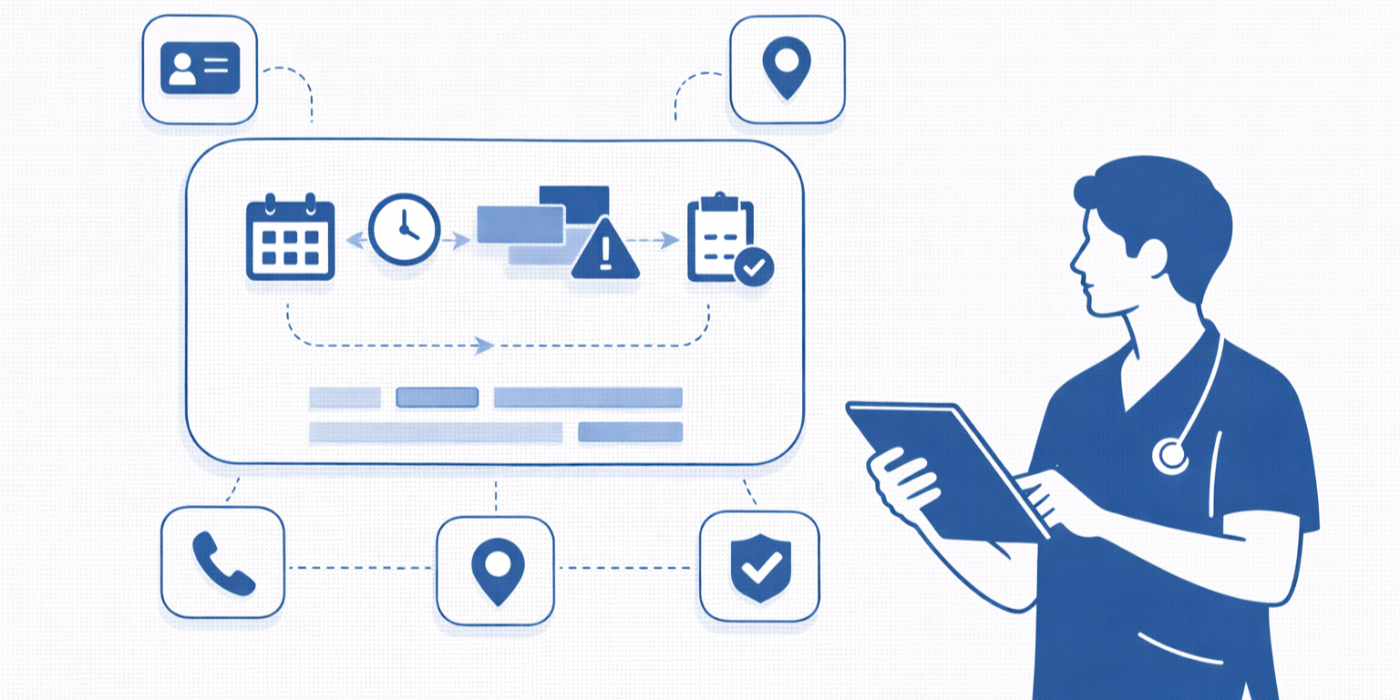
Scheduling conflicts rarely stay isolated. One inaccurate appointment type can create a chain reaction that affects room flow, staff utilization, clinical prep, patient wait times, insurance collection, provider morale, and the likelihood of complaints. A patient who was booked for a short follow-up but actually needed a procedure slot does not just inconvenience one team member. That error can push multiple visits behind, create rushed communication, and increase the risk that everyone after that patient feels ignored. This is why scheduling accuracy deserves the same seriousness as other administrative skills covered in medical office automation trends, future-proof your CMAA career, new study on certified medical administrative assistants improving healthcare efficiency, medical administration workforce trends, and top 10 skills employers look for in a CMAA.
Conflicts also hurt trust because scheduling is one of the few healthcare touchpoints patients understand clearly enough to judge immediately. They may not know what happens in claims processing or documentation review, but they know when they were told 2:00 PM and are still sitting in the lobby at 2:45. They know when they took unpaid time off work for a slot that was never properly secured. They know when they gave the office information twice and still get asked the same questions again. That emotional friction is why teams should connect scheduling skill with empathy in healthcare administration, de-escalation techniques, healthcare portal terms, healthcare CRM terms, and patient intake procedures.
Another reason scheduling conflicts become expensive is that they expose weak internal ownership. When no one knows who is supposed to fix the conflict, the patient gets bounced from phone queue to desk to billing to clinical staff. The conflict then stops being about the appointment itself and becomes about abandonment. Patients can tolerate inconvenience better than silence. They can tolerate delays better than confusion. They can tolerate a reschedule better than hearing three different versions of what happened. Strong organizations prevent that breakdown by tying scheduling workflows to medical appointment scheduling tools ranked by ease of use, virtual medical administration, interactive guide to the medical office of 2025, how automation is the biggest opportunity for CMAA career growth, and how CMAAs will lead the patient experience revolution by 2030.
| Scheduling Conflict | What Usually Caused It | Operational Risk | Best Immediate Fix |
|---|---|---|---|
| Double-booked provider slot | Manual override or syncing error | Delays and angry patients | Prioritize by urgency and offer alternatives fast |
| Wrong appointment type booked | Insufficient intake questions | Provider schedule distortion | Reclassify visit and adjust time or provider |
| No pre-authorization before visit | Insurance verification failure | Denied service or financial dispute | Pause, verify payer rules, present options clearly |
| Provider out unexpectedly | Illness, emergency, schedule change | Mass rescheduling workload | Triage patients by urgency and communication priority |
| Patient arrives on wrong day | Reminder confusion or entry error | Lobby conflict and rework | Check confirmation history and search same-day openings |
| Missed interpreter arrangement | Preference not documented | Communication barrier and delay | Activate interpreter workflow immediately |
| Telehealth link failure | Portal or platform issue | Missed visit or abandonment | Offer backup instructions or alternate connection path |
| Visit booked without required referral | Incomplete intake or payer misunderstanding | Claim denial and patient anger | Clarify requirement and coordinate referring office |
| Procedure patient given short follow-up slot | Template misuse | Backlog and clinical rush | Move case to correct block and notify affected patients |
| Duplicate patient account causing duplicate booking | Registration mismatch | Chart confusion and billing error | Escalate merge review and confirm correct visit |
| Late patient wants full visit | Travel, reminder, or misunderstanding issue | Flow disruption | Apply lateness policy with available options |
| Same-day urgent add-on request | Acute symptoms or patient pressure | Unsafe squeezing-in | Use triage criteria before assigning slot |
| Resource conflict for procedure room | Room template mismatch | Procedure delay | Reallocate room or move non-urgent case |
| Patient scheduled with wrong specialty | Poor referral interpretation | Wasted visit and dissatisfaction | Redirect quickly and preserve priority if possible |
| Follow-up interval booked too early or too late | Protocol not reviewed | Clinical workflow error | Cross-check provider guidance and reset timing |
| Patient wants to combine multiple issues in one slot | Unclear expectations | Overrun and incomplete care | Clarify scope and plan additional visit if needed |
| Portal self-scheduling mismatch | Template rules too loose | High correction workload | Validate self-booking rules and contact patient promptly |
| Reminder sent with wrong location | System data error | No-show risk | Correct message and call high-risk patients |
| Wrong provider selected by call center | Knowledge gap | Patient misdirection | Reassign and retrain scheduling criteria |
| Blocked slot filled without approval | Manual override | Provider dissatisfaction | Review authority rules and rebalance schedule |
| Post-op visit not reserved in advance | Discharge scheduling miss | Continuity gap | Escalate for protected follow-up placement |
| Transportation-dependent patient cannot take offered slot | Rigid scheduling options | Access barrier | Search time windows aligned to transport reality |
| Family insists on immediate sooner appointment | Fear or dissatisfaction | Conflict escalation | Use empathy, urgency screening, and waitlist logic |
| Insurance changed but appointment not updated | Registration lag | Eligibility surprise at check-in | Re-verify coverage before service starts |
| Conflicting recurring appointment series | Template overlap | Long-term access issue | Audit recurrence rules and rebuild correctly |
| Visit needs labs first but lab slot missing | Workflow disconnect | Incomplete clinical prep | Coordinate dependent appointments in sequence |
2. The step-by-step method for resolving scheduling conflicts without chaos
Handling scheduling conflicts professionally requires a repeatable structure. The strongest teams do not improvise every time a patient challenges a slot, a provider template breaks, or a visit turns out to be misbooked. They follow a sequence: identify the real conflict, protect clinical urgency, verify the schedule facts, communicate the issue clearly, offer realistic options, lock the new plan, and document ownership. That discipline matters as much as anything taught in ACMSO certification exam guide, ultimate guide to passing your CMAA certification exam on the first try, complete breakdown of what is included in the CMAA exam, CMAA exam day checklist, and essential study tips to guarantee your CMAA exam success.
Step 1: Name the conflict correctly.
Do not treat every schedule issue as “the patient wants another time.” That is too vague to solve. Ask yourself what kind of conflict this really is. Is it a capacity problem, a wrong visit type, an insurance dependency, a provider availability change, a late-arrival problem, or a patient-expectation mismatch? The quality of your fix depends on the quality of your classification. This same precision mindset supports accuracy in top 20 scheduling and appointment terms CMAAs should know by heart, patient intake procedures, healthcare portal workflows, front desk operations, and medical admin assistant job market outlook.
Step 2: Screen for urgency before you touch the calendar.
One of the most dangerous mistakes in scheduling is treating all patients like interchangeable calendar objects. Some conflicts can wait. Others cannot. If a patient is reporting acute symptoms, post-op concerns, rapid worsening, medication interruption, or a time-sensitive follow-up requirement, the first decision may need triage input rather than a routine reschedule. That is why scheduling staff benefit from understanding the patient context described in effective patient communication, empathy in healthcare administration, de-escalation techniques, telehealth platform guide, and future healthcare compliance changes.
Step 3: Verify the facts before making promises.
Check the appointment notes, reminder history, referral requirement, provider template, insurance status, visit type, and any prior patient communications. Many front-desk conflicts worsen because someone tries to resolve them from memory. That invites false reassurance. The patient hears one answer by phone, another at check-in, and a third from the portal. Verification is essential in environments driven by insurance verification definitions and examples, healthcare CRM terms, top 20 HIPAA and patient privacy terms, telehealth regulation changes, and CMAAs and data privacy future regulations explained clearly.
Step 4: Explain the problem in simple, non-defensive language.
Patients do not need internal jargon like “template defect” or “resource conflict.” They need a clean explanation: “The appointment was booked under a shorter visit type than what your provider needs for this concern, so I want to fix it correctly instead of forcing you into a rushed visit.” That kind of language protects trust. It also reflects the patient-centered standards emphasized in real-life success stories from certified medical administrative assistants, why CMAA certification dramatically boosts your career opportunities, future-proof your CMAA career with emerging skills, medical office of 2025 guide, and how AI will transform medical administrative assistant roles by 2030.
Step 5: Offer options that reflect reality, not wishful thinking.
Weak scheduling teams give vague hope. Strong teams give bounded choices. That may mean a same-day waitlist, alternate provider, telehealth backup, next available protected follow-up slot, or escalation to a referral or authorization coordinator. Specific options reduce emotional volatility because the patient can finally see a path. That solution orientation is increasingly important in medical administration job demand by specialty, annual CMAA salary report, medical office automation trends, medical-administrative assistants and technology report, and interactive career planner for future healthcare roles for CMAAs.
Step 6: Confirm the new plan and ownership.
Never end a scheduling conflict with “Someone will call you.” That sentence is a trust-killer when ownership is vague. Confirm who is doing what, by when, and what the patient should expect next. Clear closure is as important as the reschedule itself.
3. The most common scheduling conflict scenarios and how professionals should handle each one
One of the most frequent conflicts is the double-booked slot. This situation tempts staff to go into apology mode without strategy. The better approach is to assess urgency, review which patient can be shifted with the least clinical harm, communicate early, and offer real compensation through choice and clarity rather than empty sympathy. If one patient is already onsite, the office should avoid making them feel punished for an internal error. This scenario often exposes whether a practice truly understands the access workflows behind front desk operations, appointment scheduling best practices, healthcare CRM tracking, portal communication use cases, and patient communication terms.
A second major category is the wrong appointment type conflict. These are particularly dangerous because they create invisible damage before the patient ever arrives. A problem-focused new patient booked into a quick follow-up slot can throw the entire clinic behind. A procedure patient booked into a regular consult slot can cause rooming problems, consent issues, and prep delays. The fix begins before the reschedule. Staff should review what question was missed at intake, what rule failed in the scheduling tool, and whether the visit-type taxonomy is too confusing. That level of process thinking is part of becoming stronger through CMAA career roadmap, future-proof CMAA specializations, top emerging career specializations for CMAAs, 2026 healthcare administration report, and annual CMAA job market report.
A third common issue is the insurance-dependent scheduling conflict. The patient may have a valid reason for being upset because from their perspective the office accepted the booking and only later revealed a referral, prior authorization, or coverage issue. Staff should avoid blame language here. The patient does not care whether the error came from the payer, call center, or incomplete chart flag. They care whether they are still getting care and what happens next. Translate the barrier, verify what can be corrected immediately, and give a defined next action. This is where fluency in insurance verification, top medical billing terms all CMAAs should understand, CPT codes explained, ICD-10 dictionary, and CMS announces changes in billing codes with impact on CMAAs becomes operationally powerful.
A fourth scheduling conflict is the same-day pressure request, where a patient or family member insists on immediate access because they fear waiting will worsen the issue. These calls and desk interactions require a careful balance. Do not promise access outside protocol, but do not dismiss the request as a mere scheduling inconvenience. Acknowledge urgency, route based on symptom severity or established triage rules, and explain how the practice determines same-day availability. That balance is strengthened by de-escalation techniques, empathy in healthcare administration, telehealth platforms guide, predictive insights on certified CMAAs transforming telemedicine, and telehealth expansion changing medical admin roles.
4. How to communicate with patients during scheduling conflicts without losing trust
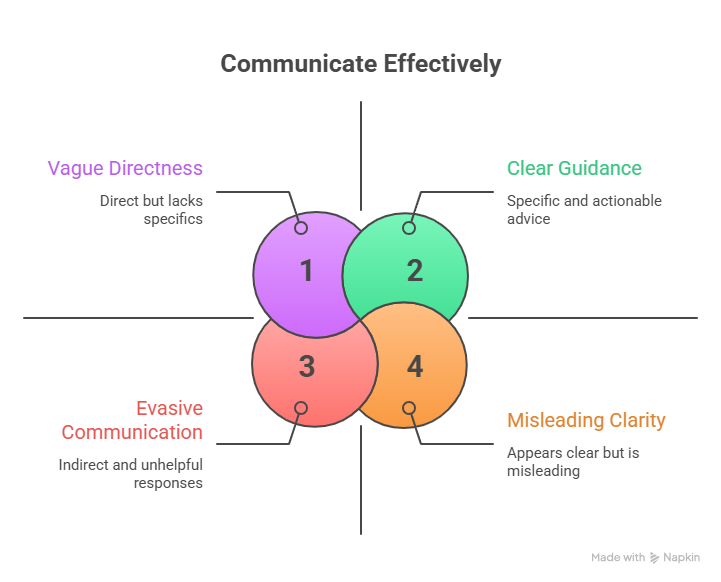
The language used in a scheduling conflict often determines whether the interaction stays manageable. Patients can accept bad news more easily than evasive news. They get angrier when they feel hidden from the truth, talked down to, or forced to decode healthcare jargon while already inconvenienced. That is why staff should avoid phrases such as “That’s just what the system did,” “There’s nothing open,” or “You’ll have to call back later.” Those phrases communicate helplessness, not professionalism.
Instead, strong communication should do three things in order. First, acknowledge the inconvenience specifically. Second, explain the issue plainly. Third, present options. For example: “I see why this is frustrating. The visit was booked under a shorter appointment type than what your provider needs for this concern. I want to fix that correctly, and I can offer you the next appropriate opening, a waitlist priority, or a review for an alternate provider.” That approach feels far more competent than generic apology alone. It aligns with the standards reinforced by effective patient communication, de-escalation techniques, empathy in healthcare administration, front desk operations, and healthcare portal messaging.
Another critical skill is protecting policy without weaponizing policy. Patients should not feel like office rules are being used to shut them down. If a late-arrival policy prevents a full visit, the explanation should connect the policy to fairness, safety, and provider capacity rather than punishment. If a referral is missing, explain that the office wants to prevent a denied or misprocessed visit rather than simply telling the patient they cannot be seen. This kind of framing protects both the relationship and the workflow, especially in settings shaped by HIPAA updates every CMAA must know, predicting HIPAA updates and their impact on CMAAs, future healthcare compliance changes, CMAAs and data privacy future regulations, and breaking new CMS guidelines impacting medical admin assistants.
Finally, never let the patient leave the conversation unclear about the next move. Even when the answer is not ideal, clarity itself reduces hostility. Patients do better with a disappointing but definite answer than with an optimistic but vague one.
5. Preventing future scheduling conflicts through smarter systems, documentation, and team habits
The best way to handle scheduling conflicts is to prevent them upstream. That starts with intake discipline. Schedulers need better prompts, better visit-type definitions, better payer checkpoints, and better escalation rules. If staff are forced to guess whether a patient needs a follow-up slot, procedure block, virtual visit, urgent triage review, or interpreter support, then the organization is practically manufacturing future conflict. The fix is not simply “be more careful.” The fix is design. That includes stronger templates, better decision trees, cleaner scheduling notes, and visible dependencies tied to appointment scheduling best practices, patient intake procedures, insurance verification workflows, healthcare CRM references, and front desk operations guide.
Documentation is another major prevention tool. A strong scheduling note should reduce repeat confusion, not merely prove that someone touched the chart. That means documenting what the patient requested, what was explained, which constraints were discussed, and what special conditions apply. For example, if the patient can only attend on transportation-supported mornings, if the provider requested post-op follow-up within a precise interval, or if an interpreter or prior authorization is required, that information should live where the next scheduler can see it immediately. High-value documentation habits connect directly with the discipline taught through how to master medical administrative terminology for your CMAA exam, top 10 mistakes students make on the ACMSO exam, interactive CMAA practice exam, cmaa exam prep mistakes to avoid, and CMAA career growth guide.
Teams should also audit recurring scheduling pain points the same way they would audit billing errors or patient complaints. If the same specialty keeps generating wrong visit types, the issue is probably structural. If self-scheduling repeatedly produces mismatched appointments, the portal logic is too loose. If referral problems are constantly discovered at check-in, the insurance verification handoff is failing. Mature organizations treat these repeated conflicts as operational intelligence, not individual annoyances. That mindset belongs with the forward-looking perspective in medical office automation trends, how AI will transform medical administrative assistant roles by 2030, 10 emerging technologies every CMAA must prepare for, the future of EMR systems and what CMAAs need to know now, and interactive timeline of major regulatory changes coming for CMAAs by 2030.
6. FAQs
-
Start by identifying exactly what type of conflict it is and whether any clinical urgency is involved. Do not begin by blindly moving calendar slots. A capacity issue, an insurance dependency, and a wrong visit type all require different fixes. This logic is reinforced by appointment scheduling best practices, patient intake procedures, insurance verification definitions, front desk operations terms, and effective patient communication.
-
Acknowledge the inconvenience specifically, explain the issue in plain language, and then give realistic options. Patients usually get angrier when they hear excuses or vague promises than when they hear a clear plan. This communication style aligns with de-escalation techniques, empathy in healthcare administration, healthcare portal communication use cases, healthcare CRM terms, and virtual medical administration.
-
Do not treat this as only a calendar problem. Screen for urgency using your organization’s triage rules, then explain clearly what options exist. Same-day access decisions should balance patient need, provider capacity, and safety rather than whoever argues the hardest. That approach fits with telehealth platforms guide, telehealth expansion changing medical admin roles, predictive insights on CMAAs in telemedicine, future-proof CMAA career skills, and top skills employers look for in a CMAA.
-
Improve visit-type rules, tighten self-scheduling logic, strengthen intake questions, document constraints clearly, and audit recurring failure patterns. Repeated scheduling problems are usually system problems before they are people problems. This prevention mindset fits with medical office automation trends, how automation is the biggest opportunity for CMAA career growth, future of EMR systems, medical-administrative assistants and technology report, and interactive guide to the medical office of 2025.
-
Because scheduling sits at the intersection of patient experience, access, compliance, efficiency, and revenue. Professionals who can manage these conflicts calmly and accurately become far more valuable to clinics, specialty practices, and health systems. That career relevance is reflected in why CMAA certification dramatically boosts your career opportunities, CMAA career roadmap, annual CMAA salary report, medical admin assistant job market outlook, and interactive salary calculator for medical administrative assistants.
