

Medical Admin Time-Tracking Tools: Complete Directory & Usage Guide
Time disappears fast in healthcare administration, but not because medical administrative assistants are disorganized. It disappears because the work is fragmented into dozens of tiny obligations that feel small in the moment and devastating in aggregate. One minute goes to insurance follow-up, another to rescheduling, another to portal routing, another to prior auth status, another to patient callbacks, and by the end of the day the team feels buried without being able to explain exactly where capacity went. That is why time-tracking tools are no longer optional management gadgets. In a modern medical office, they are visibility tools, workflow protection tools, and performance tools.
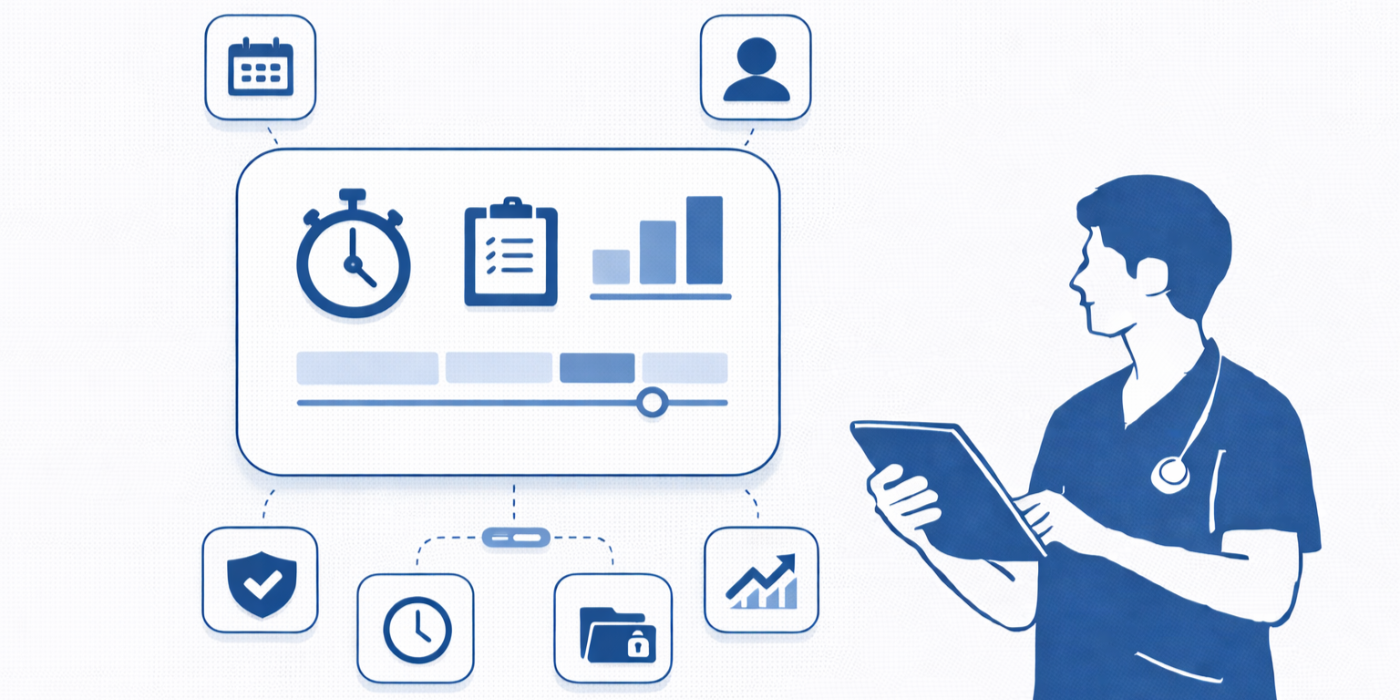
The real value of time-tracking is not surveillance. It is operational truth. When medical admin teams can see how long scheduling, intake cleanup, portal messaging, benefits verification, records handling, and documentation support actually take, they stop guessing about staffing, bottlenecks, and burnout. They make better decisions, build cleaner workflows, and protect service quality more effectively. For anyone serious about healthcare operations, this topic sits directly beside front-desk operations, appointment scheduling best practices, patient intake procedures, and medical office automation trends.
1. Why Time-Tracking Matters More in Medical Administration Than Most Teams Realize
Many healthcare offices still treat time loss like a vague inconvenience instead of a measurable operational problem. That mindset is costly. When nobody tracks where staff time goes, the loudest issue tends to get attention rather than the most expensive one. Teams complain about phones, but maybe the real drain is eligibility rework. Managers blame no-shows, but maybe the actual problem is that reminder workflows are forcing admins into manual rescue mode. Supervisors worry about productivity, but maybe the biggest drag is portal message triage or document routing. Without time-tracking, the office keeps reacting emotionally instead of operating intelligently.
Medical administrative work is especially vulnerable to hidden time erosion because so much of it lives in microtasks. A patient portal message takes two minutes. A benefit clarification takes four. A chart correction takes three. A reschedule with insurance confirmation takes six. None of those feel massive individually, but collectively they can swallow hours. That is exactly why admin professionals need stronger systems awareness, just as they need fluency in healthcare portal terms, insurance verification, effective patient communication, and healthcare CRM terms.
Time-tracking also matters because it exposes the gap between job descriptions and actual labor. A role may be labeled “medical administrative assistant,” but the daily reality might include insurance verification, prior auth prep, reminder rescue, telehealth troubleshooting, document indexing, referral coordination, intake error correction, and compliance logging. Once that workload is measured, the office can stop pretending one generic staffing model fits all sites. This makes time-tracking a workforce intelligence tool, not just a payroll tool. That broader workforce lens ties directly into medical administration workforce trends, annual CMAA salary report trends, why CMAA certification boosts career opportunities, and top 10 skills employers look for in a CMAA.
There is another reason this topic matters: trust. Staff resentment grows quickly when workloads feel invisible. The fastest way to destroy morale is to demand more speed without understanding time demand. Strong time-tracking tools help leaders see what the team is actually carrying. That creates more credible staffing conversations, more honest workflow redesign, and more realistic performance expectations. In a field where burnout often builds quietly, visibility is protection.
And finally, time-tracking is becoming a future-proof skill. Healthcare administration is moving toward more automation, more remote coordination, more digital communication, and more performance analytics. The assistants who understand how to measure time, classify work, and interpret workflow data will be much more valuable than those who only know how to execute tasks. That is why this subject belongs next to future-proofing your CMAA career, future-proof your CMAA career with emerging skills, the future of EMR systems, and 10 emerging technologies every CMAA must prepare for.
2. The Main Categories of Time-Tracking Tools Medical Admin Teams Should Know
The first category is basic manual time-entry tools. These are simple timers or task logs where staff choose a category, start a timer, then stop it when the work ends. They are useful because they reveal the shape of the day quickly. Even a one-week audit with a manual tracker can expose how much time disappears into reschedules, document cleanup, portal responses, and insurance follow-up. For smaller offices that are not ready for complex analytics, these tools are a strong starting point. They pair especially well with strong process knowledge from appointment scheduling best practices, insurance verification, patient intake procedures, and front-desk operations.
The second category is workflow-based tracking tools. These do not just capture hours; they classify effort by queue, work type, or process stage. That matters because healthcare admin labor is not interchangeable. Ten minutes spent calming an upset patient about a portal issue is not the same as ten minutes spent rebooking a follow-up, and neither is the same as preparing release-of-records paperwork. Workflow-based tools produce more meaningful insights because they measure friction by operational function. This is where understanding healthcare portal terms, effective patient communication, de-escalation techniques, and empathy in healthcare administration becomes operationally powerful.
The third category is communication-linked tracking. These tools connect directly to phone systems, patient messaging systems, inboxes, or telehealth workflows. They can measure handle time, response time, abandonment, escalation rates, and backlog. They are especially useful in practices where patient communication drives large amounts of administrative labor. A medical admin team can think it has a staffing problem when it really has a communication design problem. Communication-linked tracking makes that visible. It also complements study in telehealth platforms, healthcare CRM terms, virtual medical administration, and telehealth regulation changes.
The fourth category is EMR-embedded activity reporting. These tools are especially valuable because they can show dwell time in queues, age of unresolved tasks, document routing lag, and turnaround from receipt to completion. This matters because many admin slowdowns are not caused by laziness or low effort. They are caused by hidden queue congestion and broken handoffs. EMR-level visibility helps offices stop blaming individuals for system delays. That perspective belongs alongside the future of EMR systems, interactive guide to the medical office of 2025, how AI will transform medical administrative assistant roles, and why automation is the biggest opportunity for CMAA career growth.
The fifth category is managerial dashboards and analytics suites. These aggregate labor data across people, sites, roles, and time periods. They are critical for leaders, but medical administrative assistants should still understand them because career growth increasingly favors people who can interpret workflow data, not just perform workflow steps. That is the difference between task execution and operations thinking, the same difference emphasized in CMAA career roadmaps, new studies on healthcare efficiency, medical admin assistant job market outlook, and future healthcare administration reports.
3. How to Choose the Right Time-Tracking Tool Without Creating More Admin Work
The first rule is brutally simple: a time-tracking tool that requires too much effort will fail. In healthcare, any tool that adds friction without creating immediate clarity becomes one more burden staff resent. That means the right tool is rarely the one with the most features. It is the one that captures meaningful data with the least possible disruption. If the team spends more time documenting the work than doing the work, the system is broken.
The second rule is to track categories that matter operationally. Many offices make the mistake of using vague buckets like “admin work,” “phones,” or “miscellaneous.” Those labels are almost useless. Good categories should mirror real workflow pressure points: scheduling, rescheduling, cancellations, insurance verification, prior auth follow-up, intake cleanup, referral processing, portal responses, patient callbacks, records requests, document indexing, telehealth support, and compliance tasks. Better categories create better decisions. This kind of precision reflects the same mindset required in how to master medical administrative terminology for your CMAA exam, top 20 scheduling terms, top 20 HIPAA and patient privacy terms, and top 20 medical billing terms.
The third rule is to capture exceptions, not just routine activity. Most serious inefficiency in medical offices lives in the exceptions: wrong insurance, incomplete referrals, portal access failures, unsigned forms, denied authorizations, provider template changes, and patient confusion around virtual visit links. A weak tracker only counts the normal path. A strong tracker reveals how much time is being swallowed by messy realities. That is where real redesign opportunities live.
The fourth rule is privacy awareness. Time-tracking in healthcare cannot ignore compliance. Teams should never build logging habits that expose protected information unnecessarily, encourage insecure notes, or promote casual recording of sensitive patient details. A time-tracking tool must support operational visibility without compromising confidentiality. That is why these systems should always be evaluated alongside CMAAs and data privacy future regulations, future healthcare compliance changes, predicting HIPAA updates, and top HIPAA terms for medical admins.
The fifth rule is to decide what question the office is trying to answer. Is the office trying to understand staffing needs, reduce portal backlog, fix scheduling inefficiency, quantify insurance verification burden, compare locations, justify automation, or improve turnaround times? Different questions require different tracking designs. A bad rollout often happens because leaders ask for “more visibility” without deciding what insight they need.
The sixth rule is cultural. Staff need to understand that time-tracking should expose workflow truth, not hunt for someone to blame. If the team views the system as punishment, the data quality will collapse. If they view it as proof of hidden workload and a way to make operations fairer, adoption improves dramatically.
4. The Most Valuable Real-World Uses of Time-Tracking in a Medical Office
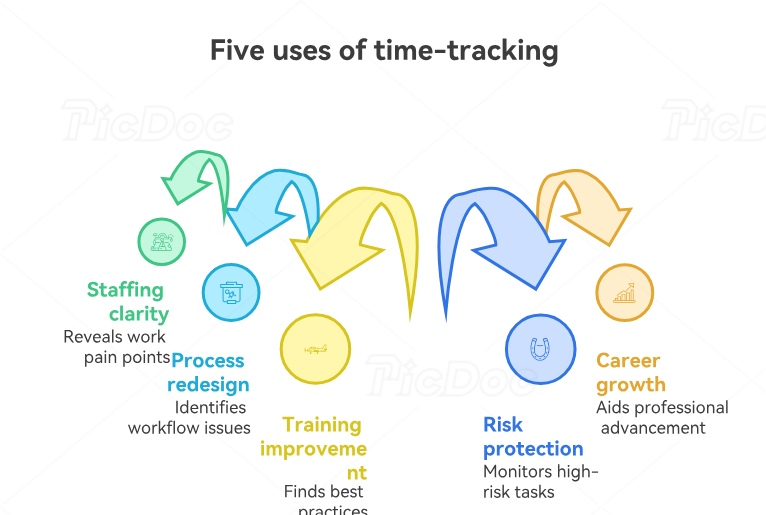
The most immediate use is staffing clarity. Offices often know they are overwhelmed, but they do not know where or why. Time-tracking reveals whether pain is concentrated in check-in, insurance verification, call queues, portal follow-up, telehealth support, or document management. That allows managers to redistribute work intelligently instead of making generic demands for speed. It also gives medical admin staff stronger evidence when they say a process is unsustainable.
A second powerful use is process redesign. Many offices try to solve problems with motivational language when the real need is workflow redesign. If time-tracking shows that the team spends huge amounts of time correcting incomplete forms, that points to better intake design. If portal questions consume hours, that may signal poor patient instructions. If insurance rework dominates the day, the office may need cleaner eligibility workflows. Measured time turns complaints into solvable operational questions. That connects directly to the logic behind medical office automation trends, interactive guide to medical office technologies, future health administration insights, and automation opportunities for CMAA growth.
A third use is training improvement. If one staff member handles portal triage in half the time of another while maintaining quality, that should not just be noticed casually. It should trigger workflow study. Maybe the faster staff member uses better templates, understands escalation rules better, or navigates the EMR more efficiently. Time data, when paired with quality review, helps offices identify best practices instead of relying on vague impressions.
A fourth use is protecting high-risk workflows. Not all admin tasks carry the same risk. A slow appointment reschedule is frustrating, but a delayed release-of-records request or mishandled privacy-related callback can create far more serious consequences. Time-tracking helps leaders see when high-risk workflows are overloaded. That matters because offices often underestimate the labor burden of compliance-sensitive work. This is why smart teams connect time visibility with knowledge in top HIPAA terms, data privacy regulations explained clearly, future healthcare compliance changes, and de-escalation techniques.
A fifth use is career advancement. The medical administrative assistants who rise fastest are often not the busiest people in the room. They are the ones who can describe workflow clearly, measure it accurately, and suggest improvements grounded in real data. A professional who can say, “We are losing 11 staff hours per week to insurance correction after scheduling because payer details are not being validated early enough,” sounds fundamentally different from someone who says, “We are very busy.” Time-tracking sharpens that difference.
5. Common Time-Tracking Mistakes That Make the Data Worthless
The first mistake is tracking too broadly. If every task falls into three giant categories, the resulting data will be too fuzzy to drive action. Offices will learn that staff spend “a lot of time on admin,” which is obvious and useless. Valuable tracking requires enough specificity to expose friction points without becoming impossibly detailed.
The second mistake is ignoring quality. Speed by itself can be dangerous in healthcare administration. A staff member who races through patient messages but creates confusion, misses documentation, or exposes privacy risk is not performing better. Good time-tracking should always be interpreted alongside accuracy, patient experience, and compliance. This is why workflow intelligence should stay connected to effective patient communication, empathy in healthcare administration, healthcare portal terms, and front-desk operations.
The third mistake is using time data only to pressure staff. That approach poisons adoption quickly. If the office only uses tracking to ask why someone took too long, staff will either resist the system or distort the data. The better question is usually, “What about this workflow is consuming so much time?” The goal should be operational truth, not shallow performance theater.
The fourth mistake is failing to separate routine work from exception work. Exception-heavy workflows almost always consume more labor than leaders expect. Prior authorizations, benefits confusion, portal access failures, incomplete intake packets, and records-release complications can devour entire shifts. If those are folded into generic categories, the office will miss the real source of workload pressure.
The fifth mistake is never closing the loop. Many offices collect time data, then do nothing with it. Staff log the work, managers glance at a dashboard, and the same broken processes continue. That is the worst outcome because it teaches employees that measurement changes nothing. A useful time-tracking program should lead to staffing changes, process redesign, automation review, script refinement, better templates, or clearer work routing.
The sixth mistake is treating all sites or specialties the same. A primary care office, specialty clinic, urgent care center, and telehealth-heavy practice may all use the same titles, but their administrative time demands differ dramatically. Tools and reporting categories should reflect that reality. That kind of specialty-aware thinking mirrors the logic behind interactive industry reports on medical administration demand by specialty, predictive insights on virtual healthcare transformation, future healthcare roles for CMAAs, and medical office technology reports.
6. FAQs About Medical Admin Time-Tracking Tools
-
They have a much broader purpose. In healthcare administration, the biggest value usually comes from operational visibility. Time-tracking helps teams measure scheduling burden, insurance verification effort, portal response lag, document routing time, referral coordination workload, and other hidden drains that generic payroll systems never explain.
-
A small office should usually start with a simple, low-friction task-based tracker for one or two weeks. The goal is not perfection. The goal is to identify where time disappears. Even a basic audit can reveal whether the main issue is phones, scheduling, intake cleanup, insurance work, or records handling.
-
Start with the tasks that create the most repeated stress or downstream damage: scheduling and rescheduling, insurance verification, patient callbacks, portal message triage, prior authorization prep, referral coordination, intake correction, and records requests. These are usually the areas where hidden labor piles up fastest.
-
Yes, if it is introduced badly. If the message is “we want to catch people wasting time,” the tool will fail. If the message is “we need proof of hidden workload so we can fix the process and staff fairly,” adoption improves. Framing matters enormously.
-
Use categories that are specific enough to guide decisions but not so detailed that logging becomes a second job. The best systems balance accuracy and usability. Staff should be able to capture reality without interrupting it constantly.
-
Absolutely. Speed without accuracy is dangerous in medical administration. Time data becomes far more meaningful when combined with quality indicators such as documentation completeness, privacy compliance, response appropriateness, patient satisfaction, and error rates.
