

Interactive Training: Patient Record Updates & EMR Compliance
Patient record updates look routine until one wrong click changes the legal, clinical, and operational meaning of the chart. A mismatched allergy entry, outdated insurance field, incomplete medication update, or careless portal message can create billing friction, patient safety risk, provider confusion, and compliance exposure at the same time. That is why strong record work is never just “data entry.”
This guide breaks down how professionals handle patient intake, EMR integration, patient privacy, charting terminology, and documentation accuracy so every update is faster, cleaner, safer, and easier for the next team member to trust.
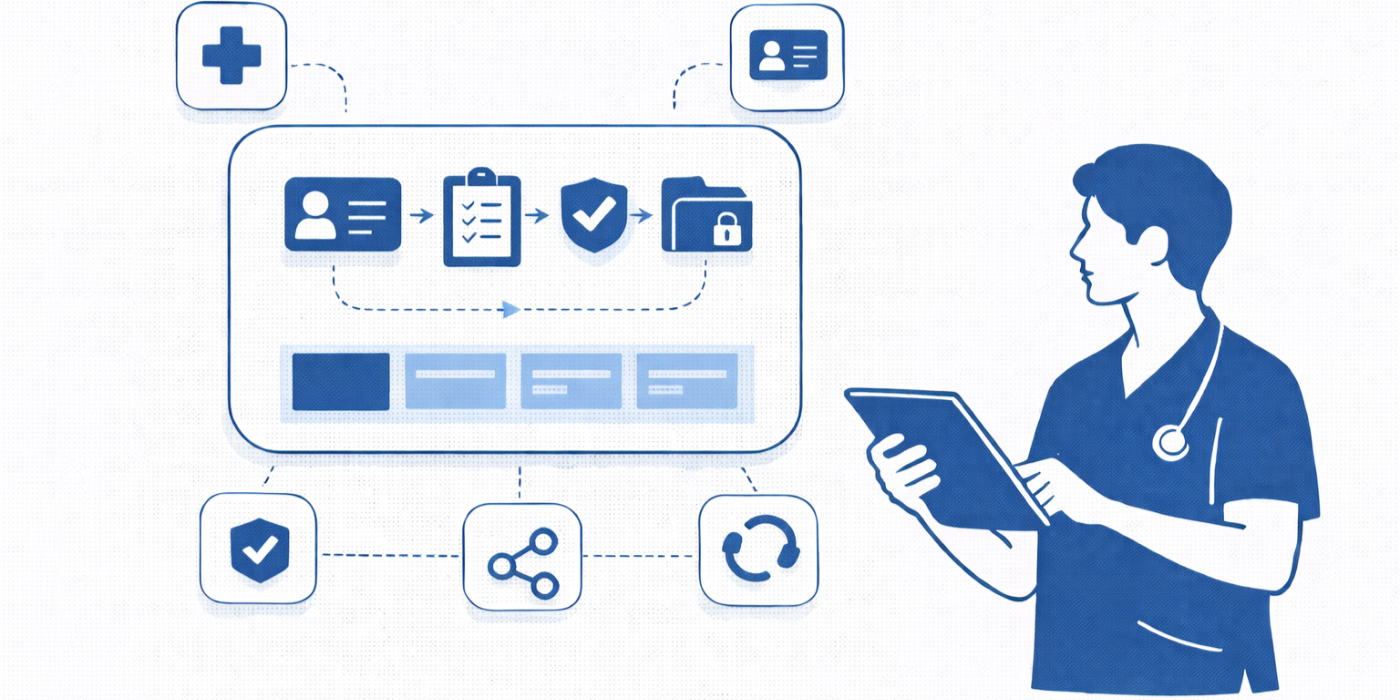
1. Why Patient Record Updates Are a Compliance Skill, Not a Clerical Task
Many new professionals underestimate patient record updates because the work often happens in small moments. A demographic correction is made between calls. A medication list is edited while the patient is checking in. A portal message is copied into the chart during a busy morning. An insurance field is changed after a payer issue. But each of those actions changes what the organization now treats as true. That is why record updates sit at the intersection of front-desk operations, insurance verification, HIPAA and privacy terms, EMR and charting language, and medical billing vocabulary.
A weak update does not stay local. If the wrong guarantor remains attached to the account, collections and statement workflows can fail. If the medication list is outdated, the provider may review bad information before entering the room. If a patient’s preferred contact method is incorrect, reminders and follow-up instructions may go to the wrong place. If an allergy is entered carelessly, nobody on the next shift knows whether the patient reported a true reaction or whether someone guessed. That is why people who handle record changes well also study effective patient communication, active listening, healthcare portal workflows, and medical records release tools.
The real difference between average and high-value staff is judgment. Average staff focus on whether the requested change can be made. High-value staff focus on whether the update is verified, appropriately documented, privacy-safe, correctly routed, and visible to the right person at the right time. That mindset is strengthened by understanding de-escalation techniques, empathy in healthcare administration, healthcare CRM terminology, and future EMR trends for CMAAs. Record work is not background work. It is trust work.
2. The EMR Compliance Rules You Must Internalize Before You Touch the Chart
The first rule is simple but often violated under pressure: do not update what you have not verified. Patients speak quickly. Family members interrupt. Insurance cards are blurry. Portal messages are incomplete. A rushed user wants the system to “just let me fix it.” But high-quality record work starts with identity, source, and scope. You verify who the patient is, what the requested change actually is, and whether your role allows you to make that change directly or requires escalation. This is where patient privacy guidance, HIPAA terminology mastery, patient communication terms, and front-desk workflow definitions become practical, not theoretical.
The second rule is that correcting information is not the same as rewriting history. Strong EMR compliance depends on preserving the record’s integrity. That means using correction workflows, comments, version history, routing, and formal amendment processes correctly instead of trying to erase inconvenient entries. Anyone working in record maintenance should understand EMR and charting terms, documentation terms for scribes, clinical documentation accuracy reporting, and documentation compliance standards. The chart must remain defensible even after a correction.
The third rule is that some fields look administrative but act clinically. Medication lists, allergies, pharmacy preferences, preferred language, communication permissions, portal proxies, and problem-list-related requests can all change care delivery. That is why professionals who update records safely also study telehealth platform workflows, portal use cases, insurance verification examples, and medical billing terms. One careless field change can echo through triage, prescribing, scheduling, and claims.
The fourth rule is visibility. A record update is incomplete if the right person cannot see it, trust it, and act on it. That means labeling documents correctly, routing tasks with enough context, using approved note types, and avoiding vague internal comments. This is supported by healthcare CRM concepts, collaboration tools for medical office teams, medical records release tools, and medical administration technology guidance. Good updates do not disappear inside the chart. They move work forward.
3. Step-by-Step Workflow for Safe, Clean, and Defensible Patient Record Updates
The best way to reduce record errors is to use a standard sequence every time, even when the requested change feels small. Step one is identity confirmation. Before touching the record, confirm the patient using approved identifiers, especially when there are similar names, merged records, portal proxies, or rushed phone calls. This discipline is reinforced by patient intake definitions, front-desk operations guidance, HIPAA privacy essentials, and active listening techniques. When identity handling is sloppy, every update after it becomes dangerous.
Step two is source clarification. Ask where the update came from and how reliable that source is. Did the patient report it directly? Is it from an insurance card, portal upload, discharge summary, pharmacy request, or outside office record? Step three is scope clarification. Decide whether the change is administrative, documentation-related, or clinically sensitive enough to require provider review or a stricter workflow. These decisions get better when you understand charting terms, documentation accuracy standards, ICD-10 concepts, and CPT terminology. Not every field should be edited by the first person who opens the chart.
Step four is the actual update. Use the correct field, the correct document type, and the correct workflow. Do not bury important information in free text when there is a structured field meant for it. Do not save an outside record under the wrong category because the name “looks close enough.” Do not edit a note when an amendment workflow is required. This is where EMR integration knowledge, healthcare portal literacy, records release workflow tools, and documentation trend guidance become essential.
Step five is routing and validation. Once the update is made, ask: who needs to know? Does this change affect the provider, billing team, scheduler, clinical staff, or records team? Does it need to be routed, attached, or acknowledged? Then do a quick self-audit: correct patient, correct field, correct visibility, correct note, correct next step. Professionals who do this consistently outperform those who rely on memory and speed alone. That is why high performers keep sharpening their judgment through medical office automation trends, future data privacy guidance for CMAAs, the future of EMR systems, and technology changes shaping medical admin roles.
4. The Most Dangerous EMR Update Mistakes and How Experts Prevent Them
The first dangerous mistake is updating fast just because the patient sounds certain. Patients often speak with confidence about information that still needs clarification. They may abbreviate medication names, confuse prior and current insurance, give a mailing address instead of a residence address, or request a diagnosis change that is outside administrative scope. Experts slow down at exactly the right moment. They use active listening, effective communication frameworks, empathy guidance, and de-escalation skills to clarify without sounding defensive or obstructive.
The second mistake is treating free-text notes like a rescue tool for bad workflow. Staff who are not confident in the system often dump important information into comments that nobody sees, nobody trusts, or nobody can route correctly. Experts know when to use structured fields, when to attach supporting documents, and when to route to the right queue instead of hiding details in a note. That judgment grows from understanding healthcare portal terms, EMR integration tools, records release workflows, and medical office team collaboration tools. The system works only when the right field carries the right meaning.
The third mistake is crossing from administrative maintenance into clinical interpretation. Updating patient-reported data is one thing. Deciding what a symptom means, altering diagnostic meaning, or changing a clinically sensitive entry without the correct workflow is something else. That is why strong staff study clinical documentation language, charting terminology, clinical efficiency reporting, and documentation compliance insights. Experts protect scope because scope errors are where quiet chart damage begins.
The fourth mistake is forgetting the audit trail. Every significant change should be understandable later. Who changed it? Why? Based on what? Where was the supporting source? What happened next? If your update cannot survive those questions, it is not truly compliant. That is why expert staff care so much about future HIPAA change preparation, major regulatory change timelines, healthcare data privacy guidance, and automation risks in healthcare administration. Good updates are not only accurate today. They remain explainable later.

5. How to Build Expert-Level Speed Without Sacrificing Accuracy, Privacy, or Audit Readiness
Real expertise is not slow perfectionism. It is fast, repeatable accuracy. The goal is to build habits that let you move quickly because your thinking is organized, not because you are rushing. Start by grouping patient record changes into repeatable categories: demographics, insurance, communication preferences, medication-related updates, document imports, portal issues, and role-restricted changes. When categories are clear, decision-making gets faster. This kind of operational clarity is strengthened by medical office automation insights, AI’s effect on medical admin roles, future-proof CMAA skill planning, and healthcare administration reporting. Strong systems thinking reduces hesitation.
Next, use micro-checklists. High performers do not trust memory for high-risk updates. They know what must be verified before saving an insurance change, what must be captured before granting portal proxy access, what fields matter in medication updates, and what document-indexing steps must happen before routing. Combine that with front-desk operations checklists, insurance verification workflows, portal terminology, and privacy-safe communication habits, and you create consistent performance under pressure.
Then review your own error patterns. Which updates make you hesitate? Which ones tend to come back with corrections? Which ones create extra routing work for the provider or billing team? That self-review is where professionals separate from task completers. They use trends to target training, create templates, refine notes, and request system improvements. That same growth mindset connects naturally with top skills employers want in a CMAA, career growth roadmaps, healthcare efficiency studies, and certification value. Employers notice people who reduce correction work.
Finally, remember that expert record maintenance is becoming more valuable, not less. As more systems automate reminders, intake forms, and uploads, the human role shifts toward judgment, verification, exception handling, privacy protection, and cross-team clarity. The people who thrive will be the ones who understand both the software and the consequences of the data inside it. That future is already visible in the future of EMR systems, technology trends for medical admins, AI and medical scribing workflow changes, and future data-accuracy expectations in healthcare documentation. Clean charts will belong to people with disciplined habits, not just fast fingers.
6. FAQs About Patient Record Updates and EMR Compliance
-
The biggest mistake is editing before verifying. Staff often trust memory, assume identity, or act on incomplete information when the clinic is busy. Stronger habits come from combining patient intake verification, front-desk discipline, HIPAA privacy knowledge, and active listening before the update is ever saved.
-
Ask whether the change is purely administrative, whether it requires supporting documentation, and whether it crosses into clinical interpretation. That judgment improves when you understand EMR and charting terms, documentation terms, insurance verification workflows, and medical billing basics.
-
Identity fields, insurance information, allergies, medications, communication permissions, portal access, and any information that can alter care, privacy, billing, or routing should always be handled with extra care. This is why portal terminology, privacy-safe communication rules, telehealth workflow guidance, and records release tools matter far more than many beginners realize.
-
Use the system’s approved correction or amendment workflow instead of trying to delete the original history. The goal is to make the correction clear while preserving what happened, when it happened, and why it changed. That becomes easier when you understand documentation compliance standards, clinical documentation accuracy expectations, EMR charting language, and future regulatory changes for CMAAs.
-
Verify the patient, document source, document type, and correct chart destination before indexing or routing anything. Many serious record problems come from attachments placed in the wrong chart or under the wrong category. Staff who handle this well usually understand medical records release workflows, EMR integration tools, portal workflows, and medical office collaboration tools.
-
Because demographics drive patient matching, payer routing, statement delivery, reminder delivery, portal access, and sometimes even visit readiness. One wrong phone number or date of birth can ripple through multiple teams. That is why front-desk operations, patient communication workflows, insurance verification, and healthcare CRM concepts must work together.
