

Time Management Mastery for Medical Admin Professionals
Medical admin work does not become overwhelming only because there is “too much to do.” It becomes overwhelming because everything arrives with a different level of urgency, interruption, compliance weight, and emotional demand. A ringing phone can interrupt insurance verification. A walk-in can break registration flow. A provider request can derail scheduled follow-up work. Time management in healthcare administration is really decision management under pressure.
For medical admin professionals, mastering time means protecting accuracy while moving fast, reducing task-switching damage, and building workflows that keep urgent work visible without letting routine work decay. The strongest professionals do not merely stay busy. They control attention, sequence work intelligently, and create systems that keep the day from controlling them.
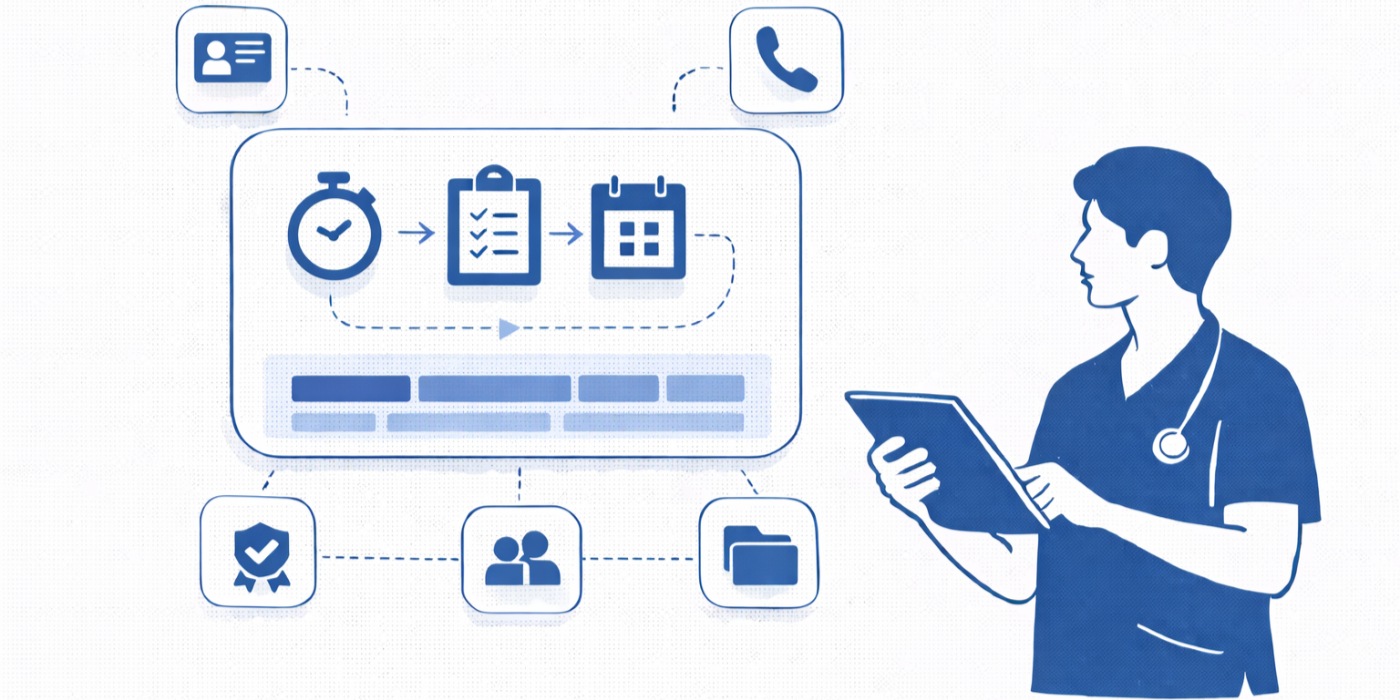
1. Time Management in Medical Administration Starts With Task Triage, Not Speed
Most time management advice fails in healthcare because it is written for people whose work can be paused without consequence. That is not how a medical office works. A medical admin professional may be handling check-in, inbound calls, prior authorization follow-up, scheduling conflicts, portal messages, records requests, provider interruptions, and patient frustration within the same hour. In that environment, pure speed is dangerous. Triage is what matters first.
The first principle is that not every task deserves the same timing. Some tasks are urgent because delay affects care. Some are urgent because delay affects revenue. Some feel urgent only because the interruption is loud. That distinction separates average performers from trusted operators. A patient who mentions worsening symptoms during a scheduling call creates a different workload than a patient confirming tomorrow’s arrival time. A prior authorization deadline carries more operational weight than a routine supply request. A portal message asking about an abnormal result cannot be handled with the same queue logic as a generic form status question. That is why strong workflow discipline begins with knowing how to classify work correctly.
A useful daily framework is to divide tasks into four buckets: immediate patient-impact work, same-day operational work, protected admin work, and deferrable low-risk work. Immediate patient-impact work includes symptom escalation language, urgent provider callbacks, result follow-up issues, and safety-sensitive communication. Same-day operational work includes scheduling corrections, insurance verification tied to near-term visits, referral packet completion, and time-sensitive document routing. Protected admin work includes records release processing, inbox cleanup, reconciliation tasks, and template maintenance. Deferrable low-risk work includes noncritical file organization, less urgent callbacks, and requests that can be grouped later. Resources such as front desk operations terms, appointment scheduling best practices, patient intake procedures, and interactive guide to handling appointment scheduling conflicts all become more valuable when viewed through this triage lens.
The second principle is that context switching has a real cost. Every time a CMAA jumps from insurance verification to a phone call, then to a provider question, then back to chart prep, accuracy drops and completion time stretches. That is why strong professionals protect mini-blocks of similar work wherever possible. Five consecutive eligibility checks are faster and safer than five eligibility checks interrupted by unrelated administrative fragments. The same is true for portal messages, referral tracking, records-release requests, and follow-up calls. Articles on medical admin time tracking tools, best collaboration tools for medical office teams, top 10 EMR shortcuts to boost CMAA productivity, and resolving common EMR software issues support this because they help reduce time leakage inside routine systems.
The third principle is that a visible work queue beats memory every time. Medical offices become chaotic when critical tasks live in heads, sticky notes, half-finished tabs, and casual verbal reminders. Time mastery begins when every task has a place, an owner, a deadline, and a priority level. That structure protects both productivity and patient safety.
2. Build a Daily Workflow That Matches the Reality of a Medical Office
Time management improves when the day is designed around real office pressure instead of idealized to-do lists. Medical admin professionals work in an environment where demand surges are predictable even when individual interruptions are not. Morning check-in spikes, lunch-hour callback congestion, end-of-day provider requests, same-day scheduling adjustments, and authorization deadlines all create patterns. The office becomes more manageable when the workflow respects those patterns.
Start with anchor blocks. Anchor blocks are non-negotiable chunks of time assigned to high-value, recurring work. A team might use an early block for next-day chart prep and insurance verification, a midday block for callback completion and portal responses, and a late-day block for records release, referral tracking, and unresolved queue cleanup. This is more reliable than trying to “fit things in” whenever possible. The strongest admins often combine directory of medical admin staff scheduling tools, secure patient scheduling tools, EMR integration tools every medical administrative assistant needs, and scheduling software mastery from beginner to expert to reduce friction inside these blocks.
The next move is preloading the day. That means preparing the schedule before the pressure hits. Verify high-risk appointments early. Flag missing insurance information. Confirm visit prep instructions. Identify double-booking risks. Note providers with heavy templates or likely overruns. The goal is not to predict every issue. The goal is to reduce surprise volume. This is where insurance verification, patient communication apps every CMAA should use, telehealth platforms key definitions and guide, and healthcare portal terms all contribute to smoother pre-visit management.
Then comes queue discipline. One of the biggest reasons time disappears in medical administration is that the work queue is unclear. Everything looks urgent when nothing is ordered properly. A good queue tells staff what to touch now, what to group later, what to escalate, and what to close quickly. That means having separate visibility for urgent patient-impact items, near-deadline admin work, routine follow-up, and backlog cleanup. It also means closing loops completely. A half-documented task always returns later and costs more time the second time around.
Another critical principle is using scripts and templates without becoming robotic. Standard language speeds up calls, estimate explanations, scheduling instructions, and follow-up reminders. It also reduces the mental load of reinventing the same communication dozens of times each day. Guides like effective patient communication terms and interactive examples, active listening techniques for medical admin professionals, patient privacy communication essentials, and step-by-step guide to managing difficult conversations with patients help teams stay both fast and clear.
The best daily systems do not try to make the office quiet. They make the pressure more navigable.
3. Use Technology, Templates, and Micro-Automation Without Losing Accuracy
Technology saves time only when it reduces decision fatigue, removes repeat keystrokes, and improves visibility. It wastes time when it creates more tabs, more re-entry, more disconnected queues, and more cleanup after bad automation. Medical admin professionals need a practical standard for evaluating whether a tool, shortcut, or template is actually helping.
Begin with the EMR. Shortcuts are powerful when they reduce navigation waste and repetitive clicks. They are dangerous when they encourage blind copying, stale documentation, or skipped verification. A good time-saving shortcut should eliminate friction without weakening accuracy. That is why top 10 EMR shortcuts to boost CMAA productivity instantly, resolving common EMR software issues practical guide, interactive training patient record updates and EMR compliance, and front desk operations guide and checklist should be used together. Productivity without control creates expensive rework.
The same applies to scheduling and communication tools. A reminder system helps when it reduces no-shows, cuts inbound call volume, and provides clean status visibility. It hurts when staff stop checking exceptions, fail to confirm prep requirements, or assume the automation solved understanding. Many offices benefit from combining medical appointment scheduling tools ranked by ease of use, patient communication apps, interactive guide to handling appointment scheduling conflicts, and emergency appointment management because together they reduce both routine friction and disruption damage.
Templates are another major lever. Call scripts, portal response starters, estimate language, records-release checklists, referral intake forms, and chart-prep checklists all save time because they reduce uncertainty. They also improve consistency, which means fewer clarifying calls and fewer reopening loops. The key is to make templates intelligent enough to guide, but flexible enough to personalize. A stiff script that ignores context can increase call time because it forces patients to repeat themselves or ask for clarification. A strong script shortens the routine portions and preserves attention for what is unique.
Micro-automation is where time management becomes strategic. Auto-reminders, flagged deadlines, routed work queues, standardized status labels, patient portal onboarding workflows, and same-day follow-up reminders all reduce invisible labor. Resources on AI and automation in medical administration, interactive guide to emerging medical admin technologies, medical office automation trends, and future-proof your CMAA career matter because they help admins choose automation that removes repetitive strain while keeping human judgment where it belongs.
The right question is never “Can this be automated?” The right question is “Will this reduce effort without creating new confusion, delay, or risk?”
4. Control Interruptions, Protect Focus, and Recover Fast When the Day Breaks
Every medical admin professional needs a recovery method because no workflow survives the day untouched. Providers run behind. Patients arrive unprepared. Systems lag. Staff call out. Insurance responses stall. A time-management system is only as strong as its interruption strategy.
The first rule is to create interruption tiers. Some interruptions deserve immediate attention. Others deserve a controlled response. If everything interrupts everything, the office bleeds time all day. Walk-ins should be triaged before they are fully engaged. Phone calls should be screened by request type. Provider interruptions should be captured in a standard way so they do not wipe out unrelated priority work. Message routing rules should distinguish urgent from merely visible. This is where de-escalation techniques interactive dictionary and practical tips, effective patient communication terms, active listening techniques, and patient privacy communication essentials support faster, cleaner handling under stress.
The second rule is to use restart points. One of the hidden reasons interruptions are so expensive is that staff lose track of where they were. A restart point is a quick note, status marker, or queue update that makes it easy to resume without rebuilding context from memory. This matters during records release, insurance verification, referral completion, scheduling research, and chart-prep tasks. A five-second status note can save ten minutes of reorientation later.
The third rule is to protect “deep admin” windows. These are short blocks where complex work gets done with minimal interruption. Prior authorizations, difficult scheduling repairs, unresolved portal messages, claim-related investigation, and multi-step provider follow-up all deserve focus protection. Offices that never protect these windows end up doing complex work in fragments, which makes it slower and sloppier. Tools such as best collaboration tools for medical office teams, medical admin time tracking tools, online communities and forums for CMAAs, and medical administration conferences and workshops often highlight productivity ideas, but the most important takeaway is operational: focused minutes in healthcare admin are expensive and should be defended.
The fourth rule is emotional recovery. Medical admin professionals lose time when a difficult patient interaction mentally lingers into the next ten tasks. Strong professionals develop a reset sequence: document the issue, escalate when needed, close the communication loop, take one tactical breath, and return to the queue. That sounds small, but it prevents emotional spillover from destroying the next hour’s concentration.
A broken day does not have to become a lost day. The best admins know how to absorb disruption, re-prioritize fast, and restore order without panicking.

5. Measure Time the Right Way: Completion, Accuracy, and Delay Prevention
A medical office can look productive while still wasting enormous amounts of time. Staff may be busy all day and still leave behind unresolved callbacks, incomplete records-release requests, unverified insurance, and unclosed patient communication loops. That is why time management must be measured by outcomes, not motion.
The first metric is completion quality. How often are tasks finished fully the first time? A callback logged without next steps is not complete. A demographic update without confirmation is not complete. A records request filed without destination verification is not complete. A scheduling fix made without updated instructions is not complete. Clean first-pass completion saves far more time than speed followed by correction. That is why interactive training for patient record updates and EMR compliance, insurance verification glossary and examples, top 20 scheduling and appointment terms CMAAs should know by heart, and top 20 medical billing terms all CMAAs should clearly understand matter to time mastery, not just knowledge building.
The second metric is delay prevention. Great admins prevent tomorrow’s mess today. They notice missing paperwork before the patient arrives. They surface schedule pressure before it becomes an hour-long backlog. They spot unresolved auth issues before the visit is in jeopardy. They identify a weak handoff before it turns into duplicate work. This predictive style is one reason why top 10 skills employers look for in a CMAA, CMAA career roadmap, why CMAA certification dramatically boosts your career opportunities, and real-life success stories from certified medical administrative assistants all point toward judgment and reliability, not just task familiarity.
The third metric is queue health. How old are the oldest unresolved items? How many same-day tasks spill into tomorrow? How many calls require second attempts because the first documentation was weak? How often do scheduling changes trigger follow-up confusion? Queue health reveals whether the workflow is sustainable or merely surviving. Strong queue health also improves patient trust, because patients feel the difference between a clinic that remembers, follows through, and closes loops versus one that makes them repeat themselves every time.
The fourth metric is energy preservation. Burned-out admins lose time because mental fatigue slows decisions, increases errors, and makes every interruption feel heavier. Good time management creates more than efficiency. It creates recoverable work. That includes task grouping, clear handoffs, stronger scripts, fewer hidden queues, and better tools. It also supports long-term career durability, especially in environments increasingly shaped by virtual medical administration, interactive industry reports on medical administration job demand, annual CMAA salary reports, and new studies on how certified medical administrative assistants improve healthcare efficiency.
Time management mastery is not about squeezing more tasks into an already crowded day. It is about building a cleaner day that produces fewer fires, fewer repeats, fewer dropped balls, and better outcomes.
6. FAQs
-
The biggest mistake is treating every interruption as equally urgent. That creates constant task switching, unfinished work, and rising error risk. Strong admins classify tasks by patient impact, deadline pressure, and operational consequence, then work from that structure instead of reacting to whatever is loudest.
-
Group similar tasks, use protected work blocks, rely on standardized scripts, and keep a visible task queue. Productivity rises when the brain spends less time reorienting and less energy deciding what to do next. Accuracy improves when work is sequenced instead of scattered.
-
They often must manage multiple demands, but true multitasking usually lowers quality. The better approach is rapid triage followed by focused handling. Touch urgent tasks quickly when needed, then return to grouped work. Context switching should be limited because every switch adds time and increases the chance of missing details.
-
The most helpful tools are the ones that reduce re-entry, improve queue visibility, standardize communication, and surface deadlines. Scheduling tools, patient communication platforms, EMR shortcuts, status trackers, and automation for reminders or routing can all help when they are configured around workflow instead of added as extra complexity.
-
Use interruption tiers. Triage walk-ins before full engagement. Use short scripts for simple call types. Capture provider requests in a standard way. Mark restart points before shifting away from a task. The goal is not to eliminate interruptions. It is to keep them from destroying the rest of the workload.
-
Look at outcomes: fewer overdue callbacks, fewer scheduling corrections, cleaner handoffs, better same-day closure, fewer repeated patient contacts, and less end-of-day backlog. A good system makes work more finishable, not just more active.
