

Building a Standout CMAA Resume: Complete Interactive Guide
A CMAA resume fails for predictable reasons. It reads like a generic office resume, hides healthcare-specific value, buries workflow skills employers care about, and lists duties without proving accuracy, pace, discretion, or operational judgment. Hiring managers do not need another candidate saying they answered phones and scheduled appointments. They need evidence that you can protect flow, reduce friction, communicate clearly, and keep a medical office moving under pressure.
A standout resume shows that you understand front desk operations, can manage appointment scheduling best practices, handle patient intake procedures, protect patient privacy communication essentials, and work confidently inside EMR workflows. The strongest candidates also connect their resume to employer priorities like medical admin job market trends, top skills employers look for in a CMAA, career growth through certification, and the larger shift toward future-proof medical administration skills.

1. What Makes a CMAA Resume Stand Out in a Real Hiring Process
Most weak resumes make one fatal mistake: they describe activity instead of value. A hiring manager already knows a CMAA may schedule patients, update records, verify demographics, answer calls, and route messages. The real question is whether you can do those things accurately, quickly, and professionally while protecting privacy and reducing office friction. That is why strong resumes use accomplishment language tied to operational work such as secure patient scheduling, patient communication tools, EMR integration tools, resolving common EMR issues, and top EMR shortcuts for productivity.
A standout CMAA resume also sounds like it belongs in healthcare. That means your wording should reflect the language of the role: insurance verification, patient registration, intake coordination, scheduling triage, records release, referral tracking, confidentiality, chart updates, provider support, portal messages, and workflow organization. Employers notice when a resume shows fluency in medical administrative terminology, insurance verification concepts, medical billing basics, HIPAA and privacy terms, and healthcare portal workflows.
Another major differentiator is relevance. A resume should not feel copied from a template meant for receptionists in any industry. It should feel built for medical administration in clinics, specialty practices, urgent care settings, and multi-provider offices. That means showing you can navigate difficult patient conversations, use active listening techniques, understand de-escalation methods, handle emergency appointment management, and support patient-facing workflows with effective communication practices. Those details help the employer picture you surviving the pace of the role, not just applying for it.
| # | Resume Element | Weak Version | Stronger Version | Why It Wins |
|---|---|---|---|---|
| 1 | Headline | Office professional | Certified Medical Administrative Assistant focused on patient flow and front-office accuracy | Immediately aligns with the target role |
| 2 | Summary | Hardworking team player | CMAA with experience in scheduling, intake, EMR updates, insurance checks, and patient communication | Shows healthcare-specific value fast |
| 3 | Job title alignment | Administrative assistant | Medical administrative assistant / front-office coordinator | Matches healthcare search language |
| 4 | Scheduling bullet | Scheduled appointments | Managed multi-provider schedules, handled reschedules, and reduced booking friction through accurate visit-type routing | Shows judgment, not basic duty |
| 5 | Phones | Answered phones | Handled inbound patient calls, triaged scheduling needs, and routed urgent concerns appropriately | Frames phone work as operational skill |
| 6 | Check-in | Checked in patients | Completed patient registration, verified demographics, and supported smoother arrival-to-room flow | Connects task to clinic efficiency |
| 7 | Privacy | Followed HIPAA | Protected confidential information during registration, scheduling, and records handling | Shows where compliance lived in real work |
| 8 | EMR bullet | Used EMR | Updated patient records, scanned documentation, and maintained organized chart data in the EMR | Adds precision and workflow context |
| 9 | Insurance | Verified insurance | Verified eligibility and flagged missing payer details before appointments | Shows prevention of downstream issues |
| 10 | Soft skills | Good communication | Communicated clearly with patients, providers, and support staff in high-volume settings | Anchors communication to environment |
| 11 | Training | Trained new staff | Helped onboard team members on scheduling steps, front-desk workflows, and documentation routines | Shows process ownership |
| 12 | Metrics | Worked efficiently | Supported timely patient throughput while maintaining accuracy in registration and records tasks | Suggests outcomes even without hard numbers |
| 13 | Patient service | Helped patients | Guided patients through intake, forms, portal access, and next-step instructions | Makes service concrete |
| 14 | Referrals | Processed referrals | Tracked referral requests and kept follow-up tasks organized for timely completion | Signals continuity and follow-through |
| 15 | Records release | Handled records | Managed records requests and supported secure document release workflows | Shows compliance-sensitive experience |
| 16 | Tools section | Computer skills | EMR systems, scheduling software, patient portals, scanning, secure messaging | Matches how healthcare teams actually hire |
| 17 | Certification line | Certified | Certified Medical Administrative Assistant with training in scheduling, privacy, and patient-facing workflows | Adds context to the credential |
| 18 | Objective | Seeking a position | Seeking a CMAA role where strong scheduling, communication, and record-management skills improve patient experience | Connects applicant to employer benefit |
| 19 | Formatting | Dense paragraphs | Short bullets with consistent structure | Improves scan speed for recruiters |
| 20 | Keywords | Generic admin language | Scheduling, intake, insurance verification, EMR, patient communication, HIPAA | Improves role relevance and ATS alignment |
| 21 | Experience bullets | Long and vague | Action-led, healthcare-specific, outcome-aware | Makes the resume easier to trust |
| 22 | Volunteer work | Assisted staff | Supported patient-facing office tasks, data intake, and workflow organization during clinical support experiences | Makes unpaid work resume-worthy |
| 23 | Career changer framing | Customer service background | Transferred high-volume communication, scheduling, and records accuracy skills into medical administration | Bridges old experience to the target role |
| 24 | Student section | No experience | Include certification training, simulations, tools, and role-relevant projects | Prevents an empty-looking resume |
| 25 | Final polish | Typos and inconsistent tense | Clean formatting, parallel bullets, zero grammar noise | Signals care and professionalism |
| 26 | Relevance to specialty | Same resume for every role | Adjust summary and bullets for primary care, specialty, urgent care, or telehealth | Shows intention and fit |
| 27 | Professional profile | General office helper | Patient-facing administrative professional who supports accuracy, access, and workflow reliability | Creates a memorable identity |
2. How to Structure a CMAA Resume So Recruiters Instantly See the Fit
Resume structure matters because medical employers review resumes fast. They are scanning for role fit, terminology, organization, and evidence that you can function in a regulated, patient-facing setting. The best layout is usually simple: name and contact information, target headline, summary, key skills, certifications, experience, education, and optional role-relevant extras such as languages, software, or volunteer support in healthcare. Keep it clean enough that a manager can spot your CMAA certification value, your readiness for medical administration technology, your familiarity with virtual medical administration, and your grasp of healthcare CRM systems.
Your summary is where many resumes go flat. This section should not waste space with empty adjectives like motivated, dedicated, or hardworking unless they are backed by work content immediately after. A better summary identifies your certification, your core workflow strengths, and the environment you can support. For example, a stronger summary might mention patient scheduling, intake support, insurance verification, record accuracy, provider coordination, and privacy-conscious communication. That language pairs naturally with employer priorities seen in medical office automation trends, new studies on healthcare efficiency, interactive industry reports on job demand by specialty, and healthcare administration key insights for CMAAs.
Your skills section should also stop being generic. Recruiters do not care that you know Microsoft Office in the abstract. They care that you can handle patient intake, scheduling systems, EMR updates, scanning workflows, portal communication, insurance checks, records release, privacy-sensitive tasks, and coordination across front-office pressure points. Use a skills block that includes role language from appointment scheduling tools, staff scheduling tools, collaboration tools for office teams, medical admin time tracking tools, and secure scheduling software. Every section of the resume should be doing hiring work.
3. What to Write in Each Resume Section When You Have Experience, Limited Experience, or No Direct Experience
If you already have medical office experience, your job is to translate daily work into employer-relevant outcomes. That means turning “answered phones” into patient-call management, turning “helped with paperwork” into registration accuracy and intake support, and turning “worked with providers” into coordination that improved workflow reliability. Think in terms of patient access, information accuracy, scheduling discipline, privacy, and office flow. Those are the areas that connect directly to front desk organization, patient flow management, provider support through organized records, EMR compliance training, and active listening in patient interactions.
If you have limited medical experience, then mine adjacent experience properly. Customer service, reception, hospitality, call center work, education support, and administrative assistance can all be reframed when the underlying skill is relevant. A candidate who handled upset clients, managed appointments, maintained records, and communicated under pressure already has transferable material. The key is to present it with healthcare-facing intent. Tie those skills to difficult patient conversation management, de-escalation techniques, effective patient communication, empathy in healthcare administration, and patient portal communication workflows. That is how you stop your background from looking unrelated.
If you have no direct experience at all, your resume still has material. Use certification training, coursework, simulations, externships, software exposure, mock scheduling exercises, privacy training, patient-intake scenarios, and role-relevant volunteer work. New candidates often undersell how much their training has already taught them about medical terminology, exam preparation and structured learning, common student mistakes to avoid, what is included in the CMAA exam, and study habits that translate to job readiness. A new candidate can absolutely look serious if the resume is specific, healthcare-literate, and disciplined.
4. The Resume Language, Keywords, and Bullet Style That Make Employers Pay Attention
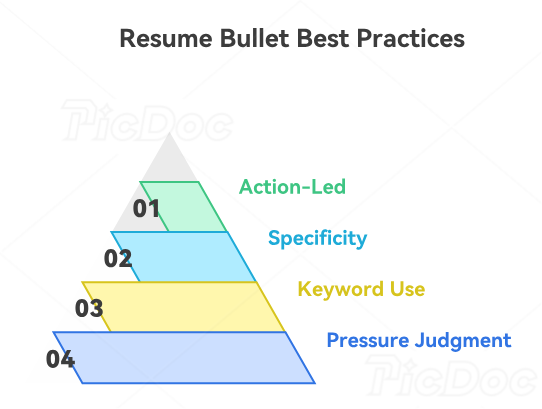
The best bullet points are action-led, concise, healthcare-specific, and outcome-aware. They begin with strong verbs, point to a real task, and imply why that task mattered. Instead of “Responsible for scheduling patients,” write something closer to “Coordinated multi-provider scheduling and handled reschedules with attention to visit type, timing, and patient communication.” That sounds sharper because it reflects real decision-making. The same principle applies across insurance verification workflows, front-desk operations, patient communication apps, EMR troubleshooting, and scheduling software mastery.
Keywords matter too, but this is where many candidates become robotic. The goal is not to stuff every possible term into the resume. The goal is to naturally include the role language employers already use: patient scheduling, intake, EMR, medical records, insurance eligibility, patient communication, records release, referrals, HIPAA, provider coordination, and workflow support. Those phrases help both ATS systems and human reviewers. They also align the resume with broader hiring expectations discussed in future-proof career skills for 2030, AI and automation in medical administration, virtual medical administration trends, and emerging medical admin technology guides.
Your language should also reflect judgment under pressure. Medical offices hire people who can keep things organized when the day stops being neat. That means your bullets should hint at coordination, prioritization, triage, calm communication, discretion, and accuracy under volume. A hiring manager should be able to infer that you can support the office when multiple patients arrive at once, when messages stack up, or when a provider needs immediate administrative backup. That credibility becomes stronger when your wording shows familiarity with emergency appointment management, handling scheduling conflicts, patient privacy guidelines, and professional development for CMAAs. Language choice is not cosmetic. It is proof of fit.
5. The Biggest CMAA Resume Mistakes That Quietly Kill Interviews
The most damaging resume mistake is vagueness. When your resume says communication skills, computer skills, and office support without showing what those meant in a medical environment, the employer has no reason to remember you. Another common mistake is overloading the document with unrelated responsibilities while burying the healthcare-relevant material. If the hiring manager has to hunt for your scheduling, intake, privacy, documentation, or patient-facing experience, the resume is already doing too much work against you. A better approach is to foreground material that supports medical office efficiency, patient intake precision, front-desk workflow control, and records-release organization.
Another quiet killer is writing a resume for yourself instead of the employer. Candidates often include what they are proud of rather than what the job posting is likely measuring. A clinic or hospital team is not mainly trying to admire your personality. They are asking whether you can support access, accuracy, communication, privacy, and administrative reliability. That is why a good resume speaks to top employer priorities in the CMAA role, career pathways into office management, salary and role positioning data, and real success stories from certified medical administrative assistants. The employer needs to see operational value fast.
Formatting errors also matter more than candidates think. A sloppy resume suggests sloppy chart updates, sloppy registration, sloppy records handling, and sloppy message routing. In medical administration, that is not a small aesthetic issue. It is a trust issue. Use clean headings, consistent verb tense, controlled spacing, and bullet alignment. Remove filler lines. Cut repeated phrases. Keep the page visually calm. The finish should reflect the same discipline required for HIPAA compliance awareness, organized scheduling systems, medical admin collaboration standards, and high-reliability medical office operations. In this kind of hiring, polish is part of credibility.
6. FAQs
-
Put your name, contact information, a targeted professional headline, and a short summary that clearly identifies you as a CMAA or CMAA candidate with strengths in scheduling, intake, EMR work, patient communication, privacy, and office coordination. The top third of the page should immediately sound relevant to medical administrative terminology, front-desk workflow expectations, appointment scheduling standards, and patient-facing communication skills.
-
For most candidates, one page is strong if you can keep it focused and specific. Two pages can work when you have substantial directly relevant experience, multiple healthcare roles, or strong supporting credentials. The real rule is density and relevance. A concise resume built around top CMAA employer priorities, healthcare administration trends, patient record workflows, and medical office organization skills will beat a longer but blurrier document.
-
Use your certification training, externships, mock office tasks, software familiarity, volunteer work, customer-facing roles, and role-relevant coursework. Show that you understand scheduling, privacy, intake, patient communication, and record accuracy. Employers can work with limited experience when the resume reflects real readiness shaped by CMAA exam preparation, common exam mistakes to avoid, study discipline, and breakdowns of what the CMAA exam covers.
-
The strongest skills are patient scheduling, registration, intake coordination, insurance verification, EMR accuracy, records handling, communication, privacy awareness, and calm multitasking in high-volume settings. Those matter because they map to the actual daily friction points of the role and connect with secure scheduling tools, patient communication platforms, EMR support tools, and office team collaboration systems.
-
Yes, but not as a lazy list. Soft skills should appear through your bullets, not sit alone as abstract claims. Instead of writing communication, empathy, and teamwork, show those through actions such as guiding patients through intake, handling difficult conversations, coordinating with providers, and protecting privacy in fast-moving interactions. That approach is stronger because it reflects real-world use of active listening, de-escalation, empathy in administration, and patient privacy communication essentials.
-
Every time, at least lightly. You do not need to rewrite the entire document for each opening, but you should adjust the summary, keywords, top skills, and a few bullets to match the setting. A primary care office, specialty clinic, urgent care group, and remote administrative role will not emphasize the same things. Tailoring becomes easier when you understand virtual medical administration, industry demand by specialty, career roadmap options, and the long-term skills needed for future-proof medical administration careers.
