

Creating Effective Medical Admin Policies & Procedures
Strong medical offices do not run on good intentions. They run on repeatable decisions. When policies are vague, teams improvise, errors multiply, patient trust drops, and managers spend their day fixing problems that should never have survived the workflow. Effective medical admin policies and procedures turn scattered habits into reliable systems.
This guide shows how CMAAs and office leaders can build policies that actually work under pressure, not just look respectable in a binder. You will learn how to structure policies, translate them into procedures, prevent common failure points, and build documentation, scheduling, privacy, communication, and escalation workflows that support cleaner operations across the entire office.
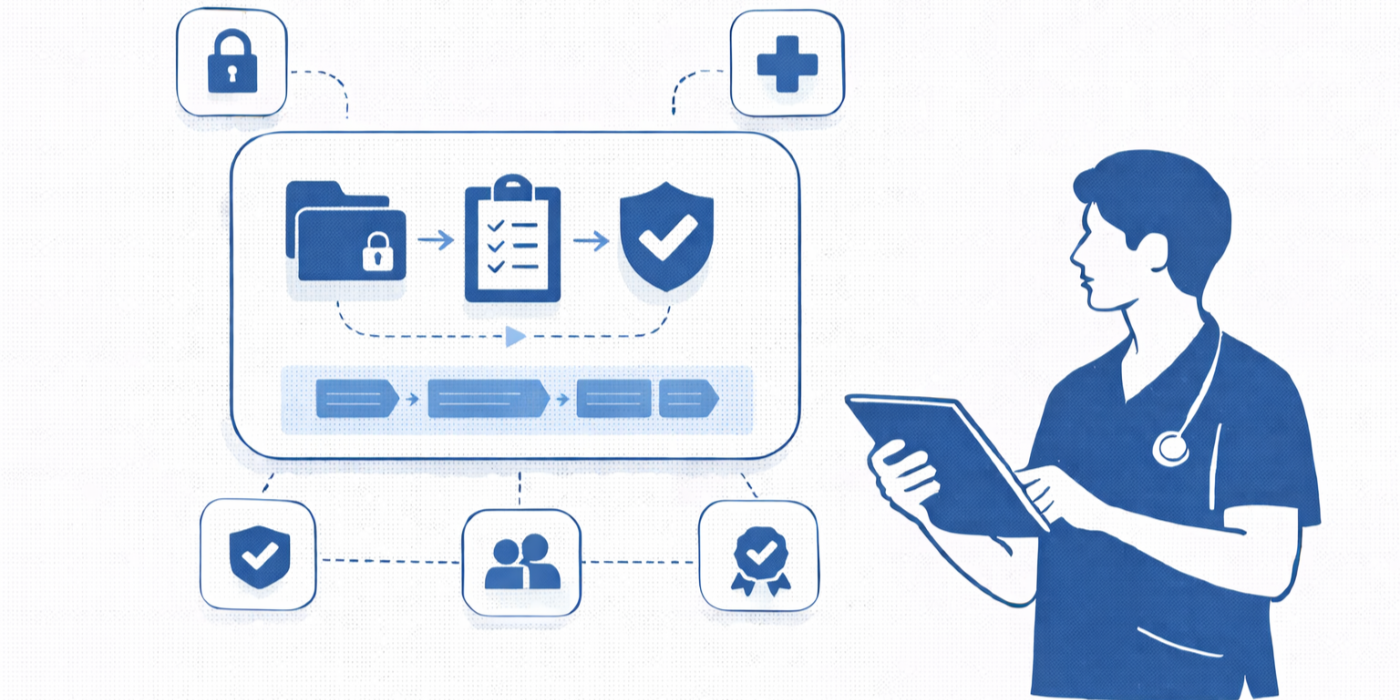
1. Why Medical Admin Policies Fail So Often in Real Offices
Most offices do not struggle because they have zero policies. They struggle because their policies are too abstract to control daily work. A document says staff must protect privacy, yet it never tells them what to do when a spouse calls, when records are requested through the portal, or when front desk traffic makes verbal disclosure riskier. A policy says scheduling should be accurate, yet it never explains how to handle double-booking pressure, urgent add-ons, provider template conflicts, or payer-specific visit types. That is where the office starts bleeding time, trust, and money. Stronger systems grow from the same operational foundations taught through front desk operations, appointment scheduling best practices, insurance verification, patient privacy communication essentials, and interactive training on patient record updates and EMR compliance.
Another common failure is confusing policies with procedures. A policy defines the rule, the standard, or the position of the office. A procedure explains the steps for carrying it out. Offices mix them together, then wonder why staff either memorize nothing or improvise everything. “We verify insurance before visits” is a policy-level statement. “Check eligibility 72 hours before the appointment, confirm active coverage, verify referral requirements, confirm authorization status, document findings in the scheduling note, and escalate mismatches before reminder calls go out” is procedure. Without the second layer, the first one becomes decorative. Offices build sharper control when they ground policy writing in practical resources like top medical billing terms all CMAAs should clearly understand, top HIPAA and patient privacy terms for medical administrative assistants, top scheduling and appointment terms CMAAs should know by heart, EMR integration tools every medical administrative assistant needs, and secure patient scheduling tools.
Policies also fail when they are written by people who are too far from the friction. The person who drafted the records-release process may never have worked a phone-heavy front desk during lunch coverage. The person who built the appointment policy may not understand how often patients arrive with one reason on the schedule and another reason in real life. The person who wrote the patient messaging standard may never have cleaned up a portal mistake, a wrong callback, or a privacy complaint. Good policy design comes from observing real workflow pressure, the same kind of pressure addressed through active listening techniques for medical admin professionals, effective patient communication terms and interactive examples, de-escalation techniques, step-by-step guidance for managing difficult conversations with patients, and resolving common EMR software issues.
The final reason policies fail is that offices treat them as compliance artifacts instead of performance tools. A good policy does more than reduce risk. It protects throughput, reduces rework, standardizes escalation, improves patient communication, and helps new staff become useful faster. A bad policy is broad, passive, hard to scan, disconnected from the EMR, detached from scheduling realities, and silent on exceptions. A good one supports the same kind of career-defining operational skill that shows up in CMAA certification and career opportunity growth, top skills employers look for in a CMAA, the CMAA career roadmap from entry level to medical office manager, future-proofing your CMAA career, and medical office automation trends and opportunities for CMAAs.
| # | Policy Area | What the Policy Must Control | Procedure Detail That Makes It Work | What Breaks When It Is Weak |
|---|---|---|---|---|
| 1 | Patient registration | Required demographic data, identity checks, and account setup rules. | Step sequence for intake, verification, documentation, and correction workflow. | Duplicate charts, billing errors, wrong-patient risk. |
| 2 | Insurance verification | When coverage must be checked and what must be confirmed. | Eligibility timeline, referral review, auth checks, note documentation, escalation path. | Denials, rescheduling, angry patients. |
| 3 | Appointment scheduling | How visit types, durations, and provider templates are used. | Rules for new vs follow-up, urgent holds, specialty slots, and conflict handling. | Template chaos and long waits. |
| 4 | Cancellation and no-show management | How missed visits are documented and followed up. | Reminder cadence, rebooking rules, fee communication, outreach steps. | Schedule waste and inconsistent treatment. |
| 5 | Privacy at front desk | What staff may say, show, print, and discuss in shared spaces. | Identity verification, verbal discretion, print handling, screen positioning. | Privacy complaints and trust loss. |
| 6 | Portal messaging | What belongs in portal messages and who may send what. | Response categories, turnaround expectations, routing rules, documentation standards. | Delayed care and privacy mistakes. |
| 7 | Phone communication | How caller identity and release boundaries are managed. | Verification questions, callback rules, voicemail limits, escalation process. | Improper disclosure and confusion. |
| 8 | Records release | How patient and third-party records requests are handled. | Authorization review, scope confirmation, turnaround logging, delivery method. | Improper disclosure or delays. |
| 9 | EMR access | Who may access what and for what purpose. | Role-based permissions, logout standards, audit trail expectations. | Unauthorized access and accountability gaps. |
| 10 | Chart correction | How errors, amendments, and updates are handled. | Correction path, timestamp rules, who may edit what, escalation rules. | Documentation integrity problems. |
| 11 | Consent workflow support | How administrative staff route and verify consent forms. | Form version control, signature checks, witness process, filing path. | Invalid paperwork and visit delays. |
| 12 | Referral management | How incoming and outgoing referrals are tracked. | Request intake, insurance requirements, note routing, close-loop confirmation. | Lost referrals and delayed care. |
| 13 | Prior authorization support | What scheduling and admin staff must confirm before service. | Code/service alignment, date checks, payer note capture, escalation timeline. | Retro-auth battles and cancellations. |
| 14 | Self-pay estimates | How estimates are communicated for uncovered or self-pay care. | Status screening, estimate request path, timing, documentation. | Billing disputes and complaint risk. |
| 15 | Patient complaints | How concerns are received, documented, and escalated. | Intake script, issue categories, handoff timing, follow-up expectations. | Escalated conflict and lost trust. |
| 16 | Interpreter access | How language and communication support needs are recognized. | Need identification, scheduling support, documentation, service coordination. | Access barriers and uneven care. |
| 17 | Telehealth support | How virtual visits are scheduled and prepared. | Platform instructions, identity checks, patient readiness, routing steps. | No-shows and wrong-workflow visits. |
| 18 | Incoming documents | How faxes, results, outside notes, and forms enter the workflow. | Scanning standards, recipient routing, indexing, urgent flags. | Lost information and delayed action. |
| 19 | Outgoing forms and letters | Who prepares, reviews, and sends operational paperwork. | Template control, approval needs, delivery method, logging. | Incorrect documents and delays. |
| 20 | Medication refill routing | What admin staff may do and what must go to clinical staff. | Message capture, urgency screening, provider routing, patient communication. | Unsafe expectations and bottlenecks. |
| 21 | Emergency call handling | How urgent symptoms or crisis language are managed. | Red-flag recognition, script boundaries, escalation route, documentation. | Unsafe delays and liability risk. |
| 22 | Payment collection | When copays, balances, and payment plans are discussed. | Collection points, script rules, documentation, exception handling. | Inconsistent collections and conflict. |
| 23 | Supply and inventory communication | How staff report shortages affecting operations. | Thresholds, ordering path, backup process, documentation. | Visit disruption and scramble. |
| 24 | Staff messaging and handoffs | How internal communication should move through the office. | Approved channels, tagging rules, urgency markers, close-loop handoff. | Dropped tasks and duplicate work. |
| 25 | Incident reporting | What errors, privacy issues, or workflow failures must be reported. | Immediate notification path, required facts, containment steps, log entry. | Late response and repeated mistakes. |
| 26 | Remote work workflow | How off-site admin work protects access, communication, and documentation. | Device rules, login controls, call handling, print restrictions. | Security risk and accountability gaps. |
| 27 | Training and competency | What staff must learn before operating independently. | Orientation checklist, shadow period, signoff process, refreshers. | Inconsistent performance and hidden risk. |
| 28 | Policy review and updates | How the office keeps procedures current. | Owner assignment, revision schedule, version control, communication plan. | Outdated workflow and policy drift. |
| 29 | Vendor and fax validation | How outside contacts and destinations are verified. | Recipient confirmation, number checks, secure routing, exception logging. | Misdirected information and wasted time. |
| 30 | End-of-day operational closeout | What must be checked before the team leaves. | Task queues, unresolved messages, locked records, pending escalations. | Overnight errors and missed follow-up. |
2. What Effective Medical Admin Policies Actually Look Like
An effective policy has five traits. It is specific, readable, role-aware, exception-ready, and connected to the actual workflow tools the office uses. Specific means the policy names the condition it governs, the action expected, the owner, and the risk it is designed to prevent. Readable means staff can scan it fast under pressure. Role-aware means it separates what front desk staff, CMAAs, billers, clinical staff, and supervisors each control. Exception-ready means it says what to do when the normal path fails. Connected means it reflects the real EMR, scheduling platform, phone workflow, and patient messaging tools, not an imaginary office. These traits become stronger when policy design pulls from directory of medical admin staff scheduling tools, patient communication apps every CMAA should use, medical admin time tracking tools, best collaboration tools for medical office teams, and interactive guide to emerging medical admin technologies.
The strongest format is simple. Start with the policy title and purpose. Name the scope. Define who must follow it. List the standard. Then attach the procedure steps, documentation rules, escalation triggers, and any linked forms or system references. That structure keeps the policy from becoming a philosophy essay. For example, a patient-message policy should not waste space saying the office values communication. It should state which channels may be used, which message types belong in each channel, who monitors the queue, when it must be escalated, how it is documented, and what should never be promised. That same sharpness should drive policies shaped by healthcare portal terms and use cases, telehealth platform definitions and workflow guidance, appointment conflict handling, emergency appointment management, and scheduling software mastery from beginner to expert.
Another important trait is decision clarity. A good policy reduces the number of judgment calls staff must make alone. When the office receives a records request, staff should not have to guess whether the caller sounds legitimate. When a patient arrives late, staff should not invent the response based on mood, crowding, or fear of confrontation. When the chart contains conflicting insurance information, nobody should wonder whether to “just keep it moving.” Good policy design reduces improvisation by defining triggers, not just ideals. It tells staff exactly what requires escalation, what can be handled independently, what must be documented, and what must never be skipped. This is the same kind of structured competence reinforced through top 10 EMR shortcuts to boost CMAA productivity instantly, resolving common EMR software issues, interactive training on patient record updates, patient intake procedures, and medical appointment scheduling tools ranked by ease of use.
The final mark of an effective policy is that it teaches by design. A new CMAA should be able to read it and understand not only what to do, but why it matters operationally. A veteran should be able to use it to train a teammate or audit a weak workflow. A supervisor should be able to trace recurring failure back to either policy weakness, training weakness, or enforcement weakness. When policies reach that level, they stop being paperwork and start becoming management tools. That maturity supports the kind of leadership development described in medical administration conferences and workshops, medical admin assistant professional organizations, online communities and forums for CMAAs, real-life success stories from certified medical administrative assistants, and why CMAA certification dramatically boosts career opportunities.
3. The Core Policy Areas Every Medical Office Should Build First
The first policy family should cover patient access and scheduling. Offices usually underestimate how many failures originate here. Wrong visit types, poor template use, unclear late-arrival rules, inconsistent urgent-slot handling, weak reminder workflows, and vague cancellation standards create downstream damage that clinical teams feel all day. A good scheduling policy family should cover appointment types, time-allocation standards, confirmation timing, no-show handling, same-day urgency routing, specialty exceptions, and staff authority limits. It should link directly with tools and language from appointment scheduling best practices, top scheduling and appointment terms CMAAs should know by heart, interactive guide to handling appointment scheduling conflicts, emergency appointment management, and secure patient scheduling tools.
The second policy family should control privacy, records, and communication. This includes front-desk verbal privacy, caller verification, portal messaging, records release, fax and vendor validation, EMR access, workstation security, and message escalation. Too many offices write “HIPAA compliance” as though it were one policy. It is not. It is a set of practical operating rules that determine what staff can say, show, print, confirm, route, and release in real time. That framework becomes stronger when built around top HIPAA and patient privacy terms for medical administrative assistants, patient privacy communication essentials, healthcare portal terms, tools for efficient medical records release, and healthcare CRM terms.
The third policy family should govern documentation flow, forms, and EMR handling. Offices lose enormous time to unindexed records, unclear chart-correction paths, unsigned forms, lost intake paperwork, weak task handoffs, and staff who do not know what belongs in the record versus the message queue. Effective policies here should define document intake, naming conventions, routing priority, correction boundaries, required audit trail behavior, and end-of-day reconciliation. This work becomes especially important in teams using EMR integration tools every medical administrative assistant needs, top 10 EMR shortcuts to boost productivity, resolving common EMR software issues, interactive training on patient record updates and EMR compliance, and top 20 EMR and charting terms medical scribes need to understand clearly.
The fourth policy family should control revenue-support workflows. Even when a CMAA is not coding claims, the office still depends on clean demographic capture, insurance verification, authorization routing, self-pay estimate handling, referral tracking, and payment-communication standards. These policies prevent the front desk from becoming the starting point of denials and disputes. Offices build stronger control here when policy writing aligns with insurance verification definitions and interactive examples, top medical billing terms all CMAAs should clearly understand, medical admin assistant job market outlook, annual CMAA salary report and trends, and new study on how certified medical administrative assistants improve healthcare efficiency.
4. How to Turn Weak Policies Into Working Procedures
The fastest fix is to stop rewriting everything at once. Start with the workflows generating the most rework, staff confusion, patient complaints, or supervisor interruptions. That might be scheduling, records release, insurance verification, message routing, or chart corrections. Take one policy area at a time and map the real workflow. Identify the trigger, the owner, the system used, the required data, the handoff points, the exception points, and the escalation threshold. Then compare that reality to the current written policy. Most offices discover the gap immediately: the written policy is broad, while the actual workflow is full of hidden decisions. That gap becomes easier to diagnose using interactive guide to handling scheduling conflicts, emergency appointment management, patient communication apps, medical admin collaboration tools, and medical admin time tracking tools.
Once the workflow is mapped, write the procedure in plain operational language. Use verbs. Use sequence. Use thresholds. Use examples. Instead of “maintain patient confidentiality,” write “verify identity before discussing appointments, results, balances, or records; do not leave detailed health information on voicemail unless the office policy and verified consent path allow it; do not discuss protected information where other patients can hear; escalate uncertain release requests instead of improvising.” Staff can act on that. They cannot act on slogans. The same applies to policies connected to patient privacy communication essentials, active listening techniques, effective patient communication terms, de-escalation techniques, and step-by-step guide to managing difficult conversations with patients.
A powerful improvement method is to embed failure points directly into the procedure. If the referral is incomplete, what happens next. If the insurance is inactive, what happens next. If the patient arrives late, what happens next. If the portal message suggests urgency, what happens next. If two providers want the same urgent slot, what happens next. If the outside fax is unreadable, what happens next. Policies become truly useful when they anticipate the exact moments where inexperienced staff normally freeze or guess. That kind of exception handling should be built with lessons from insurance verification, medical appointment scheduling tools ranked by ease of use, EMR issue troubleshooting, interactive guide to emerging medical admin technologies, and AI and automation in medical administration.
The final step is translation into training. A good policy rewrite changes nothing if staff still learn by hearsay. Every new or updated procedure should be tied to role-based training, quick-reference guides, supervisor review, and live workflow observation. Staff should demonstrate the process, not merely acknowledge the file. That training mindset fits naturally with ACMSO certification exam preparation, ultimate guide to passing your CMAA certification exam on the first try, essential study tips to guarantee your CMAA exam success, complete breakdown of what is included in the 2026-27 CMAA exam, and interactive CMAA practice exam. Good policy culture treats consistency as a trainable skill, not a personality trait.

5. How to Keep Policies Current, Enforced, and Useful Under Pressure
A policy is only as strong as its review cycle. Many offices write procedures once, then keep adding exceptions in conversation until the written version no longer matches reality. That drift is dangerous because it creates two offices at once: the office in the binder and the office in the hallway. To prevent that split, each policy should have an owner, a review frequency, a change log, and a clear trigger for unscheduled revision. Common revision triggers include recurring patient complaints, repeated supervisor overrides, denial patterns, EMR changes, new scheduling tools, staff turnover, audit findings, and repeated near-miss events. That level of control pairs well with medical office automation trends, virtual medical administration, future-proof your CMAA career: emerging skills for the next decade, 2026 healthcare administration report, and interactive industry report on medical administration job demand by specialty.
Enforcement also needs structure. Supervisors should not wait for catastrophic mistakes before checking whether procedures are followed. Use lightweight audits. Spot-check phone logs, scheduling notes, records-release documentation, intake completion quality, portal routing, and end-of-day open-task queues. Ask whether staff followed the process, not just whether the outcome happened to be acceptable. A lucky outcome can hide a broken process for months. Smart offices also watch where staff keep asking the same questions. Repeated questions usually mean the policy is either unclear, unrealistic, or too buried to help. That operational discipline benefits from medical admin staff scheduling tools, best collaboration tools for medical office teams, online communities and forums for CMAAs, networking strategies for medical admin professionals, and medical admin assistant professional organizations.
The most useful enforcement habit is feedback loop design. When a process fails, do not only correct the individual. Ask what the policy failed to clarify, what the procedure failed to specify, what tool failed to support, and what training failed to reinforce. If staff keep mishandling incoming forms, the issue may be indexing rules, inbox design, or naming conventions rather than carelessness. If the same scheduling conflicts keep escalating, the issue may be template design, urgency rules, or provider-specific exceptions that were never formally documented. Offices grow faster when they treat repeated mistakes as system clues. This mindset is reinforced through interactive medical office ergonomics tools, medical admin time tracking tools, patient communication apps, EMR integration tools, and scheduling software mastery.
The last principle is realism. Policies should be strict where risk is real, flexible where workflow needs judgment, and precise where teams routinely stumble. They should protect patients without paralyzing the office. They should support staff without giving unlimited loopholes. They should help supervisors coach with evidence instead of opinion. When policies reach that level, they become operational leverage. They reduce fire-fighting, clarify accountability, protect patient experience, and make the office easier to scale. That kind of maturity is exactly what moves a CMAA toward the higher-responsibility future described in top 10 skills employers look for in a CMAA, the CMAA career roadmap, why CMAA certification dramatically boosts your career opportunities, annual CMAA salary report, and future-proofing your CMAA career.
6. FAQs
-
A policy states the rule, expectation, or standard the office follows. A procedure explains how staff carry it out step by step. Offices get into trouble when they write broad policy language without giving staff the operational steps needed to follow it. That distinction becomes clearer when you compare workflow-heavy resources like appointment scheduling best practices, insurance verification, interactive training on patient record updates and EMR compliance, and front desk operations terms.
-
Start with the workflows that generate the most rework, complaints, privacy risk, or supervisor interruptions. In many offices, that means scheduling, insurance verification, records release, portal messaging, chart correction, and patient communication. Those areas usually produce the biggest operational return fastest. Useful supporting resources include secure patient scheduling tools, patient privacy communication essentials, tools for efficient records release, and effective patient communication terms.
-
Detailed enough that a trained staff member can follow the workflow without guessing, but not so bloated that nobody can scan it during a real shift. The best procedures name the trigger, the steps, the owner, the documentation requirement, and the escalation threshold. They also define what to do when the normal path fails. This approach works especially well alongside EMR issue resolution, patient intake procedures, healthcare portal terms, and interactive guide to handling appointment scheduling conflicts.
-
A CMAA sees real workflow friction up close. That gives the role valuable input on where staff improvise, what patients repeatedly misunderstand, which forms or systems create delays, and which exceptions are never documented properly. A CMAA can surface those gaps, suggest clearer decision rules, and help test whether a rewritten procedure actually works in live operations. That leadership mindset aligns with top skills employers look for in a CMAA, real-life success stories from certified medical administrative assistants, medical admin conferences and workshops, and future-proof your CMAA career.
-
A formal review schedule helps, but the best answer is this: review them whenever real workflow proves they no longer match reality. That includes EMR changes, staffing changes, new service lines, repeated denial patterns, recurring complaints, privacy incidents, major scheduling friction, or recurring supervisor overrides. Policy drift is expensive because staff start following unwritten hallway rules instead of the official procedure. Offices manage that risk better with support from medical office automation trends, interactive guide to emerging medical admin technologies, medical admin collaboration tools, and virtual medical administration.
-
The biggest sign is inconsistency disguised as busyness. One staff member handles a workflow one way, another handles it differently, supervisors keep stepping in, patients hear different answers, and small operational failures repeat so often they feel normal. That pattern means the office is depending on individual memory instead of controlled systems. The fix is clearer policy language, sharper procedures, better escalation rules, and stronger training reinforced by active listening techniques, de-escalation techniques, interactive training on patient record updates, and medical administration efficiency insights.
