

Telehealth Administration: Preparing CMAAs for the Future
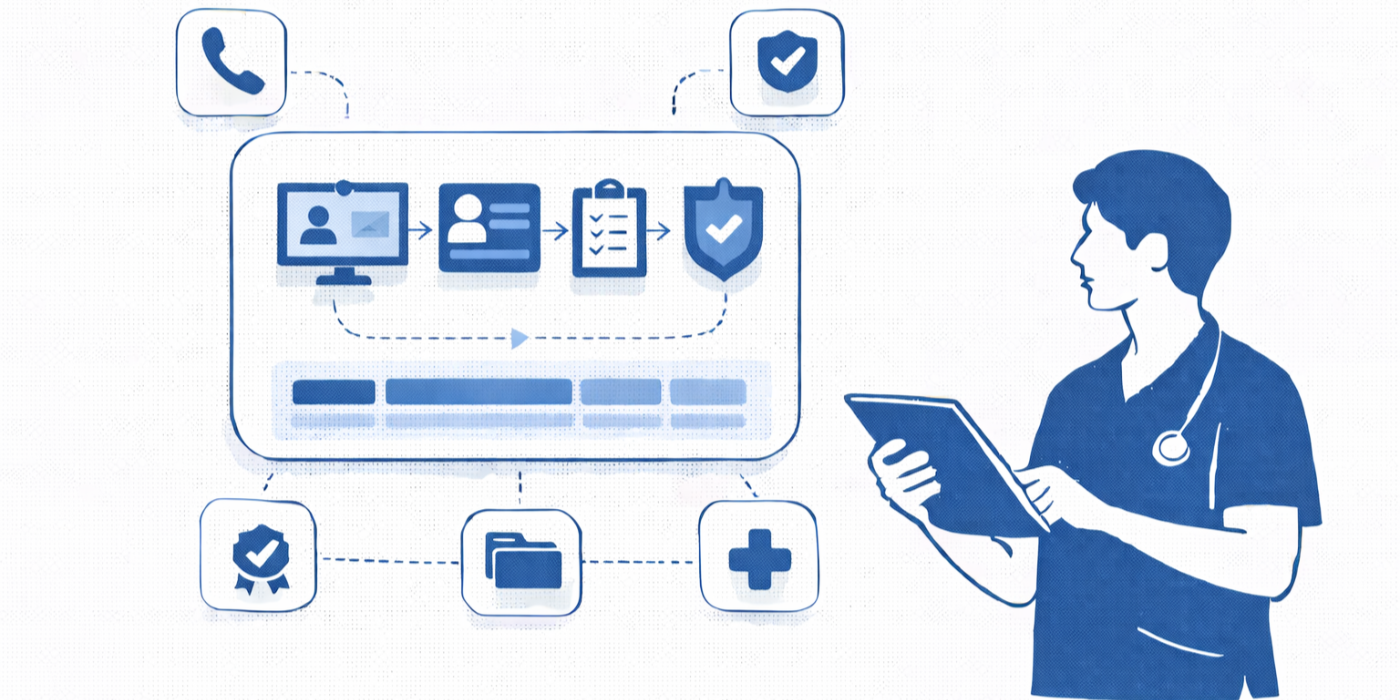
Telehealth has moved far beyond video visits. It now touches scheduling logic, digital intake, patient messaging, documentation flow, portal support, privacy controls, insurance coordination, follow-up communication, and the daily handoff between clinical and administrative teams. That shift matters for CMAAs because the role is no longer limited to managing front-desk traffic inside a physical office. It increasingly includes managing access, communication, and workflow across digital care environments where mistakes travel faster and patient frustration builds earlier.
CMAAs who prepare for telehealth administration now will be in a stronger position over the next several years. Practices need people who can keep remote workflows organized, protect patient trust, reduce technology friction, support compliant communication, and make virtual care feel structured rather than chaotic. The future belongs to administrative professionals who can combine patient-facing calm with system-level precision.
1. Why Telehealth Changes the CMAA Role More Than Most People Realize
A lot of people still talk about telehealth as if it were just in-person care delivered through a camera. That misunderstanding causes major workflow failures. Telehealth reshapes the administrative role because the points of friction move. In a traditional office, the front desk can often recover mistakes face-to-face. In telehealth, small errors around links, timing, registration, insurance, consent, patient instructions, portal access, and documentation setup can derail the visit before it begins.
That is why the future CMAA has to think beyond reception tasks. Telehealth administration requires stronger control over digital access, patient readiness, message clarity, and system coordination. A CMAA supporting virtual care may need to help patients navigate telehealth platform definitions and workflows, use healthcare portal terms and use cases, apply effective patient communication terms, and stay aligned with patient privacy communication essentials. In remote care, the administrative layer often determines whether the visit feels smooth or broken.
This becomes even more obvious when you look at what patients experience. A patient who arrives at a clinic with missing paperwork can often be rescued in real time. A patient who cannot open the visit link, does not understand what device to use, has not uploaded forms, or is confused about timing may abandon the visit entirely. That creates lost appointments, wasted provider time, patient dissatisfaction, and rescheduling pressure. The CMAA who can prevent those failures becomes extremely valuable.
Telehealth also changes expectations around responsiveness. Digital care expands the use of patient communication apps, portal messaging, remote reminders, and pre-visit instructions. That means the CMAA role becomes more communication-heavy, more systems-driven, and more exposed to privacy and timing errors. Someone who understands top 20 scheduling and appointment terms, appointment scheduling best practices, and interactive guides to handling appointment scheduling conflicts will handle this transition much better than someone who only knows how to book a slot in a basic calendar.
The bigger point is simple. Telehealth does not remove administrative work. It redistributes it into new pressure points. That is exactly where future-ready CMAAs can stand out.
| # | Telehealth Administration Competency | Why It Matters | What a Strong CMAA Actually Does |
|---|---|---|---|
| 1 | Virtual appointment scheduling | Prevents timing confusion and missed visits | Uses accurate instructions, reminders, and time-zone awareness where needed |
| 2 | Patient portal support | Reduces login failures and pre-visit frustration | Guides patients through access, forms, and message workflows clearly |
| 3 | Insurance verification for remote services | Prevents eligibility surprises | Confirms coverage rules early and communicates next steps cleanly |
| 4 | Digital intake coordination | Keeps providers from starting visits blind | Makes sure forms, history updates, and contact details are complete before the visit |
| 5 | Device and browser readiness guidance | Reduces connection failure | Gives patients simple, usable instructions before the appointment |
| 6 | Privacy and consent workflow handling | Protects compliance in remote settings | Supports correct documentation and safe communication channels |
| 7 | Pre-visit communication | Sets patient expectations and reduces confusion | Sends clear instructions on timing, environment, and preparation |
| 8 | Post-visit follow-up support | Improves continuity and compliance | Coordinates follow-up messages, scheduling, and administrative next steps |
| 9 | EMR documentation readiness | Keeps virtual workflows clean | Prepares the correct chart, visit type, and patient information before the session |
| 10 | Visit-link accuracy | One wrong link can collapse the visit | Checks delivery method, timing, and patient access details |
| 11 | Remote patient messaging etiquette | Prevents confusion and tone problems | Communicates clearly without overexplaining or leaving gaps |
| 12 | Digital workflow troubleshooting | Stops minor issues becoming cancellations | Handles basic platform and access issues quickly before escalation |
| 13 | Emergency rescheduling judgment | Protects provider time and patient safety | Knows when and how to move a virtual visit without creating a domino effect |
| 14 | Cross-channel coordination | Patients may move between portal, text, email, and phone | Maintains consistency and prevents contradictory instructions |
| 15 | Remote patient identity verification | Protects privacy and visit integrity | Uses approved processes without making the interaction feel hostile |
| 16 | Template use for virtual visits | Improves consistency | Supports the correct administrative setup for visit type and provider workflow |
| 17 | Patient education before the visit | Reduces wasted provider time | Explains what the patient should have ready and what to expect |
| 18 | Remote no-show prevention | Protects revenue and access | Uses reminders, confirmations, and friction-reduction tactics before the visit |
| 19 | Coordination with providers and clinical staff | Keeps virtual operations aligned | Communicates delays, patient issues, and readiness clearly |
| 20 | Data accuracy in remote workflows | Bad data multiplies quickly online | Checks demographics, contact methods, insurance, and portal details carefully |
| 21 | Understanding digital access barriers | Not every patient is tech-comfortable | Adapts communication for older adults, anxious patients, and low-tech users |
| 22 | Administrative triage judgment | Prevents misrouted or inappropriate scheduling | Routes issues to the right channel and avoids creating safety or workflow risks |
| 23 | Use of secure communication tools | Convenience cannot override compliance | Knows which channels are appropriate for patient communication |
| 24 | Operational reporting awareness | Telehealth needs measurable workflow control | Tracks common failure points such as no-shows, access issues, and repeated rescheduling |
| 25 | Adaptability to platform changes | Virtual tools evolve quickly | Learns new processes without becoming a bottleneck |
| 26 | Remote follow-up scheduling | Keeps care continuity from breaking after the visit | Books next steps clearly while the patient is still engaged |
| 27 | Calm patient support under digital stress | Tech panic can become trust failure | Guides patients with empathy and control when remote care starts going wrong |
2. The Core Skills CMAAs Need to Thrive in Telehealth Administration
Telehealth-ready CMAAs need a broader skill stack than many training conversations admit. It is not enough to know basic scheduling, answer calls politely, and send reminders. Virtual care rewards people who can combine access management, patient communication, technical fluency, workflow discipline, and privacy judgment in the same shift.
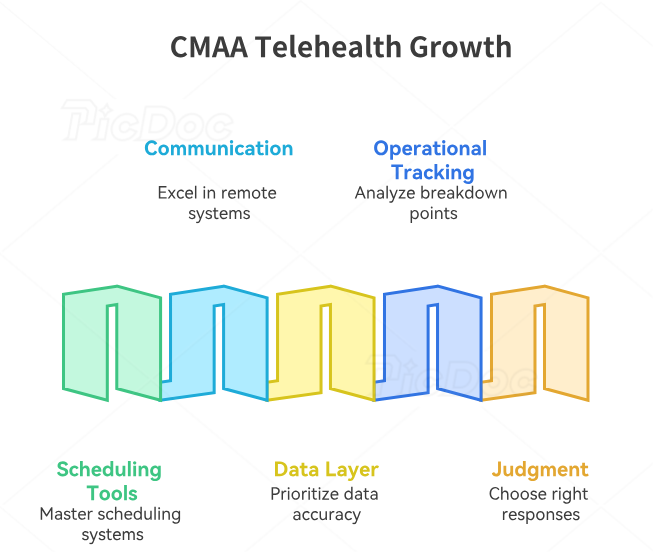
The first major skill is digital scheduling precision. In telehealth, scheduling errors are more expensive because they affect links, instructions, visit-type setup, provider readiness, and patient expectations. A CMAA who studies medical appointment scheduling tools, understands directory of medical admin staff scheduling tools, and can apply emergency appointment management brings real value to any telehealth-heavy office.
The second skill is communication clarity. Telehealth depends on written and phone-based communication far more than many in-person workflows do. Patients need to know when to log in, what to prepare, what device to use, what to do if the platform fails, how to complete forms, and what follow-up will happen after the visit. A CMAA who uses active listening techniques, understands empathy in healthcare administration, and can manage difficult situations through the step-by-step guide to managing difficult conversations with patients will reduce a huge amount of avoidable friction.
The third skill is systems fluency. Telehealth administration often lives inside a web of portals, patient messaging tools, scheduling software, EMRs, communication channels, and remote workflow platforms. That is why CMAAs need exposure to EMR integration tools, top 10 EMR shortcuts, resolving common EMR software issues, and interactive training for patient record updates and EMR compliance. Telehealth does not forgive slow learning curves when patients are waiting online and providers are moving through tight schedules.
The fourth skill is privacy discipline. Remote care increases the number of moments where protected information can be mishandled through convenience, speed, or bad habits. That is exactly why CMAAs should know top 20 HIPAA and patient privacy terms, understand patient privacy communication essentials, and be comfortable using safe systems rather than improvised shortcuts.
The fifth skill is operational anticipation. Strong telehealth administrators do not wait for problems to explode. They notice which patients are likely to struggle with portals, who keeps missing instructions, which visit types generate confusion, and where repeated communication breakdowns start. That turns the CMAA from a reactive worker into a preventive one, and preventive workers are the ones practices keep and promote.
3. Where Telehealth Administration Breaks Down and How CMAAs Can Fix It
Telehealth workflows usually fail in predictable places. They fail when the patient does not know how to enter the visit, when the office sends unclear instructions, when scheduling and technology setup do not match, when insurance or consent is not handled early, when the provider is not properly prepped, and when post-visit follow-up falls into a communication gap. Those are administrative breakdowns, not clinical ones.
The first common failure point is unclear pre-visit communication. Patients may receive a link but not understand whether they should log in five minutes early, download an app, use a specific browser, complete digital forms, or remain available by phone if the platform fails. These gaps create panicked calls minutes before the appointment. A CMAA can prevent this by building standardized but patient-friendly communication templates, using patient communication apps, and aligning language with the logic behind front desk operations terms.
The second failure point is weak intake before the visit. Telehealth only works when patient demographics, contact details, insurance, visit type, consent workflows, and basic readiness are handled before the provider joins. If this layer is sloppy, the provider spends expensive time cleaning administrative messes instead of delivering care. That is why digital intake should be treated with the same seriousness as patient intake procedures in an in-person environment.
The third failure point is tech panic. Patients who are already anxious about symptoms or care can become even more frustrated when the platform fails, the link does not work, or the visit freezes. In those moments, administrative tone matters. A calm CMAA who knows how to de-escalate, redirect, and offer a next step protects trust. A rushed CMAA who sounds irritated can turn a small tech glitch into a complaint. That is where de-escalation techniques and effective patient communication become operationally important.
The fourth failure point is inconsistent workflow between channels. A patient may get one instruction by phone, a different message in the portal, and a third version by text or email. That kind of mismatch damages confidence fast. CMAAs need to control channel consistency and use secure systems intelligently. Understanding healthcare CRM terms, best collaboration tools for medical office teams, and secure patient scheduling tools helps create that consistency.
The fifth failure point is weak follow-up after virtual visits. Patients may leave without understanding the next appointment, portal message, documentation request, referral step, or records process. A strong telehealth-ready CMAA closes that gap. They make the next step obvious, not implied. They do not assume the patient “got it.” They confirm it.
This is where future preparation becomes practical. Telehealth administration is not abstract. It is the daily work of reducing failure points before they cost the practice money and trust.
4. The Tools, Systems, and Workflow Habits Future-Ready CMAAs Should Learn
The future of telehealth administration will belong to CMAAs who can work confidently across systems without letting technology control them. The goal is not to become an IT specialist. The goal is to become operationally dangerous in the best way possible: someone who can keep digital care moving.
Start with scheduling and access tools. Practices need administrative staff who can manage appointment logic across digital settings, minimize conflicts, and make it easy for patients to show up prepared. That is why it helps to study scheduling software mastery, interactive guides to appointment scheduling conflicts, and medical admin staff scheduling tools. Telehealth amplifies even minor calendar sloppiness.
Next, focus on remote communication systems. As more care flows through messages, reminders, portals, and digital check-ins, CMAAs must be excellent at delivering precise instructions without creating overload. The practices that thrive in telehealth will be the ones where patients know what to do before they ask. That makes patient communication apps, healthcare portal workflow knowledge, and telehealth platform understanding increasingly valuable.
Then build confidence with the administrative data layer. Remote care often creates more points where wrong phone numbers, outdated emails, missing insurance details, or incomplete records can ruin the patient experience. A future-ready CMAA treats data accuracy as part of patient care access, not as clerical cleanup. This is exactly where interactive training for patient record updates and EMR compliance, EMR integration tools, and resolving common EMR issues become practical growth tools.
You should also develop habits around operational tracking. Telehealth administration improves when the team knows where breakdowns happen. Which visit types generate the most portal access problems? Which reminder sequence gets the best attendance? Which patient groups need extra support before virtual visits? Which communication channel creates the fewest misunderstandings? CMAAs who think this way help practices improve systems instead of repeating the same failures. That mindset aligns with broader career resilience topics such as future-proof your CMAA career, virtual medical administration and remote work transformation, and medical office automation trends.
The final tool is judgment. Not every issue should be solved the same way. Some patients need a simple reset link. Some need phone-based guidance. Some need rescheduling. Some need escalation. The CMAA who can choose the right administrative response under pressure will remain useful no matter how telehealth platforms evolve.
5. How CMAAs Can Position Themselves for Telehealth Careers and Advancement
Telehealth is not just a workflow shift. It is a career opportunity. Practices, health systems, specialty groups, and remote care organizations increasingly need administrative professionals who can support distributed care without creating communication chaos. That means CMAAs who prepare early can become more employable, more versatile, and more promotion-ready.
The first step is to build proof of telehealth readiness. Employers want more than interest. They want signs that you understand modern medical administration. That can include experience with scheduling software, portal messaging, digital intake, EMR workflows, privacy-safe communication, and patient support across remote channels. It also helps to show that you are actively studying the future of the field through 2026 healthcare administration insights for CMAAs, medical admin job market outlook, and AI and automation in medical administration.
The second step is to strengthen your certification and credibility base. Telehealth does not reduce the importance of fundamentals. It increases it. A CMAA who understands compliance, terminology, scheduling logic, patient communication, and workflow discipline is much easier to trust in a digital environment. That is why the ultimate guide to passing your CMAA certification exam, CMAA exam prep mistakes to avoid, essential study tips for exam success, and how to master medical administrative terminology still matter so much. Strong telehealth administration rests on strong administrative fundamentals.
The third step is to understand where the work is going. Telehealth-heavy opportunities may exist inside specialty groups, large physician networks, virtual-first care models, behavioral health settings, follow-up care programs, and organizations blending in-person and remote access. Candidates who understand broader healthcare workflow shifts will be better at spotting real opportunities and avoiding weak ones. That is also why networking matters. Explore networking strategies for medical admin professionals, medical admin professional organizations, and online communities and forums for CMAAs. Those spaces help you see how real practices are structuring telehealth-related roles.
The fourth step is to show that you are a workflow improver, not just a task completer. Anyone can claim to be “comfortable with telehealth.” Employers notice candidates who can say something sharper: that they reduce portal confusion, clean up reminder processes, improve patient instructions, support EMR readiness, protect privacy, and help providers start virtual visits on time. That language signals future value.
The CMAAs who thrive in telehealth administration will be the ones who understand one central truth: digital care still runs on trust, timing, and clarity. Technology changes the format, but it does not remove the need for disciplined administrative professionals who keep patients informed and systems under control.
6. FAQs About Telehealth Administration for CMAAs
-
It includes much more than booking a video visit. A telehealth-focused CMAA may handle virtual scheduling, patient reminders, digital intake, portal support, identity and consent workflows, insurance coordination, pre-visit instructions, administrative troubleshooting, post-visit follow-up, and communication between patients, providers, and office systems. The role sits at the center of access and workflow reliability.
-
Because remote care creates new administrative friction that practices cannot ignore. Patients still need guidance, scheduling still has to be accurate, privacy still has to be protected, and documentation still has to be ready before the visit starts. In many cases, telehealth increases the need for strong administrative coordination because errors are harder to recover from remotely than in person.
-
The core skills are digital scheduling accuracy, patient communication clarity, portal and system fluency, privacy discipline, problem-solving under pressure, and clean follow-up coordination. It also helps to understand the surrounding ecosystem through tools like telehealth platforms, patient communication apps, and EMR workflow resources.
-
Start by translating your existing experience into digital care terms. If you already manage scheduling, patient intake, privacy-safe communication, difficult conversations, and EMR updates, you already have part of the foundation. Then strengthen the digital side by learning telehealth platforms, portal workflows, remote communication patterns, and secure scheduling systems. That is how you become more future-ready without starting from zero.
-
The biggest ones are unclear patient instructions, incomplete pre-visit setup, weak portal support, inconsistent communication across channels, careless privacy habits, and poor follow-up after the visit. Many of these problems look small at first. In reality, they cause missed visits, provider delays, patient complaints, and avoidable staff stress.
-
It requires practical systems confidence, not deep engineering knowledge. A strong CMAA does not need to rebuild software. They need to understand how the systems connect, how patients use them, where common failures happen, and what the correct next step is when something breaks. In real offices, calm workflow intelligence matters more than technical jargon.
-
Yes. Administrative professionals who can support virtual care effectively often become more valuable because they help practices operate across more than one care channel. As remote workflows continue expanding, CMAAs with telehealth-ready skills may have access to stronger roles, broader responsibilities, and better long-term career positioning. That is one reason resources such as why CMAA certification boosts career opportunities, the CMAA career roadmap, and annual CMAA salary report data are worth studying.
