

Interactive Study Schedule to Pass Your ACMSO Certification Exam in 30 Days
Trying to pass the ACMSO certification exam in 30 days can feel chaotic when the syllabus is wide, medical terms blur together, and every weak area seems urgent at once. Most candidates do not fail from lack of effort. They fail from studying everything with the same intensity, skipping recall practice, and spending too much time reading instead of proving what they can actually retrieve under pressure.
This 30-day plan fixes that. It gives you a structured daily path, tells you what to study, when to review, how to test yourself, and where to tighten weak spots before exam day. It also connects you to the most useful ACMSO resources so your preparation stays targeted instead of scattered.
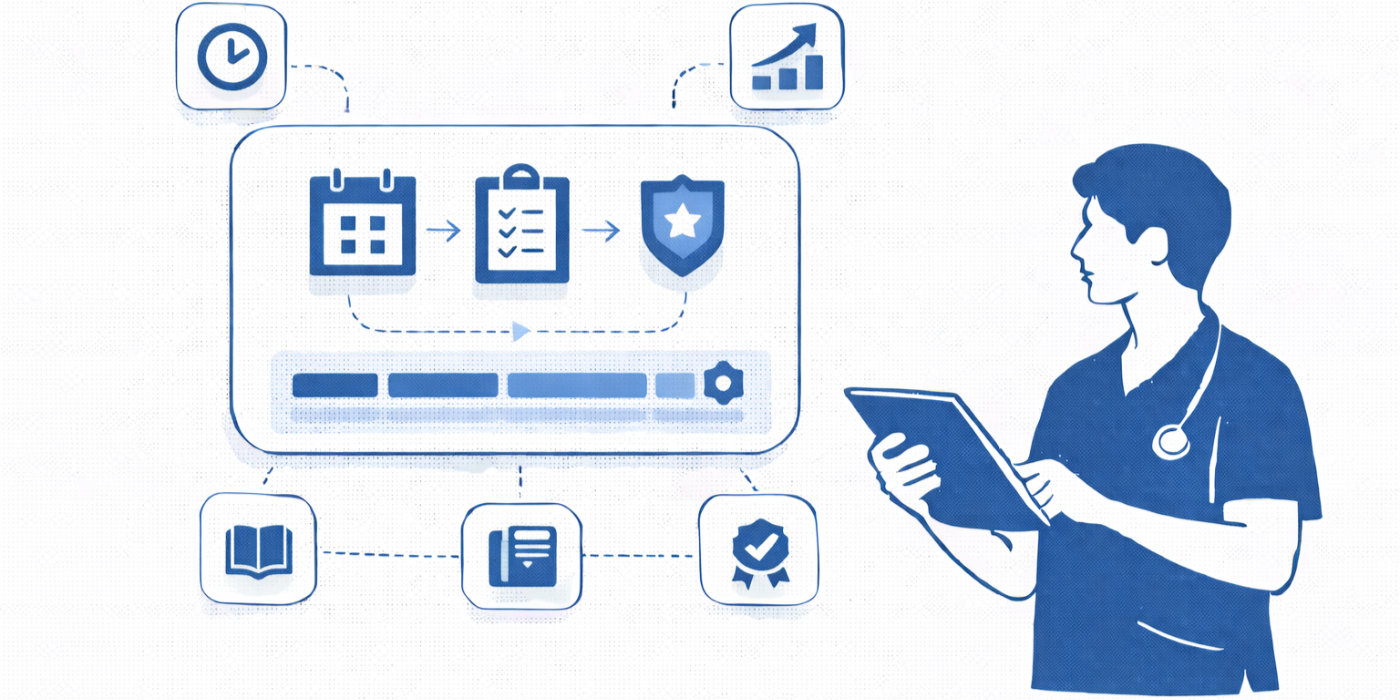
1. What This 30-Day ACMSO Exam Plan Is Designed to Fix
A weak study plan usually has three problems. First, it treats the ACMSO exam like a content-collection project instead of a performance test. Second, it confuses familiarity with mastery. Third, it ignores the reality that retention collapses fast when review is passive.
That is why the next 30 days need to revolve around active retrieval, error tracking, timed repetition, and controlled topic rotation. Reading a glossary once will not save you when two similar answer choices both look correct. What saves you is repeated contact with the same concept from different angles, such as documentation rules, workflow logic, terminology precision, and scenario-based judgment.
The ACMSO exam becomes much easier when you stop studying randomly and start clustering topics into functional groups. Administrative workflow concepts connect naturally with patient intake procedures, front desk operations terms, appointment scheduling best practices, insurance verification, and patient privacy communication essentials. Documentation accuracy connects with top 20 terms medical scribes must master, top 20 EMR and charting terms, mastering medical terminology for medical scribes, and the ICD-10 codes interactive dictionary.
A strong plan also accepts that not every topic deserves equal time. Candidates often overspend hours on comfortable areas like definitions, while undertraining the areas that actually create score damage, such as workflow sequencing, HIPAA judgment, documentation nuance, charting distinctions, and question interpretation. That is why this schedule forces you to cycle between CMAA exam prep mistakes to avoid, the complete breakdown of the CMAA exam, how to master medical administrative terminology, interactive CMAA practice exam, and the ultimate guide to passing your CMAA certification exam.
Another major reason candidates stall is cognitive overload. They keep adding new resources, new notes, new flashcards, and new checklists until the study system itself becomes the problem. The schedule below is designed to reduce that friction. It tells you exactly what to do each day, what kind of study block to use, and when to stop collecting material and start proving readiness.
| Day | Primary Focus | What to Study | Active Task | Score Goal / Outcome |
|---|---|---|---|---|
| 1 | Baseline | Exam blueprint, weak area mapping | Take short diagnostic quiz | Find top 3 weak domains |
| 2 | Medical terminology I | Prefixes, suffixes, root words | Build recall sheet from memory | 80% recall accuracy |
| 3 | Medical terminology II | Body systems and common conditions | Timed terminology drill | Reduce hesitation |
| 4 | EMR basics | Chart structure, navigation, data integrity | Label chart sections from memory | Confident section recognition |
| 5 | Documentation language | Objective vs impression vs plan | Rewrite flawed note samples | Spot wording errors fast |
| 6 | HIPAA and privacy I | Access, disclosure, minimum necessary | Scenario sorting drill | Clear privacy judgment |
| 7 | Weekly review | Days 1–6 concepts | 50 mixed questions | 70%+ with error log |
| 8 | Scheduling systems | Templates, conflicts, urgency logic | Resolve 10 schedule scenarios | Better workflow sequencing |
| 9 | Patient communication | Tone, clarity, escalation boundaries | Script difficult conversations | Less confusion in scenarios |
| 10 | Insurance verification | Eligibility, authorization, benefit checks | Create verification checklist | Fewer missed steps |
| 11 | Coding awareness | ICD-10 and CPT structure basics | Compare 20 code examples | Recognize code purpose |
| 12 | Patient intake | Registration, data capture, forms | Audit intake workflow | Cleaner front-end logic |
| 13 | HIPAA and privacy II | Messaging, portals, conversations | Fix privacy breach examples | Stronger compliance instinct |
| 14 | Weekly review | Days 8–13 concepts | 60 mixed questions | 75%+ and tighter pacing |
| 15 | Midpoint mock | Mixed exam simulation | Take timed practice test | Identify score gap |
| 16 | Error repair I | Lowest scoring domain | Rework every missed question | Convert misses to rules |
| 17 | Error repair II | Second weakest domain | Teach-back session aloud | Better conceptual clarity |
| 18 | Error repair III | Third weakest domain | Targeted drill set | Shrink careless errors |
| 19 | Documentation scenarios | Note logic and chart accuracy | Audit sample notes | Faster clinical distinction |
| 20 | Communication under pressure | Conflict, empathy, redirection | Role-play 8 office situations | Cleaner response choices |
| 21 | Weekly review | Days 15–20 concepts | 70 mixed questions | 80%+ with better timing |
| 22 | Full-system refresh | Term clusters across all domains | Rapid-fire recall board | Retention consolidation |
| 23 | Mock exam II | Full-length timed set | Simulate exam conditions | 85% target range |
| 24 | Post-mock correction | All misses and guesses | Classify why you missed each | Pattern recognition |
| 25 | High-yield weak points | Recurring misses only | Create last-mile cheat grid | Weakness compression |
| 26 | Speed and stamina | Timed mixed mini-blocks | Three 20-question rounds | Maintain pace under fatigue |
| 27 | Mock exam III | Near-final rehearsal | Take final timed mock | Exam-ready score band |
| 28 | Light correction | Only unstable concepts | Teach-back plus flash review | Keep confidence high |
| 29 | Exam logistics | Checklist, timing, materials | Prepare test-day plan | Zero preventable disruption |
| 30 | Final review | Confidence notes, not cramming | 30-minute calm refresh | Arrive composed and sharp |
2. The 30-Day ACMSO Certification Study Schedule, Broken Into Weekly Phases
Week 1: Build your base and expose your weaknesses
The first week is not about trying to cover everything. It is about building a map. Start with the ACMSO certification exam step-by-step guide, the CMAA exam content breakdown, and the ultimate guide to passing on the first try. Then move directly into terminology, EMR vocabulary, documentation categories, and privacy rules.
This week should feel diagnostic. Use top 20 HIPAA and patient privacy terms, top 20 scheduling and appointment terms, top 20 EMR and charting terms, and how to master medical administrative terminology. The goal is not memorization alone. The goal is to locate where you hesitate, mix up terms, or misread context.
Week 2: Turn knowledge into workflow competence
Week 2 shifts from word recognition to task logic. That means scheduling, intake, insurance verification, communication, portal use, and patient handling. Candidates lose points here when they know the terms but cannot sequence the work correctly.
Use interactive guide to handling appointment scheduling conflicts, emergency appointment management, patient communication apps every CMAA should use, active listening techniques for medical admin professionals, and step-by-step guide to managing difficult conversations with patients. Pair them with healthcare portal terms, telehealth platform definitions, EMR integration tools, and scheduling software mastery.
Week 3: Repair errors aggressively
Week 3 is where most serious score improvement happens. By now, you should have at least one diagnostic and one mock behind you. Your job is to stop treating wrong answers as disappointments and start treating them as design flaws in your preparation.
Go question by question and tag each miss: terminology confusion, careless reading, privacy misjudgment, workflow mis-sequencing, EMR misunderstanding, or overthinking. Then use CMAA exam prep mistakes you need to avoid, essential study tips to guarantee success, interactive training on patient record updates and EMR compliance, resolving common EMR software issues, and top 10 EMR shortcuts to boost productivity to repair the exact type of mistake you keep repeating.
Week 4: Simulate, stabilize, and protect your score
The last week is where careless candidates sabotage themselves by cramming new content. Your real job is refinement. You should now be reviewing condensed notes, recurring misses, timing strategy, and high-yield decision rules.
Anchor your final stretch with the interactive CMAA practice exam, exam day checklist, career opportunities after certification, top 10 skills employers look for in a CMAA, and future-proof your CMAA career. Keeping the professional payoff visible matters. It prevents burnout and keeps your final week disciplined.
3. How to Study Each Day So the Schedule Actually Works
A 30-day plan only works when each study session has a job. Divide your day into three blocks. Block one is concept learning. Block two is recall. Block three is application. That structure prevents the common trap where candidates spend 90 minutes highlighting notes and call it progress.
For concept learning, stay narrow. One topic cluster per session is enough. That could mean medical billing terms all CMAAs should understand, insurance verification definitions, effective patient communication terms, or de-escalation techniques. For recall, close the resource and reproduce the concept from memory. For application, answer questions, fix note samples, or walk through workflows step by step.
A useful rhythm is 35 minutes learning, 20 minutes recall, 25 minutes applied practice. Then log every error in a simple four-column sheet: concept, why you missed it, correct rule, and whether the miss came from knowledge or judgment. That one sheet becomes more valuable than a giant notebook by the end of the month.
4. The Highest-Value Resources to Use During the 30 Days
Not every ACMSO resource should be used the same way. Some are best for concept building. Some are best for salary motivation and career context. Some are best for testing readiness. If you use everything as reading material, you will waste time.
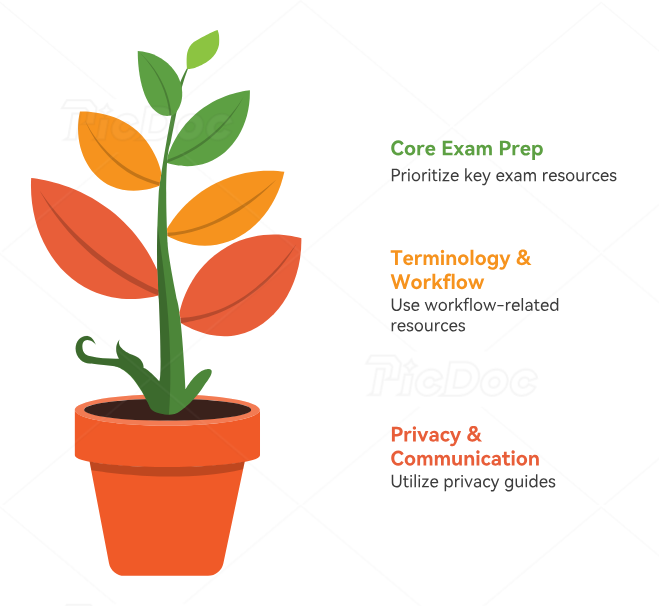
For core exam prep, prioritize the interactive CMAA practice exam, essential study tips, exam day checklist, CMAA career roadmap, and why CMAA certification dramatically boosts your career opportunities.
For terminology and workflow, lean on front desk operations terms, patient intake procedures, healthcare CRM terms, secure patient scheduling tools, and directory of medical admin staff scheduling tools. For privacy and office communication, use patient privacy communication essentials, top 20 must-know HIPAA terms for medical scribes, empathy in healthcare administration, active listening techniques, and difficult patient conversations guide.
5. Final 7-Day Strategy: What to Tighten Before Exam Day
The final seven days should feel sharper, not heavier. At this stage, weak retention is more dangerous than missing one obscure fact. You need reinforcement, not noise.
Three moves matter most. First, rework every missed or guessed question from prior mocks. Guesses matter because lucky answers hide unstable knowledge. Second, review confusion pairs: authorization versus verification, objective data versus assessment, scheduling urgency versus patient preference, portal convenience versus privacy exposure. Third, rehearse under time pressure so your brain stays organized when fatigue hits.
During this period, avoid resource-hopping. Stay close to the interactive medical office ergonomics tools directory if long sessions are draining you, the best collaboration tools for medical office teams if you need workflow context, the medical admin assistant job market outlook if motivation is slipping, the annual CMAA salary report if you need a reminder of the payoff, and real-life success stories from certified medical administrative assistants if you need to reset your confidence.
The night before the exam, stop trying to become smarter in one sitting. Review your condensed notes, your error log, and your exam routine. Then rest. A tired candidate with one more hour of cramming often performs worse than a rested candidate with slightly less review.
6. FAQs
-
Yes, if the 30 days are structured and aggressive. A month is enough time to build familiarity, reinforce recall, run multiple practice rounds, and repair weaknesses. It stops being enough when study is passive, inconsistent, or overloaded with too many resources. Use a small number of strong ACMSO resources, take frequent mixed-question sets, and keep an error log from day one.
-
For most candidates, 2 to 3 focused hours per day is enough when the work includes recall and testing. Someone starting from scratch may need closer to 3 to 4 hours in the first two weeks. Someone already comfortable with medical terminology and workflow may do well with 90 highly focused minutes plus practice questions. Quality matters more than the raw number.
-
Stop rereading and start retrieving. Study smaller clusters of terms, then close the material and write definitions, examples, and opposites from memory. Use mastering medical terminology for medical scribes, top 20 terms medical scribes must master, and ICD-10 interactive dictionary as review anchors, then test recall without looking.
-
Start with a short diagnostic in the first three days. Take a larger timed mock around day 15, another around day 23, and a final rehearsal near day 27. Practice exams are not just score checks. They expose weak pacing, misreading habits, and unstable concepts that normal reading never reveals.
-
The most common reasons are passive studying, no error tracking, weak HIPAA judgment, poor timing, and overconfidence after reading familiar material. Many candidates also neglect scenario-based questions, which punish shallow understanding. That is why CMAA exam prep mistakes to avoid, interactive CMAA practice exam, and exam day checklist should stay in your rotation.
-
Review only high-yield material: common misses, privacy rules, workflow distinctions, charting terminology, and your short confidence notes. Do not start new topics. Do not bury yourself in massive note sets. The final day should protect clarity, not create panic.
