

How Certified Medical Admin Assistants Impact Patient Satisfaction Scores
Patient satisfaction starts long before the provider enters the room. It begins when a patient calls, books, checks in, asks about coverage, receives portal instructions, waits for updates, and tries to understand what happens next. Certified Medical Administrative Assistants shape those moments through patient intake procedures, appointment scheduling best practices, patient privacy communication, front desk operations, and effective patient communication. Patient experience surveys measure exactly these friction points: access, communication, coordination, responsiveness, and office staff interactions.
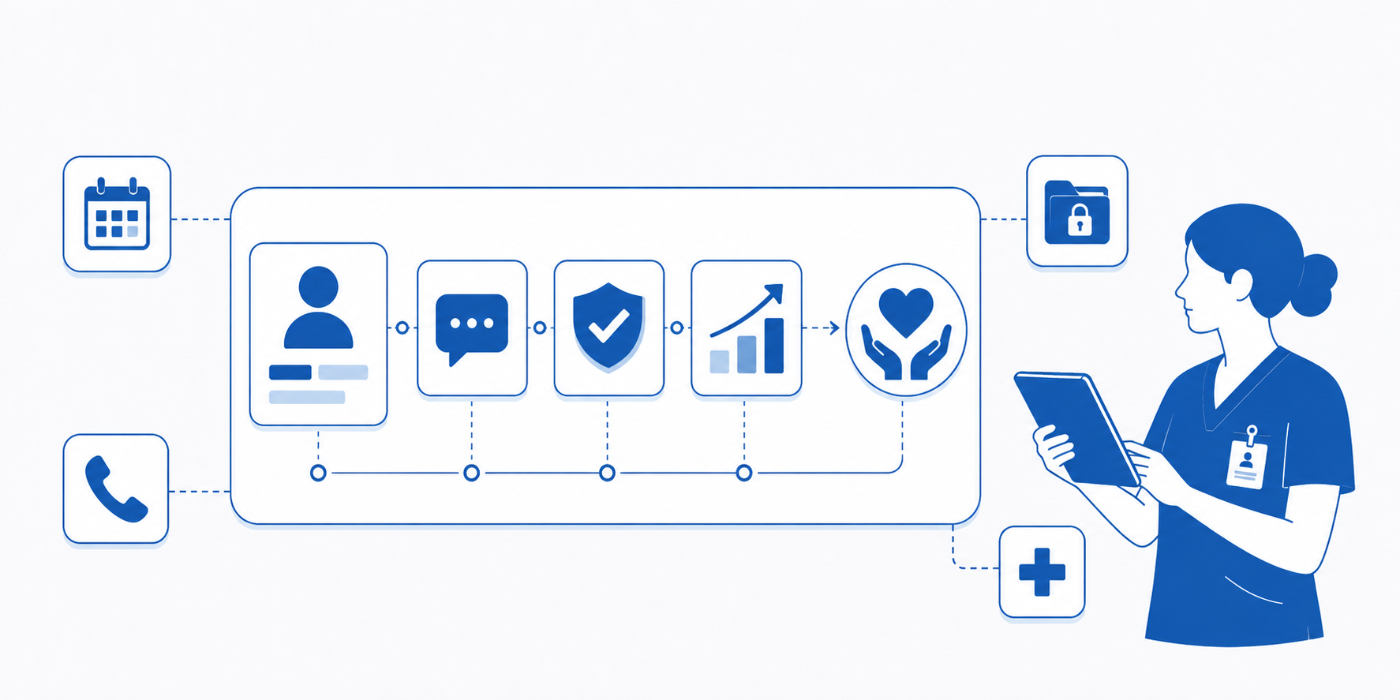
1. Why CMAAs Influence Patient Satisfaction More Than Most Clinics Realize
Certified Medical Administrative Assistants sit at the pressure point where patient expectations meet office reality. A provider may deliver excellent care, yet the patient may still leave frustrated because the appointment was hard to schedule, the front desk seemed rushed, the insurance explanation felt unclear, or the follow-up instructions arrived late. That is why strong CMAA training matters for medical administration careers, CMAA job security, medical administrative assistant technology, healthcare portal terms, and healthcare CRM workflows. The patient judges the whole organization through dozens of small administrative contacts.
CAHPS surveys ask patients to report their experiences with healthcare services, providers, clinics, and health plans, while the Clinician & Group CAHPS survey focuses on primary and specialty care experiences with providers and staff. That matters because patient satisfaction scores are shaped by the exact areas CMAAs touch every day: timely appointments, clear information, courteous staff, follow-up, medication communication support, and coordination. A trained CMAA who understands insurance verification, medical billing terms, HIPAA terms, patient complaint handling, and de-escalation techniques can turn a stressful encounter into a controlled, respectful experience.
The biggest hidden problem is that many clinics treat administrative work as “basic office support.” Patients experience it as access, trust, clarity, dignity, and safety. When a receptionist gives vague answers, schedules the wrong visit type, misses a referral note, sends a portal message with unclear instructions, or fails to update demographic information, the patient feels ignored. The provider may inherit frustration that started at the front desk. A certified CMAA reduces that risk by applying structured habits from legal responsibilities for CMAAs, risk management strategies, patient record updates, EMR integration tools, and top EMR shortcuts.
2. The Patient Satisfaction Metrics CMAAs Can Actually Move
CMAAs influence satisfaction through access, responsiveness, communication, coordination, privacy, and administrative confidence. These are measurable experience areas. The CG-CAHPS measure set includes timely appointments, care, and information; provider communication; and provider use of information to coordinate care. The HCAHPS survey includes core questions about communication, responsiveness, care coordination, discharge information, overall rating, and recommendation. Even when a CMAA does not control the provider’s bedside communication, they shape the surrounding experience through patient scheduling tools, secure scheduling software, telehealth administration, virtual patient management, and patient communication apps.
The first metric CMAAs move is timely access. Patients remember how hard it was to get an appointment, how many times they had to call, whether the office called back, and whether the appointment type matched the problem. A certified CMAA uses scheduling rules, urgency cues, provider preferences, referral requirements, and cancellation logic to reduce friction. Poor scheduling creates hidden dissatisfaction before the visit begins: the patient arrives for the wrong service, waits because prep was incomplete, or learns that required paperwork was missing. A trained admin protects satisfaction by mastering appointment conflict handling, emergency appointment management, staff scheduling tools, medical office productivity, and time management for medical admins.
The second metric is communication. Patients judge communication by tone, clarity, response time, and consistency. A CMAA who says, “You’ll need to call billing,” may technically route the patient correctly, yet the patient may feel dismissed. A stronger response explains the next step, gives the correct contact route, documents the concern, and clarifies what the patient should expect. That difference shows up in loyalty and complaint volume. Certified administrative training strengthens the judgment behind active listening techniques, difficult patient conversations, empathy in healthcare administration, patient privacy terms, and HIPAA updates.
The third metric is coordination. Patients often rate care poorly when they feel different parts of the office are disconnected. They repeat information, receive conflicting instructions, wait for results, chase referrals, or discover that records did not move. CMAAs reduce those problems by documenting thoroughly, routing tasks accurately, and closing the loop. That is where EMR platform knowledge, EMR issue resolution, records release workflows, medical records compliance, and healthcare documentation standards become satisfaction tools rather than back-office tasks.
3. How Certification Changes the Front-Office Behaviors Patients Notice
Certification improves patient satisfaction when it changes behavior, not when it simply adds letters after a name. The patient does not care whether the staff member passed a test; the patient cares whether the office is calm, clear, accurate, responsive, and respectful. A trained CMAA learns the difference between being polite and being useful. Politeness says, “Please hold.” Usefulness says, “I’m checking the appointment type and referral requirement so we do not bring you in unprepared.” That practical competence connects directly to CMAA career paths, CMAA salary growth, certification and earnings, CMAA job market demand, and career progression rates.
The behavior patients notice fastest is ownership. Untrained staff often transfer problems too quickly because they are afraid of giving the wrong answer. Certified staff are more likely to clarify the request, document the issue, route it correctly, and explain what happens next. That helps patients feel that the office has a system. The pain point is serious: patients become angry when they feel they must manage the clinic’s internal workflow themselves. Strong CMAAs prevent that by using front desk operations checklists, healthcare CRM workflows, collaboration tools, medical admin time tracking, and creating medical admin policies.
Another behavior is clean explanation. Administrative staff often handle sensitive topics: balances, no-show rules, late arrivals, insurance gaps, portal access, records requests, privacy limitations, and referral delays. A certified CMAA learns to explain boundaries without sounding cold. That skill protects satisfaction because patients can accept limits more easily when the reason is clear. “Your authorization is still pending, so we are checking status before confirming the specialist visit” lands very differently from “We can’t schedule that yet.” This is where training in billing basics, CPT code awareness, ICD-10 references, denial management, and insurance claim management creates patient-facing value.
4. The Direct Link Between CMAA Workflows and Better Patient Experience Scores
The strongest CMAA workflows are built around preventing friction before the patient feels it. A prepared patient is usually calmer. A prepared provider is usually more efficient. A prepared chart reduces repeated questions. A prepared schedule reduces waiting-room stress. This is why CMAAs should treat every administrative detail as a patient experience driver. Medicare explains that patient survey star ratings come from HCAHPS survey data, while HCAHPS star ratings help consumers compare patient experience information across hospitals. For medical offices, the same principle applies: experience data reflects how care feels to patients. Strong admin workflows improve that feeling through medical admin software tools, secure scheduling systems, patient communication apps, medical office ergonomics, and medical administration conferences.
One workflow is pre-visit readiness. The CMAA should confirm appointment reason, records, referral status, insurance details, patient forms, portal access, and preparation instructions. This prevents the classic patient frustration: “Why did no one tell me that before I arrived?” Another workflow is same-day communication. When providers run behind, a trained CMAA updates the waiting room, offers realistic timing, and avoids vague promises. Silence makes patients assume the office forgot them. Clear updates protect dignity. These workflows rely on scheduling software mastery, patient intake definitions, active listening, emergency scheduling, and appointment conflict resolution.
Another high-impact workflow is post-visit closure. Many satisfaction problems appear after the encounter: the patient forgets the next step, does not know how to access results, waits for a referral, receives an unclear portal message, or gets a bill they do not understand. Certified CMAAs can improve closure by confirming follow-up appointments, documenting pending tasks, checking records release requirements, and clarifying who will contact the patient. The office may feel finished when the patient leaves; the patient feels finished when the next step is clear. That is why post-visit workflows should connect records release tools, portal communication, telehealth platform terms, virtual patient management, and risk management habits.

5. How Clinics Can Train CMAAs to Improve Scores Consistently
A clinic that wants better patient satisfaction should train CMAAs on moments of friction, not just tasks. The training should ask: where do patients get confused, delayed, embarrassed, ignored, transferred, surprised, or forced to repeat themselves? Those are score-risk moments. Build scripts and checklists around them. For example, every referral call should include status, next action, expected timeline, and who owns the follow-up. Every late-provider update should include acknowledgment, timing, and options. Every billing question should include respectful explanation and correct routing. These habits can be built through CMAA resume skill development, interview preparation, ACMSO exam study planning, medical terminology mastery, and exam success strategies.
Train against real patient pain points. Role-play the angry patient whose authorization was missed. Practice the confused older patient who cannot use the portal. Drill the parent trying to schedule a same-day visit. Simulate the patient who says, “Nobody called me back.” Then teach the CMAA to acknowledge, clarify, document, route, and close the loop. A clinic that trains only on software clicks will produce staff who can use the system while still creating patient frustration. A clinic that trains on judgment creates staff who protect satisfaction under pressure. This approach pairs well with de-escalation practice, complaint handling, difficult conversation frameworks, empathy scenarios, and legal responsibilities.
Measure admin performance using patient-experience signals. Track call abandonment, callback delays, schedule errors, check-in wait time, incomplete intake, referral status delays, portal response time, complaint categories, and repeated patient questions. When the same confusion appears again and again, it is a training signal. When the same staff member resolves hard situations cleanly, that is a coaching model. Strong CMAA teams should review satisfaction comments for workflow clues, then adjust scripts, checklists, and handoff rules. That is how predictive analytics in medical administration, medical admin workforce trends, CMAA promotion planning, medical admin professional organizations, and CMAA online communities become practical improvement tools.
6. FAQs: How Certified Medical Admin Assistants Impact Patient Satisfaction Scores
-
Yes. CMAAs affect the administrative moments patients remember: scheduling, check-in, phone tone, portal support, insurance clarity, privacy, referrals, records, and follow-up. Patient experience surveys include areas such as access, communication, coordination, responsiveness, and staff interactions, which connect closely to CMAA workflows. A strong CMAA supports satisfaction through appointment scheduling, patient communication, patient intake, and HIPAA communication.
-
The strongest areas are timely access, staff courtesy, communication clarity, care coordination, records accuracy, referral follow-through, portal support, and billing-related explanation. CMAAs also influence wait-time perception by updating patients clearly when the schedule falls behind. Clinics should train CMAAs in front desk operations, insurance verification, records update compliance, and patient complaint handling.
-
A CMAA reduces complaints by owning the next step instead of leaving the patient stuck. That means clarifying the issue, documenting the concern, routing it correctly, giving realistic expectations, and following up when needed. Many complaints come from silence, repeated transfers, unclear policies, and surprise costs. Training in active listening, de-escalation, billing terms, and risk management helps staff respond with control.
-
Experience can build speed, yet certification can add structure, compliance awareness, terminology, documentation habits, and professional judgment. A front-desk employee may know how to answer calls, while a certified CMAA is trained to think about privacy, patient flow, records, scheduling accuracy, and healthcare-specific consequences. That makes certification valuable for staff moving into higher-responsibility roles involving EMR systems, medical admin technology, telehealth administration, and CMAA career growth.
-
Start with the highest-friction patient moments: long hold times, unclear scheduling rules, late callbacks, insurance confusion, check-in delays, portal problems, and poor complaint recovery. Then build scripts, checklists, and escalation rules. Training should include scheduling conflicts, emergency appointment management, portal workflows, records release, and office productivity.
-
Yes, because patients often merge the whole visit into one overall impression. If the schedule was wrong, check-in was stressful, staff were vague, and follow-up was confusing, the provider may receive frustration that started before the exam room. Better CMAA workflows prepare the patient, reduce delays, improve handoffs, and make the provider encounter feel more organized. That is why clinics should connect CMAA training with care coordination, documentation accuracy, data accuracy, and healthcare compliance.
