

Explanation of Benefits (EOB): Comprehensive Dictionary Entry
An Explanation of Benefits is the document that translates an insurance claim into financial responsibility. It shows how the payer processed each service, which charges were allowed, what the plan paid, and what may remain for the patient. For medical administrative teams, understanding an EOB is essential for accurate insurance verification, cleaner insurance claims management, faster denial resolution, and clearer patient communication. A weak EOB review creates billing confusion; a disciplined review catches payer errors, posting mistakes, authorization gaps, and avoidable patient complaints before they escalate.
1. Explanation of Benefits (EOB): Definition, Purpose, and Core Meaning
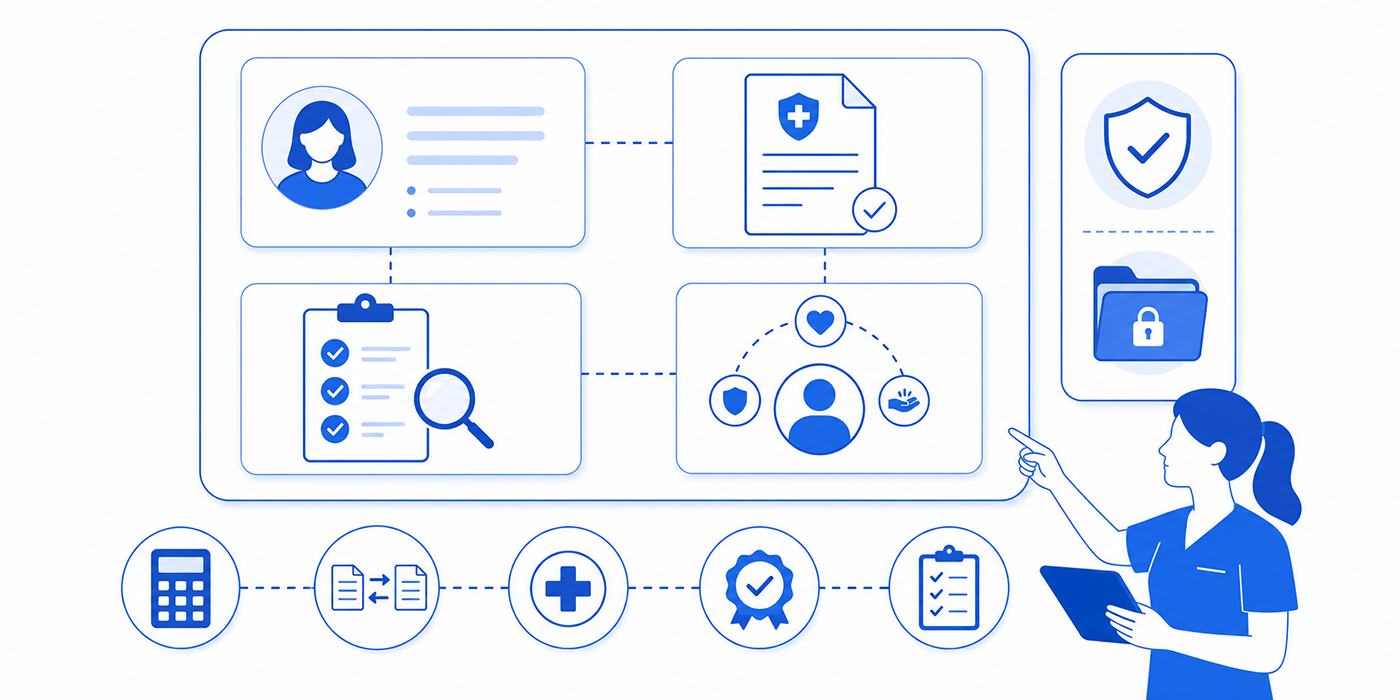
An Explanation of Benefits, usually shortened to EOB, is a post-adjudication statement issued after a health insurer processes a claim. It summarizes the claim submitted by the provider, the payer’s coverage decision, contractual reductions, plan payments, and the amount assigned to the patient. The EOB connects the clinical visit documented in the medical record with the financial outcome created through CPT coding, ICD-10 coding, eligibility rules, network contracts, and benefit design.
Patients usually receive the EOB through mail or a secure healthcare portal. Providers typically receive related remittance information through a paper remittance advice or an electronic remittance advice, often called an ERA. The patient-facing EOB and provider-facing remittance record may display similar financial outcomes, although the ERA is usually structured for payment posting, adjustment coding, and revenue cycle management.
The EOB should be read as a claim-processing record. A provider bill is the separate request for payment generated after the practice applies the payer decision, prior patient payments, secondary coverage, and internal posting rules. This distinction is central to accurate front-desk operations, effective patient complaint handling, and responsible medical billing communication.
A complete EOB review answers five operational questions: Was the correct patient and claim processed? Were the services coded and dated correctly? Did the payer apply the correct contract and benefits? Does the patient-responsibility amount reconcile mathematically? Does the provider’s account reflect the same outcome? Medical administrative assistants who combine EOB knowledge with accurate patient intake procedures, disciplined record updates, and strong risk management can identify claim problems before the patient receives an incorrect statement.
| # | EOB Term | Precise Meaning | Why It Matters | Administrative Action |
|---|---|---|---|---|
| 1 | Claim number | The payer’s unique identifier for the submitted claim. | It anchors every call, appeal, correction, and follow-up. | Record it in the claims workflow and related CRM note. |
| 2 | Member ID | The identifier linking the claim to the insured member’s plan. | A transposed or outdated ID can route the claim incorrectly. | Compare it with eligibility verification and intake records. |
| 3 | Group number | The code identifying an employer or plan group. | It helps confirm the correct benefit package. | Validate through the payer portal and document any mismatch in the patient chart. |
| 4 | Patient name | The individual who received the billed service. | Dependent claims can be posted to the wrong family member. | Use compliant identity checks and correct the demographic record. |
| 5 | Provider | The clinician, facility, laboratory, or organization tied to the claim. | Incorrect provider data may affect network status and payment. | Confirm the billing entity through front-office records and billing policy. |
| 6 | Date of service | The date on which the service was performed. | The wrong date can trigger eligibility, authorization, or timely-filing issues. | Compare with appointment records and the encounter note. |
| 7 | Service description | A plain-language label for the procedure or service line. | Labels can be broader than the actual procedure code. | Verify against the CPT reference and coding training. |
| 8 | Billed charge | The amount the provider submitted before payer adjudication. | It rarely equals the final amount owed under a network contract. | Reconcile it with billing terminology and the charge-capture process. |
| 9 | Allowed amount | The maximum amount recognized under the payer’s rules or contract. | Patient cost-sharing is commonly calculated from this amount. | Compare it with the benefit quote and payer adjustment. |
| 10 | Contractual adjustment | The reduction between the billed charge and contracted allowed amount. | Posting it to the patient can create improper balances. | Post it using approved payment policies and review unusual variances through risk controls. |
| 11 | Deductible | The covered amount the patient must satisfy before specified plan payments begin. | Deductible balances are a major source of unexpected bills. | Explain it with clear patient language and confirm through eligibility tools. |
| 12 | Copayment | A fixed patient amount assigned to a covered service. | Collected copays must be credited before statements are issued. | Match the EOB to the front-desk receipt and daily reconciliation. |
| 13 | Coinsurance | A percentage of the allowed amount assigned to the patient. | Using the billed charge instead of the allowed amount produces incorrect estimates. | Recalculate using billing rules and document the explanation through secure communication. |
| 14 | Plan paid | The amount the insurer approved for payment on the claim. | It must match the remittance and posted payment. | Reconcile through the revenue cycle and investigate discrepancies with system troubleshooting. |
| 15 | Patient responsibility | The amount allocated to deductible, copay, coinsurance, or eligible noncovered charges. | It drives the provider’s patient balance after reconciliation. | Validate before using payment communication or complaint workflows. |
| 16 | Noncovered amount | A charge excluded under the plan’s coverage rules. | Responsibility depends on benefit terms, notices, and payer rules. | Check legal responsibilities and confirm the service through benefit verification. |
| 17 | Network status | Whether the provider participates in the payer’s contracted network. | It can change allowed amounts and patient liability. | Confirm during intake and preserve evidence in the patient contact record. |
| 18 | Reason code | A code explaining an adjustment, denial, reduction, or patient-responsibility decision. | The code identifies the next corrective action. | Route it through denial management and verify the associated service code. |
| 19 | Remark code | Supplemental information that clarifies the payer’s reason code. | Ignoring it can lead staff to submit the wrong correction. | Document it in the claim follow-up and use task prioritization. |
| 20 | Processed date | The date the payer completed adjudication. | It helps calculate appeal and follow-up timelines. | Add it to the tracking system and apply timely-response procedures. |
| 21 | Pending claim | A claim awaiting information, review, or completion. | Premature patient billing can create avoidable confusion. | Check the payer portal and follow the pending-claim workflow. |
| 22 | Denied claim | A claim line the payer declined to pay under the submitted information. | The denial may require correction, documentation, appeal, or contractual adjustment. | Use the denial workflow and review clinical terminology for documentation gaps. |
| 23 | Duplicate claim | A claim identified as previously submitted or processed. | Repeated resubmission can delay resolution and distort aging reports. | Compare claim history in the payer portal and apply workflow controls. |
| 24 | Coordination of benefits | The process determining which plan pays first when multiple coverages exist. | Incorrect payer order can generate denials and false patient balances. | Update coverage details and manage the secondary claim through claims procedures. |
| 25 | Prior authorization | Payer approval required before certain services under the plan. | Missing authorization can produce preventable denials. | Follow the prior authorization workflow and document status in the EMR. |
| 26 | Referral requirement | A plan rule requiring an approved referral for specified services. | A missing or expired referral can shift or delay payment. | Verify during scheduling and resolve conflicts through appointment workflows. |
| 27 | Appeal rights | Instructions explaining how a coverage decision may be challenged. | Deadlines and documentation requirements can determine success. | Apply legal safeguards and organize records using records-release tools. |
| 28 | Reprocessed claim | A claim recalculated after correction, appeal, or payer review. | The newest EOB may replace earlier responsibility amounts. | Reverse outdated postings through revenue-cycle controls and update the account record. |
| 29 | Accumulated deductible | The deductible amount credited toward the member’s plan-year requirement. | Recent claims may change it after the original eligibility check. | Recheck current benefits and explain changes with active listening. |
| 30 | Out-of-pocket maximum | The plan-year limit on specified member cost-sharing for covered services. | Its application can materially change patient responsibility. | Confirm through payer benefits and preserve the explanation under HIPAA communication practices. |
2. How to Read an EOB Line by Line Without Miscalculating Patient Responsibility
Start with identity and claim control data before reviewing dollars. Match the patient name, member ID, provider, claim number, date of service, and service description to the patient intake record, appointment schedule, and EMR encounter. A perfect mathematical calculation attached to the wrong patient, service date, or provider remains an unusable result.
Next, read each service line horizontally. Compare the billed charge with the allowed amount, then identify every adjustment. The allowed amount usually drives deductible, copay, and coinsurance calculations. Staff who use the billed charge as the cost-sharing base can overstate patient responsibility and create a preventable billing complaint. The safer process follows established medical billing terminology, verifies payer benefits, and reconciles the outcome through revenue cycle controls.
Consider a claim with a $420 billed charge and a $250 allowed amount. The network adjustment is $170. The payer applies $100 to the deductible, leaving $150 of allowed charges. The plan assigns 20% coinsurance to that remaining amount, which equals $30. The insurer pays $120, and total patient responsibility becomes $130: $100 deductible plus $30 coinsurance. The account should reflect $170 as the contractual adjustment, $120 as insurance payment, and $130 as patient responsibility, assuming there is no secondary payer, previous patient payment, corrected claim, or separate noncovered service.
Every amount should satisfy a reconciliation equation:
Billed charge − contractual or payer adjustments − plan payment = patient responsibility plus any unresolved amount.
An unresolved amount requires investigation. It may represent a pending line, coordination-of-benefits problem, missing payment, posting error, or denial awaiting correction. Use the payer’s portal terminology, the practice’s claims tutorial, and approved EMR troubleshooting procedures before moving the balance to the patient.
Finish by checking previous collections and secondary coverage. A copay collected at check-in, a deposit, or a payment plan must reduce the open patient balance. When another insurer is active, the primary EOB often becomes supporting data for the secondary claim. Accurate coverage updates, disciplined front-desk reconciliation, and clear patient privacy communication prevent duplicate collections and contradictory statements.
3. EOB Adjustments, Denials, and Codes That Create the Most Confusion
An adjustment changes how a charge is allocated. A denial explains why the payer withheld payment on a service line. The operational response depends on the code group, remark text, contract, and claim history. Treating every unpaid line as patient responsibility can expose the practice to compliance risk, damage trust, and bury the real correction under repeated statements. Strong denial management begins with code interpretation, ownership assignment, and a documented next action.
Contractual adjustments usually reflect the difference between the provider’s charge and the payer’s contracted allowance. These amounts are commonly written off under the participation agreement. Staff should verify the adjustment against the payer contract and internal billing policies, then monitor unusual variances through risk-management controls. A large adjustment can be correct; an inconsistent adjustment can signal the wrong fee schedule, incorrect network status, or payer configuration problem.
Patient-responsibility adjustments include deductible, copay, and coinsurance. These amounts require mathematical verification and benefit context. A deductible amount may differ from the estimate given before the visit because other claims were processed between verification and adjudication. Staff should explain that timing through effective patient communication, use active listening when the patient challenges the amount, and avoid promising a correction before the claim is reviewed.
Administrative denials often arise from eligibility, missing authorization, referral rules, invalid identifiers, duplicate submission, filing limits, or coordination-of-benefits gaps. These denials frequently originate upstream. A missed coverage update during patient intake, an incomplete prior authorization, or a scheduling handoff failure can surface weeks later as an unpaid EOB line. The corrective action should address the root workflow so the same failure does not recur.
Clinical and coding denials may involve diagnosis-procedure relationships, medical-necessity edits, modifier issues, bundling, missing documentation, or an invalid service code. The EOB alone rarely contains enough detail to correct these issues safely. Staff should compare the reason and remark codes with the CPT code reference, ICD-10 dictionary, provider documentation, and current payer guidance. Altering codes solely to obtain payment can create serious legal responsibility; any correction must accurately represent the documented service.
Reprocessed claims require version control. The latest EOB can reverse a denial, change the allowed amount, transfer responsibility, or issue an additional payment. Staff should retain the claim timeline, reverse outdated postings, and update the patient statement only after the new adjudication is fully applied. This discipline depends on reliable medical admin time tracking, accurate record updates, and a clean office workflow.
4. A Practical EOB Troubleshooting Workflow for Medical Administrative Teams
A defensible EOB workflow separates verification, analysis, correction, and communication. Rushing directly to a payer call often wastes time because the staff member has not assembled the claim history, code details, remittance data, or prior contact notes. Use the following sequence to reduce repeat calls and prevent balances from reaching patients prematurely.
Step 1: Freeze the questionable balance. Place the account in an appropriate review status so an automated statement, collection message, or payment reminder does not continue while the discrepancy is active. This step should follow documented medical office policies, approved risk controls, and clear ownership within the revenue cycle workflow.
Step 2: Build the claim packet. Collect the EOB, ERA or remittance record, claim form data, encounter note, coding details, authorization record, eligibility response, prior payer correspondence, and patient payments. Pulling information from disconnected systems without a checklist creates selective review. A standardized packet based on patient record procedures, records-release controls, and EMR terminology produces a complete audit trail.
Step 3: Identify the discrepancy category. Classify the issue as demographic, eligibility, authorization, referral, coding, documentation, contract, payment posting, coordination of benefits, or patient payment. The category determines who owns the next action. An eligibility error belongs in the insurance verification process; an authorization failure belongs in the prior authorization workflow; a coding concern requires review against CPT guidance and ICD-10 documentation.
Step 4: Verify the payer’s exact reason. Read the full reason code, remark code, and claim status. Then confirm the meaning in the payer’s current portal or provider manual. Generic interpretations can miss payer-specific edits. Record the representative’s name, reference number, date, stated reason, requested documents, and expected turnaround time in the healthcare CRM, using consistent time-tracking tools and secure HIPAA communication practices.
Step 5: Choose the correct remedy. A corrected claim fits inaccurate claim data. A reconsideration fits a request for payer review using existing claim facts. An appeal fits a disputed coverage or payment decision requiring a formal challenge. A patient update fits outdated coordination-of-benefits or demographic information. A contractual write-off fits a valid network adjustment. The choice should follow the practice’s claims management tutorial, denial-management process, and legal responsibilities.
Step 6: Communicate with precision. Patients need the financial logic, current status, and next checkpoint. A useful script is: “Your insurer processed the claim on [date]. The EOB shows a billed charge of $, an allowed amount of $, a plan payment of $, and $ assigned to you. We are reviewing [specific discrepancy], so the balance is currently on hold. Our next update is due by [date].” This approach uses effective patient communication, de-escalation techniques, and active listening without making unsupported promises.
Step 7: Close the loop. After correction or reprocessing, compare the new EOB with the ERA, ledger, contractual adjustment, payment, and patient balance. Remove outdated statements, release the account hold, and document the resolution. Then identify the upstream prevention opportunity: better patient intake, stronger appointment scheduling controls, improved EMR integration, or clearer office procedures.

5. How EOB Knowledge Strengthens Revenue Cycle Accuracy, Compliance, and Career Readiness
EOB literacy improves more than payment posting. It reveals where the revenue cycle is failing. Repeated eligibility denials point to weak insurance verification. Authorization denials expose gaps in the prior authorization process. Incorrect patient balances reveal problems in front-desk collections, contractual adjustments, or claims follow-up. Tracking these patterns turns the EOB into an operational diagnostic tool.
Compliance also depends on disciplined EOB handling. EOBs contain patient identifiers, service information, payer data, and financial details that must be managed through secure HIPAA communication, appropriate privacy terminology, controlled records release, and role-based access. Staff should avoid discussing EOB details with an unauthorized caller, sending documents through unapproved channels, or copying sensitive claim data into unsecured notes.
For certified medical administrative assistants, EOB competence demonstrates practical command of billing, coding, payer communication, and patient service. It strengthens performance in CMAA interviews, supports advancement toward medical office management, and improves readiness for CMAA certification. Candidates who can explain how they reconciled an EOB, prevented an incorrect bill, and corrected the root workflow show employers measurable administrative judgment.
The strongest teams also convert EOB trends into training. A monthly review can identify top denial reasons, payer-specific adjustment patterns, average correction time, repeat patient complaints, and balances held because of posting mismatches. Those findings can guide medical office checklists, collaboration tools, staff scheduling, and focused professional development. EOB mastery becomes a system-improvement skill rather than a narrow billing task.
6. Frequently Asked Questions About Explanation of Benefits (EOBs)
-
The insurer may issue the EOB before the provider finishes posting the payment, adjustment, secondary claim, or prior patient payment. The practice should complete revenue cycle reconciliation before generating a final statement. Patients can compare the claim number and date of service through the payer portal and use secure patient communication to request clarification.
-
The billed charge is the provider’s submitted charge. The allowed amount reflects the payer’s recognized or contracted amount for that service. The difference may become a contractual adjustment under the network agreement. Staff should confirm the result through medical billing terminology, current insurance verification, and established billing policies.
-
Yes. Reprocessing, secondary insurance, corrected coding, an appeal, a coordination-of-benefits update, or a posting correction can change the amount. The newest adjudication should be compared with the prior EOB and account ledger. Staff should use accurate record updates, structured claims follow-up, and documented denial resolution.
-
Place the account under review, then compare the EOB, ERA, ledger, contractual adjustment, insurance payment, patient payments, refunds, and secondary coverage. The discrepancy may result from timing, missing posting, an outdated statement, or a reprocessed claim. Follow risk-management procedures, use EMR troubleshooting, and communicate through approved HIPAA channels.
-
The denial reason, payer contract, plan rules, authorization history, documentation, and claim-correction options determine responsibility. Administrative or coding denials may require provider correction or appeal. Staff should review the denial-management process, applicable legal responsibilities, and relevant CPT coding guidance before transferring the amount.
-
The EOB is generally designed for the member or patient and explains how the claim affected benefits and cost-sharing. The ERA is a provider-facing electronic remittance record used for payment posting, adjustment codes, and account reconciliation. Both belong in a controlled revenue cycle workflow, supported by reliable EMR integration tools and accurate medical billing knowledge.
