

How to Stand Out in CMAA Job Interviews: Questions & Answers
A CMAA interview is where front-office knowledge, patient judgment, compliance discipline, andA CMAA interview is where front-office knowledge, patient judgment, compliance discipline, and calm communication all get tested at once. The strongest candidates show they can protect privacy, keep schedules moving, handle frustrated patients, support billing accuracy, and use EMR systems without creating downstream errors. This guide gives you practical interview answers, role-play strategies, and proof points you can use to stand out for medical administrative assistant roles tied to patient intake procedures, HIPAA privacy expectations, appointment scheduling, and front desk operations.
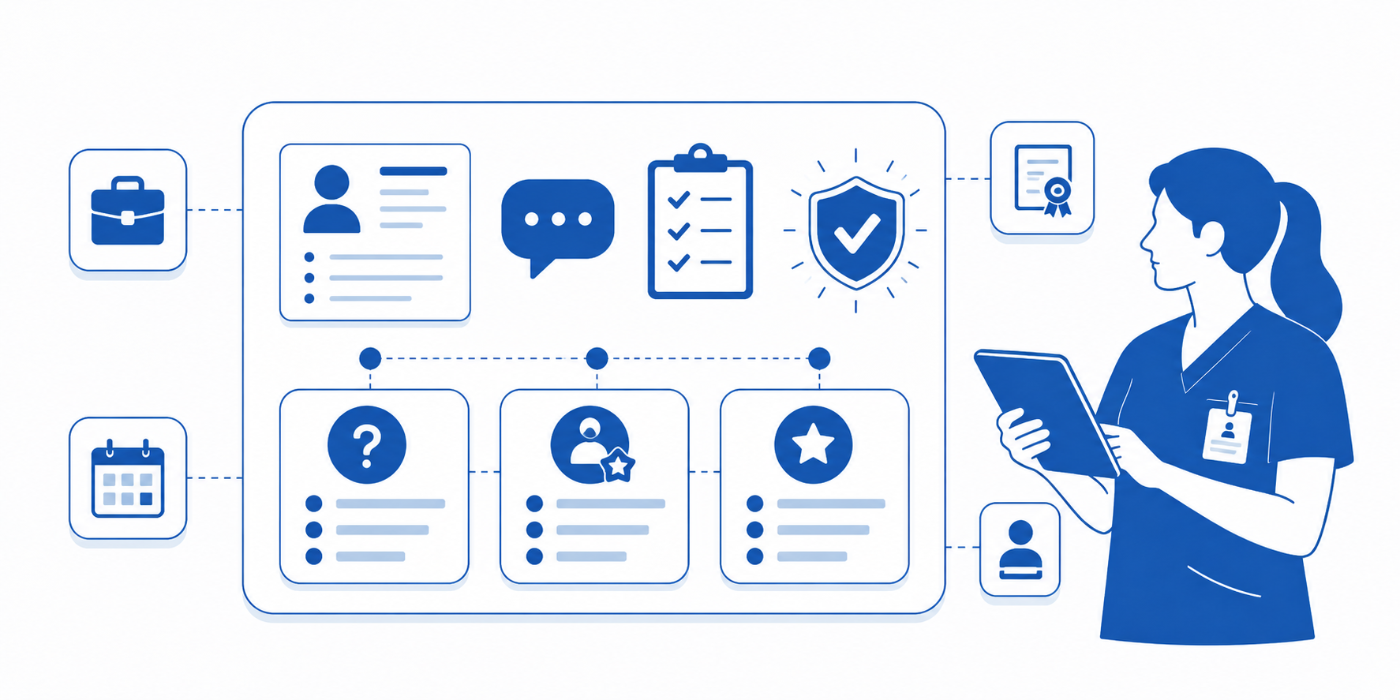
1. What CMAA Interviewers Are Really Testing Before They Offer You the Role
A hiring manager listens for proof that you can handle pressure without turning a busy clinic into a chain reaction of mistakes. In a CMAA interview, the real test is usually judgment: how you verify patient information, how you protect PHI, how you explain delays, how you route messages, and how you prevent small scheduling errors from becoming angry calls, missed care, denied claims, or provider frustration. This is why your answers should connect patient communication, insurance verification, EMR compliance, and risk management instead of sounding like memorized interview lines.
A weak candidate says, “I’m organized and good with people.” A stronger candidate says, “I verify identifiers before discussing patient information, document call details in the correct record, confirm appointment instructions clearly, and escalate urgent concerns through the clinic’s approved workflow.” That answer shows readiness for patient privacy communication, medical office policies, medical records release, and secure scheduling tools.
The best interview answers prove that you understand how one front-desk mistake travels through the entire practice. A wrong insurance entry can delay payment. A vague phone note can confuse the provider. A poorly handled complaint can damage trust. A missed privacy step can create compliance exposure. A scheduling conflict can overload the clinical team. When you answer, tie your experience to practical systems like medical appointment scheduling tools, EMR integration tools, patient communication apps, and collaboration tools for medical office teams.
2. Best CMAA Interview Questions and Answers That Prove You Can Handle the Front Office
The best way to answer “Tell me about yourself” is to build a tight three-part story: patient-facing strength, administrative accuracy, and readiness for the specific clinic environment. For example: “I’ve built my preparation around accurate intake, calm patient communication, and reliable front-desk workflow. I’m comfortable verifying information, documenting calls, following privacy rules, and keeping schedules organized so patients and providers have fewer avoidable delays.” This answer connects directly to patient intake, active listening, appointment scheduling best practices, and front desk operations.
For “How do you handle an upset patient?” avoid dramatic language and show a controlled process. A strong answer sounds like: “I let the patient explain the issue, repeat the core concern back clearly, check what I can verify, and explain the next step without overpromising. If the concern involves clinical guidance, billing complexity, privacy, or a formal complaint, I route it through the approved workflow and document the interaction accurately.” That answer proves you understand de-escalation, patient complaints, effective patient communication, and legal responsibilities for CMAAs.
For “How do you protect patient privacy?” your answer should sound specific enough to be trusted. Say: “I confirm patient identity before discussing information, use only the minimum necessary information, avoid discussing PHI in public areas, follow release-of-information procedures, and keep access limited to the work I’m assigned to complete.” This proves you understand HIPAA terms for medical administrative assistants, patient privacy communication, healthcare portal use, and medical records release.
For “How do you manage a busy schedule?” connect speed with accuracy. A standout answer says: “I confirm the appointment type, provider, location, time length, insurance or referral requirements, patient instructions, and contact details before finalizing. When conflicts happen, I check clinic policy, communicate clearly, and document changes so the next person can understand what happened.” That answer shows you can reduce chaos through secure patient scheduling, scheduling software mastery, scheduling conflict handling, and directory-level scheduling tool awareness.
For “What are your weaknesses?” choose a growth area that will strengthen the office rather than scare the employer. A good answer sounds like: “I used to spend extra time double-checking unfamiliar workflows, so I built a habit of taking structured notes, confirming expectations early, and creating quick reference steps for repeated tasks. That helps me stay accurate while improving speed.” This keeps the focus on coachability, time management, office productivity, EMR issue resolution, and medical admin technology readiness.
3. How to Build Answers That Sound Experienced Even If You Are Entry-Level
Entry-level candidates can stand out by answering with systems instead of vague confidence. You may have limited clinic experience, yet you can still show that you understand how medical offices function. Build each answer around four pieces: the patient concern, the administrative task, the risk if it goes wrong, and the safeguard you use. This framework works for insurance verification, CPT code awareness, ICD-10 familiarity, and denial prevention.
Use this answer structure: “In that situation, I would first verify the facts, then follow the office workflow, communicate clearly with the patient or team member, document the action, and escalate when the issue falls outside my role.” That one structure can answer questions about an angry caller, missing insurance, a late provider, incomplete paperwork, a portal message, or a scheduling conflict. It also shows awareness of healthcare CRM terms, medical billing terms, patient communication tools, and medical office policy workflow.
Bring proof into your answers. Proof can include certification preparation, mock scheduling practice, EMR exposure, customer service experience, call handling, data entry, patient intake exercises, or training in privacy terms. A candidate who says, “I completed training on HIPAA, scheduling, patient intake, billing terms, and EMR accuracy” sounds more prepared than someone who only says they are hardworking. Tie your proof to ACMSO certification exam prep, medical terminology memorization, first-try certification strategies, and CMAA job security growth.
The painful truth is that many candidates lose interviews through small language choices. “I just follow instructions” sounds passive. “I confirm the workflow, ask when a request is outside policy, document accurately, and keep patients informed” sounds dependable. “I’m good on computers” sounds thin. “I can learn EMR workflows by mapping where patient messages, scheduling, demographics, and billing flags live” sounds practical. Connect your language to EMR shortcuts, EMR integration tools, patient record updates, and technology trends in medical administration.
4. Role-Play Answers That Help You Stay Calm When the Interview Gets Tough
Role-play questions expose whether you can stay professional when patients are upset, confused, late, embarrassed, or angry. If the interviewer says, “A patient arrives late and demands to be seen immediately,” answer with calm structure: “I would acknowledge the frustration, check the appointment policy and provider schedule, confirm whether the patient has urgent symptoms that need clinical staff attention, and explain the available options clearly. I would document the interaction and involve a supervisor if the situation escalates.” This shows skill in difficult conversations, active listening, emergency appointment management, and risk management.
If the interviewer asks, “A patient wants test results over the phone. What do you do?” your answer should protect privacy and scope. Say: “I would verify the patient according to office policy, check whether results can be released through the approved process, avoid interpreting clinical information, and route the request to the appropriate clinical team member or portal workflow.” That answer demonstrates boundaries connected to HIPAA privacy terms, portal communication, legal responsibilities, and patient privacy essentials.
If you get a role-play about insurance, show that you understand accuracy protects the patient and the practice. For example: “I would verify eligibility, check plan details, confirm whether referral or prior authorization information is needed, update the record carefully, and explain to the patient what information the office can confirm versus what they may need to ask their payer.” This connects to insurance verification, insurance claims management, billing code changes affecting CMAAs, and denial management.
If you are asked, “What would you do if a provider is running behind and the waiting room is getting frustrated?” the best answer balances honesty, privacy, and patient flow. Say: “I would keep patients updated within office guidelines, avoid sharing private clinical details, offer realistic options when possible, communicate with the care team, and document schedule changes accurately.” That answer gives employers confidence in your ability to manage front desk operations, patient communication, scheduling conflicts, and collaborative medical office work.

5. Final Interview Prep: Proof, Follow-Up, and Red Flags to Avoid
Before the interview, prepare five proof stories: one about patient communication, one about accuracy, one about a stressful situation, one about learning software or a workflow, and one about teamwork. Each story should have a situation, action, result, and lesson. Keep them short. A hiring manager has limited time, and a rambling answer can make even a capable candidate sound disorganized. Build your proof around medical admin interview prep, CMAA resume strength, CMAA salary and career signals, and promotion pathway awareness.
Bring questions that show operational maturity. Ask, “How does your office handle same-day appointment requests?” “Which EMR workflows are most important for this role?” “How are patient complaints documented and escalated?” “What does success look like in the first 60 days?” These questions prove you are thinking like a practice contributor, not a clock-in employee. They also align with medical administration workforce trends, telehealth expansion, virtual patient management, and predictive analytics in medical administration.
Your follow-up message should be short, specific, and tied to the role. Mention one detail from the conversation, restate your interest, and reinforce the value you bring: patient communication, accurate scheduling, privacy discipline, EMR adaptability, or revenue-cycle awareness. This helps you stand out from candidates who disappear after the interview. If salary comes up later, prepare through CMAA salary negotiation, CMAA earnings data, state and specialty salary comparison, and job market demand.
The biggest red flags are vague answers, casual privacy language, blaming previous workplaces, guessing about clinical scope, and acting as if front-desk work is simple. The best candidates respect the weight of the role. They understand that a CMAA can shape access, trust, documentation, billing readiness, and patient flow before the provider even enters the room. That mindset is exactly why certified candidates who study professional organizations, online CMAA communities, medical administration conferences, and career-building healthcare tools often sound sharper in interviews.
6. FAQs About Standing Out in CMAA Job Interviews
-
Say you want a role where accurate administration directly improves patient access, office flow, and provider support. Mention that you enjoy organized systems, clear communication, and detail-heavy work. A strong answer can reference your interest in front desk operations, patient intake, scheduling best practices, and healthcare administration career growth.
-
Use transferable experience and connect it to medical office risks. Customer service becomes patient communication. Data entry becomes record accuracy. Retail scheduling becomes appointment coordination. Confidential workplace information becomes privacy discipline. Then mention your preparation in HIPAA terms, medical billing terms, EMR terminology, and medical terminology study.
-
A strong answer includes listening, acknowledging, clarifying, checking facts, explaining next steps, documenting the interaction, and escalating through policy when needed. The key is to sound calm and procedural. Prepare with de-escalation techniques, difficult conversation steps, active listening techniques, and patient complaint guidance.
-
Give practical steps instead of definitions only. Say you verify identity, discuss information privately, use minimum necessary access, follow release rules, secure paperwork, and avoid sharing PHI through unapproved channels. This shows applied knowledge of HIPAA updates, privacy communication, healthcare portal use, and legal CMAA responsibilities.
-
Ask about first-month priorities, EMR workflows, scheduling challenges, patient communication expectations, complaint escalation, and how success is measured. These questions show that you understand the operational weight of the job. They also connect naturally to scheduling software mastery, EMR integration, medical office productivity, and workforce trends.
-
Certification helps when you can explain what it trained you to handle: patient intake, privacy, scheduling, communication, billing basics, EMR awareness, and administrative professionalism. Mention certification as proof of structured preparation rather than as a title alone. Connect it to certified medical admin hiring demand, certification impact on earnings, job security and salary growth, and ACMSO exam prep planning. calm communication all get tested at once. The strongest candidates show they can protect privacy, keep schedules moving, handle frustrated patients, support billing accuracy, and use EMR systems without creating downstream errors. This guide gives you practical interview answers, role-play strategies, and proof points you can use to stand out for medical administrative assistant roles tied to patient intake procedures, HIPAA privacy expectations, appointment scheduling, and front desk operations.
