

Real-Life CMAA Exam Experiences: What Recent Test Takers Recommend
Recent CMAA exam feedback usually points to one lesson: candidates pass faster when they prepare for the exam as a workflow, not as a pile of random facts. Strong test takers combine medical admin terminology, HIPAA privacy rules, patient scheduling knowledge, and front desk operations into realistic practice sessions that feel like the job.

1. Recent Test Takers Recommend Studying the Exam Like a Real Medical Office Shift
The strongest CMAA candidates usually describe the exam as practical, scenario-heavy, and easier to handle when you understand how a medical office actually runs. The test can touch patient intake, appointment scheduling, insurance verification, privacy, records handling, communication, billing basics, and office workflow. That is why candidates who only memorize isolated definitions often feel exposed when questions ask them to choose the best action. A better strategy is to connect patient intake procedures, insurance verification steps, appointment scheduling best practices, and patient communication skills into one realistic workflow.
A common test-taker regret is spending too much time rereading notes and too little time practicing decisions. The CMAA exam often rewards judgment: what should be done first, what should be documented, what should be escalated, what must stay private, and what step protects the patient and the practice. That is why candidates benefit from pairing HIPAA updates with patient privacy communication, legal responsibilities for CMAAs, and risk management strategies.
Recent test takers also recommend practicing under time pressure before exam week. Many candidates know the material during slow review, then lose points because the wording feels similar across answer choices. Timed practice forces you to identify the role of each question: scheduling, privacy, billing, records, communication, safety, or workflow. A student preparing through an interactive study schedule, first-try certification strategies, medical terminology memorization, and CMAA exam expert tips will usually build better exam-day instincts.
The most useful mindset is simple: each question is testing whether you can protect patient flow, patient privacy, provider time, documentation accuracy, and office revenue without creating risk. That frame makes topics like CPT code basics, ICD-10 reference knowledge, medical billing terms, and denial management feel connected instead of overwhelming.
2. The Most Repeated Advice Is to Stop Memorizing Alone and Start Practicing Decisions
Recent CMAA test takers often say the exam becomes clearer once they shift from “What does this term mean?” to “What should the medical administrative assistant do next?” That difference matters. A definition tells you what insurance verification means; a scenario asks what happens when coverage cannot be confirmed before a procedure. A definition explains HIPAA; a scenario asks how to handle a family member requesting information at the desk. That is why candidates should study insurance verification examples, HIPAA patient privacy terms, patient privacy guidelines, and front desk operations checklists together.
The exam rewards sequence. Many wrong answers are tempting because they describe a real task, but the task comes too early, too late, or from the wrong role. A candidate may know that a patient balance matters, yet the first step may be confirming identity, checking eligibility, or protecting privacy. A candidate may know that appointment reminders reduce no-shows, yet the scenario may require escalation because the symptoms sound urgent. This is why appointment scheduling best practices, emergency appointment management, scheduling conflict handling, and active listening techniques are valuable exam-prep tools.
A strong way to practice is to build a “first safe action” rule. Before answering, ask which option protects patient safety, privacy, documentation accuracy, or workflow integrity first. In a privacy question, the safest action usually limits disclosure and verifies authorization. In a scheduling question, the safest action usually recognizes urgency and follows office protocol. In a billing question, the safest action usually verifies facts before discussing payment or claims. Candidates can sharpen this logic with legal responsibilities for CMAAs, risk management strategies, handling patient complaints, and de-escalation techniques.
The second practice rule is to review every missed question by category. A missed answer should be labeled as a vocabulary miss, sequence miss, privacy miss, role-boundary miss, or wording trap. That makes your study plan sharper. Instead of rereading the same chapter, you repair the actual weakness. Use the ACMSO 30-day study schedule, top CMAA exam questions, medical terminology memorization guide, and CMAA certification expert tips to build targeted repair blocks.
3. Test Takers Say HIPAA, Scheduling, Insurance, and Patient Communication Deserve Extra Time
Several CMAA exam areas feel deceptively simple until the answer choices get close. HIPAA is one of them. Most candidates know patient information must stay private, but the exam may ask about phone calls, family requests, records release, portal communication, waiting room conversations, and identity verification. Candidates should drill HIPAA updates, HIPAA terms for administrative assistants, patient privacy communication, and medical records release procedures until privacy decisions feel automatic.
Scheduling also deserves more respect than many candidates give it. Real scheduling questions can blend urgency, provider availability, patient instructions, referral status, insurance authorization, and follow-up timing. A strong CMAA does more than place names on a calendar; they protect clinical flow. A patient with worsening symptoms, a procedure needing preparation, or a follow-up tied to test results may need a different path than a routine appointment. Prepare through appointment scheduling terms, appointment scheduling best practices, secure patient scheduling tools, and medical appointment scheduling tools.
Insurance and billing questions can also create panic because they use similar terms. Eligibility, benefits, deductible, copay, coinsurance, prior authorization, claim, denial, remittance, and appeal each sit in a different part of the workflow. Candidates who understand the patient-facing side of revenue cycle work will usually answer more confidently. Build that foundation with insurance verification examples, medical billing terms, claims management training, and denial management solutions.
Patient communication is another high-value category because it tests professionalism under pressure. The exam may describe angry patients, confused patients, late patients, anxious patients, privacy-sensitive conversations, and unclear requests. The best answer usually sounds calm, role-appropriate, and policy-aware. Candidates should practice with effective patient communication, empathy in healthcare administration, active listening techniques, and difficult patient conversation guidance.
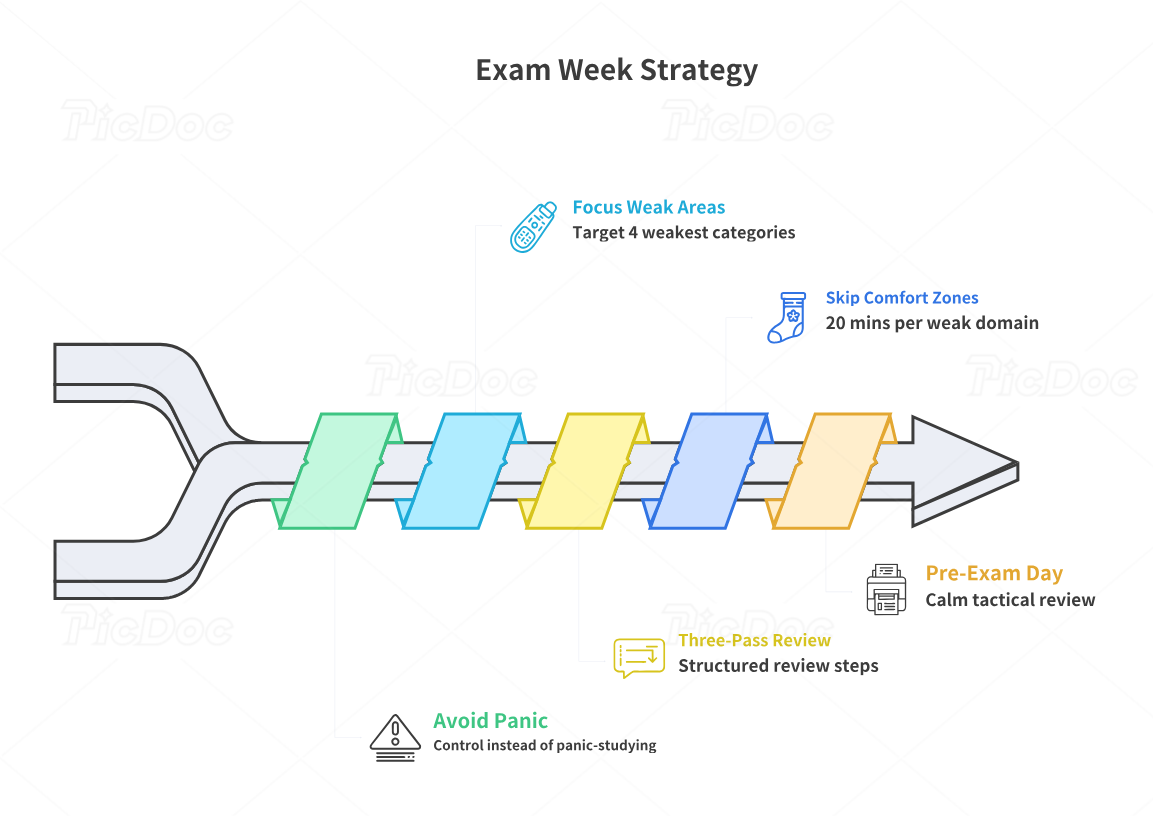
4. The Best Exam-Week Strategy Is Review, Simulation, and Error Control
Exam week should be used for control, not panic-studying. The highest-value move is to stop opening every resource at once and start using a tight review system. Choose your weakest four categories, build short timed drills, then review only the mistakes that repeat. A candidate using the ACMSO exam study schedule, CMAA certification tips, top CMAA exam questions, and first-try exam strategies can structure the final week without wasting energy.
Test takers often recommend a three-pass review method. First, review must-know office workflows: intake, scheduling, verification, records, communication, and billing. Second, practice scenario questions under time pressure. Third, repair mistakes by category instead of rereading everything. This protects mental energy and gives you measurable progress. Use patient intake procedures, front desk operations, insurance verification, and patient record update training as your workflow spine.
One practical exam-week mistake is reviewing only your favorite topics. Comfort studying feels productive because you answer more correctly, but it hides the categories that will cost points. A sharper plan is to list the domains that create hesitation: HIPAA, scheduling urgency, billing terms, claim steps, portal messages, records release, or difficult patients. Then spend 20 minutes per weak area. ACMSO’s HIPAA compliance guidance, scheduling conflict guide, claims tutorial, and complaint-handling guide can support focused repair.
The day before the exam should be calm and tactical. Review quick sheets, definitions you keep confusing, and your personal “do not repeat” list. That list should include traps such as releasing information without authorization, skipping identity verification, confusing urgent and routine scheduling, choosing a clinical decision outside the CMAA role, or answering a billing question before verifying details. Reinforce role boundaries through legal responsibilities for CMAAs, risk management strategies, patient privacy communication, and effective patient communication examples.
5. After Passing, Test Takers Recommend Turning Certification Into Career Proof Quickly
Passing the CMAA exam is only the start of career leverage. Recent test takers who move faster after certification usually update their resume, practice interview answers, and connect exam topics to job tasks. Employers want evidence that certification translates into front desk readiness, privacy discipline, scheduling accuracy, patient communication, and revenue cycle awareness. That makes building a standout CMAA resume, interview preparation for medical admin roles, CMAA salary negotiation, and CMAA job market reporting important next steps.
Your resume should turn study topics into workplace value. Instead of writing only “CMAA certified,” add skill language around appointment coordination, patient intake, insurance verification, EMR updates, HIPAA-sensitive communication, and front desk workflow. That connects your credential to actual office outcomes. You can strengthen this positioning with medical administration workforce trends, CMAA career progression reporting, certification impact on earnings, and CMAA salary data.
Interview preparation should reuse the same scenario thinking that helped on the exam. Prepare stories about calming an upset patient, protecting privacy, handling a scheduling conflict, updating patient records accurately, verifying insurance details, and escalating appropriately. These examples prove workplace readiness. Candidates can prepare through medical admin interview guidance, active listening techniques, patient complaint handling, and difficult conversation steps.
Certified candidates should also keep building technology confidence. Medical offices increasingly rely on patient portals, scheduling systems, EMR integrations, communication apps, time tracking, collaboration tools, and telehealth workflows. A candidate who can connect certification to modern office tools will look more future-ready. Study EMR integration tools, patient communication apps, medical admin time tracking tools, and telehealth administration preparation to keep the credential useful after the exam.
6. FAQs: Real-Life CMAA Exam Experiences and Test-Taker Advice
-
Many candidates find scenario questions harder than direct vocabulary questions because they require judgment, sequence, and role awareness. The hardest areas often include HIPAA privacy scenarios, appointment scheduling conflicts, insurance verification, and patient communication.
-
The best approach is to combine content review with timed practice and scenario-based decision drills. Build a study plan around patient intake, front desk operations, billing terms, HIPAA rules, and a structured 30-day ACMSO exam schedule.
-
Spend enough time to recognize common roots, prefixes, suffixes, abbreviations, and body-system terms without getting trapped in endless memorization. CMAA candidates need terminology that supports communication, scheduling, records, and office workflow. Use medical terminology memorization strategies, medical terminology mastery tools, and EMR charting terms.
-
Yes, full practice sessions help candidates manage pacing, fatigue, and answer-choice pressure. Short quizzes build knowledge, while full simulations reveal stamina problems and timing habits. Pair full practice with first-try certification strategies, CMAA exam expert tips, and top CMAA exam questions.
-
Review your weakest areas, high-risk privacy rules, scheduling urgency cues, insurance terms, patient communication scripts, and your personal mistake list. Avoid heavy new learning. Focus on decision quality through patient privacy guidelines, scheduling terms, claims management basics, and de-escalation techniques.
-
Update your resume, practice interview answers, organize proof of your skills, and connect certification to real medical office tasks. Build career momentum through CMAA resume guidance, medical admin interview preparation, CMAA salary negotiation, and career progression reporting.
