

Top 20 CMAA Exam Questions Answered Clearly & Concisely
The CMAA exam rewards candidates who can think like a front-office problem solver, not just memorize definitions. You need scheduling judgment, HIPAA awareness, patient communication skill, basic revenue cycle logic, and clean administrative workflow habits. The official NHA CMAA test plan lists 110 scored items, 25 pretest items, and a total exam time of 2 hours and 15 minutes, with domains covering foundational knowledge, communication, compliance, scheduling, patient encounters, billing, and administrative procedures. Use this guide with ACMSO certification exam preparation, CMAA exam strategies, medical terminology memorization, and medical admin career planning.
1. How to Use These CMAA Questions Without Studying the Wrong Way
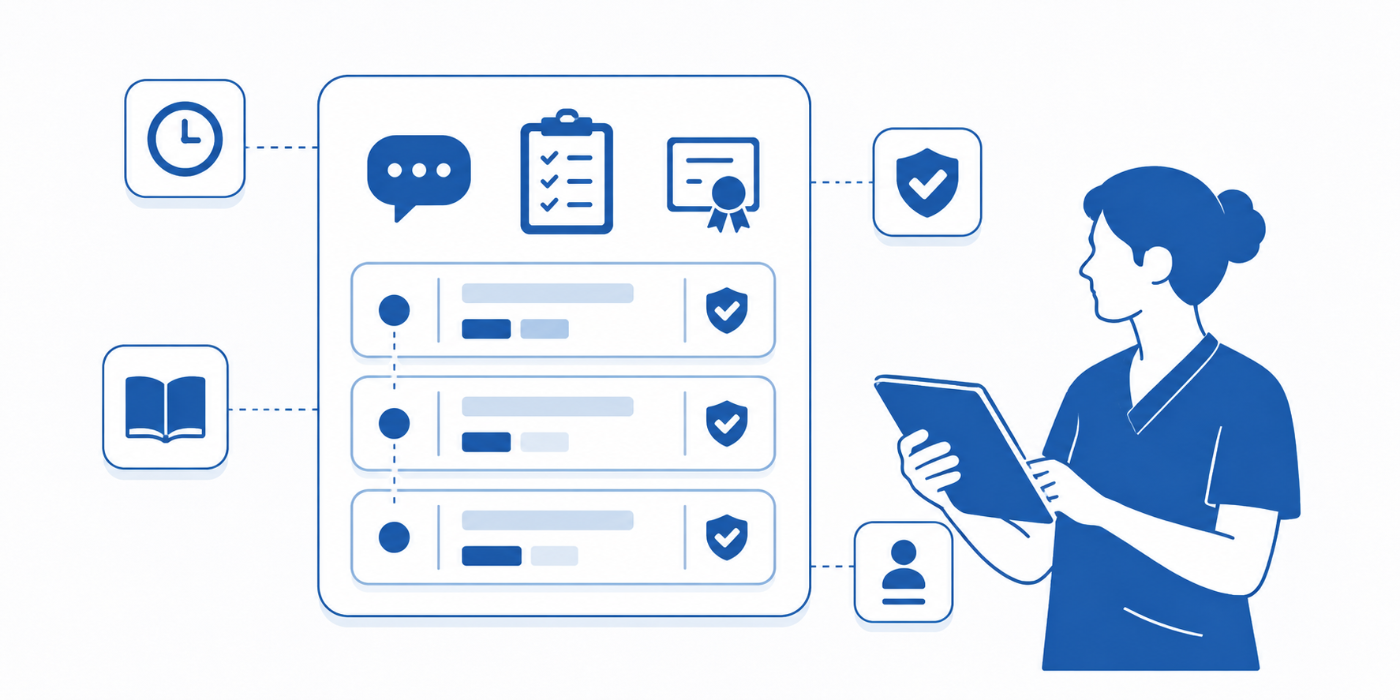
These are practice-style CMAA questions built around the real work medical administrative assistants perform: scheduling, intake, insurance, privacy, communication, claims flow, records, office logistics, and patient support. The goal is to teach the thinking pattern behind the answer, so you can handle unfamiliar wording on exam day. Candidates who only memorize flashcards often freeze when a question uses a real scenario, which is why CMAA exam preparation, medical admin interview preparation, front desk operations terms, and patient intake procedures should be studied together.
The official NHA Candidate Handbook explains that NHA exams use scaled scoring, and candidates need a 390 or higher to pass covered examinations. That score target should change how you study. You do not need perfect recall on every tiny term; you need consistent decision-making across common administrative situations. That means learning what to do first, what to protect, what to verify, what to document, and when to escalate. Strong candidates build that judgment through legal responsibilities for CMAAs, HIPAA patient privacy guidelines, insurance verification examples, and appointment scheduling best practices.
The trap is studying like every domain is equal in daily difficulty. Scheduling questions may look simple until the answer choices include emergency visits, provider preferences, appointment length, insurance authorization, and patient access issues in one scenario. HIPAA questions may look obvious until the wording tests minimum necessary disclosure, release of information, or patient identity verification. Billing questions may feel technical until you learn the basic revenue cycle sequence. That is why this guide pairs concise answers with practical logic from CPT code basics, ICD-10 reference skills, denial management basics, and medical billing terms.
2. The CMAA Answer Pattern: Verify, Protect, Route, Document, Escalate
Most CMAA questions can be solved with a simple administrative safety pattern: verify the patient, protect privacy, route clinical matters properly, document actions accurately, and escalate anything outside your role. This pattern works across patient communication apps, healthcare portal terms, front desk operations, and medical records release tools.
When a question asks what the assistant should do first, look for the option that prevents harm or prevents a bad administrative handoff. If a patient reports chest pain on the phone, the priority is emergency routing according to policy, not scheduling a routine visit. If an insurance card is presented, the priority is eligibility verification, not assuming coverage. If a caller asks for test results, the priority is verifying identity and following release rules, not reading information because the person sounds worried. That same first-action logic appears in emergency appointment management, appointment conflict handling, patient complaint handling, and de-escalation techniques.
The exam also tests whether you know your lane. A CMAA supports care delivery, but clinical advice belongs to licensed clinical staff. A strong answer will usually involve taking an accurate message, routing to the provider or nurse, scheduling correctly, explaining office policy, or confirming administrative details. Weak answers often cross into diagnosis, treatment advice, medication instruction, or privacy shortcuts. This is why effective patient communication, empathy in healthcare administration, active listening techniques, and risk management strategies are more than soft-skill topics.
Another major pattern is sequence. Registration comes before billing accuracy. Eligibility verification comes before collecting the wrong amount. Clean demographics come before claim submission. A complete referral packet comes before specialist coordination. A correct chart comes before EHR entry. If you learn workflow sequence, many exam questions become easier because the answer that comes too late or too early will feel wrong. Build that sequence through insurance verification, billing term mastery, CMAA scheduling tools, and scheduling software mastery.
3. Top 20 CMAA Exam Questions Answered Clearly & Concisely
1. What should a CMAA use to verify a patient’s identity?
Use at least two patient identifiers, commonly full name and date of birth. This protects against wrong-chart errors, duplicate records, and same-name confusion. Review patient intake procedures, EHR compliance training, front desk operations, and healthcare CRM terms.
2. What is the safest first step before discussing patient information on the phone?
Verify the caller’s identity and authority to receive the information. Privacy comes before convenience. This logic connects directly to HIPAA privacy terms, patient privacy communication, legal responsibilities, and HIPAA updates.
3. What should a CMAA do when a patient reports a possible emergency symptom?
Follow office emergency protocol and route the patient immediately to the appropriate clinical or emergency response pathway. Do not give clinical advice beyond approved procedure. Study emergency appointment management, scheduling conflicts, de-escalation techniques, and patient communication terms.
4. What information should be checked during insurance verification?
Check active coverage, patient demographics, policy details, copay, deductible, plan limits, referral needs, and prior authorization requirements. The danger is assuming coverage from an insurance card alone. Use insurance verification examples, denial management training, insurance claims tutorials, and medical billing terms.
5. What is a clean claim?
A clean claim is a claim submitted with the required accurate information so it can be processed without preventable delays or rejections. Errors in patient demographics, insurance data, codes, or provider information can create avoidable denials. Build this skill with CPT code explanations, ICD-10 code reference, billing code updates, and revenue cycle basics.
6. What is the difference between a referral and a prior authorization?
A referral is usually a direction or approval for a patient to see another provider, while prior authorization is payer approval for a service, medication, test, or procedure before it is performed. Confusing them causes delays. Review insurance verification, appointment scheduling, patient intake, and billing terms.
7. What should a CMAA do with a patient who is angry about a long wait?
Acknowledge the concern, stay calm, avoid blame, explain what can be shared, and offer the next realistic step. The exam usually rewards professional de-escalation over defensiveness. Study handling difficult conversations, de-escalation techniques, active listening, and empathy in healthcare administration.
8. What should a CMAA do when a patient asks for medical advice?
Take the message accurately and route it to the appropriate clinical staff or provider. A CMAA should not diagnose, interpret symptoms, or recommend treatment outside approved scripts. Connect this to patient communication apps, effective patient communication, risk management, and healthcare portal terms.
9. What is PHI?
PHI is protected health information that can identify a patient and relates to health status, care, or payment. Names, birth dates, record numbers, diagnoses, and billing details can all matter depending on context. Review HIPAA terms, patient privacy essentials, legal responsibilities, and HIPAA compliance updates.
10. What is the minimum necessary standard?
It means using or sharing only the amount of protected health information needed to complete the task. For exam questions, the safest answer usually limits disclosure and follows policy. Reinforce this through HIPAA privacy communication, HIPAA terms for CMAAs, medical admin compliance, and front desk operations.
11. What should a CMAA do if a patient’s demographic information is wrong?
Correct or update the information according to office policy before it affects billing, scheduling, communication, or the medical record. Wrong demographics can break claims and patient follow-up. Study patient record updates, EHR platforms, EMR integration tools, and resolving EMR issues.
12. What is the correct way to handle a request for medical records?
Follow the office release-of-information policy, verify identity and authorization, document the request, and release only what is permitted. This area often tests privacy and procedure together. Review medical records release tools, HIPAA privacy guidelines, legal responsibilities, and healthcare portal terms.
13. Which appointment should usually receive priority?
A patient with urgent symptoms or time-sensitive clinical need should be prioritized according to office triage and scheduling protocol. The CMAA should route urgent clinical concerns rather than independently judging severity. Study emergency appointment management, appointment scheduling conflicts, scheduling terms, and secure scheduling tools.
14. What is the purpose of a superbill or encounter form?
It captures services, diagnoses, provider information, and billing details needed for charge entry or claim preparation. The exam may test how administrative documentation connects to reimbursement. Review CPT code explanations, ICD-10 codes, medical billing terms, and claims management.
15. What should a CMAA do before collecting a copay?
Confirm the patient’s insurance details, office policy, and expected amount. Payment discussions should be handled discreetly and professionally. This connects to insurance verification, billing terms, patient communication, and front desk operations.
16. What does professionalism mean in a medical office?
Professionalism means maintaining confidentiality, communicating respectfully, staying within role scope, being dependable, and following policy even during pressure. The best exam answer usually protects patients and workflow. Study empathy in healthcare administration, active listening, handling patient complaints, and time management mastery.
17. What should a CMAA do when a patient arrives late?
Follow the office late-arrival policy, notify the appropriate staff, check provider schedule impact, and communicate the next option professionally. Do not promise the patient will still be seen unless policy allows it. Review scheduling best practices, appointment conflict handling, medical scheduling tools, and staff scheduling tools.
18. What should a CMAA do if they make an EHR entry error?
Follow the approved correction or amendment workflow. Medical records require traceable corrections; simply deleting or hiding an error can create compliance problems. Study patient record update training, EMR issue resolution, EMR shortcuts, and EHR platform knowledge.
19. What is the best way to prepare for medical terminology questions?
Study word parts, body systems, abbreviations, and common clinical context instead of memorizing isolated terms only. Breaking unfamiliar words into prefix, root, and suffix improves accuracy. Use medical terminology mastery, medical terminology memorization, medical abbreviations, and ACMSO exam study planning.
20. What is the best exam-day strategy for CMAA scenario questions?
Read the question stem carefully, identify the patient safety or privacy issue, eliminate answers outside CMAA scope, then choose the most policy-aligned next step. This strategy is stronger than rushing through familiar-looking choices. Pair it with CMAA exam strategies, CMAA study scheduling, CMAA exam experiences, and CMAA certification tips.
4. Why Most Candidates Miss “Easy” CMAA Questions
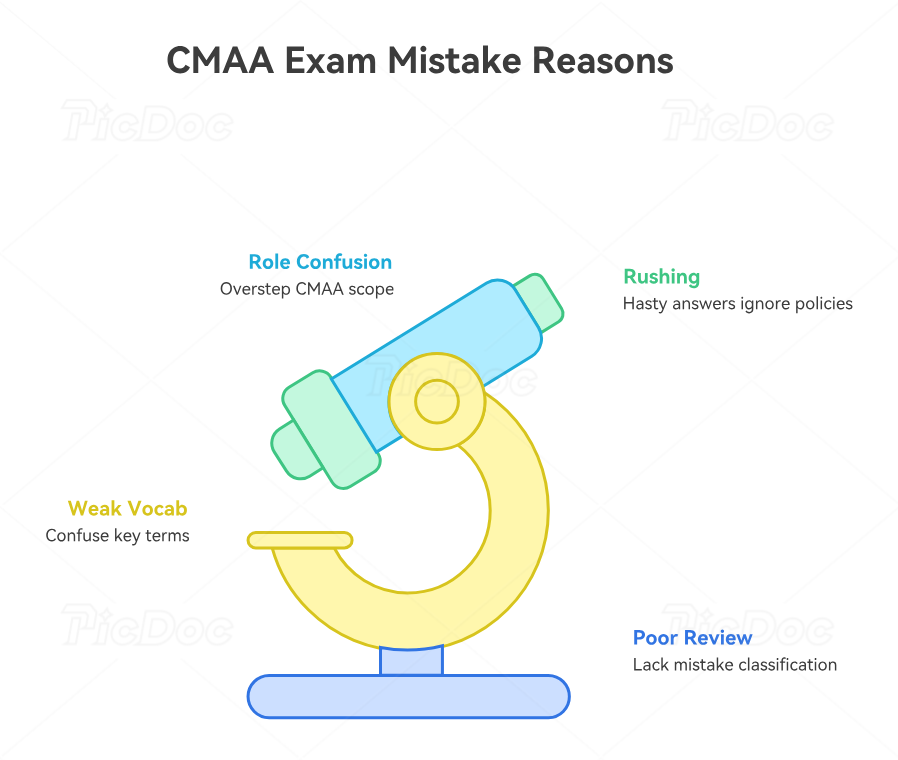
Most missed CMAA questions are missed because candidates answer too quickly. They see “angry patient” and choose the nicest-sounding response, even when the best answer is to follow office policy. They see “insurance card” and assume coverage, even when the right move is eligibility verification. They see “test results” and choose fast communication, even when privacy and provider routing come first. This is why CMAA exam strategies, patient communication training, HIPAA privacy terms, and insurance verification practice matter during review.
Another reason candidates miss easy questions is role confusion. The CMAA is not acting as a nurse, coder, provider, or compliance officer in most exam scenarios. The assistant’s job is to gather accurate information, maintain confidentiality, route requests, schedule appropriately, support billing workflow, and document administrative actions correctly. When answer choices include clinical advice, interpretation, or independent decision-making beyond scope, those choices are usually traps. Reinforce role boundaries with legal responsibilities, risk management strategies, patient portal terms, and medical admin professional organizations.
The third reason is weak vocabulary. A candidate may understand the scenario but lose points because they confuse deductible with copay, referral with prior authorization, EHR with patient portal, chief complaint with diagnosis, or authorization with consent. These terms are not decorative; they control the correct action. A focused vocabulary plan should cover medical billing terms, scheduling appointment terms, HIPAA patient privacy terms, and medical terminology tutorials.
The fourth reason is poor review technique. Reading explanations after a practice test feels productive, but the real learning happens when you classify mistakes. Was it a privacy mistake, sequence mistake, vocabulary mistake, scope mistake, or rushing mistake? That error label tells you what to fix before the next practice round. Use interactive study schedules, exam memorization techniques, CMAA expert exam tips, and real CMAA exam experiences to build a review system.
5. A 7-Day Final Review Plan for CMAA Exam Questions
Use the final week to sharpen accuracy, not to cram randomly. Day 1 should focus on HIPAA, patient privacy, release of information, and phone communication because these questions often punish careless wording. Review HIPAA updates, patient privacy communication, HIPAA terms, and active listening techniques.
Day 2 should focus on scheduling. Practice scenarios involving late arrivals, cancellations, urgent symptoms, specialist referrals, provider templates, double-booking rules, and patient access issues. The correct answer is usually the one that protects patient flow while respecting office policy. Review appointment scheduling best practices, scheduling conflict management, emergency appointment management, and scheduling software mastery.
Day 3 should focus on insurance and billing. Make a simple flow: registration, insurance verification, authorization/referral check, encounter documentation, claim preparation, claim submission, denial follow-up, patient statement. Then drill the terms that break that flow. Use insurance verification, denial management, claims management tutorials, and CPT code training.
Day 4 should focus on patient encounters and registration. Practice questions about intake forms, demographic updates, consent forms, collecting insurance information, scanning documents, routing messages, and preparing the chart. Connect that study block to patient intake procedures, front desk operations, EHR compliance, and EMR troubleshooting.
Day 5 should focus on administrative procedures and logistics. These questions may include inventory, office equipment, correspondence, records routing, supply management, workplace safety, infection control, and time management. Review infection control in medical offices, medical office organization, policy and procedure creation, and time management mastery.
Day 6 should be a mixed timed practice day. Simulate pressure. Do not pause after every question to check notes. Mark uncertain items, finish the set, then review mistakes by category. Day 7 should be light review, sleep, exam logistics, and confidence. Revisit ACMSO exam schedules, CMAA first-try strategies, exam experience recommendations, and CMAA career growth data.
6. FAQs About CMAA Exam Questions
-
These are practice-style questions designed to teach the skills behind CMAA exam scenarios. Use them to learn the reasoning pattern, then keep practicing with domain-based review. Pair this guide with CMAA exam strategies, CMAA study schedules, medical terminology tutorials, and CMAA exam experience guidance.
-
The hardest questions usually combine two skills at once: privacy plus phone communication, scheduling plus urgency, insurance plus authorization, or patient service plus policy. Candidates struggle when they answer from emotion instead of process. Review HIPAA terms, scheduling terms, insurance verification, and patient communication examples.
-
Choose the action that verifies safety, protects privacy, follows policy, or routes the issue correctly. First-action questions often punish shortcuts. Build that instinct through emergency appointment management, patient intake procedures, front desk operations, and risk management strategies.
-
The official NHA CMAA test plan lists 110 scored items and 25 pretest items, with 2 hours and 15 minutes of exam time. The scored domains include foundational knowledge, communication, compliance, scheduling, patient encounter, billing and revenue cycle, and administrative procedures. Strengthen those areas with ACMSO exam study planning, CMAA expert tips, medical billing terms, and patient communication terms.
-
NHA materials state that exams covered by the Candidate Handbook require a passing score of 390 or higher on the scaled scoring system. Your study goal should be steady domain competence, not last-minute memorization. Use CMAA first-try strategies, 30-day study scheduling, medical terminology memorization, and CMAA exam experiences.
-
Review missed questions by mistake type: vocabulary, privacy, scheduling priority, billing sequence, scope of practice, or rushed reading. Then study the weakest category before taking another full practice set. Start with HIPAA privacy terms, scheduling appointment terms, billing terms, and ACMSO certification prep.
