

Medical Interpreter Services: Essential Interactive Dictionary
Medical interpreter services give patients a reliable way to describe symptoms, understand clinical decisions, provide informed consent, and follow treatment instructions in their preferred language. For medical scribes and administrative professionals, effective interpretation also supports accurate patient intake procedures, safer patient communication, stronger clinical documentation, and responsible patient privacy communication. This interactive dictionary explains the terminology, workflows, risks, and practical controls healthcare teams need when arranging language assistance.
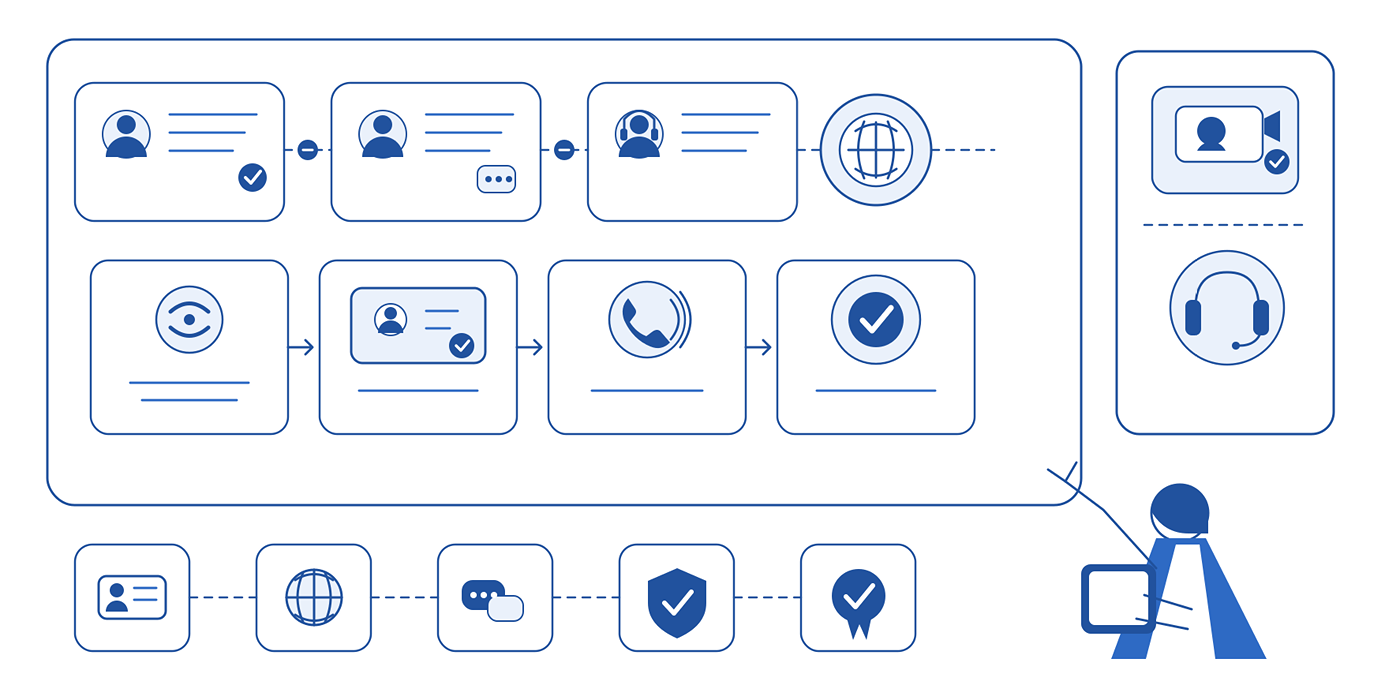
1. What Medical Interpreter Services Include
Medical interpreter services convert spoken or signed communication between languages during healthcare encounters. They may be delivered through an interpreter physically present in the room, a telephone connection, a secure video platform, or a qualified bilingual employee whose interpreting competence has been formally assessed. Written translation belongs to a related service category because it covers documents such as consent forms, discharge instructions, notices, portal messages, and educational materials. CMS describes interpretation as real-time spoken or signed communication, while translation addresses written content.
A medical interpreter must transfer the speaker’s complete meaning while preserving tone, uncertainty, clinical qualifiers, and the distinction between reported symptoms and confirmed findings. This precision directly supports medical terminology mastery, accurate ICD-10 code selection, appropriate CPT documentation, and reliable medical chart audits. A missing word such as “sometimes,” “previously,” “possible,” or “denies” can alter the documented timeline, severity, clinical impression, or medical necessity.
Healthcare organizations should plan language access across the entire patient journey. Interpretation may be needed while arranging an emergency appointment, completing insurance verification, explaining a prior authorization, using a patient portal, discussing medication changes, obtaining consent, reviewing results, or delivering discharge instructions. Language assistance that begins only after the clinician enters the room leaves scheduling, registration, financial, and follow-up communication exposed to preventable errors.
The HHS Office for Civil Rights explains that covered healthcare programs may have duties to provide meaningful language access under Section 1557 and related civil-rights requirements. The 2024 Section 1557 rule includes provisions governing language assistance for people with limited English proficiency. Exact responsibilities depend on the organization, applicable funding, services, jurisdiction, and circumstances, so facilities should maintain a current compliance review rather than rely on informal assumptions.
AHRQ reports that adverse events involving patients with limited English proficiency are more frequently connected to communication failures and may cause more serious harm. Professional interpreters have also been associated with fewer clinically significant interpretation errors than family members or untrained staff. These findings make interpreter access a patient-safety control alongside HIPAA compliance, risk management, clinical documentation improvement, and structured medical compliance procedures.
The dictionary reflects distinctions used in CMS language-access resources, including the separation between interpretation and translation and the importance of assessing interpreter qualifications. Certification can provide evidence of competency, although a qualified interpreter may satisfy an organization’s requirements through other documented assessment pathways.
| # | Interpreter Term | Practical Definition | Where It Applies | Related ACMSO Resource |
|---|---|---|---|---|
| 1 | Language access | The policies, people, technologies, and procedures used to make healthcare communication understandable to patients with different language needs. | Scheduling, registration, clinical care, billing, discharge, complaints, and follow-up. | Effective patient communication |
| 2 | Limited English proficiency | A description used for a person who may experience difficulty speaking, reading, writing, or understanding English sufficiently for a particular interaction. | Language-needs screening and interpreter eligibility workflows. | Patient intake procedures |
| 3 | Qualified interpreter | An individual who has demonstrated the language, interpreting, ethical, and healthcare-specific competencies required for the assignment. | Clinical consultations, consent, medication counseling, procedures, and discharge. | Medical compliance terms |
| 4 | Certified interpreter | An interpreter who has earned a recognized credential by meeting the certifying body’s eligibility and examination requirements. | Credentialing, recruitment, vendor standards, and quality assurance. | Medical credentialing |
| 5 | Ad hoc interpreter | An untrained person who interprets informally, such as a relative, friend, visitor, or employee whose competence has not been assessed. | A major escalation concern during high-risk communication. | Risk management strategies |
| 6 | Bilingual staff member | An employee who speaks more than one language. Bilingual ability alone does not establish professional interpreting competence. | Front-desk assistance, basic navigation, or formally authorized interpretation. | Front-desk operations |
| 7 | In-person interpretation | Interpretation delivered by a qualified professional who is physically present during the encounter. | Complex consultations, sensitive conversations, procedures, and multidisciplinary meetings. | Active listening techniques |
| 8 | Over-the-phone interpretation | Real-time audio interpretation delivered through a telephone or approved audio platform. | Unexpected visits, rare languages, after-hours calls, and short administrative interactions. | Patient communication apps |
| 9 | Video remote interpretation | Live interpretation through secure video, allowing visual communication and access to signed-language services. | Telehealth, emergency departments, clinics, and encounters requiring visual cues. | Telehealth platforms |
| 10 | Consecutive interpreting | The speaker pauses after a manageable segment so the interpreter can reproduce the complete message in the other language. | Most routine medical interviews and administrative conversations. | Medical terminology mastery |
| 11 | Simultaneous interpreting | The interpreter renders the message with minimal delay while the speaker continues speaking. | Conferences, group education, behavioral health, or certain signed-language encounters. | Medical administration conferences |
| 12 | Sight translation | Oral rendering of a written document into another language during an encounter. | Short forms or instructions when policy permits and interpreter competence supports it. | Encounter forms |
| 13 | Written translation | Conversion of written material from one language into another through a controlled translation process. | Consent forms, discharge information, notices, portal content, and education materials. | Medical records management |
| 14 | Source language | The language in which the original message is spoken, signed, or written. | Interpreter requests, vendor assignments, and translated-document workflows. | Healthcare portal terms |
| 15 | Target language | The language into which the original message is interpreted or translated. | Language matching, documentation, and quality review. | Patient record updates |
| 16 | Language concordance | A situation in which the patient and healthcare professional can communicate proficiently in the same preferred language. | Provider assignment and bilingual workforce planning. | Professional organizations |
| 17 | Preferred language | The language the patient prefers for discussing healthcare, which may differ from the language used casually at home. | Registration, demographic records, portal settings, and appointment preparation. | Appointment scheduling practices |
| 18 | Teach-back | A comprehension check in which the patient explains instructions in their own words while the interpreter renders both sides accurately. | Medication, discharge, preparation instructions, and safety-net advice. | Daily office checklists |
| 19 | Interpreter pre-session | A short introduction clarifying roles, confidentiality, direct communication, positioning, and how pauses will be managed. | Beginning of the interpreted encounter. | Organizing a medical office |
| 20 | Interpreter post-session | A brief operational review after the patient interaction, limited to relevant communication or safety concerns. | Complex cases, incidents, workflow improvement, and handoffs. | Medical administrative workflow |
| 21 | First-person interpreting | The interpreter reproduces speech using “I,” “me,” and “my” to preserve direct communication between patient and clinician. | History-taking, consent, counseling, and examinations. | EMR and charting terms |
| 22 | Register | The level and style of language used, ranging from conversational wording to highly technical clinical language. | Maintaining the speaker’s tone without simplifying away clinical meaning. | Clinical documentation terms |
| 23 | Clarification intervention | A transparent pause requested when the interpreter needs repetition, explanation, or confirmation before continuing. | Ambiguous symptoms, unfamiliar abbreviations, inaudible speech, and unclear timelines. | Resolving workflow issues |
| 24 | Cultural clarification | A transparent explanation that helps the parties understand a culturally specific expression, concept, or communication pattern. | Idioms, family roles, traditional practices, and sensitive health discussions. | Cultural competence |
| 25 | Meaningful access | Practical access that allows a patient to understand, participate in, and benefit from healthcare services despite a language barrier. | Organization-wide language-access planning and compliance. | Legal responsibilities for CMAAs |
| 26 | Vital document | A document containing information essential to obtaining services, protecting rights, understanding obligations, or following care. | Consent, eligibility, discharge, appeal, safety, and nondiscrimination notices. | Patient confidentiality |
| 27 | Interpreter encounter ID | A vendor or facility reference number used to document when and how interpretation was provided. | Charting, auditing, billing, incident review, and vendor monitoring. | Medical chart audits |
| 28 | Language-access plan | A formal framework defining language-needs assessment, interpreter access, translated materials, staff duties, training, and monitoring. | Compliance programs, facility operations, and quality improvement. | Policies and procedures |
| 29 | Dual-role employee | A staff member who performs their regular job and provides approved language assistance under defined conditions. | Workforce policies, competency testing, workload control, and conflict prevention. | Administrative staff scheduling |
| 30 | Communication accommodation | A service or adjustment that supports effective communication, including qualified sign-language interpreters and accessible technology. | Care for patients with hearing, speech, vision, or other communication-related disabilities. | Virtual patient management |
Use note: These operational definitions should be aligned with each facility’s approved language-access policy, interpreter vendor standards, applicable law, and clinical escalation procedures.
2. How to Select the Right Interpretation Method
The correct interpretation method depends on the patient’s communication needs, the clinical risk, the complexity of the discussion, the available technology, and the urgency of the encounter. A short scheduling call may work efficiently through telephone interpretation. A consent discussion involving surgery, oncology, behavioral health, or a life-changing diagnosis may benefit from an in-person or video interpreter who can observe pauses, distress, turn-taking, and visual references.
Selection should begin during appointment scheduling, rather than after a communication failure occurs. Staff should record the patient’s preferred spoken language, preferred written language, need for a signed-language interpreter, and any communication accommodation. These details should flow into the practice management system, appear in the electronic health record, and inform the medical office scheduling workflow.
In-person interpretation
In-person services offer strong visual access and can support long, emotional, technically dense, or multidisciplinary discussions. They are useful when the clinician must demonstrate equipment, assess movement, discuss anatomy, or conduct a family meeting. The organization should confirm the interpreter’s language pair, healthcare competence, identification, assignment boundaries, confidentiality obligations, and availability before the visit.
Scheduling failures create a predictable operational chain: the patient waits, the clinician falls behind, staff search for an available bilingual employee, and the encounter proceeds under pressure. A reliable workflow should connect interpreter booking with staff scheduling tools, time-management procedures, patient scheduling software, and a documented backup method.
Over-the-phone interpretation
Telephone interpretation provides rapid access and can cover a broad range of languages. It works well for appointment reminders, pharmacy questions, basic intake, insurance calls, result notifications, and unexpected language needs. Staff still need an approved device, adequate speaker quality, a private environment, the correct vendor access code, and a procedure for documenting the interpreter encounter.
Audio-only communication becomes harder when several people speak at once, the patient has hearing difficulty, the clinician relies heavily on visual demonstrations, or the room contains disruptive background noise. Staff should combine telephone interpretation with disciplined active listening, clear patient intake questions, accurate medical triage terminology, and structured emergency appointment management.
Video remote interpretation
Video interpretation combines rapid remote access with visual communication. It may be especially important for signed-language encounters, demonstrations, visual symptoms, telemedicine, and emotionally sensitive consultations. The room setup must allow the patient to see the interpreter clearly while preserving privacy and avoiding glare, frozen video, weak audio, or a camera angle that excludes a participant.
Healthcare organizations should test interpreter access inside their approved telehealth platforms, create backup procedures for failed connections, and include accessibility in virtual patient management. HHS guidance advises covered entities to review telehealth systems and processes for accessibility to people with disabilities and individuals with limited English proficiency.
Qualified bilingual employees
A bilingual employee may communicate directly with patients when the organization has verified that the employee possesses the required proficiency for that task. Conversational fluency may be insufficient for explaining anticoagulation, describing consent risks, interpreting psychiatric symptoms, or distinguishing words with similar everyday meanings and different clinical implications.
Facilities need clear role limits within their medical administrative policies. Competency assessment should address language proficiency, medical terminology, ethics, confidentiality, role boundaries, and accurate transfer of meaning. Managers should also prevent dual-role overload through appropriate medical office team collaboration, workload planning, and medical admin time tracking.
3. The Complete Medical Interpreter Workflow
A safe interpreted encounter starts before the first clinical question. Staff should identify the language need, select an appropriate service, prepare the environment, brief the interpreter, communicate directly with the patient, verify understanding, and document the service. Each step closes a specific failure point.
Step 1: Identify the patient’s language and communication needs
Ask the patient which language they prefer for healthcare discussions and which language they prefer for written information. Avoid guessing from name, nationality, accent, appearance, or the language spoken by an accompanying person. A patient may use English socially while preferring another language for complex medical decisions.
Record the answer in a standardized field during patient registration. Connect that field with appointment scheduling tools, patient portal management, and EMR integration tools. Free-text notes such as “needs translator” create ambiguity because they may omit the language, dialect, communication method, or required accommodation.
Step 2: Assess encounter risk and complexity
Interpreter planning should account for the decision being made and the possible harm from misunderstanding. High-risk scenarios include informed consent, surgery, anesthesia, emergency care, medication reconciliation, discharge, behavioral health assessment, end-of-life discussions, abuse screening, and conversations about serious diagnoses.
AHRQ recommends qualified medical interpreters for high-risk situations and highlights the value of plain-language translated materials and teach-back for discharge, consent, and surgical care. Staff should connect this risk assessment with infection-control procedures, legal responsibilities, patient confidentiality requirements, and facility-specific escalation rules.
Step 3: Arrange the service before the encounter
Confirm the language, dialect when relevant, date, time, estimated duration, location, modality, specialty, and required interpreter qualifications. Avoid including unnecessary clinical details in a scheduling request. Provide enough information for correct assignment while following HIPAA and patient privacy principles.
The appointment record should indicate that interpretation has been arranged, the expected connection method, and the backup pathway. A functioning process may combine secure scheduling technology, medical office collaboration tools, front-desk checklists, and clear responsibility for reconfirming the service.
Step 4: Conduct a focused pre-session
Introduce the interpreter and explain that everything said will be interpreted. Ask participants to speak directly to each other, use first-person language, pause after complete thoughts, and avoid simultaneous conversation. Confirm confidentiality and clarify how the interpreter will request repetition or raise a communication concern.
The clinician may briefly state the encounter’s purpose without conducting a private clinical discussion that excludes the patient. The interpreter’s role is to facilitate communication within the encounter. A well-managed pre-session supports empathetic healthcare administration, cultural competence, and professional de-escalation techniques.
Step 5: Speak directly, clearly, and completely
Face the patient and say, “How are you feeling today?” Addressing the interpreter with “Ask her how she feels” weakens the patient-clinician relationship and encourages a third-person exchange. Use normal adult language, define unfamiliar clinical terms, and break long explanations into complete segments.
Avoid unexplained abbreviations, culture-specific idioms, jokes that depend on wordplay, and compound questions containing several separate decisions. These habits strengthen medical terminology accuracy, improve clinical note quality, and reduce medical coding errors.
Step 6: Protect privacy and patient autonomy
Ask the patient whether accompanying people may remain for sensitive portions of the encounter. A relative who helps with transportation may still influence how the patient answers questions about pregnancy, mental health, substance use, domestic violence, finances, sexual health, or family conflict.
Use approved interpretation channels and follow the organization’s privacy communication checklist. Private information should be controlled through medical records management, secure healthcare portal practices, and careful medical records release procedures.
Step 7: Confirm understanding through teach-back
Questions such as “Do you understand?” often produce a polite yes without revealing confusion. Ask the patient to explain how they will take the medication, prepare for the test, monitor symptoms, or seek urgent help. The interpreter should render the teach-back exchange faithfully rather than coaching the answer.
Teach-back can expose misunderstandings involving dosage, timing, food restrictions, warning signs, follow-up dates, or referral instructions. It should be integrated into patient communication workflows, appointment conflict management, and virtual patient care.
Step 8: Document the interpretation service
Follow organizational policy for recording the patient’s language, service modality, interpreter name or identification number, vendor, relevant communication limitations, translated materials supplied, and completion of teach-back. Document clinically meaningful facts rather than subjective judgments about the patient’s language ability.
Accurate records support chart audits, patient complaint review, risk-management analysis, and defensible EMR compliance.
Which language-access failure creates the greatest risk in your healthcare workflow?
4. High-Risk Interpreter Errors and How to Prevent Them
Using family members as the default solution
Relatives may omit information to protect the patient, soften serious language, answer on the patient’s behalf, or lack the vocabulary required to interpret accurately. Children face additional emotional and developmental burdens when asked to interpret diagnoses, consent discussions, reproductive care, abuse screening, or end-of-life decisions.
Staff should know how to activate approved services without creating a confrontation. A respectful explanation can state that the organization uses qualified interpreters to protect accuracy and privacy. This approach connects naturally with difficult patient conversations, de-escalation skills, patient complaint handling, and patient privacy communication.
Confusing bilingual ability with interpreter competence
An employee may speak both languages fluently and still struggle with rapid clinical speech, regional vocabulary, ethical boundaries, first-person interpretation, or exact transfer of uncertainty. Informal use also interrupts the employee’s primary duties and may expose private information beyond operational necessity.
Create a defined authorization pathway covering competency assessment, approved assignments, documentation, annual review, and situations requiring an outside interpreter. Incorporate these controls into medical office policies, staff scheduling, professional development, and medical office productivity.
Speaking in long, overloaded segments
Clinicians frequently combine history, diagnosis, risk, treatment, and follow-up into one extended explanation. The interpreter must retain a large volume of information, increasing the chance that qualifiers, numbers, dates, and warning signs will be compressed or lost.
Use one subject at a time. Pause after a complete thought. Separate medication instructions from side effects, test preparation from arrival details, and routine follow-up from emergency precautions. This discipline strengthens clinical documentation accuracy, reduces medical coding errors, and supports cleaner medical claims processing.
Editing the interpreter’s output
Interpreters should preserve uncertainty, repetition, incomplete thoughts, emotional language, and apparent contradictions because these details may carry clinical meaning. An interpreter who transforms “I think the pain began last week, maybe earlier” into “The pain began one week ago” creates false precision.
Clinicians can request clarification whenever an answer is unclear. The interpreter should state transparently that clarification is being requested and then interpret the full exchange. This protects the distinction between patient-reported information, provider impressions, and confirmed diagnoses—a distinction reinforced through EMR charting terminology, clinical documentation improvement, and medical scribe training.
Ignoring dialect, regional variation, and health literacy
Matching the broad language may still leave important communication barriers. Vocabulary can vary across countries, regions, generations, and communities. A patient may also speak a language fluently while having limited literacy in that language or limited familiarity with healthcare terminology.
Ask vendors about dialect matching when it could influence understanding. Use plain explanations, translated visual materials, and teach-back rather than increasing technical language. These practices support cultural competence, patient satisfaction, empathetic administration, and reliable patient communication.
Failing to prepare for technology breakdowns
A video platform may freeze during consent. A telephone may produce distorted audio. Staff may lack a vendor code or discover that the device is uncharged. During an emergency, each delay increases pressure to continue through an unsafe workaround.
Every site needs a tested backup pathway. Post interpreter instructions near approved devices, maintain updated contact details, test access regularly, and define who can escalate technical failure. Include language-access technology in EMR troubleshooting, telehealth administration, emergency appointment planning, and daily medical office procedure checklists.
Omitting interpretation from the record
Missing documentation prevents the organization from confirming how communication occurred, whether a qualified service was used, and which language or modality supported the encounter. It also weakens complaint investigations and quality monitoring.
Create structured EMR fields for language preference, interpreter modality, interpreter ID, translated materials, communication limitations, and teach-back when required. Structured information is easier to audit than scattered free-text notes and can support medical chart audits, records management, regulatory compliance, and risk-management reporting.

5. Building a Reliable Language-Access Program
A dependable interpreter program requires more than a vendor telephone number. It needs ownership, standardized workflows, trained staff, accessible technology, documented qualifications, translated materials, quality monitoring, and a correction process.
Create one language-access policy
The policy should explain how staff identify preferred languages, request interpreters, assess qualifications, handle rare languages, arrange signed-language services, manage emergencies, use bilingual employees, document encounters, protect privacy, translate vital documents, and report failures.
Write the policy around real workflows rather than broad promises. Connect it with patient intake, appointment scheduling, telehealth administration, medical records release, billing, complaints, referrals, and discharge.
Assign accountable owners
Language access can fail when each department assumes another department arranged the interpreter. Define responsibility at registration, scheduling, nursing intake, clinical care, discharge, and follow-up. Assign an operational owner for vendor management, training records, translated documents, audits, and corrective action.
Clear ownership supports medical office workflow management, team collaboration, time management, and effective administrative policies.
Train every patient-facing employee
Training should help staff identify language needs, explain interpreter services respectfully, access each modality, work effectively with interpreters, avoid using children, document the service, protect confidentiality, and report failures. Scenario-based practice gives employees a chance to solve problems before a real patient is waiting.
Include scenarios involving an angry family member, an uncommon language, a disconnected video call, an unplanned emergency procedure, a patient declining the offered interpreter, and a clinician running behind schedule. These exercises strengthen active listening, difficult-conversation management, de-escalation, and patient complaint response.
Maintain a controlled translated-document library
Vital documents should be translated through an approved process and reviewed for accuracy, readability, version control, and current clinical content. Staff need one authoritative location for accessing current versions. Uncontrolled documents saved on personal desktops can remain in use long after the English source has changed.
Link the document library with patient portal content, encounter forms, medical records management, and privacy communication procedures.
Monitor meaningful performance indicators
Useful measurements include the percentage of patients with a documented preferred language, interpreter-request fulfillment time, missed interpreter appointments, connection failures, use of unassessed interpreters, complaint themes, translated-document availability, and completion of staff training.
Review outcomes alongside patient satisfaction metrics, clinical documentation audits, scheduling conflict data, and risk-management findings. A fast interpreter connection still represents a weak outcome when the wrong language was selected or the patient left without understanding the plan.
Audit high-risk encounters
Sample consent discussions, emergency visits, hospital discharges, behavioral health encounters, medication reconciliations, and procedures. Confirm that the correct language was documented, a qualified interpreter was used, the interpreter encounter was recorded, translated materials were supplied when required, and comprehension was checked.
AHRQ’s patient-safety guidance emphasizes system-level identification, reporting, monitoring, and prevention of errors affecting patients with limited English proficiency. These audits should feed directly into clinical documentation improvement, medical compliance training, EMR workflow updates, and staff coaching.
Build a rapid escalation pathway
Staff need immediate guidance when an interpreter cannot be located, a patient refuses the offered modality, a family member demands to interpret, the clinician questions accuracy, or technology fails during a critical discussion. The escalation pathway should identify the supervisor, language-access coordinator, clinical leader, compliance contact, and emergency backup service.
A clear pathway prevents frontline employees from improvising under pressure. It should be easy to find within front-desk operations resources, emergency appointment procedures, telehealth protocols, and legal responsibility guidance.
6. Frequently Asked Questions About Medical Interpreter Services
-
A medical interpreter handles spoken or signed communication in real time. A medical translator converts written healthcare content from one language into another. The skills overlap in areas such as terminology and ethics, yet each discipline uses different methods and quality controls. A staff member may need an interpreter during a consent discussion and a translated consent document for the patient to read. CMS language-access materials use this interpretation-versus-translation distinction.
Both services should connect with accurate medical terminology, controlled encounter forms, secure medical records management, and current patient portal content.
-
Healthcare teams should activate a qualified interpreter for clinical communication, especially when the encounter involves consent, medication, diagnosis, surgery, behavioral health, discharge, or another high-risk decision. Relatives may lack clinical vocabulary, filter uncomfortable information, influence the patient’s answers, or disclose private information.
Staff should explain the purpose of professional interpretation respectfully and follow the organization’s policy for emergencies or patient preferences. The situation may also require careful patient privacy communication, de-escalation techniques, complaint management, and risk documentation.
-
Bilingual fluency establishes an ability to communicate in two languages. Interpreter qualification requires additional evidence of accurate interpretation, medical terminology knowledge, confidentiality, ethics, role boundaries, and the ability to preserve meaning under pressure.
Organizations should determine which employees are authorized, what assignments they may accept, how competence is assessed, and how performance is reviewed. These decisions belong in formal medical office policies, staff scheduling systems, medical compliance programs, and professional development plans.
-
Video interpretation is useful when visual information contributes to communication. Examples include signed-language interpretation, demonstration of medication devices, assessment of movement, visual identification of symptoms, and emotionally sensitive discussions where facial expressions and turn-taking improve interaction.
Telephone interpretation may remain efficient for short administrative calls, routine scheduling, basic insurance questions, and urgent access to an uncommon language. Facilities should evaluate clinical complexity, privacy, connectivity, patient needs, and backup options through their telehealth platform procedures, virtual patient workflows, patient communication technology, and emergency appointment protocols.
-
Documentation requirements should follow facility policy. Common elements include the patient’s preferred language, interpretation modality, interpreter name or identification number, vendor, relevant connection problems, translated materials provided, and comprehension checks completed.
The note should distinguish the patient’s statements from the clinician’s findings and avoid unsupported judgments about language ability. Consistent documentation supports EMR compliance, clinical chart audits, medical records management, and defensible patient complaint investigations.
-
Interpreters should accurately reproduce the speaker’s meaning and level of language. Clinicians remain responsible for explaining medical terminology clearly. When a term has no direct equivalent or the interpreter needs clarification, the interpreter should pause transparently and request an explanation.
The clinician can then use plain language, examples, diagrams, and teach-back. This approach protects clinical documentation accuracy, improves medical terminology comprehension, reduces coding misunderstandings, and supports effective patient communication.
