

Medical Scribes & Telemedicine: A Powerful Combination in Healthcare
Telemedicine changes the way providers collect history, observe patients, manage follow-up, and document clinical reasoning. Medical scribes make that virtual workflow safer, faster, and easier to review because every remote encounter still needs clean HPI structure, accurate patient-reported details, HIPAA-aware communication, and a defensible care plan. For scribes, telehealth creates serious opportunity when remote medical scribe growth, telehealth platform knowledge, EMR charting fluency, and documentation accuracy skills come together.
1. Why Telemedicine Needs Skilled Medical Scribes
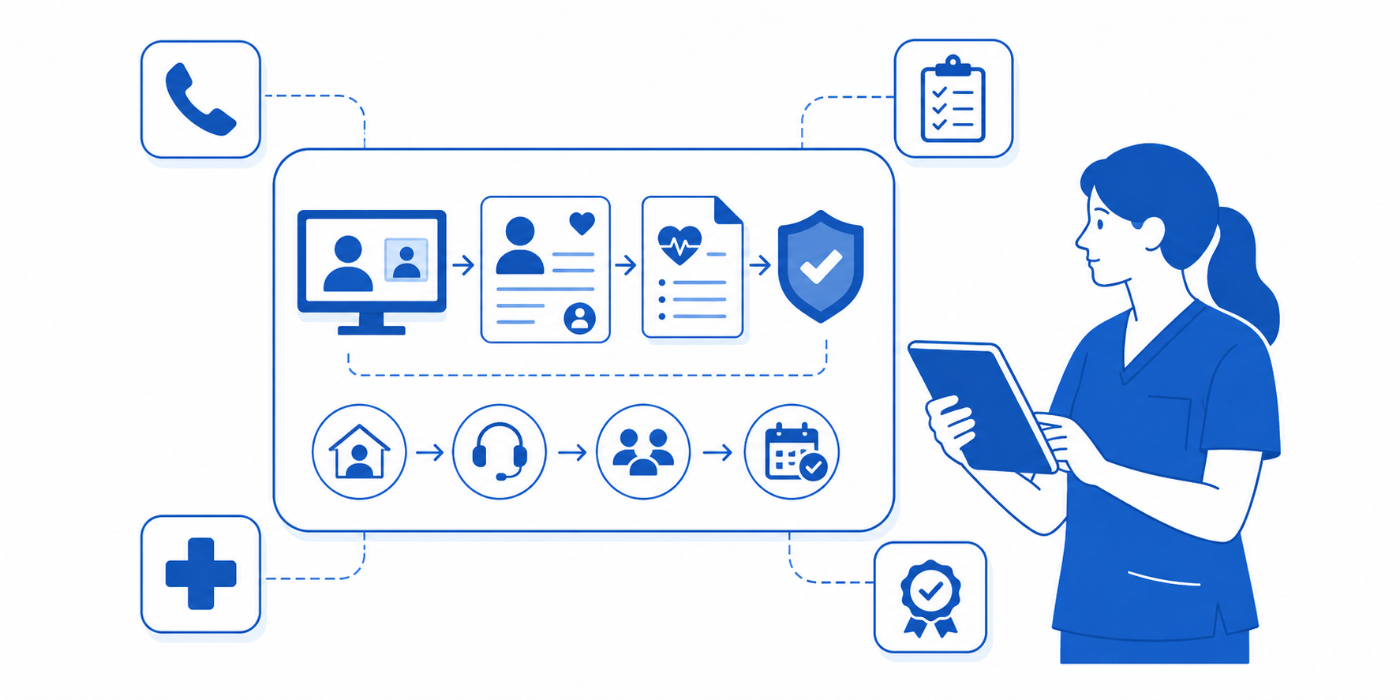
Telemedicine looks simple from the outside: patient joins video, provider asks questions, treatment plan follows. Inside the encounter, the workflow is far more fragile. The provider may be checking identity, confirming location, reviewing uploaded photos, scanning prior records, asking about symptoms, assessing visual cues, ordering labs, sending prescriptions, documenting limitations of the virtual exam, and giving return precautions at the same time. A trained scribe protects that workflow by turning scattered information into a clean chart. This is why telehealth companies using medical scribes, remote scribe employers, top EMR platforms, and medical scribe certification training matter so much.
The biggest telemedicine pain point is documentation ambiguity. A patient might say “my chest feels weird,” “my child looks tired,” “the rash spread,” or “my medication is not working,” while the provider is deciding whether the visit can remain virtual or needs urgent in-person escalation. The scribe must capture symptom onset, duration, severity, associated symptoms, red flags, home measurements, failed treatments, patient location, and provider instructions with precision. That discipline grows through HPI documentation accuracy, top medical scribe terms, medical terminology mastery, and medical scribe practice exams.
Telemedicine also increases the need for communication discipline. Patients may be distracted, anxious, using poor audio, sitting in a public space, managing children, or struggling with the platform. The scribe’s note should reflect what the provider could verify, what the patient reported, what limitations existed, and what follow-up was recommended. This is especially important in behavioral health, pediatrics, urgent care, chronic disease management, and post-discharge visits. Scribes who study effective patient communication, patient privacy communication essentials, active listening techniques, and telehealth platform terms become much more useful to virtual care teams.
| # | Telemedicine Documentation Area | What Can Go Wrong | Expert Scribe Move | Useful ACMSO Resource |
|---|---|---|---|---|
| 1 | Patient identity confirmation | Charting can become risky when identity, location, or contact information is unclear. | Capture provider-confirmed identity and visit context according to workflow. | Patient intake procedures |
| 2 | Location verification | Emergency escalation, licensing, and follow-up depend on where the patient is located. | Record location when the provider confirms it during virtual care. | Telehealth platforms |
| 3 | Technology limitations | Poor video or audio can limit what the provider can assess. | Document visit limitations when the provider states them. | EMR charting terms |
| 4 | Source of history | Family members, caregivers, translators, or staff may influence the story. | Identify who provided key history when clinically relevant. | Patient communication |
| 5 | Chief complaint clarity | Vague complaints create weak virtual notes. | Lead with symptom, duration, severity, and visit purpose. | Scribe documentation terms |
| 6 | HPI timeline | Remote visits often jump around because patients speak casually. | Build a clean onset-to-present timeline. | Documentation accuracy |
| 7 | Home measurements | Blood pressure, temperature, glucose, oxygen saturation, and weight may be patient-reported. | Label values as patient-reported when the provider indicates that source. | Patient record updates |
| 8 | Medication reconciliation | Patients may misremember dose, frequency, route, or last dose. | Capture medication details and uncertainties exactly as clarified. | Medical billing terms |
| 9 | Allergy documentation | Virtual visits can blur side effects, allergies, and preferences. | Record reaction type when provider confirms it. | HIPAA terms |
| 10 | Visual exam support | Camera quality can distort rash, swelling, movement, or respiratory effort. | Document what the provider visually observed and what remained limited. | Documentation templates |
| 11 | Uploaded photos | Images may be reviewed outside the live call or inside a portal. | Chart provider-reviewed media and related clinical interpretation. | Healthcare portal terms |
| 12 | Remote urgent care red flags | Some virtual complaints require immediate in-person evaluation. | Preserve provider escalation instructions clearly. | Urgent care brands |
| 13 | Pediatric telehealth history | Parent-reported intake, fever, breathing, and behavior need careful structure. | Capture caregiver source, reported symptoms, output, and provider precautions. | Pediatric networks |
| 14 | Behavioral health documentation | Remote sensitive conversations require exact language and careful privacy boundaries. | Record screening, safety plan, referral, and follow-up as provider states. | Privacy essentials |
| 15 | Chronic care follow-up | Diabetes, hypertension, asthma, and medication visits depend on trend detail. | Document home logs, adherence, symptoms, and medication changes. | Primary care networks |
| 16 | Specialty telemedicine | Cardiology, dermatology, ortho, and oncology each need different documentation patterns. | Use specialty templates while removing irrelevant defaults. | Cardiology scribing |
| 17 | Orders and referrals | Virtual care often triggers labs, imaging, referrals, or in-person follow-up. | Separate orders, referrals, medication changes, and follow-up timing. | Medical records release |
| 18 | Patient education | Patients leave virtual visits with instructions they may forget quickly. | Capture provider education and return precautions in clear plan language. | Active listening |
| 19 | Portal follow-up | Messages, forms, after-visit summaries, and results may live in the portal. | Document portal communication expectations when provider states them. | Healthcare CRM terms |
| 20 | Prescription workflow | Wrong pharmacy, unclear dose, or missing refill context causes rework. | Capture pharmacy, medication changes, and provider instructions accurately. | EMR issue resolution |
| 21 | HIPAA-sensitive spaces | Patients may be in public rooms, shared homes, cars, or workplaces. | Follow provider direction around privacy-sensitive documentation. | HIPAA privacy terms |
| 22 | Language access | Interpreter use and translated history can affect chart clarity. | Document interpreter involvement when part of provider workflow. | Empathy in healthcare |
| 23 | Care escalation | Telehealth must safely redirect chest pain, breathing distress, severe pain, or neurologic symptoms. | Make escalation instructions unmistakable in the plan. | ER scribing |
| 24 | AI and ambient documentation | Automated notes can miss nuance, certainty, and virtual limitations. | Review AI-assisted output for source, context, and provider meaning. | AI scribe tools |
| 25 | Remote team coordination | Virtual teams rely on clean handoffs across scheduling, billing, nursing, and providers. | Chart in a way the next team member can act on quickly. | Collaboration tools |
| 26 | Billing support context | Telemedicine documentation may need visit type, modality, time, and medical necessity support. | Follow clinic policy for modality and provider-directed documentation. | CPT codes guide |
| 27 | Quality review | Remote notes can look complete while missing crucial limitations or patient instructions. | Audit notes for history source, exam limitations, plan clarity, and follow-up. | Accuracy report |
| 28 | Career positioning | Remote scribe roles can be competitive because many applicants want flexibility. | Show telehealth-specific documentation skills in applications. | Scribe career growth |
| 29 | Certification proof | Employers need evidence that remote scribes can work independently. | Pair certification prep with telemedicine workflow examples. | Scribe training courses |
| 30 | Future readiness | Telemedicine, AI, and EMR automation keep changing documentation expectations. | Keep learning platform tools, AI review, and virtual care documentation standards. | Future documentation |
2. How Scribes Improve the Virtual Visit From Intake to Follow-Up
A strong telemedicine scribe starts improving the encounter before the provider begins. Pre-visit review can confirm the reason for visit, prior diagnoses, medication list, allergies, recent labs, imaging, refill history, portal messages, and visit modality. This preparation helps the provider spend the virtual visit on clinical thinking instead of searching the chart. It also reduces the risk of missing the patient’s true reason for booking. Scribes who understand patient intake workflows, insurance verification terminology, front desk operations, and appointment scheduling best practices are much stronger in virtual care settings.
During the visit, the scribe helps preserve the clinical spine. A telemedicine HPI should make the patient’s story readable from the first line: who is speaking, where the patient is, what symptoms are present, when they started, how they progressed, what was tried, what risks are present, what relevant negatives were reviewed, and what the provider decided. This matters in primary care, urgent care, mental health, pediatrics, dermatology, cardiology, and chronic disease management. To build this level of control, study medical scribe terminology, medical terminology training, real-life scribe exam questions, and scribe exam mistake prevention.
After the visit, the scribe supports plan clarity. Telemedicine plans often include prescriptions, portal messages, labs, imaging, in-person follow-up, specialist referral, school or work notes, home monitoring, and emergency precautions. A weak note turns all of that into a vague paragraph. A strong note organizes the plan into actions the patient and care team can follow. This is where healthcare portal terms, EMR integration tools, medical records release tools, and patient communication apps make a practical difference.
The scribe also reduces provider rework. Telemedicine providers often move from one virtual room to another quickly, and small documentation gaps can become major cleanup later: missing pharmacy, unclear medication change, absent return precautions, unconfirmed home readings, unclear referral reason, or missing in-person escalation language. A reliable scribe catches those details while the visit is still fresh. This supports physician burnout reduction, hospital revenue impact, clinical documentation accuracy, and medical scribe workforce value.
3. The Telemedicine Documentation Skills Every Scribe Must Master
The first must-master skill is documenting visit modality and limitations according to clinic workflow. Virtual care can involve video, audio, patient portal messaging, remote monitoring, or hybrid follow-up. The provider may also explain that the exam was limited because the patient had poor lighting, limited camera access, poor audio, unavailable equipment, or symptoms that require hands-on evaluation. A scribe should capture provider-stated limitations without weakening the note. This skill connects directly to telehealth platform definitions, top EMR and charting terms, EMR platform guides, and resolving common EMR issues.
The second skill is remote red-flag recognition. A telemedicine scribe should never make clinical decisions, but should recognize when the provider is building a safety-sensitive note. Chest pain, shortness of breath, severe headache, neurologic symptoms, dehydration, high fever in vulnerable patients, suicidal ideation, severe abdominal pain, allergic reaction, pregnancy-related warning signs, and pediatric breathing concerns require exact documentation. Scribes who prepare through ER scribing training, urgent care scribe job directories, pediatric scribe opportunities, and surgical documentation basics are more prepared for high-pressure virtual encounters.
The third skill is medication and home-data accuracy. Telemedicine depends heavily on patient-reported data: blood pressure logs, glucose readings, pulse oximeter values, temperature, weight, inhaler frequency, pain scores, pregnancy test results, medication adherence, and refill history. A good scribe labels information clearly and avoids turning patient-reported values into provider-measured findings unless the provider states that. This protects the note and improves continuity. Build this skill through patient record compliance training, ICD-10 reference knowledge, CPT code reference training, and medical billing terms.
The fourth skill is privacy-sensitive communication. Telemedicine often happens in living rooms, dorms, cars, offices, shared apartments, school settings, and workplaces. A teen may need privacy from a parent, a patient may have a partner listening nearby, or a behavioral health patient may lack a safe private room. Scribes must support the provider’s workflow while documenting sensitive topics with careful, clinical language. This requires strong grounding in HIPAA terms for scribes, patient privacy guidelines, HIPAA and patient privacy terms, and empathy in healthcare scenarios.
4. How Telemedicine Creates New Career Paths for Medical Scribes
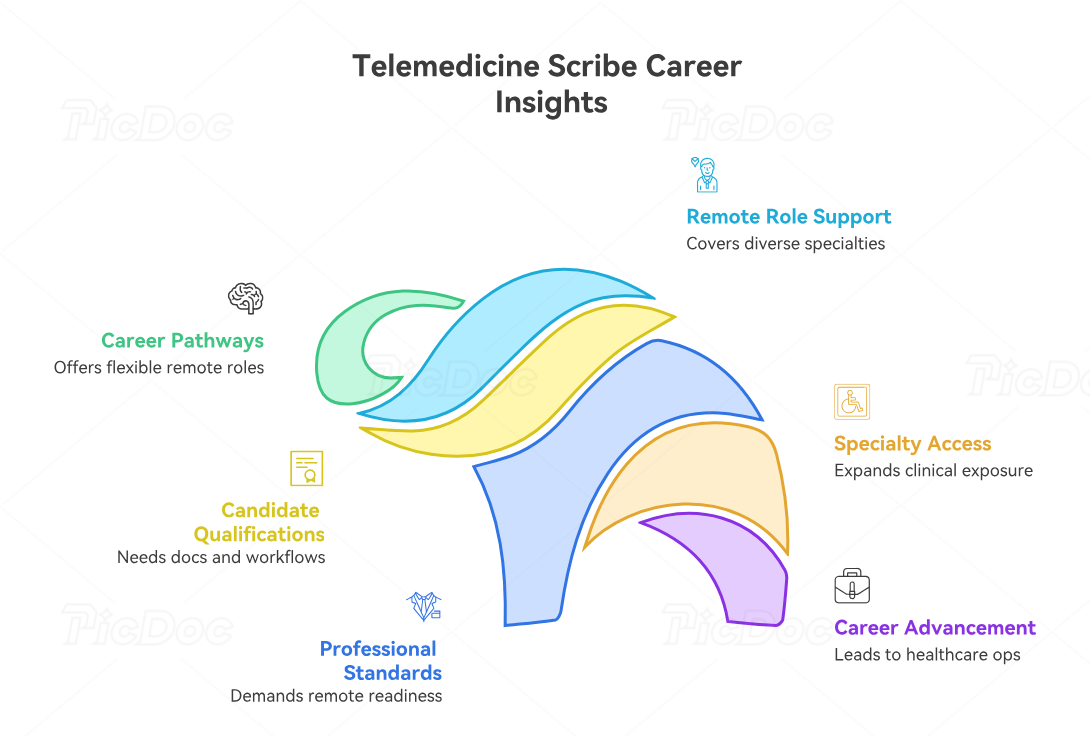
Telemedicine has opened career pathways for scribes who want flexibility, specialty exposure, and remote healthcare experience. Remote scribe roles can support primary care, urgent care, behavioral health, dermatology, pediatrics, cardiology, oncology, post-discharge follow-up, chronic care management, and specialty consultations. The best candidates understand documentation quality and virtual workflow, which is why remote medical scribe employers, telehealth company directories, medical scribe market trends, and interactive job market reports are useful for job planning.
Remote work also raises the professionalism bar. A virtual scribe needs dependable internet, quiet workspace habits, secure device practices, fast EMR navigation, clear communication with the provider, and the maturity to work with less direct supervision. Employers want scribes who can stay accurate without someone standing behind them. Certification, practice notes, specialty vocabulary, and telemedicine workflow examples help prove that readiness. Build that proof through medical scribe certification prep, top scribe training courses, medical scribe exam day essentials, and medical scribe certification questions.
Telemedicine also gives scribes wider specialty access. A local clinic may have limited openings, while virtual care organizations may hire across multiple regions and specialties. This can help pre-med students, allied health students, and career changers build stronger clinical exposure. A scribe who documents remote dermatology, pediatric triage, behavioral health follow-up, chronic care, and urgent care has a strong story for future healthcare applications. Connect this planning with how scribing boosts medical careers, pre-med gap-year programs, clinical research sites hiring scribes, and medical scribe career outlook.
Scribes who understand telemedicine can also move toward broader healthcare operations. Virtual care touches scheduling, portals, EMR integration, insurance workflows, patient communication, privacy, automation, and care coordination. That means telemedicine scribing can become a bridge into medical administration, clinical operations, care navigation, patient access, revenue cycle support, or health technology roles. To widen that path, study virtual medical administration, medical office automation trends, future-proofing medical admin skills, and future-proof CMAA career skills.
5. How AI, EMRs, and Human Scribes Work Together in Virtual Care
Telemedicine and AI are growing together because virtual visits produce digital conversations, portal messages, remote data, and structured workflows. Ambient dictation tools can draft notes, voice recognition can speed up documentation, and EMR templates can standardize common visit types. Human scribes remain valuable because virtual care needs judgment around context, source, privacy, certainty, limitations, and provider preference. A scribe who understands both technology and clinical documentation becomes a quality layer inside the system. Study AI medical scribe tools, voice recognition software, future medical documentation, and AI automation in medical administration.
AI-assisted notes can miss important nuance. A patient-reported home oxygen saturation, a provider-observed visual exam finding, a parent’s history, a limitation due to poor video, and a referral plan may all require different language. If a draft note blends those together, the chart becomes harder to defend. Expert scribes review output for source, sequence, clinical certainty, and plan clarity. This quality-control role is stronger when scribes know documentation accuracy benchmarks, specialty documentation templates, EMR shortcut productivity, and EMR integration tools.
EMR fluency is equally important because telemedicine notes often require multiple systems: video platform, patient portal, scheduling system, e-prescribing, lab ordering, referral tracking, and billing documentation. A scribe who can move cleanly between these systems reduces errors and provider frustration. The best telemedicine scribes understand where data enters the chart, where it can be verified, and where it should be kept out until confirmed. Build that foundation with top EMR platforms, healthcare CRM terminology, healthcare portal definitions, and secure patient scheduling tools.
The future belongs to scribes who can document and audit. A basic scribe records what happened. A high-value telemedicine scribe notices missing follow-up, unclear patient instructions, inconsistent medication history, unmarked virtual limitations, copied template errors, and mismatched assessment-plan language. That kind of detail helps providers, coders, patients, and care teams. It also helps scribes stand out in a job market where remote roles are attractive. Keep sharpening your profile with why facilities prefer certified scribes, certified vs non-certified scribe salary analysis, interactive scribe salary comparison, and medical scribe employment trends.
6. FAQs About Medical Scribes and Telemedicine
-
Medical scribes are useful because telemedicine providers have to manage clinical thinking, technology, patient communication, EMR navigation, orders, prescriptions, referrals, and documentation at the same time. A trained scribe organizes the visit into a clean note, captures patient-reported details, records provider-stated limitations, and preserves follow-up instructions. This value connects directly to remote medical scribe growth, telehealth companies using scribes, documentation accuracy reports, and physician burnout reduction.
-
A telemedicine scribe should pay extra attention to visit modality, patient location if confirmed, source of history, patient-reported home measurements, visual exam limitations, uploaded photos, technology issues, privacy-sensitive conditions, and escalation instructions. Virtual documentation must clearly separate what the patient reported, what the provider observed, and what could only be assessed in person. Build those skills with telehealth platform definitions, EMR charting terms, patient privacy essentials, and patient record update compliance.
-
Yes, many scribe roles now support remote providers, telehealth companies, virtual primary care, urgent care, behavioral health, specialty clinics, and hybrid health systems. Remote roles usually require strong typing, EMR skills, privacy discipline, medical terminology, independent work habits, and reliable technology. Candidates can research remote scribe employers, telehealth companies using medical scribes, international and offshore scribe employers, and healthcare recruiters posting scribe roles.
-
The strongest skills are structured HPI writing, EMR navigation, telehealth platform fluency, HIPAA awareness, medication reconciliation, home-data documentation, patient communication, red-flag awareness, plan organization, and AI-assisted note review. A strong candidate can explain how they document virtual exam limitations, patient-reported readings, follow-up instructions, and escalation precautions. Strengthen those areas with medical terminology mastery, top scribe documentation terms, active listening techniques, and AI medical scribe tools.
-
Scribes help by catching missing visit context, organizing the HPI, preserving provider-stated exam limitations, labeling patient-reported measurements, clarifying medication changes, and keeping the plan readable. They also reduce copy-forward problems from templates and help ensure that follow-up steps are easy for the care team to act on. This requires skill in specialty documentation templates, EMR shortcut productivity, common EMR issue resolution, and medical scribe exam mistake prevention.
-
Telemedicine introduces privacy concerns because patients may take visits from shared homes, cars, workplaces, dorms, schools, or public spaces. Scribes must follow clinic policy, support provider direction, document sensitive conversations carefully, and protect patient information in their own remote workspace. This area deserves careful study through HIPAA terms for scribes, patient privacy communication guidelines, HIPAA patient privacy terms, and effective patient communication examples.
-
AI will handle more drafting, transcription, and template support, but telemedicine still needs human review for context, source, virtual exam limitations, privacy-sensitive language, clinical certainty, patient instructions, and provider preference. Scribes who learn AI tools can become stronger documentation reviewers and workflow partners. Prepare for that shift with future medical documentation trends, AI and automation in medical administration, voice recognition and dictation software, and AI scribe buyer guides.
