

Team Communication in Medical Admin: Interactive Terms & Examples
Medical administration depends on hundreds of small handoffs: an appointment change reaching the clinical team, an insurance issue reaching billing, a patient concern reaching the right supervisor, and an urgent message reaching a provider without distortion. Weak communication creates duplicate work, delayed care, privacy exposure, denied claims, and frustrated patients. Strong teams use shared terminology, structured escalation, closed-loop confirmation, and precise documentation. This guide turns those principles into practical language, workflows, and examples that medical administrative professionals can use during real shifts.
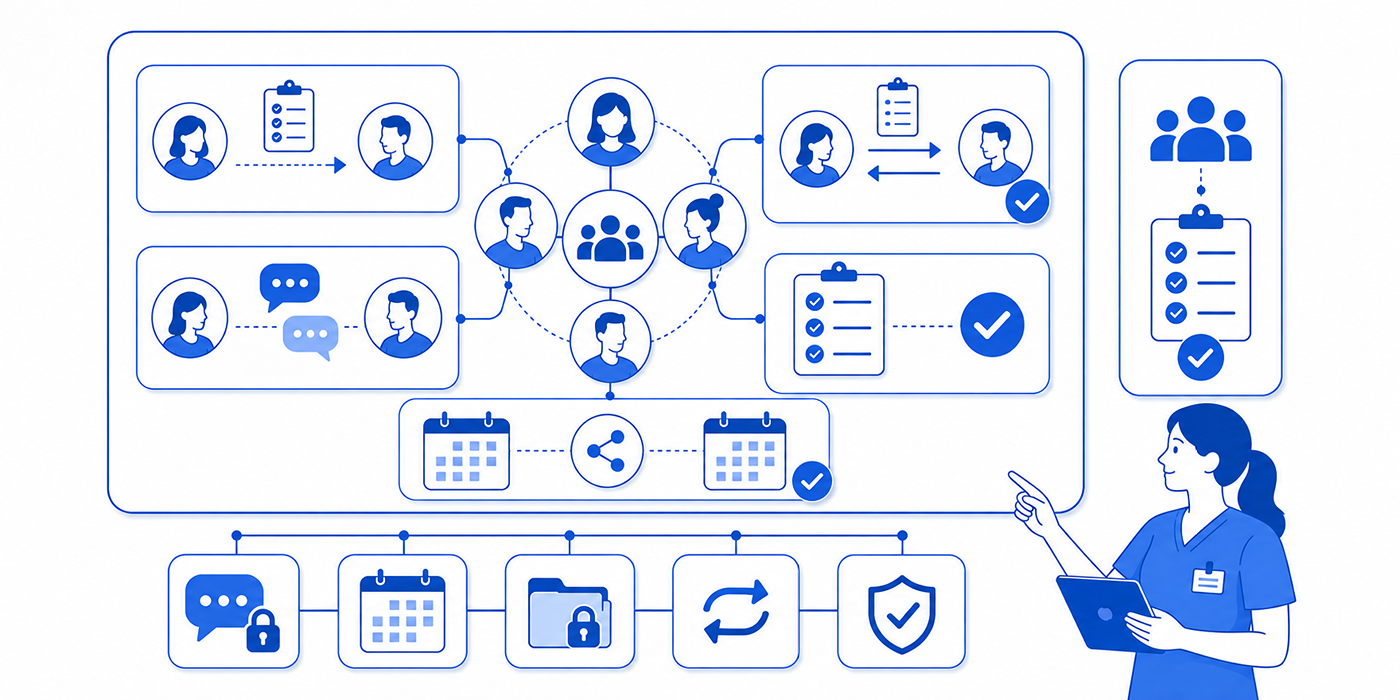
1. Why Team Communication Determines Medical Office Performance
Team communication influences almost every measurable part of a healthcare operation. It affects how accurately staff complete patient intake procedures, how quickly they resolve appointment scheduling conflicts, how safely they protect patient confidentiality, and how consistently they maintain medical records.
A communication failure rarely begins as a dramatic event. It often begins with a vague note such as “patient called,” a message placed in the wrong queue, an unexplained abbreviation, or an assumption that another employee completed the follow-up. The damage appears later when the patient arrives without authorization, the provider never receives an urgent update, or a claim is submitted using incomplete information.
Medical offices therefore need communication systems that make ownership visible. Every message should clarify:
What happened?
Who is responsible?
How urgent is it?
What action is required?
When must the action occur?
How will completion be confirmed?
These questions support dependable medical administrative workflows, stronger front-desk operations, safer patient record updates, and more disciplined medical office risk management.
Administrative professionals also communicate across departments that interpret information differently. A scheduler thinks in appointment types, durations, and resource availability. A biller thinks in coverage rules, modifiers, authorizations, and claim requirements. A provider thinks in symptoms, urgency, clinical history, and treatment decisions. Effective communication translates the same situation into the information each recipient needs.
The following reference table provides a shared vocabulary that teams can use to reduce ambiguity, improve accountability, and prevent costly handoff errors.
| # | Communication Term | Practical Meaning | Medical Admin Example | Failure Prevented |
|---|---|---|---|---|
| 1 | Closed-loop communication | The recipient repeats or confirms the instruction, completes it, and reports the outcome. | A scheduler confirms that an urgent appointment was added and alerts the clinical team through the approved [scheduling workflow](https://acmso.org/medical-scribing/appointment-scheduling-best-practices-interactive-definitions). | Missed requests and silent assumptions. |
| 2 | Handoff | A structured transfer of information and responsibility from one person or team to another. | The morning receptionist transfers unresolved calls through the office’s [daily procedure checklist](https://acmso.org/medical-scribing/essential-checklists-for-daily-office-procedures). | Lost tasks during shift changes. |
| 3 | Escalation pathway | A defined route for sending an issue to someone with the authority or expertise to act. | A threat, safety concern, or rapidly worsening complaint follows the established [crisis communication process](https://acmso.org/medical-scribing/crisis-communication-terms-interactive-reference-for-medical-admins). | Dangerous delays and unauthorized decisions. |
| 4 | Read-back | Repeating critical information to verify that it was heard or entered correctly. | Staff repeat a callback number, date of birth, medication name, or appointment time during [patient communication](https://acmso.org/medical-scribing/effective-patient-communication-terms-amp-interactive-examples). | Transcription and identity errors. |
| 5 | Message ownership | One named person remains responsible until the message is completed or formally reassigned. | An insurance specialist owns the request until [insurance verification](https://acmso.org/medical-scribing/insurance-verification-definitive-glossary-amp-interactive-examples) is documented. | Tasks sitting unworked in shared queues. |
| 6 | Urgency classification | A standardized method for identifying routine, time-sensitive, urgent, or emergency communication. | Front-desk staff use approved [medical office triage terminology](https://acmso.org/medical-scribing/medical-office-triage-key-terminology-amp-practical-scenarios) without making clinical judgments. | Urgent concerns being treated as routine. |
| 7 | Role clarity | A shared understanding of who may perform, approve, document, or escalate each task. | The team distinguishes administrative support from decisions covered by [legal responsibilities for CMAAs](https://acmso.org/medical-scribing/legal-responsibilities-for-cmaas-comprehensive-interactive-guide). | Scope violations and duplicated work. |
| 8 | Standardized language | Consistent terms, abbreviations, statuses, and labels understood by the entire team. | Staff use approved [EMR and charting terms](https://acmso.org/medical-scribing/top-20-emr-amp-charting-terms-medical-scribes-need-to-understand-clearly). | Misinterpretation across departments. |
| 9 | Communication channel | The approved method used for a specific message type, such as an EMR task, secure chat, phone call, or email. | Protected patient details are exchanged through approved [healthcare portal systems](https://acmso.org/medical-scribing/healthcare-portal-terms-interactive-dictionary-amp-use-cases). | Privacy breaches and missed messages. |
| 10 | Minimum necessary | Sharing only the protected information required for the recipient to complete the task. | A payment question is discussed using the safeguards in [HIPAA and patient privacy terminology](https://acmso.org/medical-scribing/top-20-hipaa-amp-patient-privacy-terms-for-medical-administrative-assistants). | Unnecessary exposure of patient information. |
| 11 | Secure messaging | Communication through a protected platform authorized for sensitive healthcare information. | Staff use approved [patient communication applications](https://acmso.org/medical-scribing/patient-communication-apps-every-cmaa-should-use-interactive-directory). | PHI appearing in personal texts or unsecured email. |
| 12 | Task routing | Sending a request to the correct queue, role, provider, or department. | A refill-related administrative message is routed through the correct [EMR integration workflow](https://acmso.org/medical-scribing/emr-integration-tools-every-medical-administrative-assistant-needs). | Delays caused by repeated forwarding. |
| 13 | Status visibility | A visible indicator showing whether work is new, assigned, pending, completed, or awaiting external action. | Claims staff update statuses within the [medical claims processing workflow](https://acmso.org/medical-scribing/medical-claims-processing-terms-workflow-amp-interactive-examples). | Duplicate work and forgotten follow-up. |
| 14 | Dependency | A task, approval, document, or decision that must occur before the next action can proceed. | Scheduling waits for authorization described in the [prior authorization process](https://acmso.org/medical-scribing/prior-authorization-step-by-step-interactive-guide-definitions). | Teams blaming one another for blocked work. |
| 15 | Exception handling | A predefined response for unusual situations that fall outside the standard workflow. | Staff use a defined exception path during [emergency appointment management](https://acmso.org/medical-scribing/emergency-appointment-management-step-by-step-cmaa-guide). | Improvised decisions during pressure. |
| 16 | Communication latency | The time between receiving information and delivering it to the person who must act. | Supervisors monitor delay patterns through [medical admin time-tracking tools](https://acmso.org/medical-scribing/medical-admin-time-tracking-tools-complete-directory-amp-usage-guide). | Critical updates aging unnoticed. |
| 17 | Shared mental model | A common understanding of the patient situation, priorities, workload, and next actions. | A brief morning huddle aligns staff around [medical office organization](https://acmso.org/medical-scribing/organizing-a-medical-office-for-optimal-productivity). | Conflicting priorities and fragmented action. |
| 18 | Psychological safety | A team climate where employees can question, clarify, and report mistakes without humiliation. | A new employee reports a possible privacy error using the office’s [medical compliance process](https://acmso.org/medical-scribing/medical-compliance-terms-interactive-reference-amp-examples). | Hidden errors and preventable recurrence. |
| 19 | Constructive feedback | Specific, timely guidance focused on observable behavior, consequences, and improvement. | A supervisor connects rushed communication with lower [patient satisfaction metrics](https://acmso.org/medical-scribing/patient-satisfaction-metrics-definitions-amp-interactive-insights). | Defensiveness and repeated errors. |
| 20 | Conflict de-escalation | Techniques that lower emotional intensity while keeping boundaries and responsibilities clear. | Coworkers apply structured [de-escalation techniques](https://acmso.org/medical-scribing/de-escalation-techniques-interactive-dictionary-amp-practical-tips) during a disagreement over an overbooked schedule. | Personal attacks and patient-facing tension. |
| 21 | Active listening | Listening for facts, concerns, context, and implied needs before responding. | A team lead uses [active listening techniques](https://acmso.org/medical-scribing/active-listening-techniques-for-medical-admin-professionals) before correcting a workflow problem. | Premature conclusions and avoidable conflict. |
| 22 | Clarifying question | A focused question used to resolve missing, ambiguous, or conflicting information. | Staff confirm whether “follow-up” means a routine visit, procedure review, or result discussion using [scheduling terminology](https://acmso.org/medical-scribing/top-20-scheduling-amp-appointment-terms-cmaas-should-know-by-heart). | Incorrect appointment types and durations. |
| 23 | Situation awareness | Understanding current workload, staffing constraints, delays, patient risks, and resource availability. | The office manager reviews the [staff scheduling system](https://acmso.org/medical-scribing/directory-of-medical-admin-staff-scheduling-tools) before reallocating coverage. | Decisions made without operational context. |
| 24 | Documentation trail | A chronological record of messages, actions, decisions, and outcomes. | Staff preserve a defensible trail for [medical chart audits](https://acmso.org/medical-scribing/medical-chart-audits-terms-amp-interactive-checklist-guide). | Disputes over what was communicated. |
| 25 | Communication boundary | A clear limit around what a role may disclose, promise, interpret, or decide. | Administrative staff follow [patient privacy communication essentials](https://acmso.org/medical-scribing/patient-privacy-communication-essentials-hipaa-guidelines-simplified). | Unauthorized disclosure or clinical advice. |
| 26 | Priority alignment | Agreement about which tasks require immediate attention and which can safely wait. | A huddle ranks urgent callbacks, check-ins, and authorization deadlines using [time-management practices](https://acmso.org/medical-scribing/time-management-mastery-for-medical-admin-professionals). | Busy staff working on low-impact tasks. |
| 27 | Cross-functional communication | Information exchange between departments with different responsibilities and technical language. | Front desk, coding, and billing coordinate around [revenue cycle management terms](https://acmso.org/medical-scribing/revenue-cycle-management-terms-definitions-amp-interactive-examples). | Departmental silos and rework. |
| 28 | Change communication | A structured process for announcing, explaining, implementing, and confirming a policy or system change. | Managers communicate new [medical admin policies and procedures](https://acmso.org/medical-scribing/creating-effective-medical-admin-policies-amp-procedures). | Different employees following different rules. |
| 29 | Communication audit | A review of message quality, routing accuracy, response times, privacy compliance, and completion rates. | Leaders compare breakdowns with [clinical documentation improvement principles](https://acmso.org/medical-scribing/clinical-documentation-improvement-cdi-interactive-definitions). | Recurring problems remaining invisible. |
| 30 | Recovery communication | The coordinated response after a delay, error, complaint, or missed expectation. | The team documents the issue, corrects it, communicates the resolution, and follows [professional complaint handling](https://acmso.org/medical-scribing/handling-patient-complaints-legally-amp-professionally). | Repeated frustration and loss of trust. |
2. Essential Team Communication Terms in Daily Medical Administration
Shared terminology only improves performance when employees apply it consistently. A team may understand the phrase “closed loop” during training and still leave dozens of requests unresolved because completion is never documented. The practical standard should require an owner, deadline, action, outcome, and final status.
Consider a patient who calls because an insurer has not approved an upcoming procedure. The receptionist gathers the necessary details through the office’s patient intake process, verifies identity under HIPAA communication safeguards, routes the issue to the authorization specialist, and marks the request as time-sensitive. The specialist checks the prior authorization requirements, updates the task status, informs scheduling of the expected decision date, and confirms the final outcome.
Every step adds information the next person needs. Leaving out one detail creates friction:
Missing procedure date prevents urgency ranking.
Missing payer information slows verification.
Missing ownership leaves the task in a shared queue.
Missing status forces another employee to repeat the work.
Missing patient follow-up creates dissatisfaction even after the internal task is completed.
Communication should be recipient-centered
Effective messages are designed around the recipient’s decision. A provider usually needs a concise description of the patient’s request, relevant timing, actions already taken, and the specific decision required. Billing may need payer details, codes, denial information, and documentation gaps based on medical billing terminology, CPT code requirements, ICD-10 terminology, and denial management procedures.
A message such as “Patient has an insurance problem” forces the recipient to investigate from the beginning. A stronger message reads:
Patient scheduled for an MRI on August 14. Payer portal shows authorization pending because the clinical note does not include conservative treatment history. Request routed to the provider pool at 10:05 a.m. Patient advised that scheduling will call by 3:00 p.m. with an update.
The second message supports action, establishes ownership, and creates a defensible timeline.
Communication should separate facts, interpretation, and requests
Administrative messages become dangerous when factual information is mixed with assumptions. “The patient is exaggerating” introduces bias. “The patient called three times today, stated the pain is worsening, and requested same-day guidance” communicates observable facts.
This separation is especially important in medical office triage, crisis communication, difficult patient conversations, and clinical documentation. Staff should document what the person said, what was observed, what action was taken, and who received the escalation.
3. Interactive Examples of High-Quality Team Communication
The following examples show how routine phrases can be upgraded into actionable communication.
Example 1: Appointment scheduling conflict
Weak message: “The doctor’s schedule is messed up tomorrow.”
Actionable message: “Dr. Patel has two procedures overlapping at 10:30 a.m. Room 3 is also unavailable. I reviewed the approved appointment scheduling practices and identified two patients who can be moved without exceeding follow-up windows. I need the scheduling lead to approve the changes by 2:00 p.m.”
This message identifies the conflict, operational constraint, proposed solution, owner, and deadline. It also prevents staff from randomly moving appointments through the scheduling software or using inconsistent scheduling terminology.
Example 2: Missing insurance information
Weak message: “Her insurance is not working.”
Actionable message: “The payer portal shows the policy terminated on July 31. I confirmed the member ID and date of birth twice. The patient reports new coverage but does not have the card available. The account is marked pending under the office’s insurance verification process, and the patient will upload the card through the patient portal by noon.”
This communication prevents premature cancellation, unverified promises about coverage, and confusion between eligibility, benefits, authorization, and financial responsibility.
Example 3: Delayed provider response
Weak message: “I sent it to the doctor already.”
Actionable message: “The patient’s request was sent to Dr. Lee’s clinical pool at 9:20 a.m. and remains unread. The patient called again at 12:10 p.m. reporting worsening symptoms. I escalated it to the charge nurse according to the emergency appointment protocol and documented the escalation in the EHR task trail.”
The phrase “I sent it” describes activity. The improved message shows timing, status, changing urgency, escalation, and documentation.
Example 4: Privacy-sensitive discussion
Weak message: “Her husband called about her results.”
Actionable message: “A caller identifying himself as the patient’s husband requested test results. I did not disclose information. The chart does not show current authorization for verbal disclosure. I advised him that the patient can contact the office or update permissions through the secure portal.”
This response follows patient confidentiality requirements, HIPAA terminology, and patient privacy communication guidance.
Example 5: Coworker performance concern
Weak message: “The new receptionist keeps making mistakes.”
Actionable message: “Three referrals entered this week were routed to the billing queue instead of the referral queue. Each required reassignment and delayed processing by one business day. I recommend a 20-minute review of task-routing rules and a supervised practice period using the office’s EMR training process.”
Specific feedback protects team trust. It focuses on observable actions, operational consequences, and a practical solution. Managers can reinforce this approach through medical administrative policies, team collaboration tools, and structured professional development.
4. How to Prevent Communication Breakdowns During Busy Shifts
Busy shifts expose weak systems quickly. Staff begin using memory instead of task queues, verbal instructions replace written handoffs, and urgent requests compete with ringing phones, patient arrivals, insurance problems, and provider interruptions.
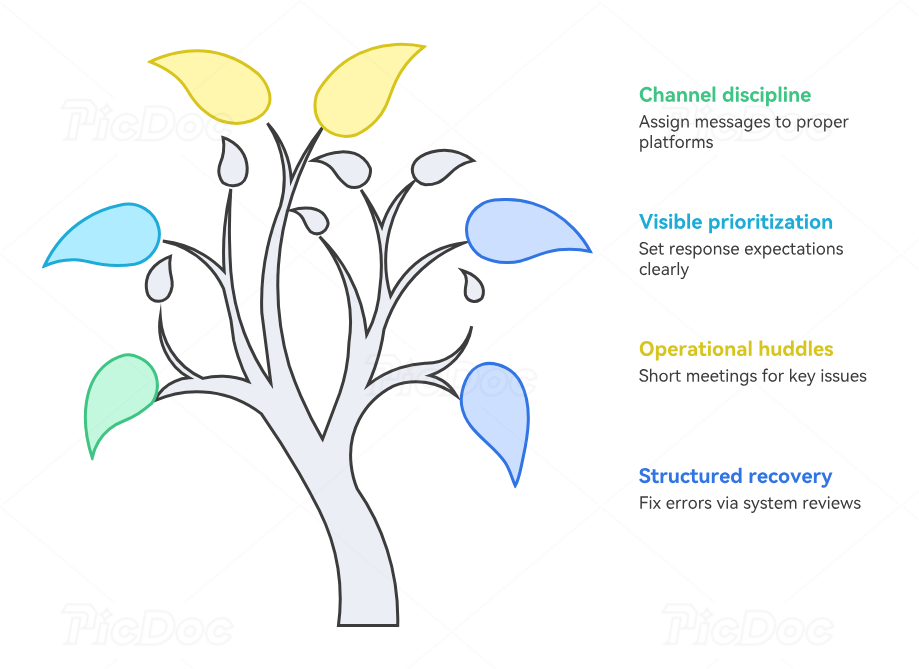
The first safeguard is channel discipline. Teams should define where each message belongs. Appointment requests belong in the approved scheduling platform. Protected patient communication belongs in a secure healthcare portal. Billing issues belong in the billing or revenue cycle workflow. Operational announcements may belong in an approved collaboration tool.
When teams scatter information across sticky notes, verbal comments, personal messages, inboxes, and multiple software systems, employees spend more time searching than acting.
The second safeguard is visible prioritization. Every office should define response expectations for:
Emergency safety concerns
Urgent clinical messages
Same-day operational problems
Time-sensitive authorization or referral issues
Routine administrative requests
Low-priority improvement tasks
Employees should understand the difference between identifying urgency and making a clinical judgment. Administrative professionals can recognize trigger phrases, follow the approved triage terminology, and escalate through the correct pathway. They should avoid diagnosing, interpreting symptoms, or reassuring patients beyond their authorized role.
The third safeguard is short operational huddles. A productive huddle takes five to ten minutes and addresses staffing gaps, high-risk appointments, equipment issues, unresolved authorizations, interpreter needs, scheduling pressure, and unusual patient accommodations. It should support office productivity, inventory coordination, medical interpreter planning, and culturally competent communication.
The fourth safeguard is structured recovery. When an error occurs, teams should stabilize the immediate situation, notify the right leader, document the facts, communicate with affected parties, and identify the system condition that allowed the error. A missed callback may reveal unclear ownership. A privacy incident may reveal poor identity verification. A duplicated appointment may reveal unsynchronized systems or inconsistent EMR integration.
Blame-focused conversations produce silence. System-focused reviews produce corrective action while preserving individual accountability.
5. Building a Reliable Team Communication Standard
A strong communication standard should be simple enough to use during peak workload and specific enough to guide difficult cases.
Step 1: Define communication categories
List the office’s most common message types: appointments, referrals, authorizations, records requests, billing questions, complaints, portal messages, prescription-related requests, test-result inquiries, emergencies, and internal operational issues.
Each category should identify the approved channel, responsible role, expected response time, escalation route, and documentation requirement. This mapping strengthens practice management systems, medical records release workflows, patient portal management, and front-desk procedures.
Step 2: Create a message-quality formula
Require internal messages to contain six elements:
Situation: What is happening now?
Background: What relevant context is already known?
Action taken: What has the sender completed?
Request: What decision or action is needed?
Priority: When is the response required?
Ownership: Who will track the issue to completion?
This formula prevents vague communication while supporting accurate clinical documentation, efficient medical claims processing, and clear encounter-form workflows.
Step 3: Standardize handoffs
Every shift-change handoff should include unresolved urgent messages, patients awaiting callbacks, blocked authorizations, pending complaints, system outages, staffing changes, and tasks with external deadlines.
A handoff should distinguish between “assigned,” “in progress,” “waiting on provider,” “waiting on patient,” “waiting on payer,” and “completed.” These statuses help teams coordinate insurance claims, coordination of benefits, clearinghouse submissions, and denial management.
Step 4: Train difficult conversations
Team communication training should include realistic pressure, such as a provider who responds impatiently, a coworker who repeatedly misses handoffs, a supervisor who gives vague instructions, or two departments disputing responsibility.
Employees need practical language:
“I want to confirm who owns the next step.”
“The current message does not include the deadline. When is action required?”
“I entered the request at 9:10 a.m. and need confirmation that your team received it.”
“The patient is waiting for an update. What outcome may I communicate?”
“I see two different instructions in the record. Which one should the team follow?”
These phrases combine assertive communication, active listening, professional email etiquette, and conflict de-escalation.
Step 5: Measure the communication system
Useful measures include misrouted-task rates, average response times, percentage of messages with a named owner, incomplete handoff counts, duplicate-work incidents, privacy-related communication errors, and complaints linked to poor updates.
These indicators can be reviewed alongside patient satisfaction data, workflow analytics, medical chart audit findings, and practice management system reports.
The purpose of measurement is to reveal patterns. Five complaints about delayed callbacks may point to staffing, routing, unclear ownership, unrealistic response expectations, or a technical problem. The corrective response should match the actual failure point.
6. Frequently Asked Questions About Team Communication in Medical Admin
-
The most important principle is clear ownership. A message should have one responsible person who tracks it until completion, reassignment, or documented closure. Shared queues remain useful, although every active task still needs an identifiable owner. This standard improves medical administrative workflows, reduces missed patient communications, and creates a stronger documentation trail.
-
Staff should collect the approved identifying and situational information, avoid clinical interpretation, label the message according to the office’s urgency definitions, and use the established escalation pathway. They should document when the concern was received, who was notified, what instructions were provided, and whether the recipient confirmed receipt. Training in medical office triage, emergency appointment management, and crisis communication supports this process.
-
Use a standardized handoff document or EMR report that lists every unresolved task, current owner, status, deadline, last action, and next required step. Verbal handoffs should supplement the written record. Supervisors should review high-risk items and verify that responsibility has been accepted. A strong process can be incorporated into daily office checklists, staff scheduling tools, and time-management systems.
-
Document information that affects patient care coordination, scheduling, access, instructions, follow-up, authorization, or other healthcare operations covered by office policy. Include the date and time, communication method, participants, factual summary, action taken, escalation, and outcome. Avoid judgmental wording, unsupported conclusions, unnecessary personal details, and excessive protected information. Staff should follow EHR and EMR terminology, patient record update training, and medical compliance requirements.
-
Address the issue privately, describe the observable behavior, explain the operational or patient impact, confirm the expected standard, and create a measurable improvement plan. A supervisor might say, “Three urgent tasks were closed without documenting the outcome. Beginning today, every urgent task must include the person notified, time of notification, and final disposition.” This approach supports risk management, professional office policies, and a safer communication culture.
-
Return to the written workflow, identify the task’s required outcome, determine which role has authority to complete it, and escalate unresolved ownership questions to the designated supervisor. The patient’s request should continue moving while the process issue is reviewed. Repeated disputes indicate a need to update the routing matrix, job responsibilities, or practice management workflow. Cross-department training in revenue cycle terminology and front-desk operations can reduce future conflict.
