

The Ultimate Guide to Getting Your Medical Scribe Certification in Egypt: All You Need to Know in 2026-2027
Getting medical scribe certification in Egypt can give medical students, pharmacy graduates, nursing-adjacent learners, clinic staff, and remote healthcare candidates a serious route into clinical documentation. The strongest candidates learn how patient stories become clean charts, how providers think, and how documentation protects follow-up care.
For Egypt-based learners, the goal is to turn medical terminology mastery, EMR charting confidence, patient privacy discipline, and realistic medical scribe exam practice into job-ready skill.
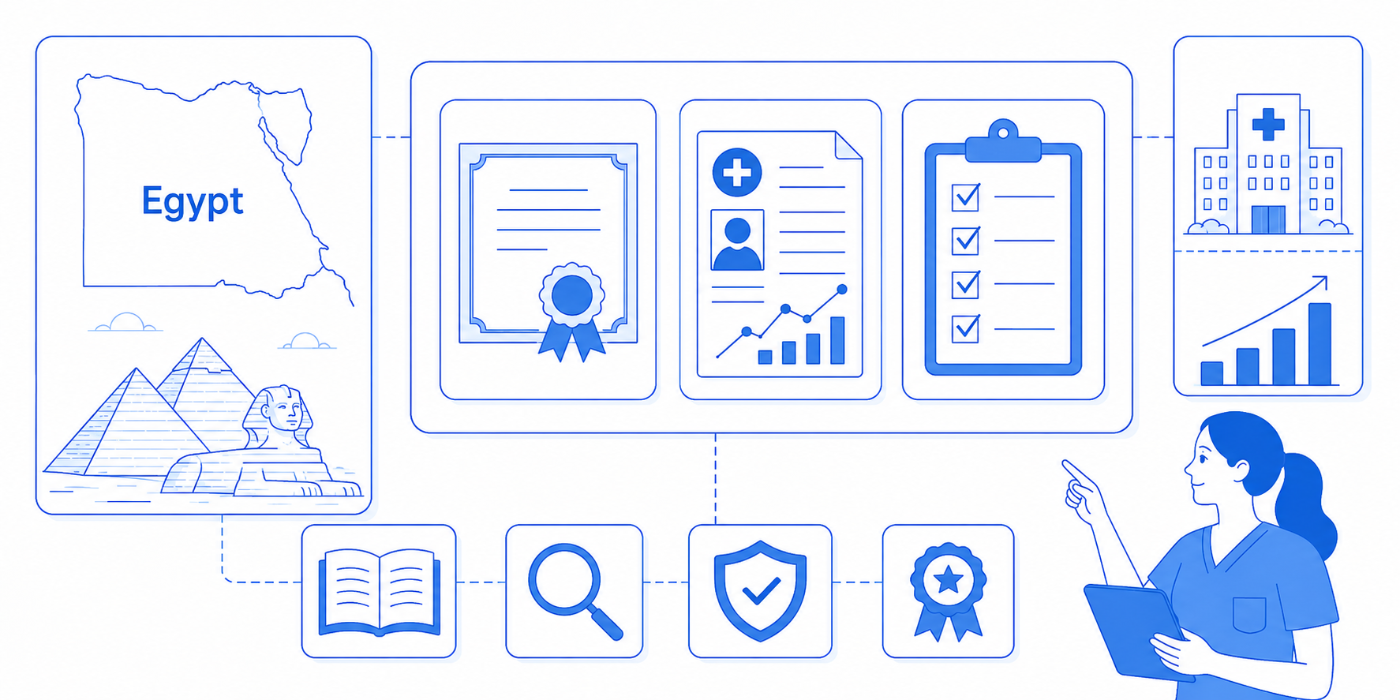
1. What Medical Scribe Certification Means in Egypt in 2026-2027
Medical scribe certification in Egypt should be approached as practical proof that you can support a provider’s documentation workflow with speed, accuracy, privacy awareness, and clinical judgment. A certificate becomes valuable when it shows that you can follow a patient encounter, identify the chief complaint, organize the HPI, capture the ROS, document physical exam findings accurately, and place the assessment and plan where they belong. Egypt-based candidates should build their foundation with medical scribe certification FAQs, clinical documentation terms, patient intake procedures, EMR charting terms, and medical terminology tutorials.
The pressure point for Egyptian candidates is often the gap between academic medical knowledge and real-time documentation. A medical student may understand anatomy and pathology, yet still struggle when a provider speaks quickly, a patient gives a scattered history, the plan changes mid-visit, or the note needs to be completed inside an EMR workflow. That is why certification prep should include documentation template libraries, ACMSO first-try exam strategies, patient record update training, HIPAA and patient privacy terms, and medical scribe exam confidence guidance.
Egypt also has a strong pool of healthcare-trained candidates who can compete for clinic-based, hospital-adjacent, telehealth, and remote documentation roles when they present their skills correctly. The smart candidate does not treat scribing as a small admin task. Scribing connects clinical reasoning, digital records, patient flow, coding support, follow-up clarity, and provider efficiency. Candidates should understand telemedicine scribe workflows, international scribe employer options, medical scribe interview preparation, healthcare resume building, and future scribing trends before applying.
| # | Certification Area | What Egypt Candidates Should Master | Real Pain Point It Solves | Best ACMSO Resource |
|---|---|---|---|---|
| 1 | Medical terminology | Prefixes, suffixes, body systems, common complaints, abbreviations | Fast provider speech becomes hard to follow when core vocabulary is weak. | Medical terminology mastery |
| 2 | Chief complaint capture | The exact reason for today’s visit in concise clinical language | A vague opening makes the entire chart harder to understand. | Patient intake procedures |
| 3 | HPI organization | Onset, location, duration, severity, modifiers, context, associated symptoms | New scribes often hear details and still lose the patient story. | Clinical documentation terms |
| 4 | ROS accuracy | Positive symptoms, pertinent negatives, system-based symptom review | Missing a key negative can make a note look clinically incomplete. | Documentation templates |
| 5 | Physical exam wording | Provider-observed findings, normal findings, abnormal findings | Unsafe notes happen when exam details are assumed instead of confirmed. | Realistic scribe questions |
| 6 | Assessment and plan | Diagnosis wording, tests, medications, referrals, follow-up steps | Weak plan documentation creates confusion after the visit ends. | Scribe exam confidence |
| 7 | EMR navigation | Chart tabs, note templates, shortcuts, structured fields, routing | Clinical knowledge loses value when the candidate cannot move through the system. | EMR charting terms |
| 8 | Privacy discipline | PHI, confidentiality, minimum necessary access, secure communication | Remote and clinic roles require strict privacy habits from the first shift. | HIPAA compliance for scribes |
| 9 | ICD-10 awareness | Diagnosis specificity, laterality, severity, documentation support | Vague diagnosis wording weakens coding, reporting, and continuity of care. | ICD-10 dictionary |
| 10 | CPT awareness | Procedure language, visit complexity, service documentation basics | Billing logic becomes confusing when the scribe cannot see why details matter. | CPT codes explained |
| 11 | Medication documentation | Dose, route, frequency, adherence, refills, changes, reactions | Medication errors can damage follow-up clarity and patient safety. | Documentation terms |
| 12 | Allergies and history | Drug allergies, surgical history, family history, social history | History feels secondary until it changes the clinical decision. | Patient intake procedures |
| 13 | Specialty vocabulary | Cardiology, orthopedics, pediatrics, OB/GYN, dermatology, ophthalmology | Specialty visits expose candidates who studied only general definitions. | Specialty scribe networks |
| 14 | Urgent care pace | Rapid complaints, triage details, testing, discharge instructions | Speed pressure reveals weak note organization quickly. | Emergency and urgent care roles |
| 15 | Telehealth workflow | Virtual visits, remote documentation, portal messages, digital handoffs | Remote candidates need workflow maturity before employers trust them. | Scribes and telemedicine |
| 16 | Voice recognition support | Dictation cleanup, transcript review, correction of clinical errors | AI-supported notes still need human judgment to prevent chart mistakes. | Dictation software guide |
| 17 | Provider communication | Clarifying questions, concise updates, professional handoffs | Unclear questions can interrupt clinical flow and reduce provider trust. | Patient communication terms |
| 18 | English documentation clarity | Clean clinical English around Arabic-speaking patient settings | Candidates must preserve meaning when spoken context and chart language differ. | Communication examples |
| 19 | Chart correction habits | Proofreading, contradiction checks, missing-detail review, final note cleanup | Small errors become visible when coding, billing, or follow-up teams review the chart. | Patient record updates |
| 20 | Exam study structure | Daily blocks, timed drills, weak-area tracking, scenario review | Random studying creates confidence without real readiness. | 30-day study schedule |
| 21 | Interview readiness | Scenario answers, remote setup, charting examples, privacy judgment | Employers trust candidates who can explain how they handle pressure. | Scribe interview prep |
| 22 | Resume positioning | Certification, terminology, typing speed, EMR exposure, specialty interest | A generic resume hides the exact skills scribe employers scan for first. | Standout healthcare resume |
| 23 | International employer research | Remote companies, staffing agencies, offshore documentation teams | Applicants waste time when they target employers that do not fit their profile. | International scribe employers |
| 24 | Clinic operations awareness | Scheduling, intake, referrals, portals, insurance, records | Scribe work connects with the entire office workflow. | Front desk operations |
| 25 | Patient communication | Clear language, empathy, active listening, professional tone | Documentation quality often depends on understanding the patient interaction. | Active listening techniques |
| 26 | De-escalation awareness | Objective notes, calm tone, tense visit awareness, neutral documentation | Emotional visits still need clean, professional, fact-based records. | De-escalation techniques |
| 27 | Telehealth admin bridge | Virtual scheduling, portals, patient messages, digital visit support | This gives candidates more career options beyond live scribing. | Telehealth administration |
| 28 | Clinical research bridge | Documentation quality, visit notes, patient flow, study-site awareness | Egypt has many medically trained candidates who can grow toward research support roles. | Clinical research pathways |
| 29 | Career growth planning | Scribe to clinical research, health admin, pre-med, operations, quality | Certification creates more value when it points toward a defined next step. | Scribe career journeys |
| 30 | Remote work discipline | Quiet workspace, headset quality, secure setup, time-zone reliability | Remote skill collapses when the work environment creates privacy or quality issues. | Virtual patient management |
2. The Step-by-Step Roadmap to Getting Medical Scribe Certified in Egypt
Start with medical terminology because it controls every other part of your preparation. A candidate who cannot quickly recognize common clinical words will struggle with HPI, ROS, physical exam language, assessment wording, medications, referrals, and follow-up instructions. Your first study phase should cover body systems, common symptoms, abbreviations, diagnostic language, medication wording, and specialty vocabulary. Use medical terminology mastery, complex medical term memorization, clinical documentation terms, ICD-10 code references, and CPT code explanations to build a vocabulary base that works inside actual notes.
After vocabulary, learn the structure of a clinical note. The chief complaint tells why the patient is being seen. The HPI tells the story of the current problem. The ROS captures symptom review. The physical exam records provider-observed findings. The assessment identifies the provider’s clinical impression or diagnosis. The plan records what happens next. Many new scribes know the details yet place them poorly. Fix that with patient intake procedures, documentation template libraries, patient record compliance training, realistic scribe exam questions, and scribe exam confidence guidance.
Then add timed documentation practice. Certification prep should include mock encounters, audio listening, chart summarization, note correction, and second-pass review. Your goal is to capture clinical meaning without typing every word. A provider may mention a negative symptom, a medication change, a test result, a referral, and a follow-up instruction within one minute. A strong scribe separates those details while keeping the patient story intact. Build that skill through active listening techniques, effective patient communication terms, EMR shortcut training, voice recognition software awareness, and scribe telemedicine guidance.
Next, prepare for the certification exam with a controlled schedule. A candidate with medical school, pharmacy, nursing, or clinic exposure may prepare faster, while a beginner may need six to eight weeks of consistent study. The best schedule rotates terminology, note sections, EMR terms, privacy, patient intake, specialty vocabulary, and scenario questions. Each session should produce something measurable: a corrected HPI, a cleaner assessment and plan, a stronger quiz score, or a list of weak terms. Use ACMSO’s 30-day study schedule, first-try passing strategies, top exam questions answered, real-life exam experiences, and medical scribe certification FAQs.
3. How to Choose the Right Medical Scribe Course for Egypt-Based Learners
A strong medical scribe course should train you for real documentation pressure. It should cover terminology, clinical note structure, patient privacy, provider workflow, EMR basics, specialty terms, chart correction, and realistic case practice. A course that only gives definitions will leave you exposed when a provider moves quickly through history, exam, results, orders, and treatment instructions. Compare any program against top medical scribe training courses, medical scribe certification FAQs, ACMSO exam strategies, realistic certification questions, and medical terminology training.
Egypt-based candidates should also think carefully about language and documentation style. Many healthcare learners in Egypt are comfortable with medical English, while patient interaction may involve Arabic, local phrasing, family-provided histories, and rapid code-switching. A scribe must preserve clinical meaning inside clean English documentation. That requires active listening, neutral phrasing, careful clarification, and privacy judgment. Strengthen this part of your preparation with effective patient communication examples, empathy in healthcare administration, de-escalation techniques, patient privacy communication essentials, and handling patient complaints professionally.
Your course should also expose you to specialties. Primary care teaches broad patient stories. Urgent care teaches pace. Orthopedics teaches injury language and exam findings. Cardiology teaches symptoms, risk factors, testing, and medication follow-up. Pediatrics teaches caregiver history and age-specific concerns. OB/GYN teaches sensitive documentation. Dermatology and ophthalmology require precise observation. Build specialty awareness through primary care scribe networks, urgent care scribe directories, orthopedic and sports medicine groups, dermatology and ophthalmology practices, and pediatric scribe guidance.
The final test of a course is whether it helps you apply. By the end, you should have sample notes, a clear skills section for your resume, a list of target roles, and interview answers that show judgment under pressure. Employers want proof that you can handle the first live shift. Build that bridge with scribe interview preparation, medical scribe job interview questions, standout healthcare resume guidance, healthcare recruiter platforms, and top hospitals hiring scribes.
4. Skills Egypt Candidates Must Build Before Applying for Medical Scribe Jobs
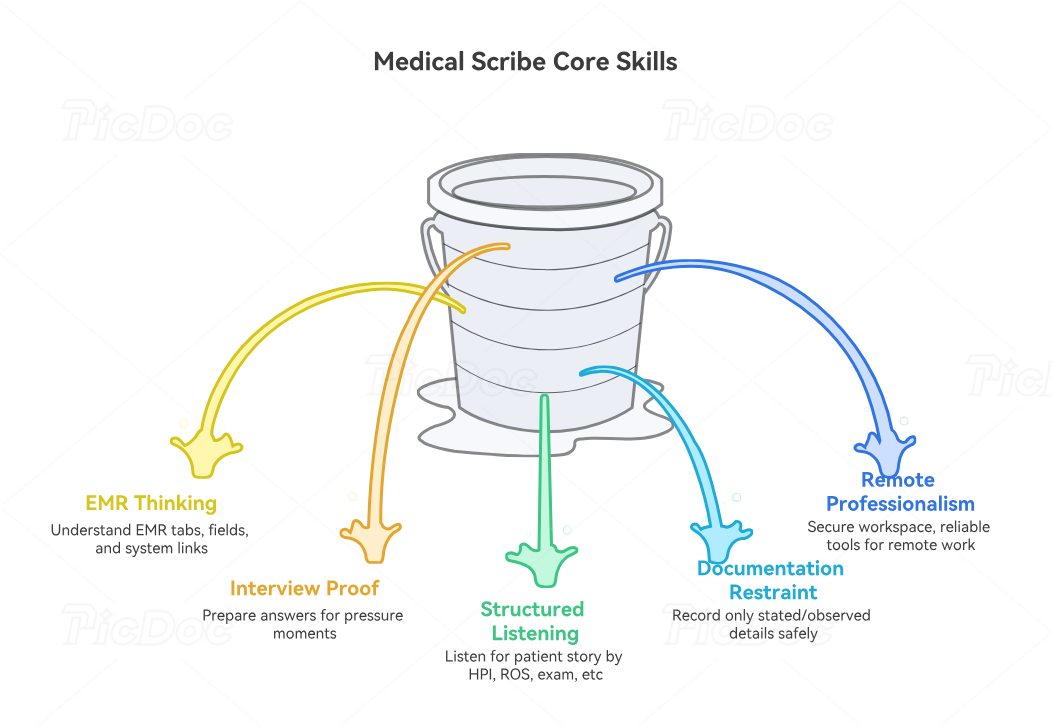
The first skill is structured listening. You are listening for the patient’s complaint, timeline, symptom details, relevant negatives, medications, history, provider interpretation, tests ordered, and follow-up plan. Many beginners try to type everything and lose the clinical story. A trained scribe listens by section. The HPI gets the story. The ROS gets symptom review. The exam gets observed findings. The assessment gets diagnosis or clinical impression. The plan gets next steps. Train this with active listening techniques, patient communication examples, documentation templates, medical terminology drills, and realistic scribe practice questions.
The second skill is documentation restraint. A medical scribe should record what was stated, observed, reviewed, ordered, or instructed. The chart becomes risky when the scribe adds assumptions, invents normal exam findings, upgrades uncertainty into a confirmed diagnosis, or leaves out a key negative. The safest candidates understand where their role begins and where provider confirmation is required. Strengthen this judgment with HIPAA privacy terms, legal responsibilities for healthcare admins, risk management strategies, patient record compliance training, and handling patient complaints legally.
The third skill is EMR thinking. Even without access to a live employer system, you can learn how EMRs are organized. Study chart tabs, templates, structured fields, orders, routing, patient portals, messages, shortcuts, and note correction workflows. Documentation is part of a larger clinical system. A chart connects with scheduling, referrals, billing, records, follow-up, quality review, and patient communication. Learn the workflow through EMR integration tools, EMR shortcuts, EMR issue resolution, healthcare portal terms, and front desk operations.
The fourth skill is remote professionalism. Egypt-based candidates may apply for local roles, hybrid healthcare support, telehealth operations, or international remote documentation positions. Remote readiness requires a quiet workspace, secure device habits, reliable internet, headset clarity, strong written communication, and a professional schedule. Remote employers need to trust your privacy habits, time-zone discipline, and chart quality before they trust your clinical interest. Prepare with telehealth administration skills, virtual patient management, patient communication apps, secure patient scheduling tools, and medical team collaboration tools.
The fifth skill is interview proof. A certificate may get your application noticed, while examples make you believable. Prepare short answers for common pressure moments: a fast provider, an unfamiliar term, a privacy concern, a confusing medication instruction, a missing detail, a tense patient interaction, and a chart contradiction. Strong answers show calm judgment. Use medical scribe interview questions, scribe job interview prep, standout resume guidance, medical admin interview preparation, and standing out in healthcare interviews before you send applications.
5. Career Paths After Certification: Clinics, Hospitals, Telehealth, Remote Teams, and Growth Roles
After certification, Egypt-based candidates should create separate application tracks for local clinics, specialty practices, hospital-adjacent roles, telehealth support, and remote documentation companies. Each track needs different language. A clinic resume should emphasize patient flow and documentation support. A remote resume should emphasize privacy, reliability, English documentation, telehealth readiness, and EMR concepts. Research opportunities through international and offshore scribe employers, medical scribe companies and staffing agencies, healthcare recruiter platforms, top hospitals hiring scribes, and health systems hiring scribes.
Specialty targeting can make certification more valuable. A candidate interested in orthopedics should learn injury language, range-of-motion wording, imaging references, and procedure terms. A cardiology-focused candidate should master chest pain history, risk factors, testing, medication language, and follow-up patterns. A pediatrics candidate should understand caregiver-provided history, age-specific symptoms, and immunization context. Explore orthopedic and sports medicine groups, outpatient specialty networks, pediatric and women’s health networks, dermatology and ophthalmology practices, and hospitalist scribe groups to choose a direction with stronger intent.
Medical scribing can also support future healthcare careers. Pre-med learners can use scribing to understand clinical reasoning. Health administration candidates can grow into patient access, scheduling, EMR support, records, or operations. Research-minded candidates can move toward clinical research coordination, site operations, or documentation quality. Build this long-term plan with clinical research site pathways, pre-med gap year scribe tracks, academic medical centers, scribe-to-physician journeys, and medical scribing future trends.
A strong Egypt candidate should present a clear professional story. “I completed a medical scribe certification” sounds thin by itself. “I trained in medical terminology, HPI structure, ROS accuracy, EMR concepts, privacy, telehealth workflow, and specialty documentation, and I am targeting remote primary care or outpatient specialty documentation roles” sounds far more credible. Turn that story into applications with resume-building guidance, medical role interview preparation, scribe interview questions, healthcare recruiter platforms, and top scribe opportunity guides.
6. FAQs About Getting Your Medical Scribe Certification in Egypt
-
A medical degree is usually unnecessary for entry-level scribe training, although medical school, pharmacy, nursing, dentistry, or clinic exposure can help. What matters most is your ability to understand medical language, follow provider-patient conversations, organize chart sections, protect patient information, and document accurately. Start with medical terminology mastery, clinical documentation terms, HIPAA compliance for scribes, patient intake procedures, and realistic scribe exam questions.
-
Begin with medical terminology, then study chief complaint capture, HPI structure, ROS, physical exam language, assessment and plan, EMR terms, privacy rules, and timed documentation practice. This order gives you the vocabulary to understand the encounter and the structure to document it correctly. Use medical term memorization strategies, EMR charting terms, documentation templates, ACMSO exam strategy, and 30-day study scheduling.
-
Egypt-based candidates can pursue remote scribe opportunities when an employer supports the arrangement and the candidate can meet documentation, privacy, schedule, technology, and communication expectations. Remote roles require a secure workspace, reliable internet, strong English documentation ability, headset readiness, and professional time management. Prepare with international scribe employer research, telemedicine scribe guidance, virtual patient management, telehealth administration skills, and patient privacy essentials.
-
A candidate with healthcare exposure may prepare in about 30 days with disciplined study, while a beginner may need six to eight weeks to build terminology, note structure, privacy knowledge, and charting speed. The best timeline depends on your vocabulary, listening ability, typing confidence, and exposure to clinical workflow. Use ACMSO’s 30-day study schedule, first-try passing strategies, exam confidence guidance, top exam questions, and realistic scribe questions.
-
Primary care is often a strong starting point because it exposes candidates to common complaints, chronic conditions, medication reviews, referrals, preventive care, and follow-up plans. Urgent care builds speed. Orthopedics builds injury and exam vocabulary. Pediatrics builds caregiver-history skills. Dermatology and ophthalmology build descriptive precision. Review primary care scribe networks, urgent care scribe opportunities, orthopedic groups, dermatology and ophthalmology practices, and pediatric scribe guidance.
-
Your resume should show certification, medical terminology training, documentation practice, EMR familiarity, privacy knowledge, typing speed if strong, telehealth readiness, specialty interests, and any healthcare-related experience. Add specific proof: charting practice, mock encounters, privacy training, intake familiarity, and remote setup when relevant. Use healthcare resume guidance, medical scribe interview prep, scribe interview questions, healthcare recruiter platforms, and top hospitals hiring scribes.
-
The biggest mistake is memorizing medical words while ignoring documentation judgment. A candidate can know the vocabulary and still miss pertinent negatives, confuse HPI with ROS, document assumptions, or turn a provider’s uncertainty into a confirmed diagnosis. Full-note practice fixes this faster than isolated memorization. Use clinical documentation terms, documentation templates, patient record compliance, risk management strategies, and realistic scribe exam practice.
