

How to Ace Your Medical Scribe Certification Exam with Confidence
A medical scribe certification exam becomes much easier when you stop studying like a memorizer and start preparing like a working documentation professional. The exam usually tests more than definitions; it tests whether you understand clinical language, provider intent, chart structure, privacy rules, workflow pressure, and safe documentation judgment. The strongest candidates use a focused plan, practice with realistic notes, and build confidence through repetition. This guide gives you a practical system you can use alongside medical scribe certification training, ACMSO exam prep, and medical terminology mastery.
1. Build the Right Exam Map Before You Start Studying
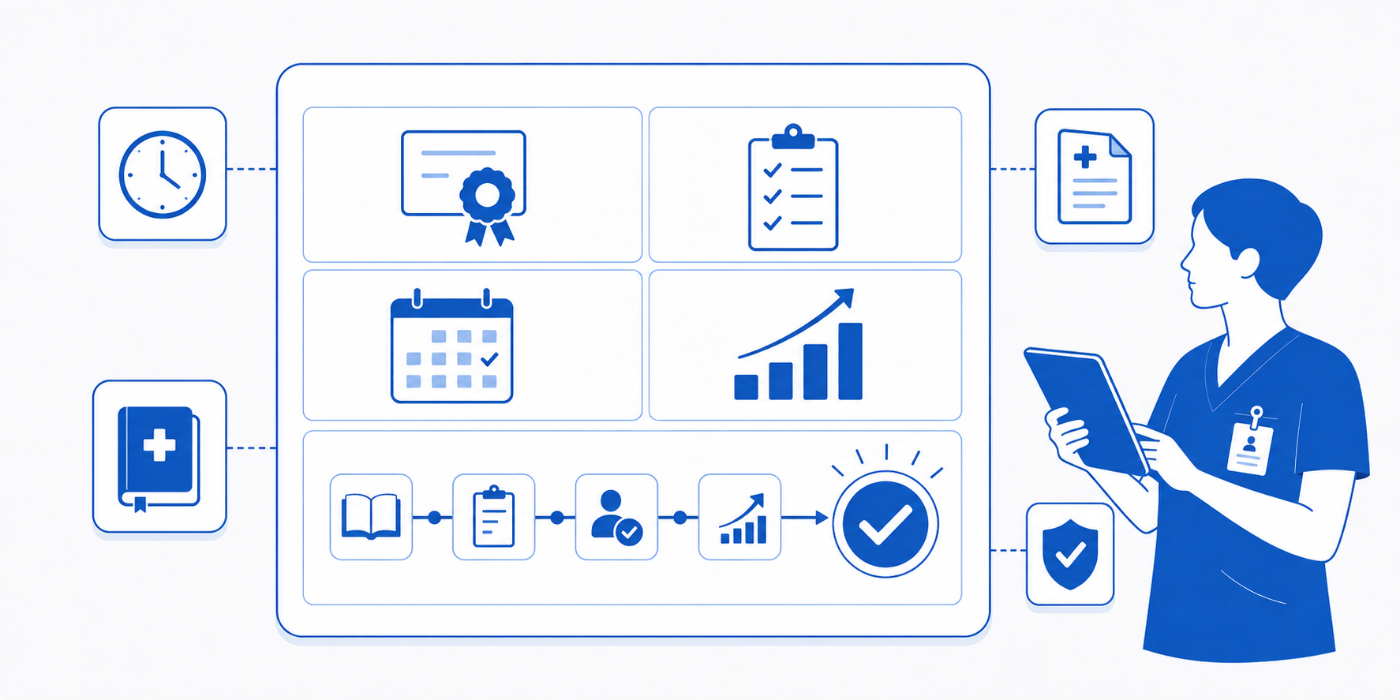
The fastest way to lose confidence before a medical scribe certification exam is to study everything with the same intensity. Strong candidates build an exam map first. That map separates high-frequency skills from lower-priority review, so every hour has a job. Start with the core domains: medical terminology, anatomy language, visit flow, HPI documentation, ROS and physical exam wording, assessment and plan structure, EMR navigation, HIPAA, documentation compliance, and common clinical abbreviations. You can support that map with top medical scribe terms, EMR charting terms, HIPAA terms for scribes, and a clear 30-day ACMSO certification study schedule.
Your goal is to know exactly what each question is trying to test. A question about “denies chest pain” may be testing pertinent negatives, not cardiology knowledge. A question about a provider saying “likely viral URI” may be testing whether you confuse impressions with confirmed diagnoses. A question about patient portal communication may be testing privacy judgment, not customer service. That is why your exam map should connect content knowledge with workplace behavior. Pair documentation compliance guidance, clinical documentation accuracy insights, patient privacy essentials, and medical scribe career expectations so your studying mirrors the real job.
A confident exam plan also needs a scoring strategy. Divide your study time into four blocks: knowledge, application, speed, and correction. Knowledge means definitions and terms. Application means turning information into chart decisions. Speed means answering without rereading every option three times. Correction means reviewing every missed question until you can explain the mistake. Students often collect notes but never build correction loops. That is where confidence breaks. Use proven certification passing strategies, medical scribe job interview prep, and real-time documentation impact insights to turn studying into performance.
2. Master Documentation Accuracy, Medical Terminology, and EMR Logic Like a Working Scribe
Medical scribe certification confidence comes from pattern recognition. You should be able to hear a clinical clue and know where it belongs. “Three days of productive cough” belongs in the HPI. “Lungs clear to auscultation” belongs in the physical exam. “Start azithromycin if symptoms worsen” belongs in the plan. “Denies shortness of breath” may be a pertinent negative depending on the complaint. The exam rewards candidates who understand these boundaries. Strengthen them with medical terminology mastery, EMR charting vocabulary, clinical documentation accuracy reporting, and documentation compliance standards.
A powerful study method is the “section test.” Take any practice scenario and label every detail as HPI, ROS, physical exam, assessment, plan, PMH, medication, allergy, social history, or follow-up. This exposes weak areas fast. Many candidates know definitions but freeze when a question asks where a detail should go. The section test trains judgment. It also helps you avoid dangerous charting habits: repeating the same fact in multiple places, documenting a symptom as a diagnosis, adding language the provider never said, or leaving follow-up instructions vague. Review specialty-specific documentation templates, top scribe documentation terms, EMR/EHR platform knowledge, and EMR shortcuts for productivity.
Medical terminology should be studied in clinical clusters, not alphabetical lists. Build clusters around common complaints: chest pain, abdominal pain, headache, shortness of breath, dizziness, rash, back pain, fever, injury, and medication refill. For each cluster, learn common terms, common negatives, likely exam findings, and plan language. This prepares you for scenario-based questions because the exam may present a note fragment rather than a clean definition prompt. Use ICD-10 terminology support, CPT code explanations, patient intake procedure definitions, and medical billing terms for admin context.
EMR logic matters because medical scribing is workflow work. You need to understand how clinical information moves from intake to encounter note to orders to after-visit instructions. When candidates ignore workflow, they make exam mistakes that feel small but reveal weak professional judgment. For example, a question may ask what a scribe should do when a provider’s statement is unclear. The safest answer usually involves clarification, not guessing. Pair resolving common EMR issues, patient record update training, healthcare portal terms, and medical scribes and telemedicine into your review.
3. Practice With Exam-Style Scenarios Instead of Passive Notes
Passive studying creates false confidence. You can read a HIPAA definition ten times and still miss a question that asks which action protects privacy during a busy telehealth session. You can memorize “HPI” and still fail to build one from a messy patient story. Scenario practice forces you to retrieve, sort, and apply information. Start with short clinical prompts. Ask yourself: What is the chief complaint? Which details are clinically relevant? Which details are missing? What should be clarified? What cannot be assumed? Support this practice with HIPAA compliance for scribes, telehealth administration preparation, virtual patient management, and medical scribe telehealth trends.
Use a three-pass practice method. On the first pass, answer the question without notes. On the second pass, explain why your answer is correct. On the third pass, explain why the other options are weaker. The third pass is where scores improve because exams often include tempting choices. A tempting choice may be clinically related but placed in the wrong section. Another may sound professional but violate privacy. Another may be too broad, too late, or outside the scribe’s role. Reviewing distractors sharpens judgment. Combine first-try exam strategies, ACMSO certification study planning, legal responsibilities for medical admins, and risk management strategies.
Your missed-question log should be simple and brutal. Create four columns: missed concept, reason missed, corrected rule, and next drill. “I forgot the term” is different from “I knew the term but chose the wrong section.” “I rushed” is different from “I overthought the provider’s wording.” Candidates who lump all mistakes together keep repeating them. Candidates who classify mistakes build control. Use time management for medical admin professionals, scheduling software mastery, effective patient communication terms, and de-escalation techniques if your weak areas include workflow, communication, or patient-facing judgment.
The best practice questions feel uncomfortable at first. They include incomplete information, time pressure, overlapping symptoms, privacy decisions, and unclear provider language. That discomfort is useful because real scribing rarely feels perfectly organized. If every practice session feels easy, you may be rehearsing recognition instead of readiness. Rotate between documentation scenarios, terminology drills, compliance decisions, and EMR placement tasks. Pull job-context insight from medical scribe roles in emergency departments, remote medical scribe opportunities, top remote scribe employers, and top hospitals hiring medical scribes.
4. Use a Confidence System for the Final 7 Days
The final week should narrow your focus. This is where many candidates damage their own confidence by opening too many resources, switching strategies, and trying to relearn every topic. A stronger approach is controlled review. Spend the final seven days on missed-question patterns, high-yield definitions, documentation section placement, HIPAA judgment, and timed practice. Avoid random browsing. Use your own mistake log, then reinforce weak areas with ACMSO certification exam scheduling, certification passing strategies, medical scribe certification courses, and medical scribe careers with certification.
Use a daily final-week structure. Day 7: take a timed mixed set. Day 6: repair terminology and abbreviations. Day 5: repair documentation sections. Day 4: repair HIPAA and compliance. Day 3: repair EMR and workflow. Day 2: complete a lighter timed set and review only errors. Day 1: do short recall, prepare logistics, and sleep. The goal is to arrive calm, not overloaded. Confidence rises when your routine is predictable. Use HIPAA updates, patient privacy communication essentials, healthcare CRM terms, and front desk operations terms for quick workflow reinforcement.
Your test-day pacing should be decided before the exam starts. Give yourself permission to skip and return. Easy questions should be answered cleanly. Medium questions deserve careful reading. Hard questions should be marked, reduced to two options, and revisited. The worst pacing mistake is spending too long proving one difficult question while sacrificing several questions you could answer correctly. When you see a scenario, identify the tested domain before reading every answer choice. Is it a documentation placement question, a privacy question, a terminology question, or a role-boundary question? Reinforce that skill with medical scribe documentation compliance, medical scribe efficiency innovations, medical administration technology trends, and AI medical scribe tools awareness.
A confidence system also includes a reset script. When anxiety spikes, use a short routine: breathe, reread the last sentence of the question, identify the domain, eliminate unsafe options, choose the best supported answer. Medical scribe exams often reward the safest, most accurate, most role-appropriate answer. That means you should avoid choices that guess, over-document, disclose information casually, diagnose without provider confirmation, or change the meaning of the encounter. Keep your final review grounded in compliance documentation standards, clinical data accuracy, patient care coordination, and real-time scribe impact.

5. Avoid the Mistakes That Cost Prepared Candidates Easy Marks
Prepared candidates often lose marks through sloppy habits rather than lack of intelligence. The first major mistake is confusing familiarity with mastery. If you recognize a term but cannot use it in a note, it is not exam-ready. If you know HIPAA as a concept but cannot choose the safest action in a hallway, portal, phone, or telehealth scenario, it is not exam-ready. If you understand EMRs generally but cannot decide where a piece of information belongs, it is not exam-ready. Repair these gaps with HIPAA terms for medical scribes, EMR charting terms, patient portal terms, and telehealth platform definitions.
The second mistake is ignoring role boundaries. A scribe documents; the provider evaluates, diagnoses, orders, and makes clinical decisions. Exam questions may test whether you understand that boundary. A scribe can clarify unclear dictation, document what was said, and support workflow within policy. A scribe should not independently interpret symptoms, add diagnoses, give medical advice, or alter provider intent. This boundary protects patients, providers, and the scribe. Review legal responsibilities for CMAAs, risk management strategies, handling patient complaints professionally, and active listening techniques to strengthen role-safe judgment.
The third mistake is studying without timed correction. Timed practice alone can make you faster at repeating errors. Correction without timing can make you accurate but slow. You need both. After each timed set, mark each wrong answer by cause: term gap, section confusion, compliance risk, careless reading, overthinking, or time pressure. Then assign one repair drill. For example, if you missed three questions about assessment versus plan, write five mini-scenarios and label the assessment and plan separately. Use time management mastery, interactive study scheduling, medical scribe interview prep, and building a standout CMAA resume for broader readiness.
The fourth mistake is underestimating plain-language accuracy. Medical scribes work with complex information, but the best note is often clear, specific, and defensible. Avoid vague phrases when a detail matters. “Pain started yesterday after lifting a box” is stronger than “pain recently.” “Follow up in two weeks if symptoms persist” is stronger than “follow up later.” The exam may reward the answer that preserves clarity and timing. Build that habit with effective patient communication examples, empathy in healthcare administration, patient communication apps and workflows, and appointment scheduling best practices.
The final mistake is treating the exam as the finish line. Certification should prepare you for the first weeks on the job, where speed, privacy, clarity, and provider preference matter every day. When you study with the workplace in mind, exam choices become easier. You begin to ask better questions: Which answer protects patient information? Which answer preserves provider intent? Which answer creates the most accurate chart? Which answer stays within scope? That mindset connects your exam prep with medical scribe job growth, annual scribe employment trends, salary analysis for certified scribes, and career progression data.
6. FAQs About Medical Scribe Certification Exam Prep
-
Most candidates benefit from a structured 30-day plan if they already have some healthcare vocabulary exposure. If you are new to medical terminology, EMR concepts, and documentation sections, give yourself more time and use a daily rhythm: terminology review, scenario practice, timed questions, and correction. A strong plan can follow an interactive ACMSO certification schedule, then reinforce weak areas with medical terminology tutorials, top scribe terms, and first-try passing strategies.
-
Start with documentation structure because it gives every other topic a place to live. Learn HPI, ROS, physical exam, assessment, plan, history, medications, allergies, and follow-up. Then add terminology, HIPAA, EMR workflows, and clinical abbreviations. Candidates who study terminology before chart structure often know words but struggle to use them. Build the base with EMR charting terms, medical documentation standards, clinical documentation accuracy insights, and specialty documentation templates.
-
Second-guessing usually comes from unclear decision rules. Before looking at answers, identify what the question is testing: terminology, section placement, privacy, role boundaries, EMR workflow, or patient communication. Then eliminate choices that are unsafe, outside scope, vague, or unsupported by the scenario. This method turns anxiety into process. Strengthen it with HIPAA compliance for scribes, legal responsibility guidance, risk management training, and patient privacy communication essentials.
-
Flashcards help with recognition, but they rarely build full exam readiness by themselves. You also need scenario-based application, documentation section drills, timed question sets, and missed-answer correction. A better method is to learn terms inside clinical complaints, then practice placing those terms into chart sections. Pair flashcards with medical terminology mastery tools, ICD-10 reference support, CPT coding explanations, and patient intake procedures.
-
Do not only read the correct answer. Write why you missed it. Label the mistake as a terminology gap, documentation placement error, compliance issue, scope problem, careless reading, or timing issue. Then create one small drill to repair that exact weakness. This turns every missed question into a score improvement. Use interactive exam study planning, time management mastery, EMR issue resolution, and patient record update training.
-
Certification can help you present yourself as a more prepared candidate because it signals structured training in terminology, documentation, privacy, and workflow. Employers still care about accuracy, adaptability, professionalism, and provider trust, so use certification as a starting point for job readiness. After passing, connect your exam skills with medical scribe career paths, medical scribe hiring trends, top hospitals hiring scribes, and medical scribe job interview preparation.
