

The Ultimate Guide to Getting Your Medical Scribe Certification in Bangladesh: All You Need to Know in 2026-2027
Bangladesh is becoming a serious talent base for healthcare documentation, remote clinical support, offshore medical teams, and English-language administrative work. For students, doctors preparing for foreign exams, allied health graduates, and career changers, medical scribing can create a practical bridge into global healthcare operations when the training is structured around real documentation accuracy, EMR confidence, clinical terminology, privacy discipline, and interview-ready workflow judgment.
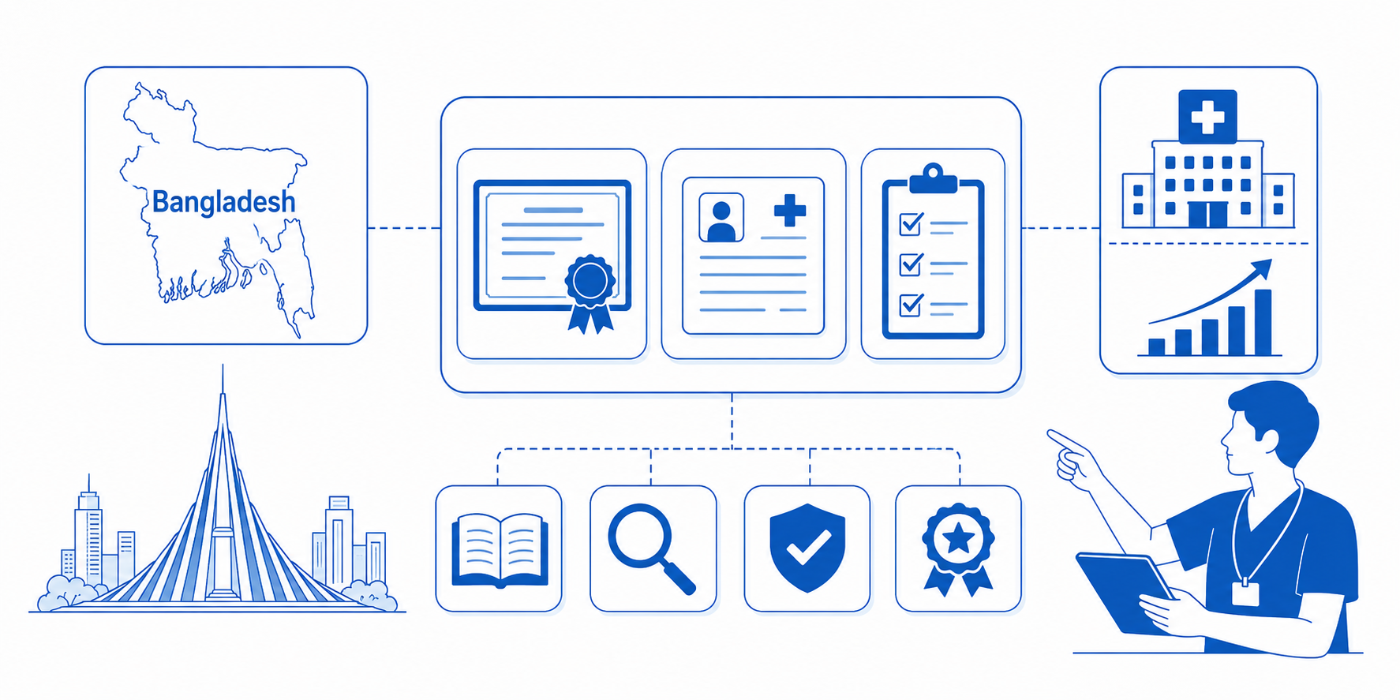
1. Why Medical Scribe Certification Matters in Bangladesh in 2026-2027
A medical scribe certification in Bangladesh should be treated as a professional proof system: it tells employers that you can understand clinical language, follow provider logic, document encounters cleanly, protect patient information, and work inside digital healthcare systems with discipline. The strongest candidates build their base through medical terminology mastery for scribes, accurate clinical documentation terms, EMR and charting terminology, HIPAA-style privacy discipline, and realistic medical scribe exam preparation.
The pain point for many Bangladesh-based candidates is simple: they study medical words, then freeze when those words appear inside a rushed patient story. A chest pain visit may include history, risk factors, physical exam findings, differential impressions, orders, counseling, follow-up, and billing-relevant specificity. Certification preparation helps you turn that pressure into a repeatable process by using documentation template libraries, ICD-10 code awareness, CPT code basics, voice recognition tools, and EMR platform familiarity.
For Bangladesh, the most valuable certification path is the one that prepares you for both local healthcare documentation and international remote work. That means your study plan should cover live encounter listening, note structure, provider abbreviations, privacy expectations, specialty vocabulary, scheduling context, patient communication, and documentation cleanup. ACMSO resources such as realistic medical scribe exam questions, medical scribe certification FAQs, top scribe training courses, international scribe employers, and scribe interview preparation help you build that wider job-readiness layer.
2. The Best Certification Path for Bangladesh-Based Students, Doctors, and Career Changers
Start by deciding which kind of medical scribe role you want. A Bangladesh-based MBBS graduate preparing for overseas exams may use scribing to build clinical exposure, while an English-fluent graduate may target remote documentation work, and an allied health professional may use certification to move into healthcare operations. Each route needs the same foundation: medical terminology, clinical documentation, EMR fluency, HIPAA privacy awareness, and exam-focused preparation.
A strong pathway begins with the “language layer.” You should know common symptoms, diseases, medications, anatomy, procedures, abbreviations, and provider phrases before you attempt complex note writing. Use complex medical term memorization, medical scribe term drills, ICD-10 reference practice, CPT code awareness, and specialty cheat sheets to build pattern recognition.
The second layer is “encounter logic.” Beginners often write everything they hear, then produce bloated notes that bury the provider’s reasoning. A certified scribe should separate patient-reported symptoms from provider findings, identify relevant negatives, capture the plan clearly, and avoid inserting assumptions. The best practice stack combines realistic scribe exam questions, scribe certification FAQs, EMR shortcuts, patient record update training, and documentation templates.
The third layer is employer readiness. Bangladesh candidates competing for remote roles must show disciplined English comprehension, clean home-office privacy habits, dependable internet, headset quality, time-zone flexibility, and the ability to follow account-specific rules. You can prepare by studying international scribe employers, healthcare recruiters posting scribe roles, top medical scribe companies, remote-friendly telemedicine workflows, and scribe interview questions.
3. What You Should Study Before Taking a Medical Scribe Certification Exam
Your exam preparation should move from simple recall to chart judgment. Memorizing terms helps, yet certification success comes from applying those terms inside messy patient encounters. A knee pain visit, for example, needs injury mechanism, laterality, duration, exam findings, imaging review, treatment plan, return precautions, and follow-up. That kind of precision comes from orthopedic scribe exposure, primary care documentation practice, urgent care workflow study, ED documentation awareness, and clinical documentation terms.
Build your study schedule around five blocks. First, master core anatomy and medical terms. Second, study note structure: chief complaint, HPI, ROS, physical exam, assessment, plan, orders, and follow-up. Third, learn EMR language through EMR charting terms, EMR platform guides, EMR integration tools, common EMR issue resolution, and patient record compliance training.
Fourth, study privacy and professional boundaries. Remote medical scribing requires secure behavior every day: private workspace, locked screen, limited access, careful file handling, verified communication channels, and zero casual sharing of patient details. Use HIPAA compliance for scribes, patient privacy communication essentials, HIPAA terms for scribes, legal responsibility guides, and risk management strategies to make privacy part of your daily workflow.
Fifth, practice under pressure. Read a case, create a clean note, compare your version to a template, fix missing details, then explain why each section belongs where it does. That process is far stronger than passive reading. Use a 30-day study schedule, medical scribe exam strategy, first-try certification tactics, realistic practice questions, and certification FAQs.
4. How to Build a Bangladesh-Friendly Study Plan That Actually Leads to Work
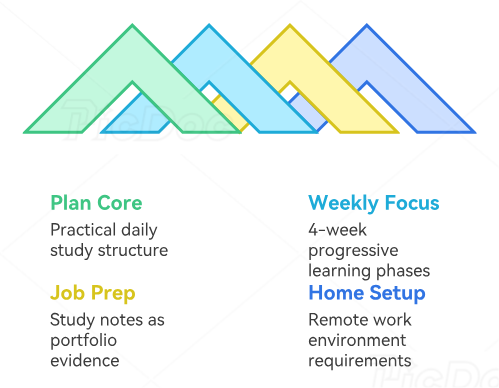
A Bangladesh-friendly study plan should respect the realities of the market. Many candidates study while completing university, preparing for medical licensing exams, working part-time, or managing inconsistent schedules. The winning plan is practical: one hour of terminology, one hour of note structure, one short practice note, one privacy or EMR concept, and one weekly interview drill. ACMSO’s 30-day certification schedule, exam confidence guide, medical terminology tools, EMR terms guide, and documentation practice resources make this structure easier to maintain.
Week one should be vocabulary-heavy. Learn anatomy, common symptoms, medications, abbreviations, and specialty phrases. Week two should focus on note sections and encounter flow. Week three should push you into realistic charts, privacy rules, and EMR workflows. Week four should combine timed practice, mock interviews, resume positioning, and employer research. Pair this plan with top scribe training courses, practice exam questions, ACMSO certification tips, scribe career opportunity guides, and international employer directories.
The biggest mistake is waiting until after certification to think about jobs. Your study notes should become your portfolio evidence. Create sample notes from common scenarios: sore throat, chest pain, diabetes follow-up, ankle injury, rash, headache, pregnancy visit, pediatric fever, and post-op follow-up. Use primary care networks, pediatric scribe training, orthopedic documentation exposure, dermatology and ophthalmology practice guides, and urgent care employer research to understand how specialties differ.
Your home setup matters too. Remote employers may care about your privacy environment as much as your terminology score. You should have a quiet room, reliable internet, a professional headset, secure passwords, updated software, and a routine for handling interruptions. Study telehealth platform terms, healthcare portal terms, secure patient scheduling tools, collaboration tools for medical teams, and virtual patient management to understand the wider remote-work ecosystem.
5. How to Turn Certification Into a Medical Scribe Job From Bangladesh
After certification, your job search should be specific. Avoid sending the same resume everywhere. Build one version for remote scribe roles, one for clinical documentation assistant roles, one for healthcare admin roles, and one for medical office support roles. Each version should highlight terminology, EMR familiarity, privacy training, typing speed, English comprehension, and sample documentation practice. Use medical scribe companies, international offshore employers, healthcare recruiters, hospital hiring guides, and pre-med scribe pipelines.
Your resume should contain proof, not empty claims. “Trained in HPI documentation, ROS capture, physical exam organization, assessment-plan formatting, HIPAA-style privacy, and EMR terminology” carries more value than “hardworking medical scribe.” Add sample case categories, specialties studied, tools reviewed, and practice volume. For job preparation, combine building a standout resume, scribe interview prep, top interview questions, real-life exam experiences, and career trend reports.
During interviews, expect scenario questions. An interviewer may ask what you would do if a provider speaks too quickly, if a patient mentions a symptom late in the visit, if the assessment conflicts with the HPI, if the audio drops, or if you notice a privacy concern. Strong answers should show calm process: clarify, document only supported information, flag uncertainty, follow account policy, and protect patient data. Practice with de-escalation techniques, active listening techniques, patient communication examples, handling difficult conversations, and patient privacy communication.
Long-term, certification can open more than one lane. Some Bangladesh-based scribes move toward clinical documentation improvement, medical coding, healthcare administration, telehealth coordination, patient access, research coordination, or physician-assistant style support roles depending on education and employer needs. Explore clinical research scribe-to-CRC tracks, medical billing terms, insurance verification basics, telehealth administration, and predictive analytics in medical administration.
6. FAQs About Medical Scribe Certification in Bangladesh in 2026-2027
-
Yes. Medical scribe certification can be useful for Bangladeshi students who want structured exposure to healthcare documentation, medical terminology, remote clinical support, and global healthcare workflows. The strongest advantage comes when certification is paired with medical terminology mastery, clinical documentation terms, EMR charting basics, HIPAA-style privacy training, and realistic exam practice.
-
Many remote healthcare documentation roles are built around secure digital workflows, English comprehension, privacy discipline, and time-zone reliability. Bangladesh-based candidates should study international scribe employers, medical scribe staffing agencies, telemedicine scribe workflows, healthcare recruiter directories, and scribe interview preparation before applying.
-
Start with terminology, then move into note structure, then EMR workflow, then privacy, then timed case practice. This order prevents the common beginner problem of recognizing words while still failing to produce a clean chart. Use medical term memorization, documentation terms, EMR terms, patient intake procedures, and practice questions.
-
Medical school experience can help, although many scribe candidates begin from life sciences, allied health, nursing, pharmacy, English, healthcare administration, or general graduate backgrounds. Employers usually care about accuracy, training, privacy discipline, listening skills, and documentation judgment. Build proof through scribe training courses, exam strategies, 30-day study planning, certification FAQs, and interview preparation.
-
Primary care, urgent care, emergency medicine, pediatrics, orthopedics, dermatology, and telehealth are strong learning environments because they expose scribes to repeatable visit patterns. Beginners should explore primary care scribe networks, urgent care brands, emergency departments, orthopedic groups, and dermatology and ophthalmology practices.
-
Create a focused resume, prepare two or three clean sample notes, practice scenario-based interview answers, and show that you understand privacy, EMR language, and specialty documentation. Your strongest proof stack includes resume building, job interview prep, medical scribe interview questions, hospital hiring opportunities, and future scribing trends.
