

Interactive Map: Best Cities & States for CMAA Careers
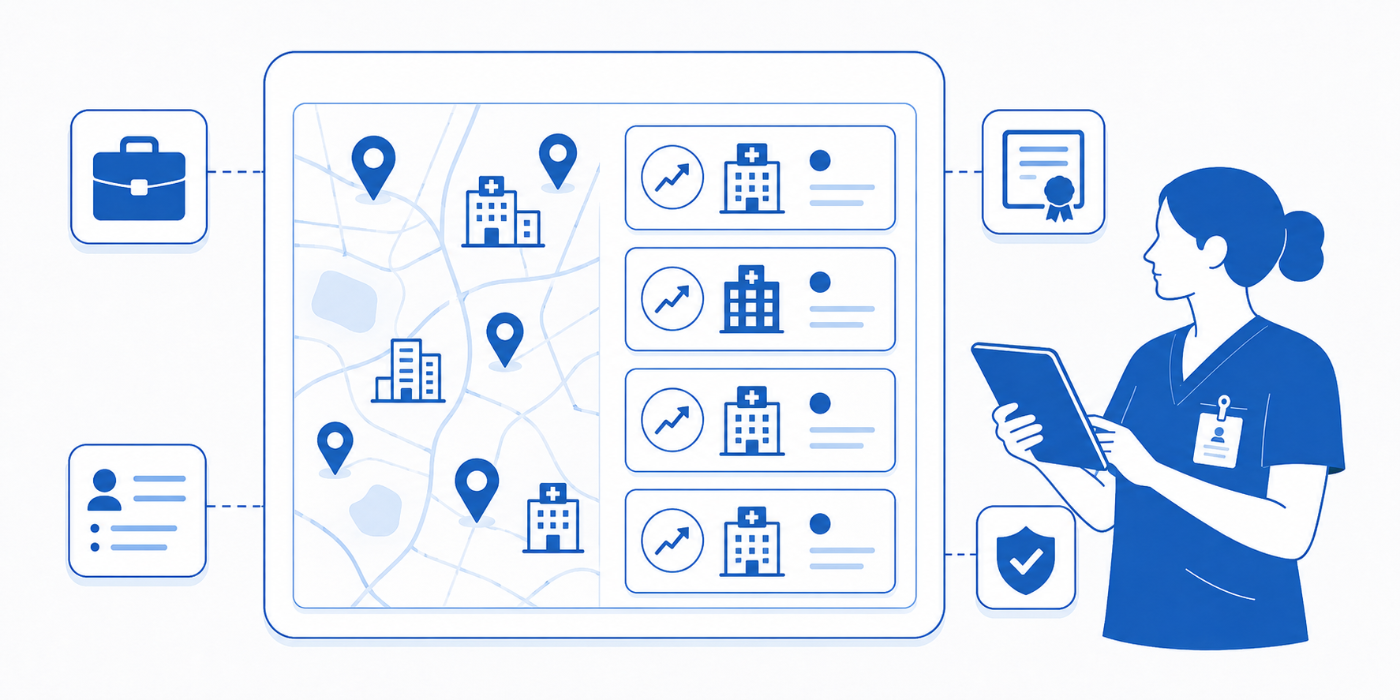
Choosing where to build a CMAA career should feel like a map, not a guessing game. The strongest locations combine healthcare employer density, patient-volume growth, stable front desk demand, telehealth adoption, specialty clinic expansion, and real promotion pathways. Nationally, medical secretaries and administrative assistants are tracked as a healthcare-specific administrative occupation, with O*NET listing 850,000 employees in 2024, a $44,640 median annual wage, and projected growth through 2034.
1. How to Read the CMAA Career Map Before Choosing a City or State
The best CMAA career location is the place where your skills match the local healthcare ecosystem. A large hospital city may reward candidates who understand front desk operations, patient intake procedures, HIPAA privacy terms, and insurance verification. A fast-growing suburban market may value scheduling accuracy, patient communication, records updates, and referral coordination even more.
CMAA candidates should read the map through five filters: employer density, pay potential, commute reality, career ladder, and specialty fit. BLS describes medical secretaries and administrative assistants as workers who need familiarity with medical terminology, codes, medical records, and hospital or laboratory procedures, which explains why stronger training matters in competitive cities. A candidate who can show proof in medical billing terms, appointment scheduling, patient communication, and EMR integration tools has a better chance of turning location into leverage.
The pain point many candidates miss is cost-adjusted opportunity. A high-wage city can still feel weak if rent, transportation, parking, and long commute time erase the advantage. A smaller city can become powerful when it offers hospital systems, urgent care growth, specialty clinics, and a realistic promotion ladder. That is why this map favors practical career strength: where CMAAs can find work, grow skill depth, protect patient flow, and move into roles tied to medical administration workforce trends, CMAA career progression, salary growth, and job security.
2. The Best States for CMAA Careers Usually Combine Healthcare Volume With Practical Mobility
Strong CMAA states tend to have a mix of hospitals, urgent care networks, specialty practices, community clinics, telehealth employers, and aging-population healthcare demand. Texas, Florida, California, New York, Pennsylvania, North Carolina, Georgia, Arizona, Washington, Massachusetts, Tennessee, and Ohio all deserve attention because candidates can find multiple employer types instead of being locked into one narrow path. To compete in these markets, a candidate should build confidence in medical admin technology, healthcare CRM terms, telehealth platform terms, and patient portal workflows.
The best state for one candidate may be a poor fit for another. A new graduate may need entry-level openings, supportive supervisors, and manageable commuting. A certified CMAA with experience may prioritize specialty clinics, lead scheduler roles, revenue cycle exposure, or higher-paying hospital departments. Someone building a remote pathway should study telehealth administration, virtual patient management, secure scheduling tools, and patient communication apps.
Candidates should avoid judging a state only by headline wages. A better map score includes rent, transportation, parking, public transit, shift options, health system concentration, and promotion routes. The strongest locations help CMAAs build skills that transfer: intake, scheduling, insurance, records, privacy, patient communication, and EMR coordination. This is where CMAA salary reporting, salary comparison tools, job market reporting, and career progression data become useful planning tools.
3. The Best Cities for CMAA Careers Are Usually Healthcare Hubs With Many Employer Types
A strong CMAA city gives candidates options. Hospitals can teach volume and structure. Specialty clinics can teach deeper terminology. Urgent care can teach speed. Primary care can teach continuity. Telehealth employers can teach digital workflow. Community health centers can teach patient barriers and coordination. BLS notes that healthcare growth is expected to increase demand for medical secretaries because healthcare facilities need administrative support to run smoothly. Candidates who prepare through patient intake procedures, front desk operations, appointment scheduling, and insurance verification can move across these settings with less friction.
Large cities create more openings, but they also create more competition. A candidate in New York, Los Angeles, Boston, Seattle, Chicago, or Miami should expect employers to screen for professionalism, speed, privacy discipline, and technology comfort. A candidate in Phoenix, Charlotte, Nashville, Austin, Columbus, or Tampa may find fast-growing healthcare markets where practical readiness stands out quickly. In either case, skills such as EMR troubleshooting, patient record updates, time management, and medical office organization make the location more valuable.
The biggest city-level mistake is chasing only the famous medical hub. A smaller metro with several hospital systems, lower commute stress, and good clinic networks may produce better day-to-day career growth. CMAAs should compare job postings by task language: scheduling, prior authorization, check-in, check-out, referrals, medical records, call center, patient access, billing support, care coordination, and portal communication. Then match weak areas to denial management, claims management, CPT code basics, and ICD-10 reference knowledge.
4. A CMAA Map Should Separate Entry-Level Cities From Advancement Cities
Entry-level cities are strong when they give new CMAAs enough openings to learn the job without impossible competition. These markets usually have urgent care groups, primary care networks, community clinics, multi-provider offices, and patient access departments that need reliable administrative support. Candidates should lead with practical readiness: patient intake, scheduling terms, patient communication examples, and HIPAA privacy basics.
Advancement cities are strong when they offer deeper ladders. A CMAA may move from front desk to lead scheduler, referral coordinator, patient access specialist, insurance verification specialist, billing support, office supervisor, telehealth coordinator, or medical office manager. Those moves require proof beyond friendliness. The candidate needs evidence of accuracy, escalation judgment, software confidence, and workflow improvement. Useful preparation includes building a standout CMAA resume, interview preparation, salary negotiation, and professional development resources.
The strongest long-term plan may involve starting in a practical entry-level market and later moving into a higher-specialty or higher-pay market. A candidate can begin in primary care, urgent care, or community health, then pivot into orthopedics, cardiology, dermatology, ophthalmology, pediatrics, OB/GYN, hospital patient access, or telehealth operations. That path becomes easier with specialty documentation awareness, medical terminology mastery, medical coding system updates, and certification renewal terms.

5. How CMAAs Can Use the Map to Make Smarter Career Moves
Start with a personal scorecard. Give each city or state a score from 1 to 5 for job volume, pay, cost of living, commute, employer variety, remote options, specialty access, and promotion potential. Then compare that score against your current skill gaps. A candidate weak in insurance should prioritize insurance verification, claims management, denial management, and billing terminology before applying to revenue-heavy roles.
Next, read local job descriptions like a labor-market report. Count how often employers mention EMR, scheduling, prior authorization, insurance verification, referrals, phone triage, patient access, medical records, billing, HIPAA, bilingual skills, or telehealth. Those repeated terms show the city’s real demand. Then tailor your resume around proof. Use EMR shortcuts, patient record compliance, communication apps, and collaboration tools to show modern readiness.
Finally, treat certification as a mobility tool. Certification helps most when it is paired with location strategy, interview confidence, and practical skills. A certified candidate who can explain how they protect privacy, reduce scheduling confusion, verify coverage, update records accurately, and calm frustrated patients will sound stronger in any city. Use ACMSO exam study planning, medical terms memorization, first-try certification strategies, and CMAA job security data to turn the map into action.
6. FAQs: Best Cities and States for CMAA Careers
-
Strong options often include Texas, Florida, California, New York, Pennsylvania, North Carolina, Georgia, Arizona, Washington, Massachusetts, Tennessee, and Ohio because they offer multiple healthcare environments. Candidates should compare CMAA salary data, job market demand, career progression, and certification impact before choosing.
-
Cities with hospital systems, urgent care chains, primary care networks, and outpatient growth can be strong for entry-level CMAAs. Phoenix, Orlando, Tampa, Charlotte, Columbus, San Antonio, Las Vegas, and Atlanta can be practical markets when candidates prepare for front desk operations, patient intake, appointment scheduling, and patient communication.
-
Salary should be compared with rent, commute, parking, employer variety, benefits, shift stability, and advancement potential. A city with a lower headline wage can still be stronger when it offers good training, shorter commute time, and faster promotion. Use salary comparison reporting, salary negotiation guidance, career progression rates, and resume strategy.
-
Competitive cities reward speed, privacy discipline, software confidence, calm patient communication, and accurate documentation support. Candidates should strengthen HIPAA terms, EMR integration, patient record updates, and time management.
-
Remote and telehealth roles can come from many markets, but tech-forward healthcare regions may offer more hybrid workflows. Candidates should prepare for telehealth administration, telehealth platform terms, virtual patient management, and patient portal use cases.
-
Pick five target cities or states, review job postings, list repeated skills, compare salary with cost of living, and build a resume that mirrors the local demand. Then strengthen weak areas through interview preparation, medical office organization, risk management, and medical admin technology.
