

Medical Scribe Career After AI: Reddit Predictions, Ambient Documentation Trends & the Skills That Transfer Into Better Healthcare Roles
Medical scribes are watching artificial intelligence take over responsibilities that once justified entire documentation teams. Across Reddit, former and current scribes describe layoffs, reduced shifts, reassignment, and growing pressure to correct AI-generated notes instead of writing them independently. Meanwhile, hospitals are adopting ambient documentation systems that promise faster chart completion and lower administrative costs.
For anyone entering medical scribing in 2026, the important questions concern which responsibilities are becoming automated, where human expertise remains valuable, and how existing clinical experience can support a transition into healthcare careers with stronger long-term prospects.
1. How AI Is Changing Medical Scribe Jobs in 2026: The Evidence Behind the Predictions
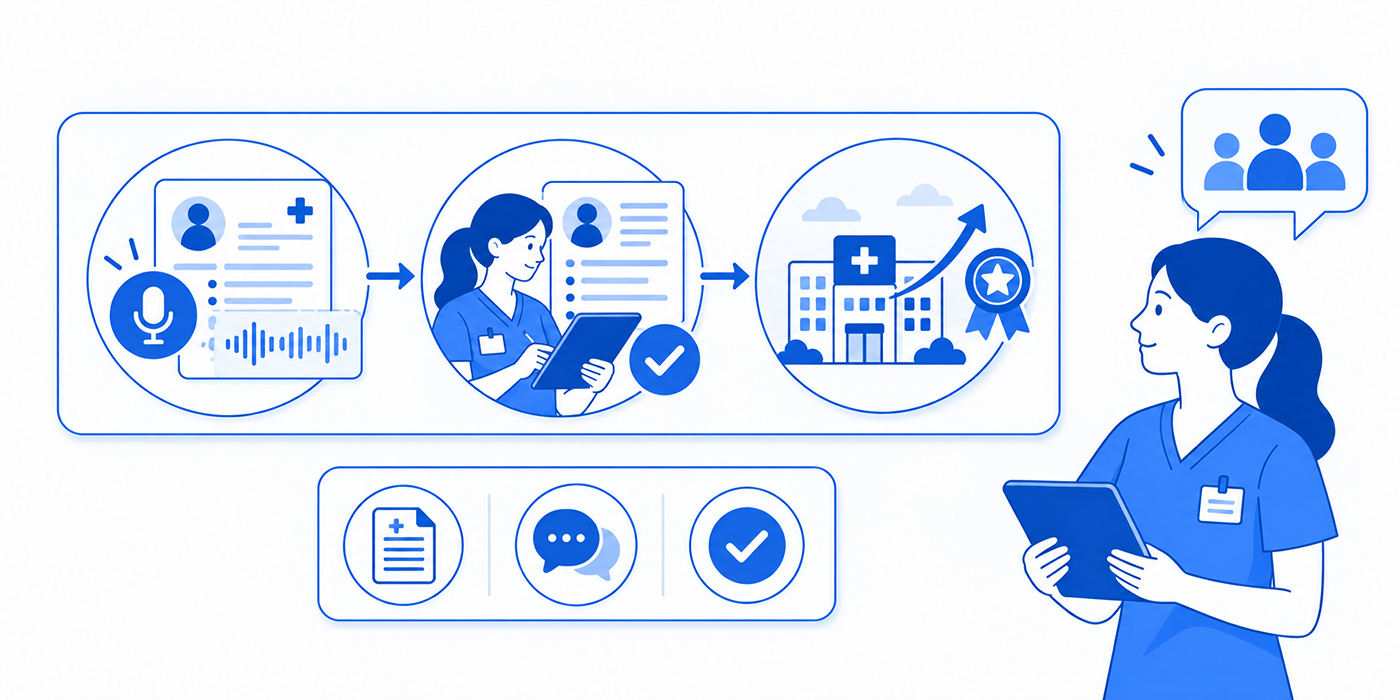
Ambient AI documentation systems capture clinical conversations, process relevant information, and generate draft encounter notes for clinician review. Products such as Microsoft Dragon Copilot, Abridge, and Nabla have accelerated the transition toward automated chart preparation.
The implications extend beyond AI replacing human medical scribes. Healthcare organizations are reassessing how they distribute documentation responsibilities, evaluate accuracy, and manage electronic health record workflows.
What the latest research reveals
The American Medical Association's 2026 physician survey found that 81% of respondents used AI professionally, compared with 38% in 2023. Specifically, 28% reported using AI for documentation involving billing codes, charts, or visit notes.
These figures demonstrate growing adoption while distinguishing broader professional AI use from dedicated ambient scribing.
An April 2026 JAMA study covering 8,581 clinicians across five academic medical centers found that AI scribe adoption was associated with approximately 16 fewer minutes of documentation time per eight scheduled patient-care hours.
Total EHR time decreased by approximately 13.4 minutes, while weekly patient volume increased by about 0.49 visits. After-hours EHR activity showed no statistically significant overall reduction.
The findings indicate measurable efficiency benefits without establishing that every practice can eliminate human medical scribe positions.
A separate 2026 note-quality study evaluated 356 AI-generated notes. Researchers found omissions in 18% and hallucinations in 11.5% of the evaluated notes. Approximately 94.7% were free of errors classified as significant, although some contained potentially serious inaccuracies.
These results explain why medical documentation accuracy, medical coding error recognition, and clinical compliance knowledge remain valuable.
Which responsibilities face the greatest automation pressure?
Routine note drafting, repetitive transcription, standardized histories, and template population are especially exposed.
Responsibilities requiring verification of clinical meaning, reconciliation of conflicting records, coordination between departments, or judgment about documentation deficiencies still demand human oversight.
However, the existence of these responsibilities does not guarantee that hospitals will retain dedicated scribes to perform them. Organizations may assign the work to clinicians, coding departments, documentation specialists, or existing EHR teams.
A scribe who understands only typing speed requirements faces a different employment outlook from someone who understands patient records management, healthcare software workflows, and secure clinical communication.
The strongest career strategy involves building skills that translate into independently recognizable healthcare qualifications and responsibilities.
Medical Scribe Career After AI: 30 Skills, Automation Risks & Career Transition Opportunities
| # | Current Scribe Skill | AI Exposure | Higher-Value Skill to Develop | Potential Career Direction |
|---|---|---|---|---|
| 1 | Routine transcription | High | Identify inaccurate terms and transcription omissions using clinical transcription knowledge | Clinical documentation QA |
| 2 | History of present illness drafting | High | Verify onset, duration, severity, and associated symptoms | Health records quality support |
| 3 | Review of systems entry | High | Distinguish patient-reported findings from unsupported negatives | Documentation quality reviewer |
| 4 | Physical examination transcription | High | Confirm findings were actually documented by the clinician | Clinical documentation support |
| 5 | Assessment note formatting | High | Distinguish diagnostic certainty from provisional impressions | Coding quality support |
| 6 | Plan documentation | Medium–high | Reconcile follow-up instructions, referrals, and pending tests | Care coordination support |
| 7 | Medication list review | Medium | Detect discrepancies and route them to authorized clinicians | Medication reconciliation support |
| 8 | Allergy documentation | Medium | Identify missing reactions and conflicting chart entries | Patient safety support |
| 9 | Problem list maintenance assistance | Medium–high | Identify duplication and outdated problems for provider review | EHR data quality |
| 10 | ICD-10-CM familiarity | Medium–high | Learn coding conventions and documentation requirements | Medical coding |
| 11 | CPT terminology familiarity | Medium–high | Study procedural coding, modifiers, and payer rules | Revenue cycle coding |
| 12 | EHR navigation | Medium | Understand practice management integration and workflow defects | EHR support specialist |
| 13 | Chart preparation | Medium–high | Reconcile historical information and outstanding documentation | Clinical information support |
| 14 | Physician communication | Lower | Develop escalation protocols and team coordination skills | Clinical operations coordinator |
| 15 | Patient interaction | Lower | Strengthen therapeutic communication and service recovery | Patient navigator |
| 16 | Specialty terminology | Medium | Learn specialty-specific clinical validation concepts | Specialty coding support |
| 17 | Patient confidentiality | Lower | Study privacy safeguards and access controls | Health information privacy support |
| 18 | Record discrepancy detection | Lower–medium | Develop formal documentation audit methods | Clinical documentation integrity pathway |
| 19 | High-volume documentation | High | Analyze bottlenecks and standardize safe workflows | Healthcare workflow analyst |
| 20 | Referral documentation | Medium | Learn referral completion and patient communication tracking | Referral coordinator |
| 21 | Follow-up scheduling | Medium–high | Resolve scheduling conflicts and escalation failures | Patient access coordinator |
| 22 | Clinical research exposure | Medium | Learn study protocols, GCP, and data integrity | Clinical research assistant |
| 23 | Documentation feedback | Lower–medium | Build calibration and error classification methods | AI documentation evaluator |
| 24 | Quality checking | Lower–medium | Track error rates and corrective actions | Healthcare quality improvement assistant |
| 25 | Patient portal navigation | Medium–high | Manage secure message workflows and routing | Ambulatory operations support |
| 26 | Clinical workflow observation | Lower | Map workflow steps and document inefficiencies | Health IT implementation support |
| 27 | Training new scribes | Medium | Develop competency assessments and training materials | Clinical documentation trainer |
| 28 | Encounter completion assistance | Medium | Learn encounter completeness checks | Revenue cycle operations |
| 29 | AI note correction | Medium | Evaluate omissions, hallucinations, and unsupported findings | Clinical AI quality support |
| 30 | Practice workflow support | Lower–medium | Measure turnaround times and service quality indicators | Healthcare operations analyst |
AI exposure classifications are directional assessments, not measured probabilities of job loss. Career transitions depend on education, experience, employer requirements, and applicable credentials.
2. What Reddit Medical Scribes Are Actually Reporting About AI Replacements
Reddit provides firsthand accounts of workplace changes that employment statistics may take longer to capture. These discussions illustrate different experiences across emergency departments, outpatient clinics, and large healthcare systems.
The posts are anecdotal and cannot establish national displacement rates, but they reveal specific operational decisions affecting individual workers.
The emergency department scribe whose position disappeared
In August 2026, a contributor to r/medicalscribe described losing a hospital-supported emergency department scribe position after organizational leadership favored AI documentation integration.
The poster explained that the hospital had previously shared scribe costs with an emergency physician group. When the arrangement was reconsidered, the hospital declined to continue its financial contribution.
This illustrates an important workforce risk: physicians can appreciate human scribe clinical support while organizational purchasing decisions still remove those positions.
Workers should monitor staffing announcements, contract changes, and whether their duties are being absorbed into healthcare automation workflows.
The experienced scribe becoming an AI fact-checker
A July 2025 Reddit contributor described completing a year with ScribeAmerica, earning positive physician feedback, and advancing into a training-related role before noticing increasing AI adoption.
The scribe reported that certain charting responsibilities disappeared, leaving more time spent checking and correcting AI-generated documentation.
The experience highlights an uncomfortable problem: strong medical scribe performance cannot fully protect a role when its core workflow changes.
However, detecting AI documentation problems can develop valuable expertise if it is formalized into an auditable skill.
Someone who identifies unsupported diagnoses, incorrect medication details, and missing clinical negatives can potentially pursue documentation accuracy and compliance roles.
The practical next step is to document error categories and corrective actions in aggregate, using organization-approved, de-identified quality data.
The premed who transitioned into patient care
An April 2025 Reddit discussion featured an emergency department scribe whose hospital planned to phase out human documentation staff.
A respondent described moving from scribing into a per-diem emergency department patient care assistant position with employer-provided training.
That pathway may appeal to students deciding between medical scribing and medical assisting.
Direct patient care can provide greater involvement with patients, but scope-of-practice requirements, supervision, and training vary considerably.
Premeds who primarily need meaningful clinical experience for medical school should evaluate these alternatives before investing heavily in a position threatened by automation.
Why some emergency departments still retain humans
A December 2025 Reddit discussion included a worker whose emergency physicians disliked AI-generated notes because irrelevant complaints were sometimes included, creating substantial correction work.
Other contributors in the same discussion reported actual displacement and transfers.
The contrast matters because individual departments differ in documentation complexity, clinician preferences, financial resources, and technology performance.
A role in emergency department scribing may face different pressures from ophthalmic scribe employment.
Still, specialty complexity alone provides limited job security. Organizations can change their documentation systems, workflows, and staffing models.
The recurring lesson across Reddit is that scribes benefit from developing transferable capabilities while they still have access to clinical environments.
3. The Human Skills That Remain Valuable When Ambient AI Writes the First Draft
AI-generated notes create a new category of work around validation, workflow integration, exception handling, and documentation quality.
These responsibilities offer transferable skills, although formal career opportunities depend on whether healthcare organizations hire dedicated specialists or distribute the work among existing professionals.
Skill 1: Clinical documentation integrity
Clinical documentation integrity involves ensuring that medical records accurately communicate the patient's condition, clinical reasoning, and care delivered.
A scribe can begin developing relevant knowledge by identifying mismatches between patient histories, assessments, and treatment plans.
For example, a generated note might describe a suspected condition as confirmed. Recognizing the distinction is relevant to medical coding errors and documentation compliance.
The scribe should flag discrepancies for the authorized clinician rather than independently determining diagnoses.
Clinical documentation integrity specialist positions frequently require additional clinical, coding, or health information management experience. Scribing alone generally does not meet every employer's eligibility requirements.
Skill 2: AI output quality assurance
An AI documentation reviewer needs to detect four distinct error categories:
Omissions: Clinically relevant information is missing.
Hallucinations: The note contains unsupported information.
Incorrect attribution: Statements are assigned to the wrong speaker or source.
Clinical contradiction: The note conflicts with documented findings or instructions.
A useful review system separates error frequency from error severity.
For example, a formatting mistake may inconvenience the clinician, while an incorrect allergy or unsupported medication instruction can create a substantial safety concern.
Expertise in medical transcription terminology, patient privacy safeguards, and health records management strengthens this capability.
Skill 3: EHR workflow and systems troubleshooting
Ambient AI tools must operate within existing EHR systems.
Problems can arise when generated documentation enters an incorrect field, fails to populate encounter sections, duplicates historical information, or creates unnecessary work for physicians.
Scribes familiar with practice management systems and electronic encounter forms can learn to recognize these failures.
An aspiring EHR analyst should understand clinical workflows, troubleshoot reproducible defects, document user requirements, and work with authorized IT teams.
Formal EHR analyst positions may require specialized training, employer-sponsored vendor credentials, technical experience, or a relevant degree.
Skill 4: Healthcare privacy and AI governance
AI documentation introduces questions about recording permissions, protected health information, vendor access, data storage, and organizational approval.
Under HIPAA, cloud vendors that create, receive, maintain, or transmit electronic protected health information on behalf of covered entities or business associates generally require appropriate business associate agreements.
Patient consent and recording obligations also depend on applicable law and organizational policy.
A scribe developing expertise in confidential healthcare communication, patient privacy communication, and secure healthcare messaging can establish a foundation for privacy or compliance support work.
Patient information should never be entered into unauthorized consumer AI tools for training, experimentation, or portfolio development.
Skill 5: Clinical coordination and judgment-based communication
AI documentation can produce a draft note, while actual patient care still involves coordination among clinicians, departments, and patients.
Documentation specialists who develop professional healthcare communication, patient interaction techniques, and team communication skills may become stronger candidates for patient access or coordination positions.
These responsibilities can involve identifying incomplete referrals, escalating unresolved messages, tracking follow-up arrangements, and correcting workflow breakdowns within authorized responsibilities.
The underlying skill is the ability to recognize when information requires action, identify the appropriate responsible professional, and verify that the workflow has progressed.
4. Better Healthcare Careers Medical Scribes Can Transition Into After AI
The strongest career options depend on whether a scribe wants continued clinical exposure, greater technical responsibility, structured professional advancement, or improved long-term compensation potential.
A job title alone cannot establish career progression. Required credentials, experience, regional demand, and organizational responsibilities determine actual opportunities.
Career Path 1: Clinical documentation integrity support
Best for: Scribes skilled at identifying clinical contradictions, missing details, and documentation deficiencies.
The progression may begin with documentation quality assistance, transition into health information or coding work, and eventually lead toward formal CDI responsibilities.
Learn medical coding error identification, medical compliance requirements, and structured health record management.
AHIMA's Certified Documentation Integrity Practitioner credential provides an established professional pathway. Its exam eligibility requirements and recommended experience should be reviewed carefully; many CDI employers prefer experienced nurses, coders, or health information professionals.
Career Path 2: Medical coding and revenue cycle management
Best for: Scribes who enjoy precise documentation, diagnosis classification, procedural terminology, and administrative healthcare systems.
Medical coders translate clinical documentation into standardized codes under applicable coding guidelines.
A practical foundation includes ICD-10-CM, CPT, HCPCS Level II, evaluation and management principles, and payer requirements.
The AAPC Certified Professional Coder credential is one recognized pathway. AHIMA also offers coding credentials with different requirements.
Experience with encounter documentation, coordination of benefits, and practice management software helps explain the broader revenue cycle.
AI is also changing coding workflows, making coding guideline interpretation, auditing, and compliance increasingly important areas of professional development.
Career Path 3: EHR support and clinical informatics operations
Best for: Scribes who understand why healthcare software frustrates users and how documentation tasks move between systems.
Entry-level clinical applications support, implementation coordination, and workflow support may provide routes toward more technical responsibilities.
Develop knowledge of healthcare automation tools, patient portal operations, and electronic medical record terminology.
A portfolio containing fictional workflow maps, testing scenarios, and documented process improvements can demonstrate analytical ability without exposing patient data.
Advanced clinical informatics positions may require formal healthcare credentials, degrees, or substantial technical experience.
Career Path 4: Clinical research assistant or coordinator
Best for: Scribes interested in scientific investigation, protocol adherence, research documentation, and study operations.
A scribe's familiarity with medical terminology, physician workflows, and documentation discipline can support an entry-level research application.
Additional knowledge typically includes Good Clinical Practice, informed consent processes, study protocols, eligibility criteria, adverse event reporting, and research data integrity.
Experience with informed consent principles, patient communication, and confidential records handling provides useful preparation.
Clinical research coordinator roles often require research-specific experience or relevant education, making research assistant positions a more accessible first step for some applicants.
Career Path 5: Patient care assistant or medical assistant
Best for: Premeds who want direct patient contact and practical clinical exposure.
These roles can involve vital signs, patient preparation, rooming, and other permitted patient-care activities, depending on training and employer requirements.
Explore medical assistant versus medical scribe career value and which clinical experiences matter for MD/DO applications.
Some employers provide on-the-job training, while other positions require specific certification, credentials, or prior experience.
For premeds, the value of patient-facing responsibilities should be compared with medical school clinical hour expectations.
Career Path 6: Healthcare quality improvement or AI documentation QA
Best for: Scribes who consistently identify system errors and want to improve processes rather than repeatedly correct individual notes.
Potential responsibilities include monitoring documentation defects, reviewing workflow performance, analyzing recurring errors, and assisting with corrective action plans.
Relevant preparation includes patient satisfaction metrics, team communication protocols, and clinical documentation accuracy practices.
The immediate opportunity may be a quality coordinator assistant, documentation auditor trainee, or operations support role. Dedicated AI quality positions may be less common and may require technical qualifications.
Choosing the right transition
Use three questions to narrow the options:
What can I demonstrate now? Identify documented skills beyond basic typing.
What qualification gap exists? Determine whether the next role requires certification, a degree, clinical licensure, or relevant employment experience.
What is the actual advancement path? Investigate responsibilities and progression rather than assuming a new title guarantees higher compensation.
Someone weighing low medical scribe pay against career benefits should consider whether additional training creates a realistic route into work with broader responsibilities.

5. A 90-Day Career Protection Plan for Medical Scribes Facing AI Automation
A structured transition plan helps scribes prepare before a hospital announces staffing reductions or replaces its existing documentation workflow.
Days 1–15: Audit your current role
Create an inventory of the activities performed during a typical shift.
Separate repetitive transcription from responsibilities involving judgment, accuracy, coordination, and troubleshooting.
Track legitimate professional achievements such as documentation turnaround improvements, training contributions, or participation in quality initiatives.
Use medical scribe resume improvement strategies to turn these observations into measurable experience.
For example, instead of writing "Assisted doctors with charting," describe the actual responsibilities, approved workflows, and demonstrated competencies.
Days 16–30: Develop a documentation quality portfolio
Use fictional patient scenarios to practice reviewing AI-generated notes.
Build a checklist covering clinical history, medication accuracy, allergies, diagnostic certainty, follow-up instructions, and conflicting information.
Categorize each discrepancy by type and potential severity. Record whether the correct response is to revise formatting, request clinician clarification, or escalate a patient safety concern.
Practice medical coding error detection, clinical record accuracy, and medical compliance terminology.
Never place actual patient records in publicly accessible portfolios or unauthorized AI systems.
Days 31–45: Choose one specialization
Select a primary pathway based on existing education and realistic entry requirements.
A scribe who enjoys documentation detail might investigate coding qualifications. Someone interested in software could begin learning clinical workflow analysis. A premed who needs patient interaction might investigate authorized patient care roles.
Compare medical scribe specialties and career learning opportunities and review alternative premed clinical experiences.
Avoid purchasing multiple unrelated certifications without determining whether employers recognize them.
Days 46–60: Build evidence that employers can evaluate
Create three examples demonstrating the chosen specialization.
For documentation quality, these might include a fictional error audit, a risk-based review checklist, and a standardized escalation workflow.
For EHR support, produce a process map, a fictional software defect report, and a workflow-improvement proposal.
For research support, document understanding of informed consent, participant tracking, and protocol deviation reporting.
Developing written healthcare communication, professional email practices, and team coordination skills will strengthen each pathway.
Days 61–75: Apply strategically
Build an application shortlist divided into immediate, near-term, and longer-term positions.
Immediate targets might include roles that explicitly accept transferable clinical documentation experience.
Near-term targets may require a short course, relevant project experience, or employer-provided training.
Longer-term targets include roles requiring formal coding qualifications, clinical licensure, or advanced informatics education.
Review healthcare interview weaknesses and resume rejection patterns before submitting applications.
Days 76–90: Evaluate results and reduce risk
Track applications, interviews, missing qualifications, employer feedback, and offers.
Use a decision matrix that compares eligibility, training costs, compensation, professional progression, and exposure to future automation.
If continuing with scribing, ask supervisors about documentation technology plans, cross-training, chart preparation duties, and opportunities for healthcare workflow support.
Students should also protect MCAT study schedules and consider whether medical scribe burnout is reducing the value of their current position.
Career progression should be assessed through specific capabilities and opportunities rather than waiting for the existing role to become less secure.
6. FAQs: Medical Scribe Jobs After AI, Reddit Predictions & Career Alternatives
-
There is currently insufficient evidence to support a precise date for complete replacement.
Some healthcare organizations have already eliminated positions, while others continue using human scribes because of workflow preferences, specialty requirements, and documentation limitations.
The future of human medical scribes versus AI documentation will depend on economics, clinical accuracy, adoption patterns, and organizational staffing strategies.
-
It can be worthwhile when the position offers meaningful physician interaction, supervised clinical learning, and reasonable working conditions.
Applicants should evaluate whether medical scribing remains valuable for premeds, particularly when considering limited employment periods.
Students should also compare scribe clinical hours with other patient-facing experiences.
-
Depending on existing qualifications and employer requirements, potential roles include patient access coordinator, clinical documentation support, referral coordinator, healthcare operations assistant, EHR support associate, and certain patient care assistant positions.
Some jobs provide employer training, while others require additional credentials or clinical experience.
Understanding patient portal management, medical administration workflows, and practice management systems may improve applications.
-
It can become a specialization within healthcare quality, clinical documentation, health IT, or AI product operations.
However, employers may combine quality review with other responsibilities rather than hiring separate AI note reviewers.
Experience with documentation accuracy, privacy compliance, and structured error assessment provides useful preparation.
-
Medical coding also faces increasing automation, particularly for repetitive coding suggestions and straightforward claims.
Professional coders develop additional expertise in coding guidelines, documentation interpretation, auditing, compliance, and reimbursement requirements.
Students should investigate coding error prevention and medical billing coordination before selecting a certification pathway.
-
Emergency departments have complex, rapidly changing encounters, but some have already experienced AI-related staffing reductions.
A busy specialty does not guarantee employment stability.
Compare emergency department versus outpatient medical scribing and the employer's existing automation plans before assuming either environment provides greater security.
