

Medical Scribe vs Medical Assistant for Premed: Reddit Experiences, Clinical Exposure & Med-School Value Compared
Choosing between medical scribing and medical assisting can shape far more than the number of clinical hours on a premed application. A scribe can gain unusually deep exposure to physician reasoning, documentation, and the full patient encounter, while a medical assistant may build stronger direct-patient skills through rooming, histories, vitals, procedures, and follow-up. For applicants already questioning whether medical scribing is still worth it for premeds, the better choice depends on the experience your application actually lacks—not which job title sounds stronger.
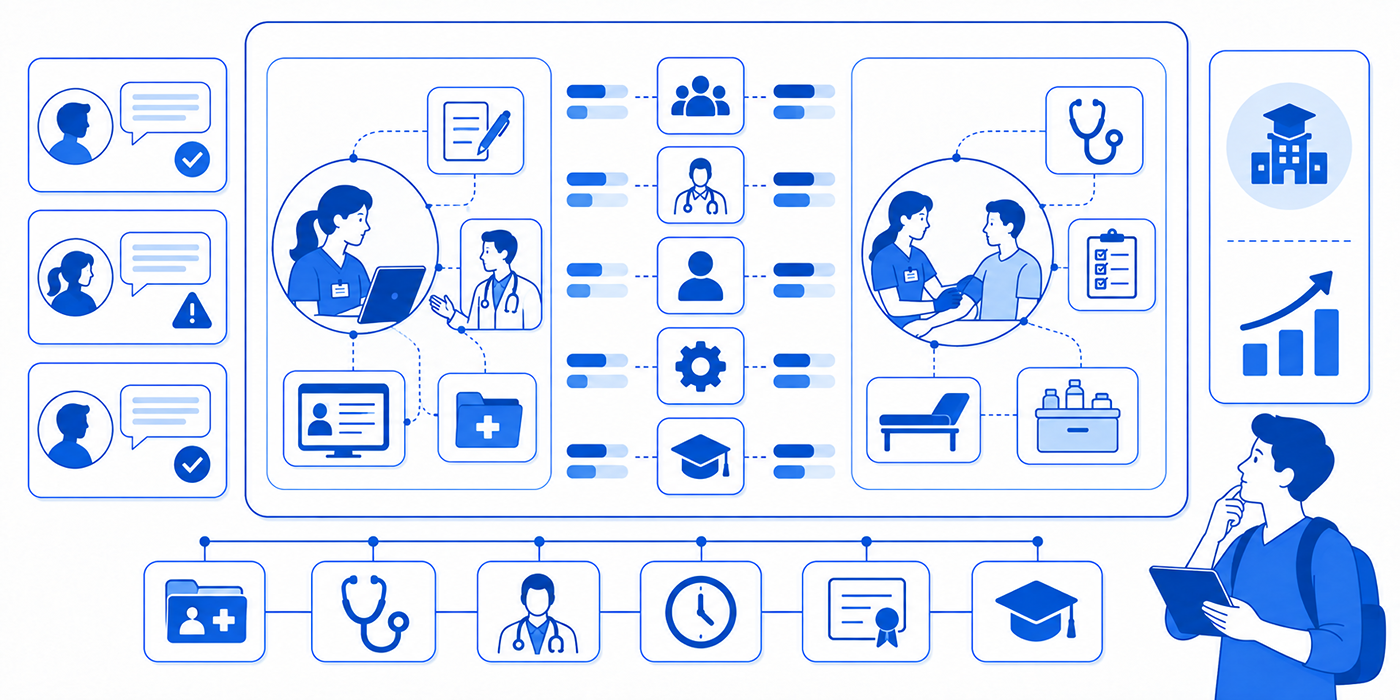
1. Medical Scribe vs Medical Assistant: The Real Difference for Premeds
The most useful comparison begins with proximity to the physician versus responsibility toward the patient. A medical scribe commonly spends much of an encounter observing the physician obtain a history, interpret findings, construct a differential, explain a diagnosis, select a treatment, and document medical decision-making. That makes the role unusually valuable for understanding how doctors actually think. Strong scribes simultaneously develop medical transcription skills, written clinical communication, confidential communication, and the ability to follow complex medical administrative workflows.
A medical assistant usually occupies a different part of the encounter. According to the U.S. Bureau of Labor Statistics, MAs may interview patients, record medical histories, measure vital signs, help with examinations, prepare specimens, enter information into medical records, and—in jurisdictions and workplaces where permitted—give medications or injections. Their duties vary substantially by employer and state. That variation matters enormously to premeds because one MA position may provide daily hands-on patient care while another is dominated by phones, scheduling, prior authorizations, and other front-desk medical administration.
This creates the first major mistake in the “scribe versus MA” debate: comparing titles instead of job descriptions. An MA who rooms patients, performs vitals, obtains histories, assists during procedures, teaches preparation instructions, and manages difficult encounters can accumulate intense patient-facing experience. That role develops verbal communication skills, rapport building, therapeutic communication, and practical experience dealing with difficult patients.
A different MA could spend most of the shift answering phones and scheduling visits. A scribe working directly beside an emergency physician could witness dozens of complex encounters, difficult family discussions, diagnostic uncertainty, consultations, admissions, and discharges. Someone evaluating medical scribe certification value therefore needs to investigate the clinical substance of the job, while someone considering MA work should ask precisely how much time is spent with patients, what procedures are permitted, and what percentage of the job is administrative.
The AAMC itself lists hospital scribing among alternatives that can provide meaningful healthcare exposure, describing the role as an opportunity to work alongside a provider while developing oral and written communication and demonstrating reliability within a healthcare team. This makes blanket claims that scribing “does not count” as clinical experience difficult to defend. The stronger question is whether your scribing position gives you enough meaningful exposure to patients and medicine to produce genuine reflection.
That distinction becomes especially important as AI scribes change traditional scribing. A human scribe who simply transcribes dictated material may have a shallower experience than one who follows complete encounters, recognizes pertinent history, understands healthcare documentation terminology, tracks tests and diagnoses, and learns why specific information belongs in particular parts of the note.
| # | Premed Decision Factor | Medical Scribe | Medical Assistant | Best Premed Takeaway |
|---|---|---|---|---|
| 1 | Direct patient interaction | Usually limited to indirect participation and observation | Usually substantially stronger | MA has the advantage when patient contact is your major application gap |
| 2 | Physician observation | Often exceptional | Highly variable | Scribing can provide a front-row view of actual physician work |
| 3 | Medical decision-making exposure | High when present for full encounters | Moderate and role-dependent | Scribe frequently wins for understanding physician reasoning |
| 4 | Hands-on clinical tasks | Usually minimal | Can include vitals, specimens, EKGs or procedure support | Verify the MA scope before accepting the job |
| 5 | Patient histories | Documents them after physician questioning | May personally obtain or update them | MA usually develops more direct interviewing practice |
| 6 | Documentation skill | Core responsibility | Usually secondary | Scribing can create unusually strong clinical documentation literacy |
| 7 | Understanding physician workflow | Very strong | Moderate to strong | Scribe is particularly useful for career confirmation |
| 8 | Bedside communication | Observed frequently | Practiced frequently | MA provides more opportunities to develop your own bedside manner |
| 9 | Patient responsibility | Low | Higher within delegated scope | Responsibility can create stronger personal growth stories |
| 10 | Exposure to difficult conversations | Often excellent | Moderate to high | Setting matters more than title |
| 11 | Diagnostic reasoning exposure | Strong | Usually indirect | Scribes often hear the entire diagnostic thought process |
| 12 | Procedural exposure | Observed | Potentially assists | MA can be stronger in procedure-heavy specialties |
| 13 | Physician mentorship potential | Potentially excellent | Highly variable | Ask who you will actually work beside |
| 14 | Patient-story potential | High observational depth | High personal-interaction depth | MA often gives applicants greater personal agency in stories |
| 15 | Entry barrier | Often lower | Can require training or certification | Local hiring rules may decide the practical winner |
| 16 | Training time | Often relatively short | Ranges from on-the-job training to formal programs | Calculate opportunity cost before paying for training |
| 17 | Clinical terminology exposure | Very high | High | Both build useful vocabulary through different tasks |
| 18 | EHR fluency | Usually intensive | Moderate to intensive | Both can produce strong workflow literacy |
| 19 | Understanding continuity of care | Depends heavily on specialty | Often strong in outpatient practice | Primary care can be particularly educational |
| 20 | Understanding patient barriers | Observed through physician encounters | Often encountered directly | MA may reveal logistical barriers invisible during the exam itself |
| 21 | Learning team communication | Strong within physician-documentation workflow | Strong across front and back office teams | Both can demonstrate teamwork when responsibilities are substantive |
| 22 | Stress-management opportunities | High in fast-paced specialties | High in high-volume clinics | Choose an environment where pressure produces learning rather than unsafe overload |
| 23 | Application differentiation | Depends on insight gained | Depends on responsibility gained | The reflection matters more than simply possessing the title |
| 24 | Best fit for weak physician exposure | Excellent | Variable | Scribe usually solves this gap more efficiently |
| 25 | Best fit for weak patient interaction | Potentially insufficient alone | Usually excellent | MA generally fills this gap better |
| 26 | Best fit during a busy semester | Depends on shift structure | Depends on clinic schedule | Protect GPA and MCAT preparation from excessive work hours |
| 27 | Best fit for career confirmation | Excellent view of physician work | Excellent view of patient-care realities | Choose based on which side of medicine you understand least |
| 28 | Overall premed value | High when clinically immersive | High when genuinely patient-facing | Job substance + longevity + reflection determine the real value |
2. What Reddit Experiences Reveal About Scribing vs Medical Assisting
Reddit discussions are useful here because applicants repeatedly describe a gap between how a job sounds on paper and what actually happens during a shift. In a May 2026 r/premed discussion comparing MA, scribing, and phlebotomy, one contributor favored medical assisting because it created more patient interaction and more opportunities to interact with physicians who could later become mentors or letter writers. A separate March 2026 discussion emphasized choosing based on what an applicant genuinely wanted to gain, noting that physician exposure often differs substantially between MA and scribe positions.
That pattern explains why applicants frustrated by medical-scribe hiring barriers sometimes assume an MA position will automatically be stronger. The title provides no such guarantee. An applicant who spends an MA shift mostly scheduling, faxing paperwork, and handling insurance issues may gain less meaningful patient contact than expected. Those duties still teach professional email etiquette, secure healthcare messaging, appointment scheduling systems, and professionalism in medical administration, but they may not solve an application deficit in patient-facing experience.
Scribing has the opposite vulnerability. A strong scribe may become extraordinarily fluent in medical terminology and transcription, watch physicians navigate uncertainty, see how informed consent is approached, and observe sophisticated patient education. Yet the applicant may still struggle to answer a different interview question: When were you personally responsible for helping a distressed, confused, angry, or vulnerable patient?
A July 2026 r/premed discussion captures this tension particularly well. Current scribes described the role as immersive because they remained in the room through physician-patient interactions and decision-making, while other participants argued that more patient-centered positions provide broader hands-on exposure. That disagreement is useful because both observations can be true simultaneously. Scribing offers depth of observation; medical assisting often offers depth of participation.
Older Reddit discussions show the same durable pattern. Applicants who had performed both roles commonly described MA work as stronger for direct interaction and scribing as stronger for observing physicians. One commenter who had done both said interviewers focused more heavily on the assisting portion because it produced more direct patient experiences. Others described scribing as among their most educational premed activities because of continuous exposure to physician reasoning.
The most useful lesson from these stories is therefore not “Reddit prefers MA.” It is to scrutinize the actual workflow. Before accepting either job, ask who you spend the shift beside, how frequently you enter patient rooms, which tasks you perform independently within your permitted scope, whether you participate in team communication, whether you handle patient interaction scripts, and whether you can realistically sustain the schedule long enough to become genuinely competent.
3. Which Role Has More Med-School Admissions Value?
Medical-school value should be judged through competencies and evidence, rather than a fabricated hierarchy of job titles. The current AAMC premed competency framework covers areas such as service orientation, teamwork, reliability, resilience, communication, empathy-related interpersonal behaviors, scientific thinking, and commitment to growth. Both jobs can generate evidence for these competencies, but they generate different evidence.
Medical assisting is often stronger when an applicant needs examples of doing, particularly rapport building with patients, assertive medical communication, responding professionally to difficult patients, recognizing non-verbal communication, and adapting explanations to patients with different needs. Those experiences often make personal statements and interviews easier because the applicant was an active participant rather than an observer.
Scribing can be exceptional when an applicant needs evidence of understanding medicine. Watching hundreds of encounters teaches how symptoms become histories, how physical findings alter reasoning, why physicians document pertinent negatives, how uncertainty is communicated, how follow-up decisions are made, and how clinical documentation supports continuity. The experience becomes especially valuable when the applicant understands medical documentation terminology, maintains confidential healthcare communication, communicates accurately within the medical care team, and sees how physicians handle crisis communication.
The 2027 AMCAS Work and Activities guidance reinforces a particularly important point: when applicants select their most meaningful experiences, they are encouraged to consider the transformative nature of the activity, their impact, what they learned, and their personal growth. That makes “I completed 1,400 scribing hours” less compelling than explaining how repeated exposure to medically complex patients changed your understanding of uncertainty, communication, or continuity of care. The same applies to an MA who accumulated 1,400 hours without being able to articulate what responsibility toward patients taught them.
A longstanding AAMC clinical-experience survey also reported that schools valued what applicants gained from clinical experience more than the raw number of hours, while identifying both scribing and medical assisting among acceptable healthcare-related experiences. Applicants therefore gain little from chasing an arbitrary hour target while ignoring quality, reflection, and longitudinal commitment.
There is also a strategic application issue. Someone who already has hundreds of hours volunteering directly with patients may gain more incremental value from scribing because physician workflow exposure fills a different gap. Someone whose entire portfolio consists of research, shadowing, and observation may benefit more from MA work because it forces them to practice bedside manner, direct verbal patient communication, patient education, and responsibility within a clinical team.
4. Choose Medical Scribing or Medical Assisting Based on the Gap in Your Application
Applicants should begin with an inventory of what their existing experiences already prove. If your portfolio contains research, physician shadowing, laboratory work, and observation but little sustained patient interaction, a hands-on MA position can add an entirely new dimension. Daily rooming, histories, follow-up conversations, emotional patients, communication failures, and real clinic bottlenecks can develop therapeutic communication, patient rapport skills, professional assertiveness, and confidence navigating scheduling conflicts.
Choose scribing more aggressively when you already possess patient-facing experience but lack sustained exposure to what physicians actually do. Shadowing can show you medicine episodically; scribing may expose you to the same provider repeatedly, allowing you to watch their clinical reasoning evolve across hundreds of encounters. A strong position can deepen your understanding of written medical communication, medical transcription, secure patient information handling, and the growing effect of healthcare automation.
Applicants choosing MA primarily because it “looks more clinical” should also price the entry barrier correctly. The BLS notes that medical assistants typically complete postsecondary education, while some enter with a high-school diploma and receive on-the-job training. State rules differ, and employers may independently require certification even where the state does not. Spending thousands of dollars and months on certification solely to produce a marginally stronger application may be inefficient when an accessible scribe position can begin generating meaningful experience immediately.
Conversely, accessibility alone should not trap you in weak scribing. Applicants researching remote medical scribe jobs should distinguish live, encounter-based clinical documentation from detached work where meaningful patient and physician exposure is minimal. Similarly, comparing ScribeAmerica with private-practice scribing should involve physician access, patient volume, specialty breadth, training quality, autonomy, schedule, and mentorship—not employer name alone.
Your academic bandwidth also belongs in the decision. A “better” clinical role becomes strategically poor if mandatory shifts damage your GPA, MCAT preparation, research commitments, or sleep. Recent Reddit discussions repeatedly mention schedule flexibility, commute, compensation, and personal sustainability alongside clinical value. A longitudinal 12-month experience with genuine growth can be more persuasive than cycling rapidly through jobs because each new title appears marginally stronger.

5. How to Turn Either Job Into a High-Value Premed Experience
The strongest premeds treat clinical employment as a learning system rather than an hour-collection system. After difficult encounters, reflect on what made communication effective, where the healthcare system failed the patient, how the team responded, and what you would want to understand better as a future physician. Experience with patient education, informed consent conversations, non-verbal communication, and difficult-patient communication becomes much more valuable when you can explain precisely what it taught you.
For scribes, move beyond learning where information belongs in a note. Pay attention to why the physician asks one follow-up question instead of another, how they separate symptoms from diagnoses, how they communicate uncertainty, and how the assessment changes after laboratory or imaging results. Studying clinical transcription terminology, team communication, professional clinical communication, and healthcare automation tools can help convert transcription speed into deeper workflow understanding.
For MAs, avoid allowing repetitive tasks to become intellectually invisible. Taking blood pressure hundreds of times matters less than understanding when a reading looks unusual, how the clinic responds, why accurate documentation matters, and how nervous or confused patients affect the reliability of information collected. Strengthen bedside manner, verbal communication, patient interaction techniques, and confidential communication so routine responsibilities produce genuine clinical maturity.
Both roles can also generate mentorship, but mentorship is earned through reliability. Arrive prepared, protect patient information, communicate clearly, accept correction without defensiveness, and become the person the clinical team trusts. Strong professionalism in medical administration, crisis communication, secure messaging practices, and team communication matter because a compelling recommendation letter usually grows from months of demonstrated behavior rather than simply working near a physician.
Finally, keep reflective notes without recording protected or identifiable patient information. Document lessons, themes, moments of uncertainty, communication challenges, and changes in your own thinking. When AMCAS asks you to explain your experience, those reflections will produce stronger material than reconstructing 1,000 hours from memory. The AAMC explicitly encourages applicants to consider impact, learning, personal growth, and transformation when identifying meaningful experiences.
6. FAQs: Medical Scribe vs Medical Assistant for Premed
-
Medical scribing is widely used as a healthcare-related premed experience, and the AAMC specifically lists hospital scribing among alternatives for gaining clinical exposure when traditional shadowing is unavailable. Its application value improves when you are immersed in real encounters, work closely with providers, develop clinical documentation skills, understand physician communication, and can explain what sustained exposure taught you about medicine.
Applicants worried because they have heard that medical scribing has lost value should focus less on arguments over labels and more on the actual experience. A passive remote documentation job and an emergency-department scribe following a physician through complex encounters can carry very different experiential value.
-
Medical assisting often has an advantage when an applicant lacks direct patient interaction because MAs may interview patients, obtain histories, take vitals, assist during examinations, collect specimens, and perform additional permitted clinical tasks. Those responsibilities naturally develop patient rapport, bedside communication, patient education skills, and experience handling difficult patients.
A scribe can provide stronger physician-level observational exposure, however. The best role depends on what your existing application already demonstrates and what the specific job actually allows you to experience.
-
That description understates a strong scribing position. Shadowing is primarily observation; scribing adds responsibility for accurate clinical documentation, active listening, medical terminology, workflow awareness, and producing usable records under time pressure. Developing written clinical communication, medical transcription accuracy, confidential communication, and professional team communication requires active performance.
Scribing does share one major advantage with shadowing: unusually consistent observation of physicians performing their actual work. AAMC guidance recognizes shadowing as useful for understanding a physician's typical day, while also identifying other clinical experiences—including scribing—as legitimate ways to gain exposure.
-
Requirements depend on the jurisdiction and employer. BLS guidance says some medical assistants enter with a high-school diploma and learn through on-the-job training, while many complete certificate or degree programs. Some states impose specific requirements, and employers can prefer or require certification independently.
Premeds should therefore search local postings before paying for a program. Compare certification cost, training duration, expected wages, actual patient-facing responsibilities, and how quickly you could instead begin gaining experience through medical scribing, remote scribe opportunities, or another accessible clinical role.
-
Medical assisting frequently creates more stories in which you personally interacted with a patient, managed communication, responded to distress, or helped solve a practical problem. That makes therapeutic communication, rapport building, non-verbal communication, and assertiveness easier to demonstrate through personal action.
Scribing can produce equally powerful material around physician reasoning, uncertainty, serious diagnoses, longitudinal care, ethical communication, and understanding what the medical profession demands. The 2027 AMCAS guidance places emphasis on impact, learning, personal growth, and transformation, which means the quality of reflection determines much of the narrative value.
-
A strong available scribe opportunity can begin building clinical exposure, physician familiarity, medical transcription knowledge, professional communication, and healthcare-team experience immediately. Recent 2026 Reddit discussions include successful students and current scribes describing substantial educational value from the role while acknowledging that more patient-centered positions can provide different experiences.
A better strategy is to assess the entire portfolio. If scribing gives you rich physician exposure while another sustained activity provides meaningful direct service or patient interaction, the combination can address both sides of the equation. Premed preparation becomes considerably stronger when your experiences demonstrate that you understand physicians, can work with patients, communicate professionally, function inside healthcare teams, and can explain why those experiences strengthened your decision to pursue medicine.
