

Which Medical Scribe Specialty Is Best for Premed? Reddit Experiences Across ER, Cardiology, Ophthalmology, Oncology & More
Choosing a medical scribe specialty can determine whether hundreds of clinical hours become repetitive charting or an unusually strong education in how physicians think. Premeds comparing medical scribing as clinical experience, scribe hours for medical school, medical scribing versus medical assisting, and the broader question of whether medical scribing is still worth it should choose for learning quality, mentorship, sustainability, and exposure. For most first-time scribes, the ER offers the strongest overall breadth, while several outpatient specialties can outperform it for depth and physician relationships.
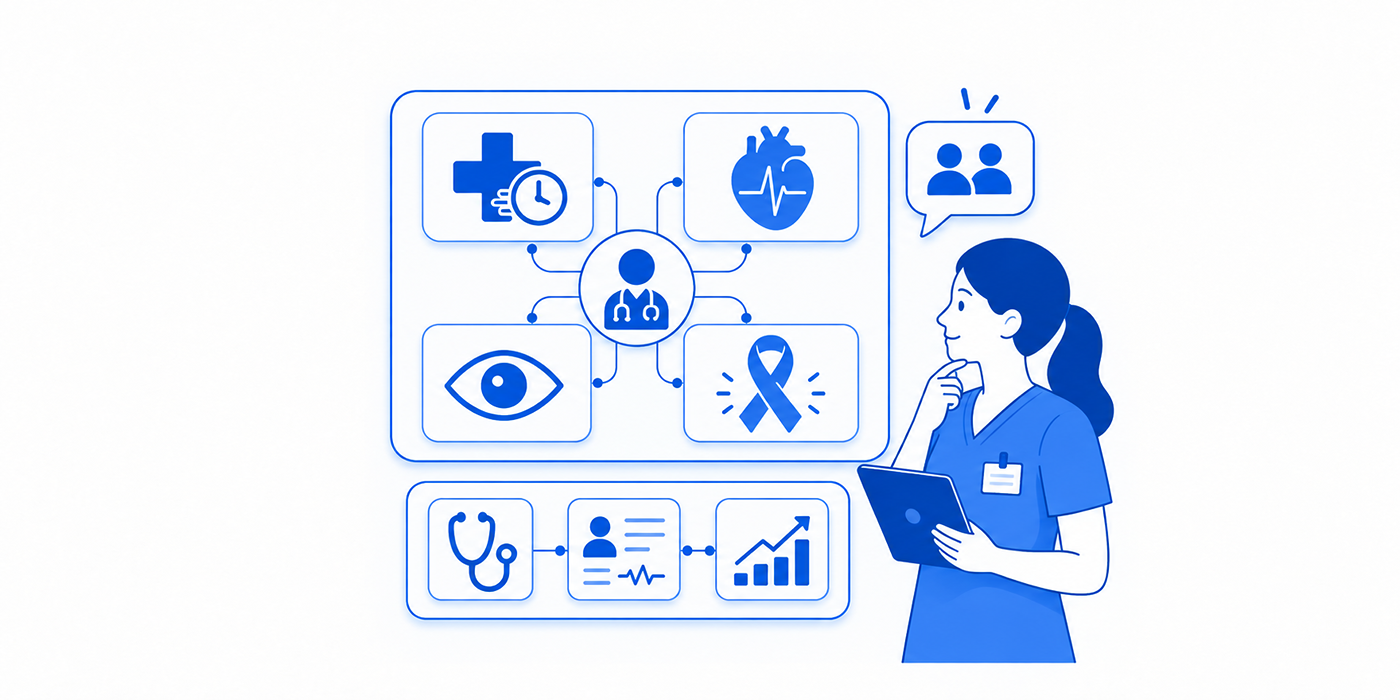
1. What Actually Makes a Medical Scribe Specialty Good for Premed?
The strongest specialty gives you repeated access to clinical reasoning you can understand, reflect on, and eventually discuss intelligently. Medical schools evaluate applicants through competencies such as communication, teamwork, reliability, critical thinking, self-awareness, and growth. AAMC guidance also emphasizes the transformative nature of an experience, personal growth, and its impact when applicants describe meaningful activities.
That changes how you should evaluate a scribe job. A prestigious specialty with hours of repetitive templating may offer less developmental value than a community clinic where a physician teaches you why the patient history changed the differential, how verbal communication alters an encounter, why written documentation needs greater specificity, and how effective team communication prevents errors.
Evaluate every position across six dimensions: breadth of pathology, visibility of physician reasoning, patient continuity, mentorship access, documentation complexity, and schedule sustainability. Add a seventh if medical school is approaching: whether the job produces experiences you can meaningfully reflect on rather than merely accumulating clinical hours.
Current Reddit experiences show why this distinction matters. A May 2026 premed discussion described ER scribing as especially revealing because scribes could watch acute decision-making and minor procedures, while outpatient work created stronger opportunities to build relationships with individual physicians and potentially obtain shadowing or recommendations. Another comparison between outpatient and ER scribing favored emergency medicine for variety, while acknowledging the predictable scheduling advantage of outpatient clinics.
For someone entering healthcare with minimal exposure, that breadth can be particularly useful. If you are already questioning whether scribing provides enough clinical experience, worried about premed regrets from scribing, struggling with medical scribe hiring barriers, or deciding between a large scribe company and private practice, the environment around the specialty deserves as much attention as the specialty name itself.
| Specialty | Premed Value | What You Learn Best | Main Limitation | Best Fit |
|---|---|---|---|---|
| Emergency Medicine | Excellent | Breadth, triage, differential diagnosis, acute decisions | Irregular shifts, intensity, limited continuity | Premeds wanting maximum breadth |
| Family Medicine | Excellent | Prevention, chronic disease, continuity, whole-patient care | Some encounters become repetitive | Premeds wanting broad outpatient medicine |
| Internal Medicine | Excellent | Complex comorbidities, medications, longitudinal reasoning | Dense charts and long problem lists | Students who enjoy diagnostic complexity |
| Cardiology | Excellent | Physiology, ECGs, imaging, medications, risk management | Steep terminology and testing curve | Premeds who love physiology |
| Hematology/Oncology | Excellent | Longitudinal care, staging, imaging, treatment decisions | Documentation and emotional burden | Premeds wanting depth and continuity |
| Ophthalmology | Very High | Focused anatomy, diagnostics, procedures, visual findings | Narrower systemic exposure | Premeds interested in procedural specialties |
| Retina | Very High | Diabetes, vascular disease, imaging, injections | Highly specialized vocabulary | Premeds wanting ophthalmology plus systemic links |
| Orthopedics | Very High | Musculoskeletal exams, imaging, procedures, surgical decisions | Body-region specialization can narrow variety | Premeds interested in surgery or anatomy |
| Pediatrics | Very High | Development, parent communication, prevention | Lower adult-disease exposure | Premeds testing interest in pediatrics |
| Neurology | Very High | Localization, examinations, imaging, chronic disease | Complex terminology and long histories | Premeds who enjoy diagnostic reasoning |
| Gastroenterology | High | Chronic GI disease, procedures, labs, pathology | Repeated follow-up patterns | Premeds wanting clinic plus procedural exposure |
| Dermatology | High | Visual diagnosis, biopsies, medications, procedures | Potentially narrow or cosmetic-heavy case mix | Premeds strongly interested in dermatology |
| Urology | High | Cancer, stones, imaging, procedures, surgery pathways | Organ-system concentration | Premeds exploring surgical medicine |
| ENT | High | Focused exams, procedures, surgery follow-up | Narrow anatomy | Procedure-oriented learners |
| OB/GYN | Very High | Preventive care, pregnancy, procedures, sensitive communication | Access to scribe positions varies | Premeds wanting medical and procedural breadth |
| Hospitalist/Inpatient | Excellent | Multisystem illness, admissions, rounds, discharge planning | Workflow can be documentation-heavy | Premeds wanting hospital medicine exposure |
| Urgent Care | Very High | High-volume acute complaints, triage, outpatient workflow | Less high-acuity reasoning than an ER | Premeds wanting breadth with fewer hospital nights |
2. ER vs Cardiology vs Ophthalmology vs Oncology: Which Gives You the Strongest Experience?
Emergency medicine is the strongest default choice for breadth. One shift may expose you to chest pain, fractures, abdominal emergencies, psychiatric crises, infections, neurological complaints, trauma, substance-related presentations, and routine illnesses. That forces rapid development of medical terminology, concise clinical written communication, effective physician communication, and accurate confidential communication.
A 2025 ER-scribe discussion emphasized both the variety and the opportunity to watch medicine applied under uncertainty. Another recent premed thread described seeing minor procedures and physician medical decision-making firsthand. That makes the ER particularly useful for a student who has limited exposure and still wants to understand how specialties intersect.
The cost is pace. Night shifts, unpredictable schedules, emotionally difficult cases, limited breaks, and constant context switching can interfere with coursework or MCAT preparation. A job that destroys your academic bandwidth can become a poor trade even when the clinical exposure is outstanding. Premeds should assess medical scribe burnout risks, low scribe pay versus clinical ROI, their realistic clinical-hour needs, and whether a private-practice position would preserve more study time.
Cardiology is arguably the best focused specialty for learning physiology-driven medicine. You repeatedly encounter coronary disease, arrhythmias, heart failure, hypertension, anticoagulation, echocardiography, stress testing, rhythm monitoring, lipid management, and risk stratification. A cardiology scribe can gradually connect symptoms to testing, testing to diagnoses, diagnoses to therapies, and therapies to follow-up.
Reddit cardiology discussions specifically warn about the learning curve around anatomy, tests, medications, and interpreting what results mean. Another scribe who had worked in orthopedics and cardiology reported finding cardiology more demanding because of what individual physicians expected scribes to handle. This is valuable pressure when training and supervision are strong. It becomes problematic when a new scribe is expected to operate beyond a clearly defined role.
Cardiology therefore rewards excellent professionalism, strong team communication, disciplined documentation skills, and a willingness to master unfamiliar medical transcription terminology. For a physiology-minded premed, few outpatient specialties provide such a concentrated education.
Ophthalmology is stronger than its narrow scope suggests. High-volume clinics expose scribes to cataracts, glaucoma, diabetic retinopathy, macular disease, visual testing, imaging, procedures, postoperative care, and highly specialized physical findings. Retina can be particularly valuable because ocular disease intersects with diabetes, hypertension, vascular disease, medications, and aging.
Premeds on Reddit consistently classify ophthalmology scribing as legitimate clinical experience, while also acknowledging that its medical breadth is narrower than emergency medicine. Several users emphasized direct patient interaction, physician supervision, and the amount they learned, while one recommended retina specifically because its patients often carry extensive medical histories.
The operational challenge is speed. One ophthalmology scribe described a surprisingly fast clinic despite regular daytime shifts, and newer scribes have recommended proactively learning specialty vocabulary while becoming familiar with where information belongs in the chart. Skills in patient interaction, rapport building, non-verbal communication, and patient education can therefore become surprisingly relevant.
Oncology provides exceptional depth and longitudinal exposure. Oncology notes can integrate pathology, imaging, genetics, staging, prior treatments, treatment responses, adverse effects, goals of care, surveillance, and changing therapeutic plans. A recent oncology scribe described lengthy documentation, substantial pre-charting, new imaging and biopsy information, and a major learning curve around genetics and treatment plans. Earlier hematology-oncology discussions similarly identify drug names, treatment regimens, side effects, and specialized studies as early challenges.
For premeds, that complexity creates unusually rich exposure to therapeutic communication, sensitive patient communication, careful confidential communication, and precise written documentation. The emotional load deserves serious consideration. Repeated exposure to recurrence, progression, difficult prognoses, and end-of-life discussions demands maturity as well as technical competence.
3. The Underrated Specialties Premeds Should Consider
Family medicine and internal medicine may be the best compromise between ER breadth and outpatient mentorship. You can watch chronic disease evolve over months, see how physicians prioritize multiple problems, learn preventive medicine, recognize medication interactions, and understand why patient education, rapport building, difficult-patient communication, and professional communication alter medical outcomes.
Internal medicine becomes especially educational when patients have five or six active problems rather than one chief complaint. You learn prioritization. Which abnormality needs action today? Which can be monitored? Which medication explains the new symptom? Which specialist recommendation conflicts with another part of the plan? That reasoning is difficult to capture through brief shadowing alone.
Orthopedics is excellent for anatomy, imaging, procedures, and tangible outcomes. Reddit reports describe high-volume clinics where scribes repeatedly see injury evaluation, treatment decisions, follow-up, and improvement after intervention. A student interested in surgery can combine that with strong patient communication, informed consent concepts, team communication, and disciplined medical documentation.
Dermatology can teach visual recognition and procedural workflow extremely well, although the case mix matters enormously. A medical dermatology practice with skin cancers, inflammatory disease, biopsies, immunomodulators, and complex follow-ups offers a different education from a heavily cosmetic practice. Reddit discussions repeatedly make this distinction and also show how clinic volume can make dermatology surprisingly fast-paced.
GI is another overlooked option. Endoscopy-oriented practices expose scribes to gastrointestinal symptoms, chronic inflammatory conditions, liver disease, pathology, imaging, and procedural planning. A Reddit scribe who moved beyond the ED described GI as interesting and comparatively relaxed, highlighting how dramatically provider and clinic structure influence the job.
Pediatrics adds a communication skill that adult specialties rarely reproduce: working simultaneously with the patient and caregiver. A strong pediatric scribe watches physicians adjust verbal communication, use age-appropriate patient education, interpret non-verbal communication, and build rapport with two audiences at once.
4. How to Choose the Best Scribe Specialty for Your Specific Premed Application
Start with the weakest part of your current clinical profile.
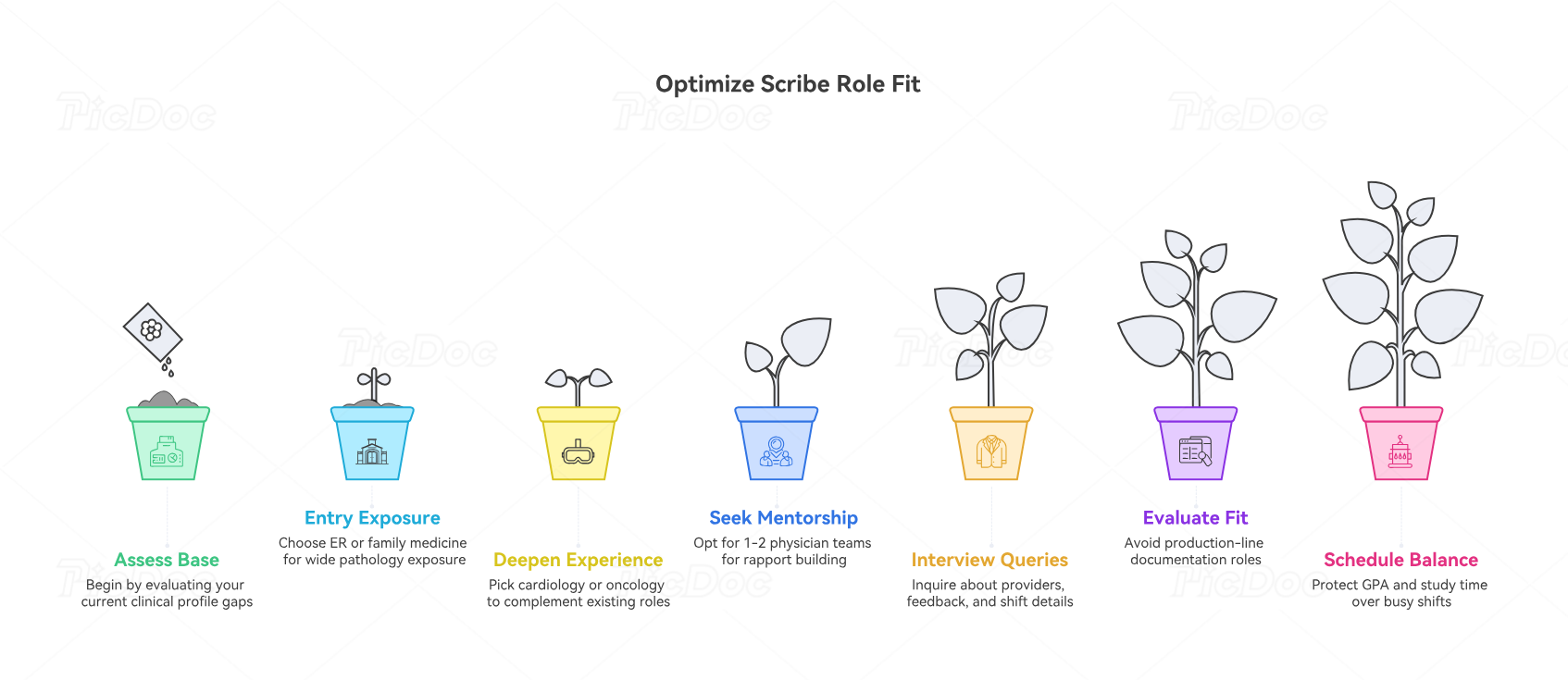
If you have almost no healthcare exposure, prioritize ER, family medicine, internal medicine, urgent care, or inpatient medicine. These settings expose you to broader pathology and make it easier to understand whether medicine itself fits you. That is particularly valuable before committing hundreds of medical scribe hours or deciding that medical scribing is worth the opportunity cost.
If you already have broad patient exposure through EMT, CNA, MA, volunteering, or another role, depth may add more value than another broad experience. Cardiology can strengthen understanding of physiology. Oncology can teach longitudinal complexity. Neurology can sharpen diagnostic reasoning. Ophthalmology or orthopedics can expose you to procedure-heavy workflows. The strategic question becomes how the scribe position complements your existing experiences rather than how impressive the specialty sounds.
If your biggest need is a physician mentor or future recommendation, investigate the provider structure before accepting the job. A smaller outpatient practice where you work with one or two physicians repeatedly may give you more opportunities to demonstrate professionalism, develop strong team communication, practice assertive communication, and build genuine professional rapport.
Ask during the interview: How many providers will I regularly scribe for? Do physicians give feedback on notes? What percentage of the role involves pre-charting? How many patients are seen per shift? Are nights or weekends required? How long do scribes usually stay? What happens when a physician wants documentation clarified?
Those questions expose more than a job description. They reveal whether the position resembles genuine clinical learning or production-line documentation. Applicants already struggling to land their first scribe job can still evaluate fit instead of accepting poor conditions blindly.
Schedule deserves equal weight. A predictable cardiology clinic that allows you to protect your GPA, research, volunteering, and MCAT study may deliver far more application value than an ER schedule that repeatedly leaves you exhausted. This is especially important when evaluating low medical scribe pay, potential scribe burnout, remote scribe opportunities, or a choice between medical assisting and scribing.
5. How to Turn Any Scribe Specialty Into a High-Value Premed Experience
Your specialty creates the opportunity. How you engage with it determines the educational return.
First, learn the reasoning behind the chart. When a physician orders imaging, changes medication, delays intervention, refers a patient, or requests follow-up, understand the clinical question being answered. Strong scribes eventually recognize how the HPI connects with the assessment and why apparently small details change the plan. That process improves medical transcription fluency, written communication, verbal communication, and overall professionalism.
Second, ask high-quality questions at appropriate times. “Why did you order that?” can become “Was the exertional component what pushed this patient toward stress testing?” Specific questions show that you were listening and allow physicians to teach efficiently. Developing that judgment also strengthens assertiveness, team communication, therapeutic communication awareness, and workplace rapport.
Third, keep a PHI-free reflection log. Record the type of lesson rather than identifiable patient details: a communication challenge, an ethical tension, a diagnostic surprise, a physician interaction, a systems problem, or something that changed your understanding of medicine. AAMC's current application guidance asks applicants describing meaningful experiences to think about transformation, impact, learning, and personal growth. That reflection is far more useful than trying to reconstruct a year of clinical exposure immediately before writing applications.
Fourth, learn how physicians communicate with patients, not only what they diagnose. Watch how they explain uncertainty through patient education, de-escalate difficult encounters, obtain informed consent, use non-verbal communication, and maintain confidentiality. These observations often produce richer lessons about becoming a physician than memorizing another abbreviation.
Fifth, recognize when your learning curve has flattened. If six months later you are documenting mechanically, rarely learning, receiving little feedback, and gaining no meaningful mentorship, reevaluate the position. The same applies when poor scribe compensation becomes unsustainable or when AI scribe adoption changes your role into primarily correcting generated notes. Your strongest protection is becoming excellent at the human skills surrounding documentation: context, accuracy, communication, clinical workflow, and judgment.
AAMC guidance reinforces the larger principle: schools want applicants capable of connecting experiences to their development rather than simply presenting a checklist of activities. A thoughtful year in ophthalmology can therefore become far more meaningful than an unfocused year in an ER, while an engaged ER scribe may accumulate an extraordinary library of lessons about medicine, uncertainty, teamwork, and patient care.
6. FAQs About Choosing a Medical Scribe Specialty for Premed
-
For a student with limited clinical exposure, ER scribing is probably the strongest all-around choice because it provides exceptional breadth. You can encounter many organ systems, ages, acuity levels, and physician decision styles within the same month. Reddit experiences repeatedly highlight that variety and access to acute decision-making.
Its advantage becomes smaller when you already have broad clinical experience. In that situation, cardiology, oncology, ophthalmology, neurology, or another focused field may add a new dimension to your application. Evaluate your existing clinical experience, expected scribe hours, risk of scribe burnout, and the career value of the position.
-
There is no AAMC framework ranking applicants according to whether they scribed in emergency medicine, cardiology, ophthalmology, or oncology. Current premed competencies focus on qualities such as communication, teamwork, critical thinking, reliability, understanding others, and capacity for growth.
Your ability to explain what you learned carries more weight than chasing a supposedly prestigious department. Strong physician communication, meaningful patient interaction, disciplined professional behavior, and thoughtful clinical documentation can develop in many specialties.
-
Choose cardiology if you want deeper exposure to physiology, chronic disease, medication management, diagnostic testing, and cardiovascular risk. Choose ophthalmology if you enjoy anatomy, visual diagnosis, imaging, high-volume workflow, procedures, and highly specialized examinations.
Cardiology usually provides stronger multisystem connections. Ophthalmology may provide more focused procedural exposure and, depending on the position, direct involvement with patient flow. Retina offers an especially interesting middle ground because diabetic and vascular eye disease connects ocular findings with systemic medicine. Premeds can strengthen either experience through medical terminology mastery, strong patient rapport, careful written communication, and consistent professionalism.
-
Oncology can be one of the richest specialty experiences available. Patients often have extensive histories, serial imaging, pathology results, genetic testing, changing treatment regimens, medication toxicity, surveillance plans, and long-term physician relationships. That forces scribes to understand how information changes across time rather than treating each encounter as isolated.
The emotional burden is meaningful. Students who choose oncology should be prepared for serious illness, recurrence, difficult treatment decisions, and emotionally charged communication. Those encounters can teach exceptional therapeutic communication, patient education, confidential communication, and rapport-building skills.
-
There is no universal hour threshold that turns a scribe position into a strong medical-school activity. AAMC materials have emphasized what applicants gain from clinical experiences, and current AMCAS guidance asks applicants to discuss learning, impact, transformation, and personal growth in their most meaningful activities.
Stay long enough to move beyond survival mode and understand the workflow, terminology, physician reasoning, and patient population. Then assess whether additional hours continue producing new learning. Premeds should think about how many scribe hours are useful, whether low pay remains worthwhile, whether burnout is eroding the experience, and whether another clinical role could fill a missing skill.
-
For general premed educational value, a practical ranking is:
ER → Family/Internal Medicine → Cardiology → Oncology → Hospitalist/Inpatient → Ophthalmology/Retina → Pediatrics → Orthopedics → Neurology → GI → other focused specialties.
Treat that hierarchy as a starting point because provider quality can completely reorder it. A cardiologist who teaches, reviews your notes, discusses clinical reasoning, and gradually trusts your work may give you a better education than an ER where scribes rotate constantly and interact minimally with physicians. Likewise, a private ophthalmology or orthopedic practice may create stronger mentorship than a larger program.
Before accepting, compare the private-practice versus large-company experience, realistic scribe hiring conditions, potential remote scribing limitations, and whether medical scribing supports your broader premed goals.
