

The Ultimate Guide to Getting Your Medical Scribe Certification in Ireland: All You Need to Know in 2026-2027
Ireland is entering a serious digital-health phase, and that changes what a medical scribe must be able to do. A strong scribe in 2026-2027 needs more than fast typing. You need clinical vocabulary, defensible documentation habits, privacy judgment, EMR confidence, and the ability to support providers without turning incomplete information into risky chart content. This guide shows how to choose the right medical scribe certification, build practical charting skill, prepare for Irish healthcare workflows, and avoid the mistakes that make new scribes look unready.
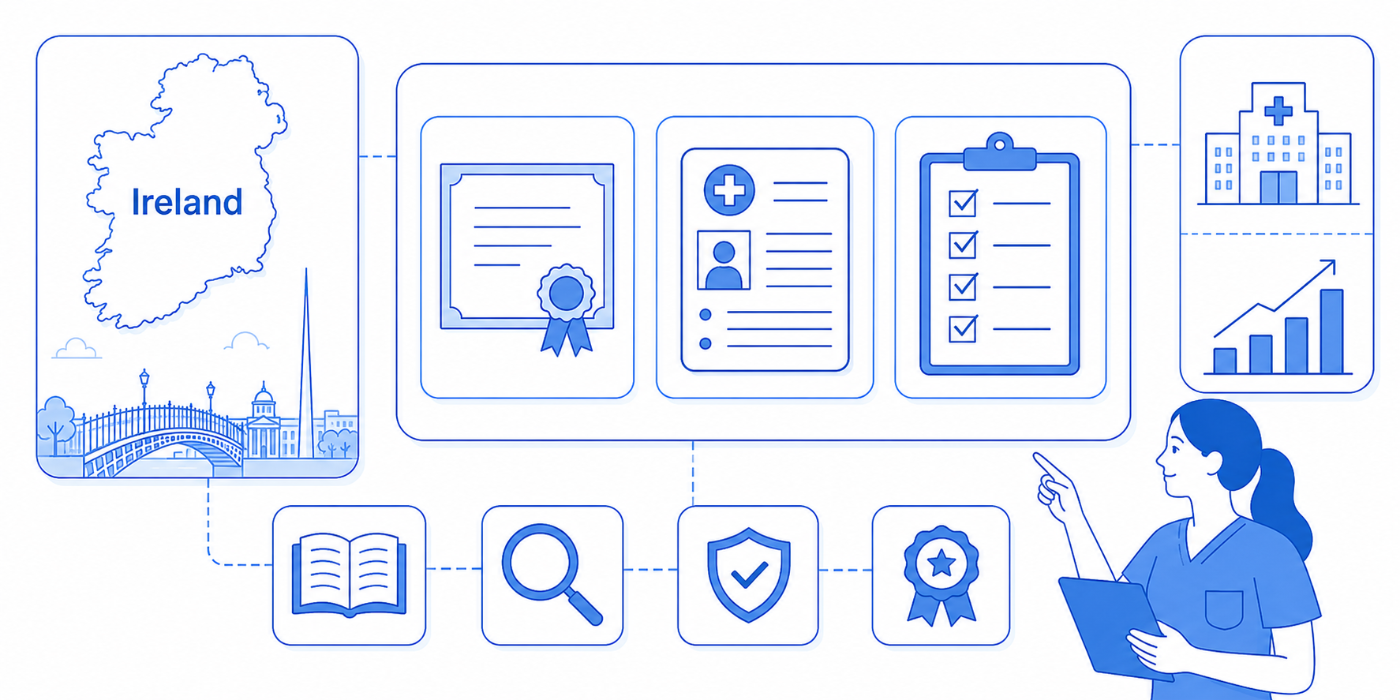
1. Why Medical Scribe Certification Matters in Ireland in 2026-2027
Medical scribing in Ireland sits at the intersection of clinical documentation, digital records, patient safety, and provider efficiency. That makes certification valuable because employers do not only need someone who can type what they hear. They need someone who understands how a history becomes an HPI, how exam findings must stay separate from assessment language, how a provider’s impression should be documented without adding unsupported certainty, and how a patient encounter moves through an increasingly digital system. A structured medical scribe training course gives you that foundation before you step into a clinic, hospital, urgent care setting, telehealth team, or remote documentation role.
Ireland’s healthcare environment also rewards scribes who can think like clinical documentation partners. Public and private hospitals, outpatient clinics, GP practices, specialty groups, and virtual care teams all depend on accurate records. A weak note creates problems downstream: missed follow-up details, vague symptoms, unsupported diagnoses, poor handoff clarity, coding confusion, patient communication errors, and privacy exposure. That is why a candidate who studies EMR and charting terms, HIPAA and privacy concepts, medical terminology, and clinical documentation terms will look stronger than someone who only says they are “good with computers.”
Certification also helps international candidates who want to compete for remote scribe roles serving global healthcare clients. Ireland-based learners may apply to Irish healthcare administration roles, multinational clinical operations teams, outsourced documentation employers, or international scribe companies. A credible medical scribe certification exam gives your resume a skill signal, while focused preparation with realistic scribe exam questions, scribe interview preparation, and top scribe employer directories helps you convert that signal into interviews.
The biggest pain point for new scribes is false confidence. Many learners memorize terms, then freeze when a provider speaks quickly, changes the plan halfway through, uses abbreviations, or jumps between symptoms, exam findings, and next steps. Certification should train you to listen under pressure, organize information cleanly, and know when something must be clarified. A defensible scribe note shows what was actually said and done. It does not guess, decorate, exaggerate, or fill clinical gaps. That discipline is the difference between being useful and becoming a documentation risk.
| # | Certification Skill Area | Why It Matters in Ireland | What to Practice Before Applying | Best ACMSO Resource to Use |
|---|---|---|---|---|
| 1 | Clinical listening | Providers may move quickly between history, exam, impression, and plan. | Practice separating patient-reported symptoms from provider assessment. | clinical documentation terms |
| 2 | HPI structure | Irish clinics need clear symptom timelines, severity, context, and modifiers. | Rewrite messy patient stories into structured HPI paragraphs. | medical terminology mastery |
| 3 | EMR navigation | Digital-health growth increases the need for charting confidence. | Learn where notes, medication lists, orders, and follow-ups usually live. | EMR charting terms |
| 4 | Privacy discipline | Health data requires careful handling, access control, and minimum-necessary thinking. | Practice privacy scenarios involving screens, messages, portals, and calls. | HIPAA compliance for scribes |
| 5 | Diagnosis caution | A scribe must avoid turning uncertainty into a confirmed diagnosis. | Train with phrases that separate differential, impression, and confirmed diagnosis. | ICD-10 dictionary |
| 6 | Procedure awareness | Specialty notes often include procedures, consent language, and follow-up instructions. | Learn common procedure wording without inventing missing details. | CPT codes explained |
| 7 | Specialty vocabulary | Cardiology, orthopedics, dermatology, paediatrics, and women’s health use different note patterns. | Build one-page cheat sheets for five major specialties. | documentation template libraries |
| 8 | Telehealth documentation | Remote care requires clean documentation of virtual limitations, consent, and follow-up. | Practice telehealth notes with location, mode, limitations, and escalation steps. | scribes and telemedicine |
| 9 | Patient communication context | Scribes must understand patient-facing language even when they do not directly advise patients. | Study how complaints, confusion, and sensitive questions should be documented. | patient communication terms |
| 10 | Medication accuracy | Medication names, doses, routes, and adherence details create high-risk note sections. | Practice capturing medication changes without assuming dose or frequency. | scribe documentation terms |
| 11 | Follow-up clarity | Poor follow-up wording creates missed care, patient frustration, and weak continuity. | Practice plans with timeframe, referral, testing, red flags, and return instructions. | patient intake procedures |
| 12 | Abbreviation control | Ambiguous abbreviations can damage clarity across teams and systems. | Build an abbreviation list and flag dangerous lookalikes. | memorize medical terms |
| 13 | Negatives and positives | Missing pertinent negatives weakens clinical reasoning and risk documentation. | Practice ROS and exam snippets where one missing negative changes the note. | realistic scribe exam questions |
| 14 | Chart correction habits | Strong scribes know how to fix mistakes transparently instead of hiding them. | Learn correction workflows and avoid overwriting meaning casually. | EMR software issue guide |
| 15 | Provider preference adaptation | Every clinician has preferred phrasing, template depth, and note rhythm. | Create preference sheets for assessment style, plan detail, and template use. | specialty documentation templates |
| 16 | Irish healthcare awareness | Local readiness improves interviews with hospitals, clinics, and health administration teams. | Study public, private, outpatient, GP, and specialty care workflows. | medical admin conferences |
| 17 | Remote work readiness | International scribe roles require secure setup, strong audio focus, and timezone discipline. | Prepare a quiet workspace, headset, speed drills, and privacy checklist. | international scribe employers |
| 18 | Interview evidence | Employers need proof that you can handle real documentation pressure. | Prepare examples of difficult audio, fast encounters, corrections, and privacy judgment. | scribe interview questions |
| 19 | Exam timing | Certification prep fails when learners study terms without timed recall. | Use timed quizzes for terminology, chart sections, and scenario judgment. | 30-day study schedule |
| 20 | Urgent care speed | Fast encounters punish slow organization and vague plans. | Practice concise notes for respiratory, injury, abdominal pain, and follow-up visits. | urgent care scribe jobs |
| 21 | Primary care continuity | Longitudinal care requires clean chronic disease, medication, screening, and referral tracking. | Practice notes for diabetes, hypertension, asthma, and preventive visits. | primary care scribe networks |
| 22 | Specialty depth | Specialty employers want scribes who understand terminology before onboarding. | Choose one specialty and build deeper anatomy and procedure vocabulary. | outpatient specialty networks |
| 23 | Documentation ethics | The scribe role depends on accuracy, boundaries, and escalation. | Practice scenarios where the safest action is to ask the provider. | regulations shaping scribe roles |
| 24 | Resume positioning | Irish applicants need a resume that translates certification into job-ready ability. | List charting skill, terminology, privacy training, typing speed, and specialty exposure. | standout healthcare resume guide |
| 25 | Career pathway planning | Scribing can support routes into clinical research, medical administration, and healthcare operations. | Map your next step before choosing a certification and employer type. | scribe career journeys |
| 26 | Employer targeting | A certified applicant still needs the right hiring channel. | Build a target list of hospitals, scribe companies, recruiters, and remote employers. | healthcare recruiters directory |
| 27 | Certification review | Weak final review leaves gaps in high-pressure note scenarios. | Run a final audit across terminology, privacy, EMR, specialty, and exam questions. | pass certification first try |
2. How to Choose the Right Medical Scribe Certification for Ireland
The best medical scribe certification for Ireland should teach practical charting rather than only vocabulary. A certificate looks thin when the learner still cannot identify the difference between subjective history and objective exam findings, or when they place a provider’s tentative differential diagnosis into the wrong part of the note. Choose a program that covers medical terminology, EMR documentation, clinical documentation accuracy, and scribe exam preparation together, because employers care about the full workflow.
Start by checking whether the course explains real encounter structure. A valuable program should teach chief complaint, HPI, ROS, physical exam, assessment, plan, orders, referrals, patient instructions, and follow-up. It should train you to capture relevant positives and negatives, avoid unsupported wording, and ask for clarification when the record would otherwise be unsafe. A course that only gives term definitions can help your memory, but a stronger medical scribe training course should also include practical note scenarios, documentation template practice, realistic exam questions, and interview preparation.
For Ireland, you should also look for privacy and data-protection depth. Even when a course uses international examples, the underlying discipline matters: access only what you need, avoid casual disclosure, protect patient identifiers, keep screens secure, and never treat patient information as ordinary workplace content. A strong certification pathway should push you into patient privacy essentials, HIPAA vocabulary, legal responsibility basics, and regulatory changes affecting scribes, because privacy mistakes can damage trust faster than typing errors.
You should also decide what kind of role you want after certification. If your goal is hospital exposure, study academic medical centers, emergency departments and urgent care chains, and hospitalist group opportunities. If your goal is specialty experience, use directories for orthopedic and sports medicine groups, dermatology and ophthalmology practices, and paediatric, OB/GYN, and women’s health networks. Certification works best when it supports a clear job target.
3. Step-by-Step Roadmap to Become a Certified Medical Scribe in Ireland
Start with a diagnostic skill audit. Before you pay for a course, test yourself on medical terms, anatomy basics, typing speed, listening accuracy, privacy scenarios, and your ability to rewrite a messy visit into a structured note. Many learners waste weeks studying content they already know while ignoring the exact weakness that will hurt them in interviews. Use top scribe terms, EMR charting language, medical terminology tools, and medical scribe FAQs to identify gaps before they become expensive delays.
Next, build your 30-day study plan. Week one should cover terminology, anatomy, abbreviations, and note sections. Week two should focus on HPI, ROS, exam, assessment, plan, and common specialty templates. Week three should move into privacy, EMR workflows, telehealth, corrections, and provider preference adaptation. Week four should become exam simulation and interview proof. ACMSO’s 30-day certification schedule, first-try exam strategies, realistic scribe questions, and medical scribe interview guide can help turn preparation into a measurable routine.
Then practice with noisy, imperfect clinical scenarios. Real providers pause, correct themselves, use shorthand, mention irrelevant background details, and sometimes give the plan before finishing the history. A new scribe must learn to capture the encounter cleanly despite that disorder. Practice converting raw notes into final documentation, then check whether every diagnosis, medication change, procedure detail, referral, test, and follow-up instruction is supported. This is where documentation cheat sheets, ICD-10 code awareness, CPT code basics, and patient intake procedures become practical rather than theoretical.
After you pass your certification, package your skills for hiring. Your resume should show certification, typing speed, terminology training, EMR readiness, privacy awareness, specialty interest, and example workflows you can handle. Your interview answers should prove that you know your boundaries: you document, organize, and clarify, while clinical judgment remains with the provider. Use healthcare recruiter directories, international scribe employer lists, top hospitals hiring scribes, and scribe job interview prep to move from certificate to opportunity.
4. What Skills Irish Employers and Remote Scribe Teams Will Actually Test
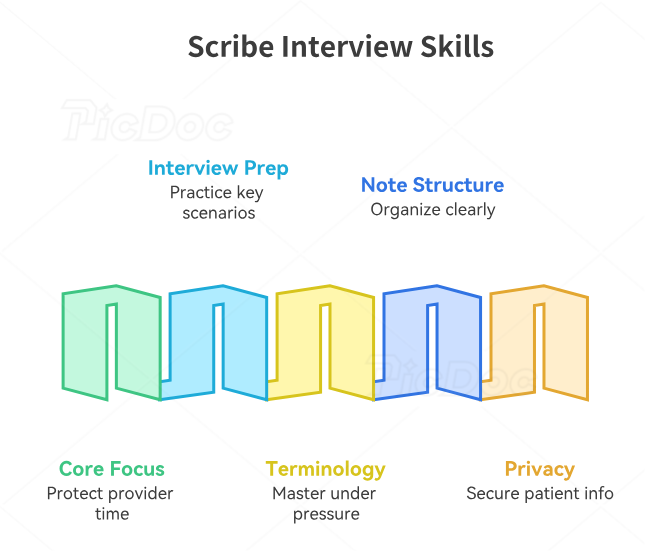
Employers test whether you can protect the provider’s time without creating documentation cleanup. That means your note must reduce burden, not create a second job for the clinician. In an interview, expect questions about fast encounters, unclear audio, missing details, provider corrections, sensitive information, and how you decide when to ask for clarification. Strong candidates answer with workflow judgment: listen, structure, flag uncertainty, protect privacy, and document only what is supported. Prepare with scribe interview questions, expert interview answers, patient communication examples, and de-escalation techniques so your answers sound grounded.
The first hard skill is terminology under pressure. You may recognize a term on a flashcard and still miss it when spoken quickly inside a real encounter. That is why your practice should include audio drills, specialty vocabulary, abbreviations, and common complaint patterns. For example, chest pain documentation needs onset, character, radiation, associated symptoms, risk factors, testing, provider impression, and follow-up. Dermatology notes may require lesion description, location, duration, morphology, procedure detail, and aftercare. Use medical terminology mastery, specialty template libraries, orthopedic scribe directories, and dermatology and ophthalmology hiring guides to match vocabulary to real settings.
The second hard skill is note architecture. Weak candidates place everything in one paragraph, bury the actual problem, mix patient statements with provider conclusions, and leave the plan vague. Strong candidates build a note that another clinician can read quickly: the patient’s story is clear, relevant negatives are present, exam findings are organized, assessment wording is careful, and the plan is actionable. This is where clinical documentation terms, EMR charting terms, patient record update training, and EMR shortcut training become interview assets.
The third skill is privacy behavior. A certified scribe must know that patient information is not casual workplace content. Screens, messages, portals, printed notes, home workspaces, screenshots, recordings, and conversations can all become risk points. For remote scribe roles, privacy discipline becomes even more visible because the employer must trust your environment. Prepare a concrete privacy answer: secure workspace, locked screen, no personal device capture, no unnecessary access, no public discussion, and immediate escalation for accidental exposure. Reinforce that with patient privacy essentials, HIPAA terms for medical admins, legal responsibilities, and risk management strategies.
5. Career Opportunities After Medical Scribe Certification in Ireland
Certification can support several career directions in Ireland, especially if you build your experience deliberately. Some learners want direct clinical exposure before medicine, nursing, physician associate routes, public health, or clinical research. Others want healthcare administration, EMR operations, patient access, revenue cycle, telehealth coordination, or medical office leadership. Scribing gives you a rare view of how clinical decisions, documentation, patient flow, coding language, follow-up, and digital systems connect. To plan beyond entry-level work, study scribe-to-physician journeys, clinical research site pathways, telehealth administration, and future trends in medical scribing.
Hospital-based scribe roles can strengthen your understanding of acuity, team communication, specialty consults, handoffs, and time-sensitive documentation. Outpatient roles can build deeper continuity skills, especially in primary care, internal medicine, paediatrics, dermatology, cardiology, orthopedics, and women’s health. Remote scribe roles can build speed, discipline, audio comprehension, and digital workflow maturity. Each pathway rewards a different strength, so do not apply blindly. Compare top hospitals hiring scribes, primary care networks hiring scribes, outpatient specialty networks, and urgent care scribe opportunities before building your applications.
The smartest candidates also use certification to become more than “entry-level.” They learn how documentation supports patient safety, continuity, billing, coding, compliance, provider workload, and patient satisfaction. That makes them valuable for healthcare operations roles because they understand the pain inside the system. A scribe who understands insurance verification, appointment scheduling, front desk operations, and healthcare portal terms can speak across clinical and administrative teams.
Your biggest career mistake would be treating certification as the finish line. The certificate opens the door; your practice portfolio gets you noticed. Keep sample de-identified note exercises, specialty vocabulary sheets, typing speed results, mock interview answers, and a target-employer tracker. Use healthcare recruiter directories, medical scribe company lists, pre-med gap year pipelines, and medical admin professional organizations to build an actual opportunity pipeline instead of waiting for one job post.
6. FAQs About Medical Scribe Certification in Ireland
-
A formal certification may not be required for every role, but it can make you far more competitive because it proves you understand documentation structure, medical vocabulary, EMR workflows, privacy habits, and provider-support boundaries. Employers want evidence that you can produce a clean note under pressure. A certification supported by scribe exam preparation, clinical documentation terms, EMR charting practice, and medical terminology training is especially useful when you lack direct healthcare experience.
-
Start with note structure and terminology together. Learn chief complaint, HPI, ROS, physical exam, assessment, plan, orders, referrals, and follow-up while also building vocabulary for common symptoms, anatomy, procedures, medications, and specialties. Then move into EMR workflows, privacy, telehealth documentation, and timed practice. A strong sequence is 30-day study planning, medical term memorization, realistic exam questions, and first-try exam strategies.
-
Yes, certification can help you compete for remote documentation roles if you also show privacy discipline, strong audio comprehension, fast typing, stable internet, secure workspace habits, and comfort with digital systems. Remote employers need confidence that you can handle sensitive patient information without casual exposure. Strengthen your application with international scribe employer research, medical scribe company directories, telemedicine scribe training, and scribe interview preparation.
-
The biggest mistakes are vague answers, weak terminology, poor privacy awareness, confusing assessment with diagnosis, and sounding unaware of the scribe’s boundaries. Employers quickly notice candidates who say they can “help diagnose,” “fix charts,” or “handle patient information normally.” Better answers show that you document accurately, ask for clarification, protect patient data, follow provider direction, and understand EMR workflows. Prepare with medical scribe interview questions, patient privacy communication essentials, EMR troubleshooting guidance, and documentation templates.
-
Primary care is excellent for learning continuity, medications, preventive care, referrals, and chronic disease documentation. Urgent care builds speed and concise decision-support documentation. Dermatology, ophthalmology, orthopedics, cardiology, paediatrics, and women’s health are valuable if you want specialty vocabulary and procedure exposure. Choose based on your career goal, then study specialty language before applying. Compare primary care scribe networks, urgent care scribe opportunities, dermatology and ophthalmology groups, and orthopedic groups hiring scribes.
-
Many focused learners can build a serious foundation in 30 to 60 days, but the right timeline depends on your starting point. If you already understand anatomy, medical terminology, and healthcare workflows, your main work may be documentation structure and exam practice. If you are new to healthcare, spend extra time on terminology, note sections, privacy, and specialty vocabulary. Use 30-day exam planning, ACMSO exam tips, real-life exam experiences, and medical scribe FAQs to create a realistic schedule.
