

The Impact of Medical Scribes on Physician Burnout & Satisfaction
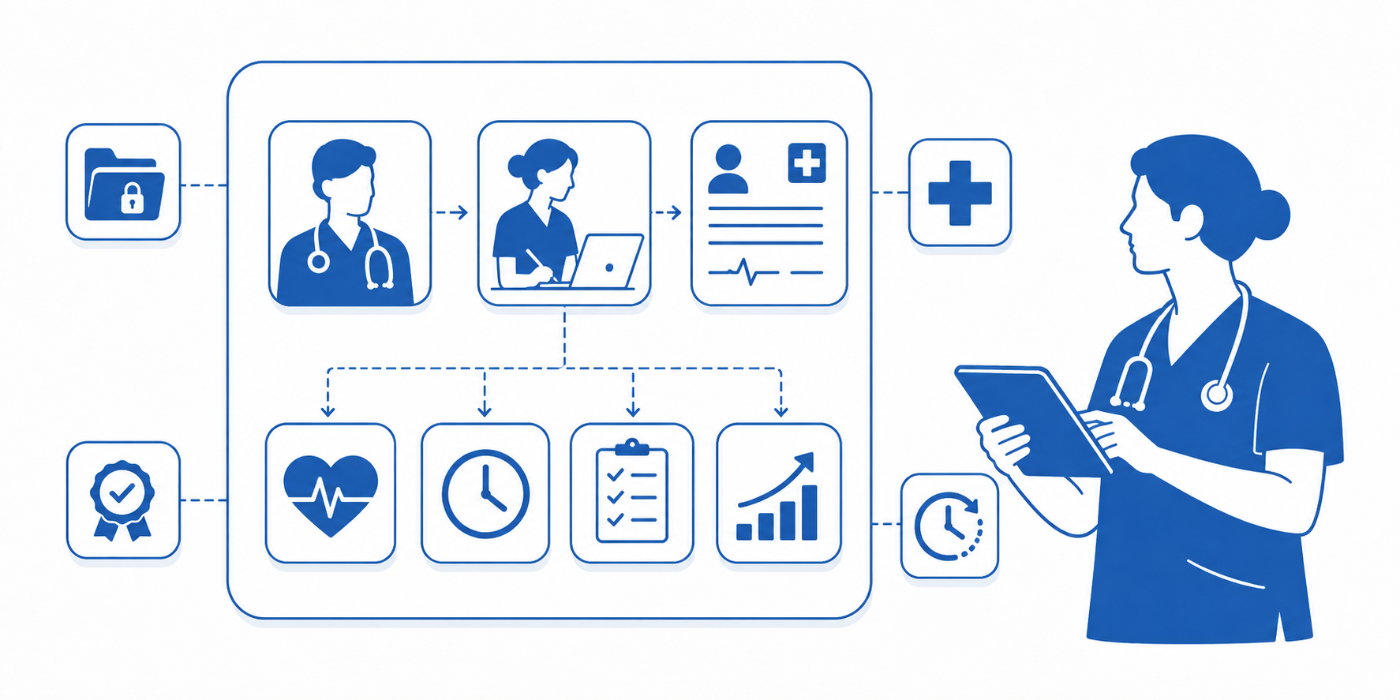
Physician burnout often begins with the part of care patients rarely see: late notes, inbox pressure, EHR clicks, chart cleanup, coding details, and documentation that follows clinicians home. Medical scribes help by removing friction from the encounter itself. A strong scribe program gives physicians more eye contact, faster chart completion, cleaner visit flow, and less after-hours documentation. For medical scribes, this makes the role bigger than typing. It becomes a direct support system for physician focus, satisfaction, and clinical stamina.
1. Why Documentation Pressure Turns Into Physician Burnout
Physicians usually enter medicine for patient care, diagnosis, procedures, teaching, and meaningful clinical judgment. Burnout grows when the workday becomes dominated by tasks that feel disconnected from that purpose. EHR documentation, inbox follow-up, coding requirements, visit summaries, note closure, template cleanup, and quality measure language can turn a full clinic day into a second shift. That is why a well-trained medical scribe can become one of the most practical workflow supports in a busy practice.
The pressure shows up in small moments. A physician looks at the screen while the patient explains symptoms. The provider asks a question, clicks three fields, checks old labs, updates medication history, and tries to keep the conversation human. In a fast clinic, that split attention drains everyone. Scribes trained through medical terminology mastery, top scribe documentation terms, EMR and charting vocabulary, and HIPAA compliance for medical scribes reduce that split by capturing the encounter cleanly while the physician stays clinically present.
Burnout also grows when physicians feel they cannot finish work at work. “Pajama time” becomes normal. Notes stay open. Charts pile up after dinner. One unfinished note becomes five, then fifteen, then a weekend of catch-up. A strong scribe helps by keeping the HPI, ROS, exam details, assessment, plan, follow-up instructions, and provider decisions organized in real time. This is why medical scribe training courses, realistic scribe exam questions, scribe certification FAQs, and EMR/EHR platform awareness matter so much.
The clearest value of a scribe is workflow relief. The deeper value is emotional relief. Physicians feel more satisfied when they can listen, think, educate, and move through the day with less documentation drag. Patients feel the difference when their doctor looks up, responds naturally, and gives the visit full attention. For scribes, understanding this pressure changes the job. You are helping the physician protect attention, reduce chart backlog, and keep the clinical relationship from getting swallowed by screens.
| # | Physician Burnout Trigger | How It Shows Up During the Workday | How a Medical Scribe Helps | What Practices Should Measure | ACMSO Resource |
|---|---|---|---|---|---|
| 1 | After-hours charting | Physicians finish notes at night after clinic ends. | The scribe builds the note during the visit so closure happens faster. | Charts closed same day, average closure time, after-hours EHR time. | EMR charting terms |
| 2 | Screen-heavy visits | The physician keeps looking away from the patient to document. | The scribe captures history and plan details while the physician stays engaged. | Patient satisfaction comments, eye-contact complaints, visit-flow feedback. | patient communication terms |
| 3 | Incomplete HPI details | Onset, severity, duration, context, and modifiers get missed. | The scribe listens for structured clinical story elements in real time. | Provider correction rate, HPI completeness, addendum frequency. | documentation terms |
| 4 | Click fatigue | Physicians spend energy navigating templates, fields, and repetitive EHR actions. | The scribe handles documentation structure and reduces low-value clicking. | Clicks per visit, note time, provider EHR burden feedback. | EMR/EHR platform guide |
| 5 | Inbox spillover | Documentation backlog combines with messages, refills, results, and follow-up tasks. | Cleaner same-day notes reduce the pile physicians face after clinic. | Open inbox items, turnaround time, chart-task overlap. | patient record updates |
| 6 | Visit delays | Physicians fall behind because documentation slows room-to-room movement. | The scribe keeps the note moving while the physician transitions to the next patient. | Average visit delay, rooming-to-provider time, patient wait complaints. | patient intake procedures |
| 7 | Specialty documentation burden | Complex specialty visits require detailed history, exam, imaging, and plans. | The scribe learns specialty-specific language and note patterns. | Specialty note accuracy, provider edit time, documentation consistency. | documentation templates |
| 8 | Provider multitasking | The doctor has to examine, educate, document, review labs, and plan follow-up at once. | The scribe absorbs the documentation stream so the physician can think clinically. | Provider stress rating, perceived focus, visit completion quality. | scribe certification prep |
| 9 | ED pace pressure | Emergency physicians handle rapid turnover, interruptions, and high-risk complaints. | The scribe tracks histories, updates, reassessments, and disposition details. | ED chart completion, disposition note accuracy, turnaround time. | ED and urgent care directory |
| 10 | Telehealth documentation gaps | Remote visits depend on fast listening and clean digital note handling. | A virtual scribe captures the encounter without room-based cues. | Telehealth note accuracy, provider edit rate, visit completion time. | scribes and telemedicine |
| 11 | HIPAA anxiety | Providers worry about privacy, access, and documentation boundaries. | A trained scribe follows confidentiality rules and role limits carefully. | Privacy incidents, audit findings, training completion. | HIPAA terms |
| 12 | Patient connection loss | The visit feels rushed, distracted, or transactional. | The scribe creates space for the physician to talk naturally with the patient. | Patient comments, communication scores, complaint themes. | empathy in healthcare |
| 13 | New provider learning curve | Residents, fellows, and newer clinicians need documentation support during growth. | The scribe reinforces structure and helps keep notes organized. | Note revision frequency, supervisor feedback, chart completion speed. | academic medical centers |
| 14 | Primary care overload | Multiple chronic problems, prevention, refills, labs, and counseling crowd one visit. | The scribe keeps each issue separated inside the note and plan. | Problem-list clarity, plan completeness, same-day closure. | primary care networks |
| 15 | Hospitalist handoff complexity | Inpatient notes require assessments, labs, imaging, consults, and discharge planning. | The scribe helps organize complex daily documentation. | Daily note quality, discharge summary readiness, handoff clarity. | hospitalist groups |
| 16 | Medical terminology strain | Unfamiliar terms slow the note and create more provider edits. | The scribe studies common terms before working high-pressure shifts. | Terminology correction rate, training scores, provider trust. | memorize medical terms |
| 17 | Template bloat | Notes become long, cluttered, and hard to review. | The scribe keeps the note specific, relevant, and clinically defensible. | Note length, irrelevant text, provider cleanup time. | template libraries |
| 18 | Provider dissatisfaction | Doctors feel their workday is controlled by clerical demands. | The scribe restores time for clinical reasoning and patient conversation. | Physician satisfaction surveys, retention, burnout pulse checks. | future trends report |
| 19 | Training inconsistency | Every scribe documents differently, creating provider frustration. | A standardized program creates consistent chart quality. | Training completion, provider edit patterns, quality audits. | training courses |
| 20 | Regulatory worry | Providers worry about compliance, signatures, and documentation standards. | The scribe works within approved documentation policy and provider review rules. | Compliance audit results, signature errors, policy adherence. | regulations and compliance changes |
| 21 | Voice documentation confusion | Dictation tools create rough drafts that still require cleanup. | The scribe can support structured review, correction, and clinical organization. | Dictation correction time, note quality, provider edits. | voice recognition software |
| 22 | Patient follow-up ambiguity | Follow-up timing, return precautions, and next steps can become unclear. | The scribe captures the plan with specific timing and instructions. | Follow-up clarity, patient calls, plan correction frequency. | communication examples |
| 23 | Clinic bottlenecks | Slow documentation disrupts rooming, scheduling, check-out, and billing flow. | The scribe helps keep visits moving and reduces downstream delays. | Cycle time, bottleneck reports, staff feedback. | front desk operations |
| 24 | Low documentation confidence | Physicians hesitate to trust a note that needs heavy editing. | A prepared scribe earns trust through accuracy and consistent structure. | Provider trust score, edit volume, training remediation needs. | ACMSO exam strategies |
| 25 | High-volume specialty clinics | Dermatology, orthopedics, ophthalmology, and cardiology visits move quickly. | The scribe learns specialty flow and anticipates documentation needs. | Visit throughput, note completeness, provider satisfaction. | outpatient specialty networks |
| 26 | Poor role boundaries | Confusion about what scribes can document, say, or handle creates risk. | Clear policy keeps scribes inside documentation support duties. | Role-boundary training, incident reports, supervisor feedback. | legal responsibilities guide |
| 27 | Weak job fit | A scribe placed in the wrong specialty may struggle and frustrate the physician. | Better matching connects skills, pace, specialty, and provider expectations. | Turnover, performance reviews, provider-scribe match feedback. | healthcare recruiter platforms |
Use this table to connect physician burnout pressure points with measurable scribe-program outcomes, training needs, and workflow improvements.
2. How Medical Scribes Improve Physician Satisfaction During the Patient Encounter
Physician satisfaction often improves when the doctor gets the clinical relationship back. A busy provider can feel trapped between the patient and the computer. The patient wants attention. The EHR wants structured fields. The billing system wants defensible language. The clinic schedule wants speed. A trained scribe absorbs the documentation stream so the physician can ask better questions, listen longer, explain decisions more clearly, and move through the visit with less cognitive drag.
This is especially visible in history-taking. A strong scribe captures the patient’s story while the physician thinks through differential diagnosis, red flags, medication context, prior visits, test results, and next steps. The difference is practical. Instead of reconstructing the visit later from memory, the physician reviews a structured note that already contains the visit’s clinical spine. Scribes who study HPI and documentation terms, medical terminology tutorials, ICD-10 reference basics, and CPT code explanations become more useful because they understand how documentation connects to the entire care cycle.
Patient interaction also improves when the scribe is unobtrusive, accurate, and professional. The physician can turn toward the patient. The conversation feels less interrupted. Patients can explain symptoms without watching the doctor fight the computer. This matters in primary care, pediatrics, women’s health, dermatology, orthopedics, and urgent care, where trust often depends on small communication signals. Scribes preparing for those settings should use primary care scribe networks, pediatric and women’s health networks, dermatology and ophthalmology groups, and orthopedic scribe employer lists.
The satisfaction effect also depends on trust. A physician feels relief when the scribe captures pertinent negatives, avoids inventing information, separates patient-reported history from provider impression, and keeps the assessment-plan section clean. A physician feels more pressure when every note requires heavy correction. That is why preparation through scribe exam confidence training, real-life scribe exam practice, scribe interview preparation, and ACMSO certification study scheduling directly supports provider satisfaction.
3. Where Scribes Reduce Burnout Most: EHR Time, Note Closure, and Mental Load
The strongest scribe impact usually appears in EHR-related pressure. Physicians spend less energy building the first version of the note, chasing missing history, typing long narratives, and cleaning up visit details after hours. A well-run scribe program should reduce time spent on notes, improve same-day closure, and lower the mental load that builds when unfinished charts follow the provider home. Practices should track those outcomes instead of relying only on vague comments like “the doctors seem happier.”
Metrics should include average note closure time, percentage of charts closed same day, number of provider edits per note, provider-reported documentation burden, patient throughput, and patient satisfaction comments. Scribe quality also needs measurement. A program can hire many scribes and still fail if training is thin, templates are sloppy, or providers never give feedback. ACMSO readers can strengthen this side through EMR integration tools, EMR troubleshooting guidance, patient record update training, and medical admin time tracking tools.
Mental load matters because physicians carry unfinished work in their head. A patient with worsening symptoms, a complex medication change, a referral, a pending lab, and a follow-up plan cannot become a vague note. The provider must trust that the chart reflects the clinical encounter. A strong scribe reduces that burden by organizing the note while the visit is fresh. This is especially important in hospitalist groups, emergency departments, community health centers, and academic teaching hospitals.
Virtual and AI-assisted documentation tools have made this conversation even more important. Some practices use human scribes, some use virtual scribes, and some combine scribe support with dictation or ambient documentation tools. The best approach depends on specialty, patient volume, privacy controls, provider preference, and note complexity. Scribes who understand voice recognition and dictation software, telehealth platforms, virtual patient management, and future trends in medical scribing will be better positioned as documentation models continue changing.
4. Why Scribe Quality Determines Whether Burnout Improves or Gets Worse
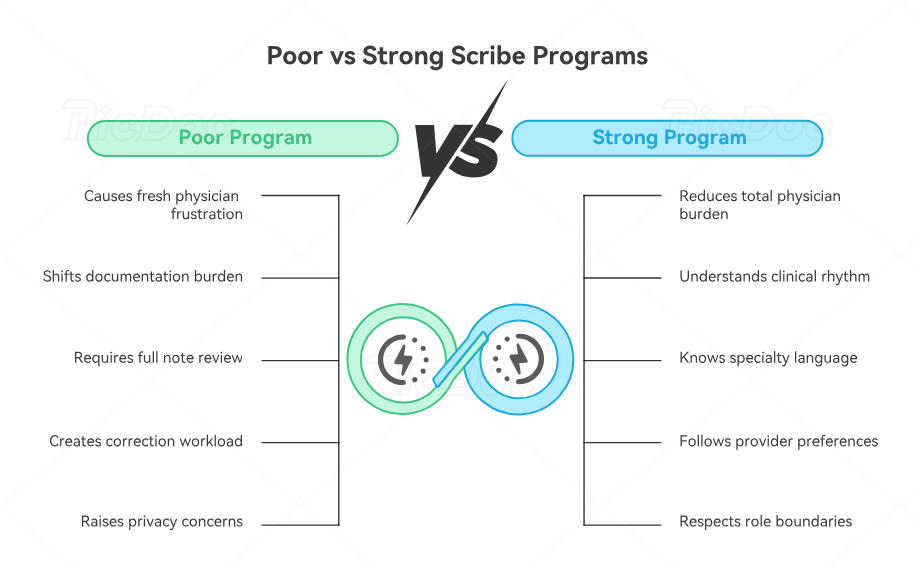
A poor scribe program can create fresh frustration for physicians. The physician still has to review every note, correct mistakes, fix structure, remove irrelevant details, and worry about privacy or role boundaries. That kind of program moves the burden around. A strong program reduces total burden because the scribe understands the clinical rhythm, the specialty language, the provider’s preferences, and the difference between documentation support and clinical decision-making.
Quality begins before the first shift. Scribes need a working understanding of chief complaint structure, HPI elements, pertinent positives and negatives, exam language, test interpretation boundaries, plan wording, follow-up instructions, and confidentiality rules. Preparation through top medical scribe terms, HIPAA terms for scribes, medical terminology memory strategies, and medical scribe certification FAQs helps prevent the early mistakes that destroy provider confidence.
Specialty matching is another quality factor. An emergency physician may need a scribe who can keep up with rapid reassessments and disposition changes. A dermatologist may need lesion descriptions and procedure flow. An orthopedic provider may need injury mechanism, imaging details, range-of-motion language, and treatment progression. A pediatric provider may need parent-reported history, growth context, school notes, immunization details, and clear follow-up instructions. Use urgent care and ED hiring guides, dermatology and ophthalmology practice directories, orthopedic group directories, and pediatric/OB-GYN network lists to understand those differences.
Feedback loops keep the program healthy. Providers should review early notes closely, flag recurring errors, clarify preferred wording, and identify specialty-specific expectations. Scribes should welcome correction because correction is how trust forms. Practices should also protect role boundaries. Scribes document what occurs; providers make the medical decisions and verify the final chart. That distinction supports compliance, patient safety, and physician satisfaction. ACMSO readers can reinforce this through regulatory changes for scribe roles, patient privacy essentials, risk management strategies, and legal responsibilities guides.
5. How Practices Should Build a Scribe Program That Actually Supports Physicians
A practice should begin by defining the physician pain point. Some clinics need same-day chart closure. Some need better patient connection. Some need visit-flow support. Some need help in a specific specialty. Some need virtual documentation coverage across multiple providers. The program design should match the pressure. Hiring scribes without identifying the burden first can create staffing activity without meaningful burnout relief.
The next step is role design. Decide whether scribes will work in person, virtually, by specialty, by provider, by pool, or through a staffing partner. Decide what parts of the note they can prepare, how physicians approve notes, how training is documented, how privacy is monitored, and how performance is measured. Practices can explore top scribe staffing agencies, health systems using scribes, top hospitals hiring scribes, and healthcare recruiter platforms to understand common hiring pathways.
Training should combine general documentation foundations with specialty-specific practice. A new scribe needs vocabulary, EMR navigation, privacy rules, note structure, provider communication, and real examples. A cardiology scribe needs different language than an urgent care scribe. A tele-scribe needs different habits than a room-based scribe. Start with training courses and certifications, ACMSO exam study planning, top exam questions, and interview preparation for scribes.
The final step is measurement. Physician satisfaction should be checked before and after implementation. Documentation burden should be measured through chart closure time, after-hours EHR work, note edit frequency, clinic flow, and provider feedback. Patient experience should be watched too, especially if patients feel more seen, heard, and less rushed. A good scribe program proves value with data and human feedback. For long-term planning, use interactive future trends in medical scribing, medical scribes and telemedicine, AI and dictation software guides, and regulatory updates shaping scribe roles.
6. FAQs About Medical Scribes, Physician Burnout, and Satisfaction
-
Medical scribes reduce the documentation pressure that often follows physicians beyond the clinic day. They capture encounter details, organize the note, support same-day chart closure, and help the physician stay focused on the patient. The strongest impact usually comes from less after-hours charting, fewer EHR distractions, smoother visit flow, and higher provider satisfaction. Scribes should prepare with medical terminology mastery, documentation terms, and EMR charting terms.
-
Some physicians feel relief quickly because they regain eye contact, reduce typing, and finish notes faster. Lasting satisfaction depends on scribe accuracy, specialty fit, provider feedback, privacy training, and workflow design. A new scribe may need time to learn provider preferences and clinical language. Programs improve faster when they use scribe training courses, realistic scribe exam questions, and medical scribe certification FAQs.
-
A scribe should support clinical documentation during the encounter, including HPI structure, ROS details when appropriate, exam findings as directed, assessment-plan organization, follow-up instructions, and chart updates allowed by policy. The physician remains responsible for clinical judgment and final chart review. Scribes can strengthen role clarity with HIPAA compliance guidance, patient privacy essentials, and regulatory changes for scribes.
-
High-volume and documentation-heavy settings often benefit strongly, including emergency medicine, urgent care, primary care, hospital medicine, orthopedics, dermatology, ophthalmology, pediatrics, cardiology, and women’s health. The best fit depends on provider burden and note complexity. Applicants can explore emergency and urgent care roles, outpatient specialty networks, primary care networks, and hospitalist groups.
-
Virtual scribes can reduce documentation burden when the technology, privacy controls, audio quality, workflow, and provider-scribe communication are strong. They may be especially useful for telehealth, large health systems, and providers who need flexible documentation support. Virtual scribes need strong listening, typing, EMR, and confidentiality skills. Preparation should include telehealth platform terms, medical scribes and telemedicine, and virtual patient management.
-
Clinics should measure same-day chart closure, after-hours EHR time, note edit frequency, provider satisfaction, patient satisfaction, visit cycle time, documentation errors, and provider retention signals. Strong programs combine metrics with direct physician feedback. Scribes and managers can support this through medical admin time tracking tools, EMR integration tools, and patient record update training.
