

Interactive Map: Top Cities & States Hiring Medical Scribes
Medical scribe hiring looks simple until you start applying city by city and realize every market behaves differently. One city may have hospital jobs but brutal competition. Another may have fewer listings but better entry-level access. A third may be full of virtual roles that require stronger typing, sharper listening, and better EMR fluency. This guide turns the search into a practical map so students, gap-year applicants, career changers, and future clinicians can target the right states, cities, settings, and skills before wasting weeks on weak applications.
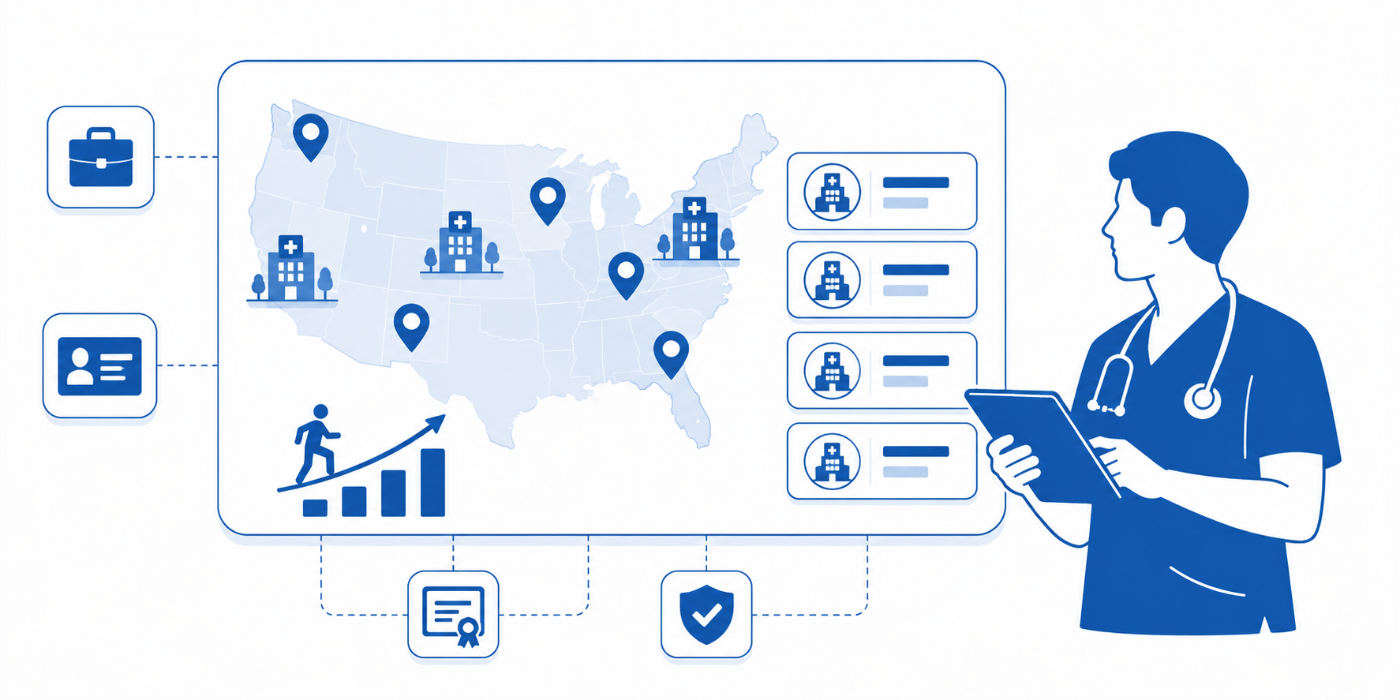
1. What the Medical Scribe Hiring Map Should Help You Decide First
A useful hiring map should answer one painful question quickly: where should you spend your energy first? Many applicants open job boards, type “medical scribe,” and apply to every listing in sight. That approach creates noise. A smarter search begins with market type, because a city with large hospitals needs a different strategy than a city dominated by outpatient clinics, urgent care chains, telehealth teams, or specialty groups.
Start by separating volume markets from access markets. Volume markets usually include large health systems, emergency departments, teaching hospitals, academic clinics, and multispecialty outpatient networks. These are the places where ACMSO readers should cross-check the top health systems hiring medical scribes by state, the top hospitals hiring medical scribes, and the top academic medical centers using medical scribes before building an application list.
Access markets matter just as much. These are cities where urgent care groups, dermatology offices, orthopedic practices, pediatric clinics, and primary care networks may hire faster than famous hospitals. For many first-time scribes, the best path starts with the top urgent care and retail clinic brands hiring scribes, the top outpatient specialty networks hiring scribes, and the primary care and internal medicine networks hiring scribes.
The biggest mistake is treating every scribe opening as equal. A hospitalist scribe, emergency department scribe, ophthalmology scribe, telemedicine scribe, and pediatric scribe can all share the same job title while requiring different stamina, vocabulary, schedule flexibility, charting rhythm, and provider communication style. Before choosing a city, applicants should review medical terminology mastery for scribes, top EMR and charting terms, and top documentation terms medical scribes must master.
| # | State / Region | High-Value City Targets | Best Scribe Setting to Prioritize | Why This Market Matters | Best ACMSO Next Step |
|---|---|---|---|---|---|
| 1 | California | Los Angeles, San Diego, Bay Area, Sacramento | Academic, emergency, specialty, telehealth | Large provider networks, dense specialty care, and strong pre-med competition make preparation essential. | Use the health systems by state guide. |
| 2 | Texas | Houston, Dallas-Fort Worth, Austin, San Antonio | Emergency, hospitalist, outpatient specialty | Major metro growth plus large hospital systems create steady scribe demand across clinical settings. | Compare with the emergency and urgent care directory. |
| 3 | Florida | Miami, Orlando, Tampa, Jacksonville | Urgent care, primary care, dermatology, ophthalmology | Retiree-heavy care demand supports outpatient, specialty, and high-volume patient documentation roles. | Check the dermatology and ophthalmology directory. |
| 4 | New York | New York City, Long Island, Rochester, Buffalo | Academic, hospital, specialty, virtual | High competition rewards applicants with strong terminology, EMR, and interview readiness. | Build skills with the EMR/EHR platform guide. |
| 5 | Pennsylvania | Philadelphia, Pittsburgh, Hershey, Allentown | Teaching hospitals, ED, outpatient networks | Strong medical education footprint makes this a strong option for pre-health applicants. | Review pre-med gap-year programs. |
| 6 | Massachusetts | Boston, Worcester, Springfield | Academic, research, specialty clinics | Excellent for applicants who want clinical exposure near teaching hospitals and research settings. | Use the scribe-to-CRC tracks list. |
| 7 | Illinois | Chicago, Peoria, Springfield | Hospital, primary care, specialty | Chicago offers volume, while smaller cities may offer easier entry and less crowded applicant pools. | Pair applications with scribe interview prep. |
| 8 | Ohio | Cleveland, Columbus, Cincinnati, Toledo | Academic, hospital, outpatient | Strong health systems and teaching environments support both entry-level and experienced scribe roles. | Start with top hospitals hiring scribes. |
| 9 | North Carolina | Raleigh-Durham, Charlotte, Winston-Salem | Academic, specialty, primary care | Research Triangle and major health systems make this a strong scribe launch market. | Compare with outpatient specialty networks. |
| 10 | Georgia | Atlanta, Augusta, Savannah | Hospital, urgent care, specialty | Atlanta’s large healthcare footprint creates broad opportunity, but competition requires stronger screening answers. | Prepare with top scribe interview questions. |
| 11 | Arizona | Phoenix, Tucson, Mesa | Urgent care, outpatient, telehealth | Fast-growing metro areas often need documentation support across primary care and specialty clinics. | Study medical scribes and telemedicine. |
| 12 | Washington | Seattle, Tacoma, Spokane | Academic, specialty, virtual | Tech-forward care environments reward candidates comfortable with portals, EMRs, and digital workflow. | Review healthcare portal terms. |
| 13 | Colorado | Denver, Aurora, Colorado Springs | Emergency, outpatient, specialty | Strong metro growth and health system density make targeted applications more effective than broad spraying. | Use the healthcare recruiter directory. |
| 14 | Michigan | Detroit, Ann Arbor, Grand Rapids | Academic, hospital, specialty | Ann Arbor and Detroit offer strong teaching-hospital exposure for future clinicians. | Read scribe-to-physician journeys. |
| 15 | Tennessee | Nashville, Memphis, Knoxville | Hospitalist, emergency, outpatient | Healthcare operations hubs create opportunities beyond bedside documentation, including admin pathways. | Connect with medical admin organizations. |
| 16 | Minnesota | Minneapolis-St. Paul, Rochester | Academic, specialty, hospital | Rochester and Twin Cities markets can be strong for serious pre-health applicants. | Strengthen with scribe certification exam prep. |
| 17 | Missouri | St. Louis, Kansas City, Columbia | Hospital, specialty, outpatient | Balanced metro markets can give applicants multiple entry points without only chasing famous hospitals. | Use scribe staffing agencies. |
| 18 | Indiana | Indianapolis, Fort Wayne, South Bend | Hospital, primary care, urgent care | Often useful for applicants seeking practical experience without coastal-market competition. | Review urgent care brands. |
| 19 | Wisconsin | Milwaukee, Madison, Green Bay | Academic, outpatient, primary care | Madison and Milwaukee can reward candidates who understand clinical documentation fundamentals. | Study documentation templates. |
| 20 | Maryland / DC / Northern Virginia | Baltimore, Washington DC, Arlington, Fairfax | Academic, hospital, specialty | Dense medical, federal, and academic ecosystems support competitive clinical documentation roles. | Read HIPAA compliance for scribes. |
| 21 | New Jersey | New Brunswick, Newark, Hackensack, Camden | Hospital, specialty, outpatient | Strong proximity to major metro systems creates spillover opportunities and hybrid job-search routes. | Compare hospitalist groups hiring scribes. |
| 22 | Connecticut | New Haven, Hartford, Stamford | Academic, specialty, primary care | Good for applicants targeting teaching hospitals and outpatient networks with strong documentation standards. | Review HIPAA terms for scribes. |
| 23 | Utah | Salt Lake City, Provo, Ogden | Hospital, outpatient, telehealth | Fast-growing healthcare markets can favor applicants who are organized, trainable, and digitally fluent. | Use EMR shortcuts. |
| 24 | Oregon | Portland, Eugene, Salem | Primary care, specialty, telehealth | Good target for applicants who want outpatient documentation and patient-flow exposure. | Study patient intake procedures. |
| 25 | Louisiana | New Orleans, Baton Rouge, Shreveport | Emergency, hospital, community care | Strong clinical exposure can come from hospital and safety-net settings with busy patient flow. | Explore community health centers. |
| 26 | South Carolina | Charleston, Columbia, Greenville | Academic, outpatient, specialty | Charleston and Greenville can be strong for applicants who want clinical exposure with less giant-metro pressure. | Build your plan with ACMSO certification study planning. |
| 27 | Remote / National | Virtual scribe roles across U.S. time zones | Tele-scribe, AI-assisted documentation, remote chart support | Remote roles demand sharper listening, typing accuracy, privacy discipline, and comfort with digital workflows. | Compare international and offshore scribe employers. |
Use this table as a priority map, then verify live openings through employer career pages, local health system portals, staffing agencies, and ACMSO training resources.
2. Top State and City Clusters to Prioritize First
The best states for medical scribe hiring usually have three forces working together: large patient volume, many provider types, and enough clinical systems to support repeated hiring. California, Texas, Florida, New York, Pennsylvania, Massachusetts, Illinois, Ohio, North Carolina, and Georgia deserve early attention because they combine large healthcare footprints with many possible entry points. Applicants should move through the state-by-state health system list, then compare local openings against top medical scribe companies and staffing agencies and healthcare recruiter platforms posting scribe roles.
Big cities help when you need volume. Los Angeles, Houston, Dallas, New York City, Chicago, Philadelphia, Boston, Atlanta, Phoenix, Seattle, Denver, and Miami tend to give applicants more listings, more specialties, and more ways to recover if one application fails. The pressure is higher, so weak resumes get filtered quickly. Before applying in these markets, candidates should tighten their medical scribe resume strategy, review medical scribe interview questions, and study realistic medical scribe exam questions.
Secondary cities can be the smarter move for first-time applicants. Rochester, Ann Arbor, Cleveland, Columbus, Nashville, Madison, New Haven, Salt Lake City, Greenville, and Charleston may offer more manageable competition while still giving strong clinical exposure. These markets are especially useful for applicants who need their first healthcare role, a gap-year clinical job, or an opening that can turn into provider references. Pair these searches with medical scribe certification FAQs, training courses and certifications, and how to ace your medical scribe certification exam.
Remote scribe hiring deserves its own category. Virtual roles can remove relocation friction, but they also expose weak listening, poor typing discipline, slow chart navigation, and loose privacy habits. A remote scribe may need to follow fast provider speech, capture HPI details, understand negative findings, and update the chart without visual cues from the room. Applicants targeting virtual roles should strengthen telemedicine scribe skills, voice recognition and dictation software knowledge, and healthcare portal vocabulary.
3. How to Read a Scribe Hiring Market Without Getting Fooled
A city can look strong online and still waste your time. Some postings stay live after the role is filled. Some hospital portals split one opening across multiple departments. Some staffing agencies post broad evergreen listings because they want a candidate pool ready before contracts open. This is why serious applicants should verify openings through three channels: employer career page, staffing agency listing, and local health system job board. The top scribe companies directory, healthcare recruiter directory, and top hospitals guide make that cross-check faster.
The strongest sign of a real scribe market is repeated demand across settings. One hospital listing may be random. A hospital listing plus urgent care listings plus ophthalmology jobs plus primary care openings indicates a real documentation support market. Applicants should compare emergency roles through the ED and urgent care directory, specialty roles through the orthopedic and sports medicine group directory, and outpatient roles through the pediatric, OB/GYN, and women’s health networks directory.
Pay also needs context. A higher hourly rate in a high-cost city may leave less take-home value than a slightly lower rate in a city with cheaper rent, easier commuting, and more stable shifts. Look beyond the hourly number and ask about training pay, provider assignment, shift length, night coverage, weekend expectations, chart closure rules, and whether the role is in-person, hybrid, or virtual. Use time management mastery, EMR software issue resolution, and clinical documentation term mastery before accepting a role that sounds better than it functions.
Applicants should also read job descriptions for hidden friction. “Fast-paced environment” may mean back-to-back visits with little correction time. “Flexible availability” may mean unstable scheduling. “Must be comfortable with medical terminology” may mean the provider expects near-immediate fluency. “Prior EMR experience preferred” may mean the training is thin. Before applying, review medical terminology tutorials, EMR and charting terms, and specialty documentation templates.
4. Best Scribe Job Targets by Setting: Hospital, Urgent Care, Specialty, Academic, and Virtual
Emergency department scribe roles are best for applicants who want intense clinical exposure and can handle rapid shifts in pace. ED scribes may see chest pain, abdominal pain, trauma, respiratory symptoms, psychiatric complaints, and follow-up complexity in one shift. The learning curve can be steep, so candidates should prepare through realistic medical scribe exam questions, medical terminology tutorials, and the emergency department and urgent care chain directory.
Urgent care roles can be excellent for first-time scribes because the conditions are varied but often more predictable than hospital emergency departments. You may document sore throat visits, sprains, minor injuries, respiratory complaints, work notes, basic procedures, and follow-up instructions. The danger is becoming casual with details because cases feel routine. Use patient intake procedures, effective patient communication terms, and appointment scheduling best practices to understand the full clinic flow around the note.
Specialty scribe roles can build deeper skill. Orthopedics, cardiology, dermatology, ophthalmology, pediatrics, women’s health, and internal medicine all teach different documentation habits. An orthopedic note may focus on injury mechanism, range of motion, imaging, conservative care, injections, and surgical planning. A dermatology note may depend heavily on lesion description, location, duration, prior treatment, and procedure documentation. Applicants should compare the orthopedic and sports medicine directory, dermatology and ophthalmology directory, and pediatric and OB/GYN networks directory.
Academic medical centers are ideal for students who want a serious pre-med or pre-PA experience, but these roles may attract more qualified applicants. The upside is exposure to complex cases, teaching environments, specialists, residents, fellows, and research-adjacent workflows. The downside is slower hiring and stricter expectations. Candidates should read academic medical centers using scribes, pre-med gap-year scribe tracks, and scribe-to-physician journeys.
Virtual scribe jobs fit applicants who have discipline, strong listening skills, privacy awareness, and a quiet work setup. These roles can be powerful for candidates outside major metros, but remote hiring filters weak applicants quickly because every note depends on accuracy without room-based context. Build readiness through telehealth platforms, telemedicine scribe guidance, and HIPAA compliance for medical scribes.

5. A 30-Day Plan to Turn the Map Into Real Interviews
Days 1 through 3 should be for market selection, not applications. Pick three target markets: one big metro, one secondary city, and one remote option. For each, list hospitals, urgent care groups, outpatient networks, staffing companies, and academic centers. Use top hospitals hiring scribes, health systems hiring by state, scribe staffing agencies, and healthcare recruiter platforms.
Days 4 through 10 should be for skill alignment. If you are targeting emergency roles, practice fast HPI capture and common complaint vocabulary. If you are targeting specialty clinics, study specialty templates. If you are targeting remote roles, practice listening, typing, and privacy-safe workflow. Work through medical terminology mastery, top scribe documentation terms, specialty documentation templates, and EMR platform basics.
Days 11 through 18 should be for application quality. Customize your resume around accuracy, confidentiality, typing speed, medical vocabulary, schedule reliability, and provider support. Avoid vague lines like “interested in healthcare.” Replace them with proof: coursework, patient-facing experience, shadowing, volunteer work, certification prep, EMR familiarity, or documentation practice. Use building a standout resume, how to stand out in job interviews, and interview preparation for medical scribes.
Days 19 through 30 should be for disciplined follow-up. Track every application by city, employer, setting, date applied, status, contact, and next step. Recheck employer portals twice weekly. Apply to fresh postings within 24 to 48 hours when possible. If you receive no callbacks, adjust your market mix instead of assuming the career path is closed. Add urgent care, outpatient specialty, community health, and tele-scribe roles using the community health center directory, urgent care and retail clinic directory, and international/offshore scribe employers.
The strongest applicants treat the map like a system. They do not chase one dream hospital for six weeks while ignoring better entry points nearby. They build a pipeline, improve their documentation readiness, and match each application to a setting. That is how a scribe job search becomes more controlled, less emotional, and far more productive.
6. FAQs About Top Cities and States Hiring Medical Scribes
-
California, Texas, Florida, New York, Pennsylvania, Illinois, Ohio, Massachusetts, North Carolina, Georgia, Arizona, and Washington are strong starting points because they have major health systems, large metro areas, specialty networks, urgent care groups, and academic medical centers. Applicants should verify live openings through the state-by-state health system guide, top hospitals hiring scribes, and medical scribe staffing agencies.
-
Big cities usually offer more listings, but they also bring heavier competition, higher living costs, and faster screening. A secondary city with a strong hospital, urgent care network, or specialty group may be easier for a first-time applicant. Compare large markets with the top outpatient specialty network directory, urgent care hiring directory, and academic medical center list.
-
A first-time scribe should look for cities with multiple entry routes: urgent care, primary care, outpatient specialties, hospital systems, and staffing companies. This gives you more chances if one setting filters you out. Before applying, strengthen scribe certification knowledge, medical terminology, and interview preparation.
-
Remote scribe roles can look easier because they remove commuting and relocation, but they often demand stronger independence. Employers may expect accurate listening, fast typing, clean chart structure, HIPAA discipline, and comfort with digital systems. Prepare with telemedicine scribe guidance, voice recognition software awareness, and HIPAA compliance for scribes.
-
Academic medical centers can be excellent for pre-med students because they may offer exposure to complex cases, teaching environments, specialists, and stronger recommendation opportunities. They are also competitive. A smart plan includes academic centers plus urgent care, outpatient specialty, and community health roles. Start with pre-med gap-year programs, academic medical centers using scribes, and scribe-to-physician career stories.
-
Competitive cities reward accuracy, speed, medical vocabulary, EMR awareness, confidentiality, and provider communication. Applicants should be ready to explain how they handle fast speech, unclear terminology, missing details, and documentation pressure. Build those answers with top charting terms, documentation terms for scribes, and realistic scribe exam questions.
